


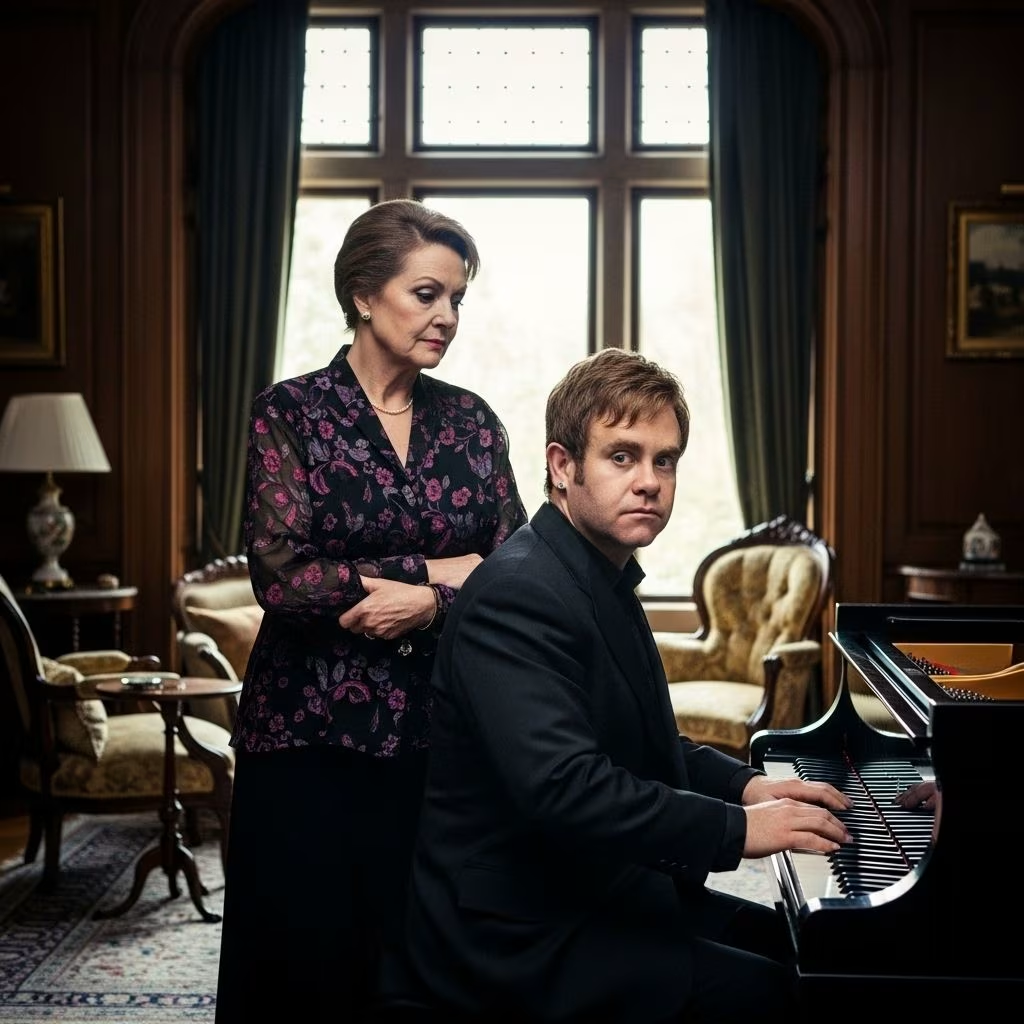
Elton John and His Mother: The Real Story Behind the Strained Relationship
Elton John’s life was shaped as much by his extraordinary musical talent as by the often difficult relationships he shared with his family, especially his mother. The 2019 biographical film Rocketman shone a spotlight on the rift between Elton and Sheila Farebrother, delivering a dramatic depiction that left many viewers asking: how accurate was this strained mother-son relationship, and what really happened between Elton John and his mother?
A Fractured Bond: Sheila Farebrother and Elton’s Upbringing
Born Reginald Dwight in Pinner, England, just after World War II, Elton John grew up in a household marked by emotional turbulence and discord. His parents, Sheila Farebrother and Stanley Dwight, married when Elton was six. According to both Elton and actors involved in portraying his family, their relationship was fraught and deeply unhappy, creating an unstable and often cold environment for Elton as a child.
- Sheila was described as argumentative and prone to dark moods, while Stanley was distant and had a quick temper. Their arguments frequently revolved around how Elton was being raised.
- Elton has recounted that “all I can remember are icy silences or screaming rows. The rows were usually about me, how I was being brought up.”
- As a result, Elton’s sense of security and belonging at home was tenuous. He would later seek out unconditional love and approval elsewhere—a theme that echoes throughout his adult life and career.
The Search for Love and Belonging
Rocketman dramatizes the emotional scars that Elton carried from his early years, painting Sheila as a mother whose affections were conditional and whose support for her son was fraught with resentment. The film goes so far as to depict Sheila telling Elton he will never truly be loved because of his sexuality, a scene that, while sensational for storytelling, aligns with reports of her coolness toward her son’s personal life.
- Actress Bryce Dallas Howard, who played Sheila, consulted outside sources—including people close to Sheila—and was told repeatedly about the dysfunctional nature of the relationship, with many confirming that Sheila could be “mean” and emotionally distant.
- As Elton searched for love, both platonically and romantically, the lack of acceptance and warmth from his earliest family figures cast a long shadow over his personal life and relationships.
Fact vs. Fiction: What Rocketman Got Right (And Where It Diverged)
The depiction of Sheila in Rocketman drew on real-life interviews, Elton’s memoir, and biography accounts. Yet drama and facts sometimes blur:
- Sheila is portrayed as aggressively unsupportive of Elton’s sexuality and career, at times making demands for financial gain and appearing to have her own interests foremost.
- Some details in the film, like the context of certain outbursts or the severity of specific exchanges, are dramatized for narrative effect. But many close to the family support the film’s broad emotional truths about the relationship.
- Sheila’s tendency to speak to the press and her apparent resentment about sacrifices for Elton were longstanding, and she was known publicly for her blunt remarks about her son.
Family History and Complicated Parents
| Family Member | Relationship to Elton | Key Characteristics | Impact on Elton |
|---|---|---|---|
| Sheila Farebrother | Mother | Argumentative, emotionally distant, at times supportive but prone to resentment | Strained bond, source of lifelong emotional challenges |
| Stanley Dwight | Father | Strict, remote, had a temper, largely absent | Lack of paternal warmth, contributed to Elton’s longing for acceptance |
| Bob Halley | Personal assistant (considered like a son by Sheila) | Loyal, close to Sheila, controversial figure in Elton’s family controversy | Became a breaking point in mother-son relations |
| David Furnish | Elton’s husband | Loved by Elton, disliked by Sheila, seen as catalyst in family rift | Contributed to lasting fallout and eventual estrangement |
Bitter Arguments and Public Fallouts
The most significant rupture in Elton and Sheila’s relationship occurred after Elton’s romantic and professional relationship with David Furnish deepened. Sheila publicly accused Furnish of turning Elton against her and claimed that she had been unfairly pushed aside.
- Sheila accused Elton of replacing her loyalty with that of others close to him, including former manager John Reid and assistant Bob Halley. She refused to cut ties with them, which Elton allegedly demanded, leading to a complete communications breakdown between mother and son.
- Sheila said of her relationship with Halley: “Bob is like a son to me. He has always been marvelous to me and he lives nearby and keeps an eye on me.” Her open attachment to Halley further angered Elton, leading him to accuse her of loving Halley more.
- The public exchange grew more heated, with Elton asserting, “I don’t hate her, but I don’t want her in my life.” This absence continued for years, despite periodic attempts at reconciliation.
Sheila Farebrother’s Final Years and Elton’s Reflections
The years leading up to Sheila’s death continued to be marred by distance, yet Elton notably provided for her financially, paying for her medical care even during periods of estrangement.
- They reconciled briefly before Sheila’s death in 2017 at age 92. Elton shared his grief publicly, saying, “So sad to say that my mother passed away this morning … I am in shock. … Thank you for everything. I will miss you so much.”
- Despite their momentary truce, Sheila’s final will reportedly left her life savings to Bob Halley, symbolizing a lifelong division in loyalties and affections within the family.
- Elton’s late-life reflections suggest he recognizes the damage caused by their relationship, yet he ultimately expresses gratitude for all her sacrifices, if not her methods.
The Psychological Complexity of Sheila Farebrother
Bryce Dallas Howard, preparing to play Sheila, sought professional counsel to understand the psychological roots of Sheila’s behavior. She described Sheila as “equal parts charming and damaging,” observing that the mother’s behavior could be “erratic and confusing and cruel” — characteristics that could arise from deep-seated emotional issues.
- Howard’s research left her convinced that Sheila was “a broken woman” whose difficulties in her own marriage and life affected her ability to relate to her son.
- Both Elton’s and Howard’s portrayals highlight the intergenerational impact of unresolved trauma and emotional inadequacy within families.
Myths, Memories, and Shifting Truths About Elton’s Parents
Biographer Philip Norman and other writers have challenged some family narratives, especially concerning Elton’s memories of his father. According to Norman, Sheila may have influenced Elton’s negative perceptions of Stanley Dwight, his father, and could have chosen not to join him overseas due to personal preference rather than necessity. In fact, Stanley missed his son dearly, wrote home constantly, and even personally bought Elton his first piano, contrary to some traditional family lore.
- These complexities suggest that family stories, especially in public families, are vulnerable to bias, memory lapses, and the normal evolution of relationships over time.
Rocketman: The Biopic’s Approach to the Mother-Son Relationship
Rocketman does not shy away from dramatizing the cold, withholding aspects of Sheila Farebrother’s personality. While some moments are exaggerated for cinematic effect, the film remains broadly faithful to the real-life pain, distance, and longing for acceptance that colored Elton and Sheila’s bond.
- Feedback from those close to Elton, as well as actors and producers, confirms that the emotional tone of the relationship portrayed in the film is rooted in documented reality, even if every scene is not literally factual.
- Elton himself responded to Howard’s powerful performance with a single word—“Bitch”—acknowledging her uncanny embodiment of his mother’s more abrasive characteristics.
Reconciling Art and Reality: Elton John’s Legacy
The story of Elton John and his mother dramatized in Rocketman holds important lessons about the lasting impact of childhood, the hunger for unconditional acceptance, and the healing (or lack thereof) that time can bring to even the most damaged relationships. For Elton, the path from emotional pain to musical greatness was entwined with his complex family legacy, making his musical journey all the more extraordinary.
Frequently Asked Questions (FAQs)
Q: Was Rocketman’s portrayal of Elton John’s mother accurate?
A: The film dramatizes certain events and character traits, but the emotional distance and turbulent nature of the relationship are well-supported by both Elton’s recollections and testimonies from those who knew Sheila, and are considered broadly accurate even if some details are exaggerated for effect.
Q: What caused the final rift between Elton John and his mother?
A: The major fallout occurred after Elton’s relationship with David Furnish began; Sheila strongly objected to being pressured to cut off ties with Elton’s former manager and assistant. She felt increasingly replaced and marginalized, which ultimately led to a long period of estrangement.
Q: Did Elton and his mother reconcile before her death?
A: Yes. Despite years of estrangement and public disputes, they made amends in the last year of Sheila’s life, and Elton provided for her financially. Their reconciliation was brief but genuine, as indicated by Elton’s public tribute after her passing.
Q: How did Sheila Farebrother’s behavior impact Elton John’s life?
A: Elton has credited the lack of warmth and approval from his mother with driving his pursuit of love and validation through his music and relationships. The emotional wounds of his family life are a recurring theme in both his music and public reflections.
Q: Did Sheila leave her money to Elton John?
A: No. In her will, Sheila Farebrother left her savings to Bob Halley, her former driver and Elton’s assistant, symbolizing a lifetime of divided loyalties within the family.
References
- https://graziamagazine.com/articles/elton-john-mother-sheila-bryce-dallas-howard-rocketman/
- https://ultimateclassicrock.com/elton-john-mom/
- https://www.stylist.co.uk/people/rocketman-true-story-elton-john-wife-mother-renate-blauel-sheila-farebrother/269586
- https://www.youtube.com/watch?v=TCr5TdAFA6A
- https://www.refinery29.com/en-us/2019/05/233801/elton-john-relationship-with-real-mother-real-vs-rocketman
- https://rocketman.fandom.com/wiki/Sheila_Eileen_Dwight


