


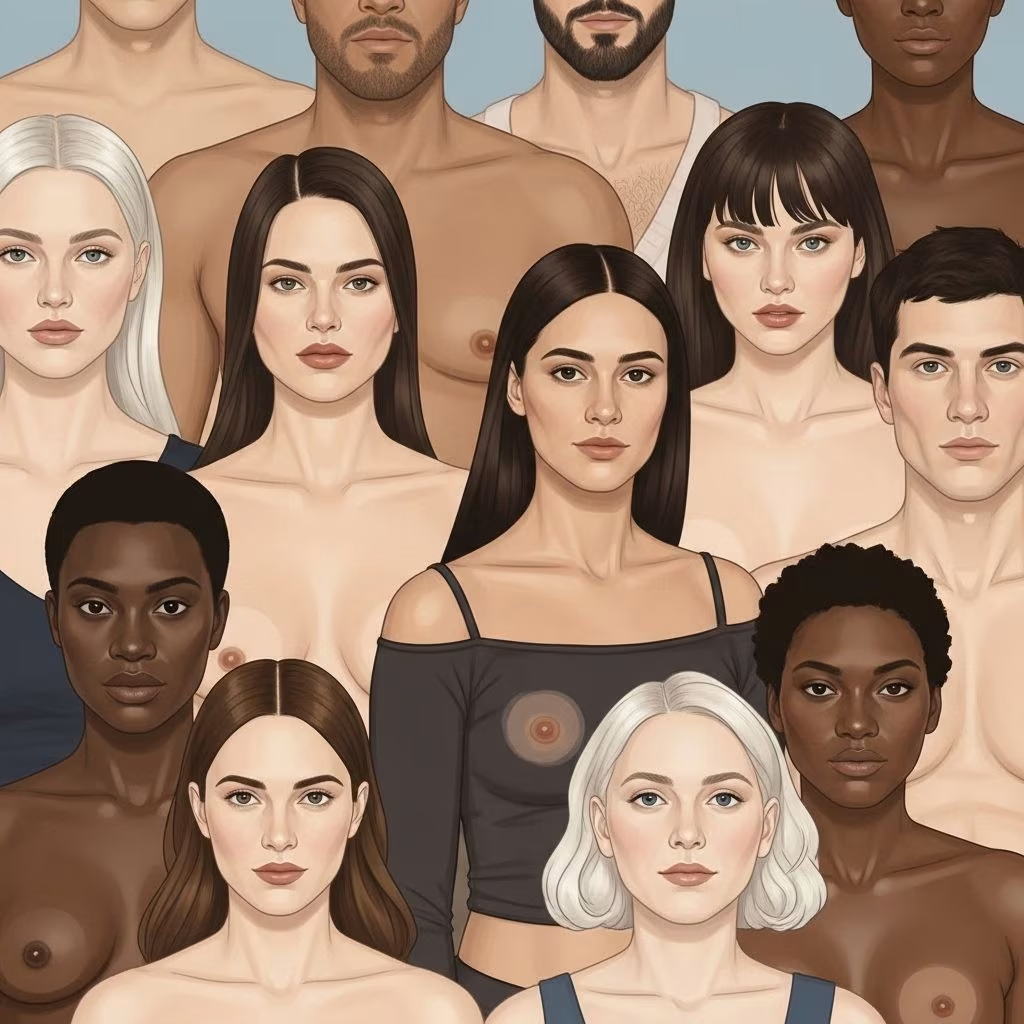
Free the Nipple: Beauty, Inclusivity & The Mammary Movement
The Free the Nipple campaign has become a potent symbol in contemporary feminism, highlighting the ways in which bodies—especially female bodies—are policed, censored, and commodified due to narrow definitions of beauty and gender. Far beyond a simple protest for the right to go topless, it seeks deeper recognition of the inequality controlling whose bodies are deemed acceptable or beautiful, and whose nudity is criminalized or sexualized.
Origins and Cultural Context
Rooted in a history of feminist resistance, Free the Nipple emerged as both a viral social media campaign and an in-person protest. It gained public traction in 2014 following Lina Esco’s documentary, which depicted activists in New York challenging legal and cultural prohibitions on female toplessness. The campaign’s viral hashtag spread rapidly, sparking events and online discussions about bodily autonomy, censorship, and sexualization in mainstream media.
- The movement’s immediate goal is to end the censorship and criminalization of female nipples, which persists even as male nipples remain publicly visible and noncontroversial.
- It raises broader questions about why women’s bodies are so closely governed, while violence and male nudity are rarely censored in the same way.
- “Free the Nipple” is informed by decades of feminist activism that positioned bralessness and body visibility as acts of liberation, resisting patriarchal and capitalist pressures to control women’s appearance and sexuality.
The Relationship to Beauty Standards
The campaign does not exist outside historical patterns of beauty, consumption, and exclusion. Beauty standards are governed by race, class, gender, and able-bodiedness, shaping not just whose bodies are censored but whose activism is deemed legitimate and visible.
- Historically, beauty ideals have been narrow and exclusionary, centering whiteness, thinness, youth, and able-bodiness, while pathologizing or sexualizing other identities.
- Women’s bodies have been treated as objects for consumption: from overbust corsets and bandeau bras to modern lingerie and the Victoria’s Secret fashion shows, bodily beauty is designed for the gaze of others—often cisgender, heterosexual men.
- The campaign’s visibility on social media and in major protests often amplifies a particular image—thin, young, white, cisgender women—reinforcing which bodies are “acceptable” or “liberated.”
Intersectionality and Exclusion
While “Free the Nipple” appears to advocate for the bodily autonomy of all women, critiques from within and outside the movement highlight an uncomfortable reality: not all women benefit equally from the visibility promised by topless protest. The campaign’s mainstream prominence frequently centers whiteness and conventionally attractive bodies, sidelining women of color, trans women, fat women, disabled women, and those outside Eurocentric beauty ideals.
- Intersectionality refers to the overlapping systems of discrimination faced by individuals based on race, gender, class, sexuality, and ability.
- Media coverage and viral images have tended to exclude those whose bodies are considered “undesirable” or “deviant,” limiting the movement’s claim to represent all women.
- Legal and cultural risks of toplessness disproportionately impact women of color and transgender individuals, who are more likely to face harassment, violence, or criminal charges.
- Empowerment is not evenly distributed; the perceived “freedom” of topless protest can be inaccessible or unsafe for marginalized groups.
Media, Censorship, and Visibility
Social media platforms have played a key role in popularizing “Free the Nipple,” but have also been sites of ongoing censorship. Algorithms and policies arbitrarily block or remove images featuring female nipples—even when they are presented in non-sexual contexts—while male nipples remain untouched. This policing shapes which bodies the public sees, further entrenching narrow definitions of acceptability.
- Censorship on Instagram and Facebook drives activists to challenge why the female nipple is considered “indecent,” particularly when contrasted with how violence is portrayed online.
- Viral campaigns and hashtags (#FreeTheNipple) have forced some platforms to reassess their content guidelines, but progress remains inconsistent.
- Celebrity involvement, from Miley Cyrus to Rihanna’s public toplessness, has raised visibility, but often reflects an idealized image removed from grassroots activism or intersectional challenges.
Historical Roots: The Bra & Bodily Control
To understand “Free the Nipple,” one must consider the history of the bra and its relationship to body shaping, control, and commercial exploitation. The bra emerged in the early 20th century, evolving from the restrictive overbust corsets of the Victorian era to bandeau styles and padded bras catering to changing beauty trends. Each shift reflected larger patterns of controlling, defining, and commodifying women’s bodies for fashion and capitalist profit.
- The invention and mass production of bras mirrored trends: from flattening silhouettes in the 1920s to the Victoria’s Secret “Angels” look in the 21st century.
- Throughout history, bras have responded to—and reinforced—what society deems beautiful, often through exclusion and restriction.
- Modern movements towards bralessness, like Free the Nipple, draw from the feminist rejections of restrictive garments in the 1960s and 1970s, but remain entangled in debates over body image and marketization.
Dilemmas of Empowerment vs. Commercialization
The intersection of feminism and capitalism brings both opportunity and risk: visible campaigns raise awareness, but can also be co-opted for profit or diluted to suit mainstream sensibilities. Free the Nipple products—like braless-friendly apparel or “nipple covers”—are increasingly marketed as tools for empowerment, yet echo familiar patterns of selling liberation while upholding beauty norms.
- Brands tout “empowerment” by offering products that claim to support body autonomy, but often only cater to those already deemed beautiful or desirable.
- Celebrity endorsement furthers commercialization, sometimes overshadowing grassroots activism and intersectional analysis.
- Critics urge vigilance in recognizing when movements for equality become vehicles for profit, reinforcing inequalities rather than dismantling them.
Challenges to True Inclusivity
For “Free the Nipple” to succeed as a truly inclusive movement, advocates must actively confront and resist the tendency to center whiteness, cisgender identity, thinness, and able-bodiedness. It requires meaningful engagement with the voices and bodily experiences of those marginalized by beauty standards and patriarchal control.
- Representation matters: campaigns should feature and amplify diverse bodies, faces, stories, and leaders.
- Legal protections and advocacy must prioritize those most vulnerable to criminalization, harassment, or medical pathologization.
- Intersectional feminism is not optional—inclusive campaigns address race, class, sexuality, and ability in every tactic and message.
- Solidarity means challenging not just gendered oppression, but the ways in which feminist activism can exclude or silence the multiply marginalized.
| Group | Visibility in Movement | Legal/Social Risk | Empowerment |
|---|---|---|---|
| White cis women | High | Low | High |
| Women of color | Low | High | Low |
| Trans women | Low | Very High | Variable |
| Fat/disabled women | Low | Moderate | Variable |
| Men (cis) | Not relevant | Low/None | N/A |
Looking Forward: Visions of Liberation
True bodily autonomy and freedom from imposed beauty standards require ongoing critique, revision, and solidarity. “Free the Nipple” remains a vibrant campaign for many, but its future depends on whether it can address its own internal exclusions, resist commercialization, and forge coalitions across lines of difference. Meaningful progress will come through education, advocacy, and the creative use of media not just for virality, but for substantive change.
- Legal reform must guarantee equality and safety for all bodies, regardless of sex, gender, or appearance.
- Media literacy and activism should challenge stereotypes, demand diversity, and expose the mechanisms of censorship and sexualization.
- Intersectional organizing is key: only movements attentive to overlapping oppressions can build more just and liberatory futures.
Frequently Asked Questions (FAQs)
Q: What is the core mission of the Free the Nipple campaign?
A: The movement aims to end the legal and cultural censorship of female nipples, challenge the sexualization of women’s bodies, and promote gender equality in media and public spaces.
Q: Does Free the Nipple only benefit certain women?
A: Critics note the campaign often centers and benefits white, thin, cisgender women, overlooking the risks and visibility barriers faced by marginalized groups.
Q: Why are only female nipples censored on social media?
A: Social media platforms deploy algorithms and guidelines deeming female nipples “indecent” while allowing male nudity, perpetuating double standards.
Q: Are there legal risks to going topless?
A: Laws regarding female toplessness vary widely. Women of color and trans women may face greater risks of harassment, violence, or prosecution.
Q: How can Free the Nipple be made more inclusive?
A: Making the campaign truly inclusive requires intersectional leadership, diverse representation, and direct address of racial, class, and gender disparities in visibility and safety.
Q: How do beauty standards affect the movement?
A: Dominant beauty ideals influence which bodies are accepted and visible in protests and media, often excluding those who are fat, disabled, non-white, or gender non-conforming.
Q: Is there a relationship between capitalism and Free the Nipple?
A: Yes. Commercialization threatens to dilute radical messages, selling liberation to already privileged groups without challenging larger systemic inequality.
References
- https://perkies.com/blogs/the-perkies-blog/the-evolution-of-the-free-the-nip-and-braless-movement
- https://mancunion.com/2022/03/23/free-the-nipple-a-history-of-the-bra/
- https://ir.library.louisville.edu/cgi/viewcontent.cgi?article=1130&context=honors
- https://en.wikipedia.org/wiki/Free_the_nipple
- https://fashinnovation.nyc/free-the-nipple-the-bra-and-its-r-evolution/
- https://www.catalystplanet.com/travel-and-social-action-stories/free-the-nipple-unpacking-inequality-in-the-feminist-movement
- https://www.youtube.com/watch?v=Q0sdINkv7eY
- https://www.orchyd.com/blogs/overflow/free-the-nipple


