


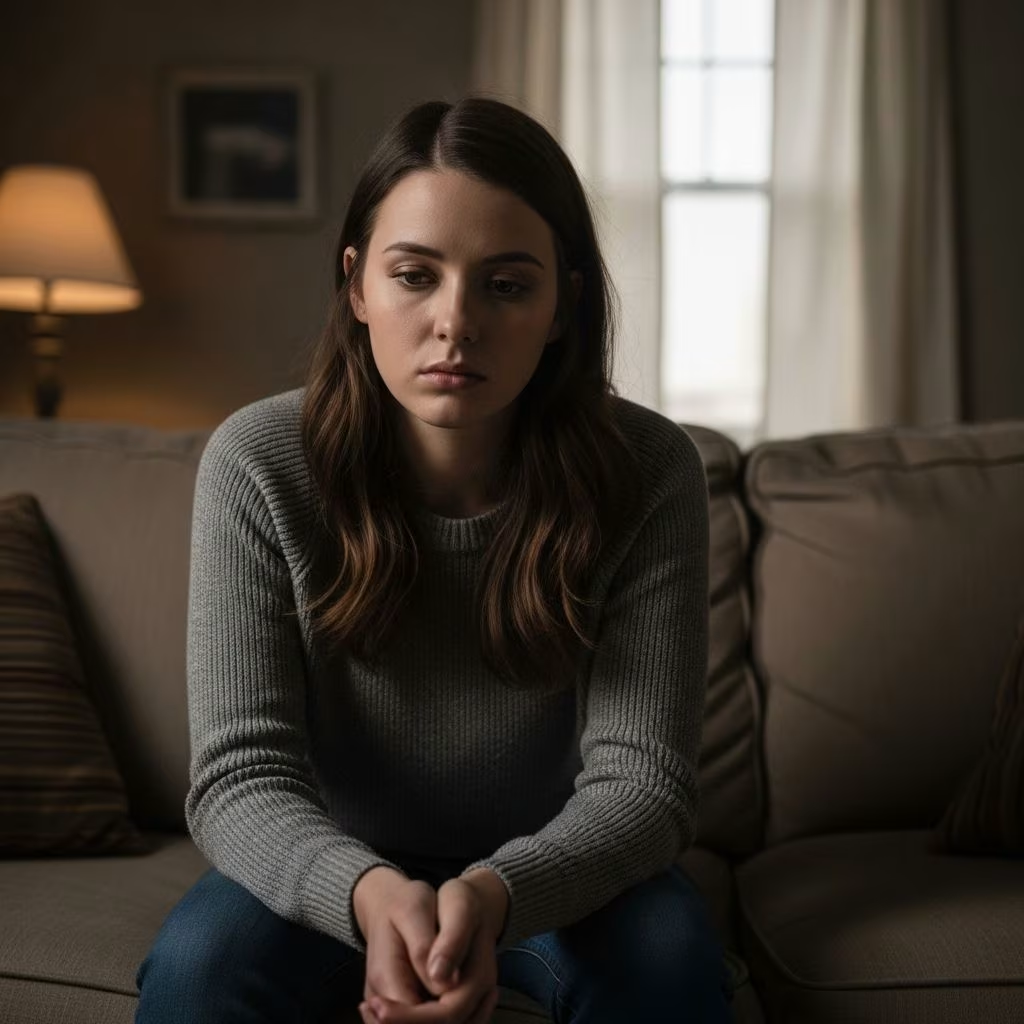
Growing Up in a World of Strong Women
My household was a matriarchy, a world run by women: my mother, my sister, me, and our live-in nanny. You might assume hardship—but let me be clear, my childhood was comfortable. My mother worked tirelessly, sacrificing her own needs so that my sister and I could have a good life. Despite the absence of a male figure, we lacked for nothing, neither emotionally nor materially. Our home was a place of warmth, accomplishment, and resilience.
We cooked, cleaned, excelled academically, and built strong friendships. There was nothing we couldn’t do, and it never once occurred to us that something might be missing. The idea that a “man’s presence” was essential simply didn’t resonate with us. After all, who needs a man when you’re surrounded by superheroes?
The Myth of the Missing Man
I often wonder what it would have been like if my father had been present. Would I have learned different values? Would I feel differently about relationships? I can only theorize, because I have no reference point. Growing up, the men who passed through our lives—coworkers, cousins, neighbors—existed only at the margins of my consciousness. To me, they were not essential, and certainly not central to my sense of security.
My mother found love here and there, but never the “everlasting love” that fairy tales and movies promised. I watched her selflessly put her own desires aside, focusing instead on raising her daughters. Her sacrifices became the gold standard of womanhood for me. Bravery, selflessness, independence—these were the qualities I saw in her and wanted to achieve.
Empathy and the Echoes of a Single Mother’s Pain
When I think about my own romantic needs, I realize how much of my mother’s pain I have absorbed. If she hurt, I hurt. If she was lonely, I was lonely—not because I was neglected, but because we were so intertwined. Her burdens became my burdens.
It’s an odd kind of inheritance. I have never been discouraged from trusting men or pursuing relationships, but I am instinctively cautious, protective of both myself and, by extension, my mother. I mirror her emotions far more than I ever realized. Her unspoken lessons about love—its risks, its costs, its temporary comforts—have shaped my expectations.
Independence and the Fear of Dependency
Growing up in a single-parent household instilled in me a fierce sense of independence. I was taught to fend for myself, to rely on no one. That kind of self-sufficiency is empowering, but it also comes at a price: the subliminal message that depending on another person—especially a romantic partner—is a form of weakness.
Strangely, I’ve come to mistake being alone for being truly independent. The two are not the same. One can be in a loving relationship and still maintain autonomy, still be self-reliant. But in my own life, these concepts have never coexisted. I am either fiercely on my own or lost in longing—but never both.
Imitation and the Weight of Example
I love my mother so much that I unconsciously seek to imitate her example, even when it’s detrimental to my own happiness. She never found lasting love, so why should I expect to? She is the standard of independence and resilience, so my own independence becomes a measure of my worth. If I let myself become vulnerable, if I let myself depend on a partner, I feel I am betraying the standard she set.
Logically, I know she wants me to be happy and encourages me to find love. But emotionally, the pull to follow her path—of self-sacrifice and solitude—is incredibly strong. I find myself resisting romance not out of fear of men, but out of loyalty to her.
The Fear That It’s Too Late
The older I get, the more I worry that my patterns are set in stone. I am so used to being on my own that I wonder if I could ever truly let someone in. Would I even recognize lasting love if it found me? I worry that my self-sufficiency has become a wall, protecting me from pain but also from true intimacy.
I see friends in relationships, sometimes struggling, sometimes thriving. I envy their ability to share their lives, their burdens, their joys. But when it comes to my own heart, I hesitate. The habits of a lifetime—of self-reliance, of guarding my emotions—are hard to break.
Breaking the Cycle
Recognizing the impact my upbringing has had on my romantic life is the first step. I know now that independence and love are not mutually exclusive. It’s possible to be both strong and vulnerable, both self-sufficient and interdependent.
But knowledge isn’t the same as transformation. Changing deeply ingrained patterns requires more than awareness—it requires action. It means challenging the assumption that love is a liability, and allowing myself to hope for something my mother never had.
FAQs
-
Can children of single mothers have healthy relationships?
Yes, children raised by single mothers can absolutely have healthy, fulfilling relationships. While upbringing shapes our views, it does not predetermine our future. Self-awareness and a willingness to work on oneself are key to breaking cycles and building strong connections.
-
Is independence always healthy in relationships?
Independence is a sign of strength and self-sufficiency, but relationships thrive on interdependence. Finding a balance between maintaining your own identity and being vulnerable with your partner is essential for deep, lasting intimacy.
-
How can someone raised by a single mom build trust in romantic partners?
Building trust takes time, open communication, and self-reflection. Recognizing how your upbringing affects your expectations and fears allows you to make conscious choices in your relationships rather than repeating old patterns.
-
Is it common for children of single moms to fear commitment?
Some children of single mothers experience anxiety about commitment, often due to witnessing their parent’s sacrifices or lack of a stable romantic relationship. However, this is not a universal experience—many individuals from single-parent homes form healthy, committed partnerships.
-
How can society better support children from single-parent families?
By rejecting stereotypes, offering emotional support, and fostering environments where all family structures are valued, society can help break the stigma and provide diverse models of love and partnership for the next generation.
Key Takeaways
Being raised by a single mom can profoundly shape one’s sense of independence, self-worth, and attitudes toward relationships. For some, this upbringing fosters resilience and strength. For others, it may lead to an unconscious fear of dependency and vulnerability in romantic partnerships. Recognizing the influence of one’s upbringing is the first step toward building healthier, more fulfilling relationships.
Ultimately, everyone’s experience is unique. While the shadow of a single mother’s sacrifice can be long, it does not have to define your emotional future. Awareness, self-compassion, and the courage to seek new patterns can open the door to both independence and love.
References
- https://www.youtube.com/watch?v=El3_lEuu6v4
- https://www.elitedaily.com/dating/reasons-to-date-a-single-mom/1035501
- https://www.elitedaily.com/dating/raised-single-mom-anti-relationship/1550888
- https://www.youtube.com/watch?v=JRjMnH-4cYo
- https://www.skeptic.com/article/how-american-schools-of-education-burked-education-in-americas-schools/


