


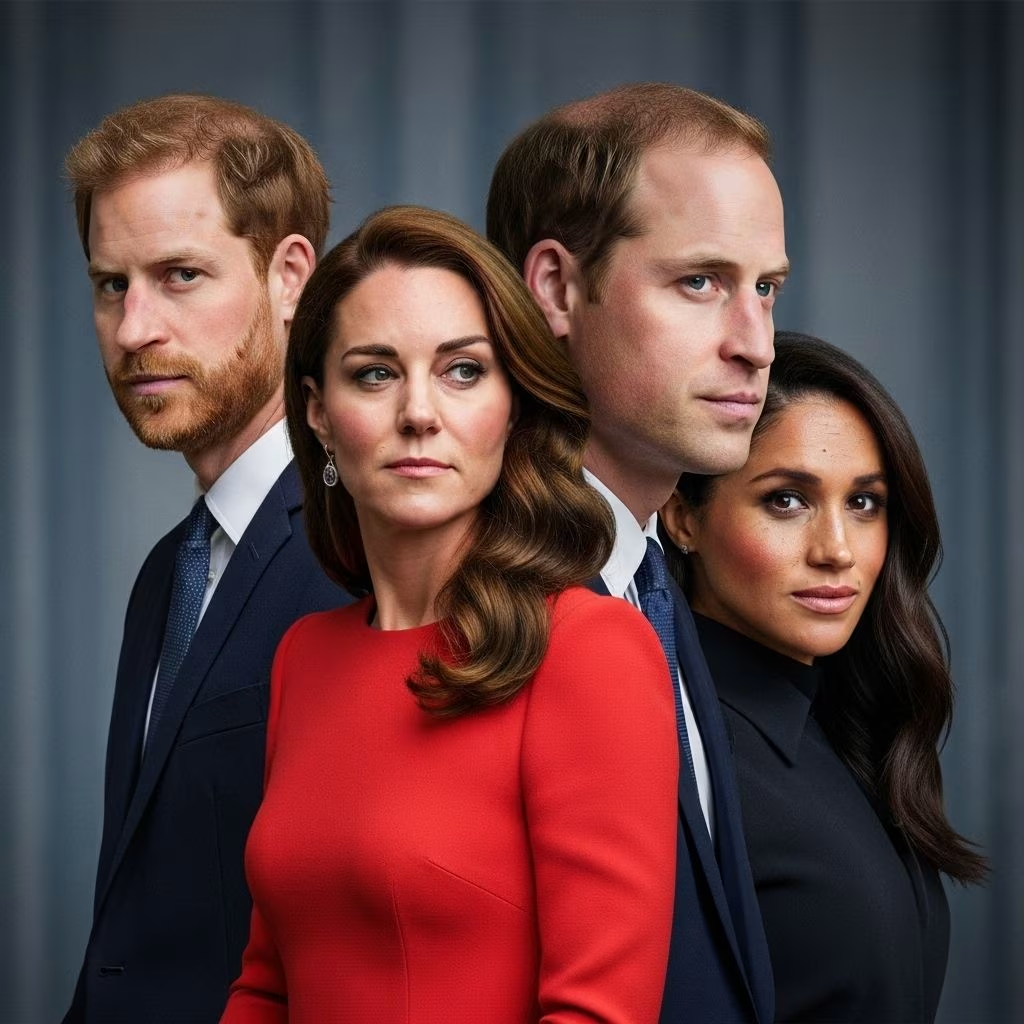
Inside the Royal Relationships: Harry, Meghan, William & Kate
Few subjects captivate the world as much as the relationships within the British royal family. From fairytale weddings to whispered feuds, the dynamics between Prince Harry and Meghan Markle, and Prince William and Kate Middleton, have constantly drawn the public gaze. This article delves into the journey of these four royals: recounting milestones, analyzing the moments of unity and division, and illuminating the truth behind rift rumors that have defined the family’s recent history.
The Beginnings: Two Fairy-Tale Love Stories
The romance between William and Kate started years before the world became familiar with Harry and Meghan’s whirlwind courtship. William and Kate met during their university years, growing together before marrying in a lavish 2011 ceremony. Meanwhile, Harry met Meghan Markle, an American actress, on a blind date in July 2016. Their relationship moved quickly: a Botswana trip sealed their bond, an engagement was announced in November 2017, and a globally celebrated wedding followed in May 2018.
Both couples were held up as modern royal love stories—but their relationships with each other, and with the institution of monarchy itself, would soon become further complicated.
First Signs of Unity: Public Appearances as a “Fab Four”
Before any hint of discord, the four royals appeared united. Memorable joint events, such as the inaugural Royal Foundation Forum in February 2018, drew headlines featuring the “Fab Four,” representing a modern, collaborative royal family.
- Media celebrated their joint charitable causes.
- The couples shared platforms on mental health and youth empowerment.
- William and Kate expressed joy for Harry and Meghan’s engagement, publicly endorsing their new roles.
This brief period of unity painted a hopeful picture of the monarchy’s future, signifying that Harry and Meghan’s arrival might energize royal traditions.
Milestones: Engagements, Weddings, and Major Life Events
The royal brothers and their wives marked key milestones, often in view of the world:
| Milestone | William & Kate | Harry & Meghan |
|---|---|---|
| First public event as couples | Various joint appearances, often at charity events | Polo event, Ascot, May 2017 |
| Engagement | November 2010 | November 2017 |
| Wedding | April 2011 | May 2018 |
| Children | Three (George, Charlotte, Louis) | Two (Archie, Lilibet) |
| First joint Royal Foundation event | With Harry (pre-Meghan) | With William & Kate, February 2018 |
The Emerging Rift: Early Signs and Media Speculation
Despite the early image of unity, rumors of tension began circulating after Harry and Meghan’s marriage. Media reports speculated about disagreements over royal duties, personalities, and protocol. By late 2018, the couples were rarely seen together, and royal watchers noted changes:
- Harry and Meghan announced plans to move out of Kensington Palace, seeking their own home at Frogmore Cottage.
- Speculation arose that Meghan and Kate had clashed during wedding preparations—though details were inconsistent, with later accounts indicating misunderstandings over bridesmaids’ dresses.
- Royal chroniclers reported Harry feeling William didn’t “roll out the red carpet” for Meghan, resulting in a fallout only resolved after Prince Charles intervened to encourage goodwill.
Public Statements and Private Tensions
Rumors became more credible as Harry directly acknowledged the speculation. In his 2019 interview with Tom Bradby, Harry stated, “We are certainly on different paths.” The significance of his comments became clearer with time:
- Harry’s memoir “Spare” details longstanding issues with William, describing both emotional distance and a 2019 altercation in which Harry alleges William physically attacked him after criticizing Meghan.
- William and Kate, by contrast, seldom addressed the rift publicly, maintaining royal tradition of discretion.
- Harry and Meghan’s openness marked a turning point in royal communications, shifting some public sympathy their way.
Major Turning Points: The Sussexes’ Departure
The biggest seismic shift came in January 2020, when Harry and Meghan announced their decision to step back from royal duties and relocate to North America. Their statement surprised even senior royals, reportedly leaving Buckingham Palace “disappointed.” Meghan and Harry’s decision to redefine their roles emphasized their wish to support the Queen and charitable causes while pursuing financial independence.
Harry later clarified in the Oprah Winfrey interview that he did not “blindside” his grandmother, denying some media accounts. The move to North America marked a decisive split—not only in the brothers’ working lives but also in their personal relationships.
Family Dynamics in the Spotlight
The aftermath of this departure revealed how strained relationships had become.
- Harry and Meghan’s statements about struggles with mental health and feeling unsupported sparked international debate.
- Disclosures in documentaries and interviews highlighted a lack of “unity” the public had once celebrated.
- Kate and William continued to serve as steady royal figures, rarely wading into the fray.
Recurring Issues: Personality Clashes, Pressures, and Public Perception
Several recurring issues fueled the rift, as described by multiple accounts over the years:
- Media Scrutiny: Meghan faced intense tabloid attention, raising questions about racism, sexism, and protection. Harry publicly condemned press harassment, voicing concern for Meghan’s safety.
- Differences in Royal Approaches: William and Kate’s adherence to tradition contrasted with Harry and Meghan’s desire for independence and activism.
- Communication Breakdowns: Misunderstandings during royal events—such as the wedding, holidays, and protocols—exacerbated tensions.
- Family Support and Intervention: Prince Charles, and at times Queen Elizabeth II, were called on to mediate disputes.
In Their Own Words: Accounts from Memoir and Documentaries
Harry’s memoir “Spare” and the couple’s Netflix docuseries provide more personal views of the rift:
- Harry describes his relationship with William as “deteriorating for years,” intensified by Meghan’s arrival.
- Details of confrontations, including the infamous 2019 altercation, offer rare insight into private dynamics.
- Meghan’s own accounts highlight emotional struggles, emphasizing the importance of mental health advocacy.
- William and Kate’s silence on specifics reinforce their commitment to royal discretion.
Public and Media Responses: Sympathy and Division
The world’s response to these revelations has been deeply divided. Some sympathize with Harry and Meghan’s assertions of isolation and lack of support, especially in light of Meghan’s mental health challenges. Others uphold William and Kate’s approach, valuing duty and discretion. The couples’ stories have become a touchstone for broader discussions about modern royal life, tradition versus change, and the power of the press.
Current Status: Are the Couples on Better Terms?
There is little public evidence of reconciliation. The Sussexes remain in California, focused on media ventures and philanthropy, while the Waleses continue as prominent senior royals.
Occasional joint appearances—funerals, coronations, or major family events—show outward civility but not restored intimacy. Most updates come through official statements or carefully staged photo ops, rather than genuine displays of togetherness.
- The brothers’ communications appear limited and formal.
- Kate and Meghan have not been seen engaging privately since the family split.
- Media continues to monitor all interactions for signs of thaw or escalation.
Lessons from the Royal Rift: The Future of the Monarchy
The rift has catalyzed debates about the monarchy’s relevance, its treatment of outsiders, and the balance between privacy and public duty. Several lessons emerge:
- Modernization Is Challenging: Integrating new voices, especially from non-traditional backgrounds, can be fraught within institutional structures.
- Media Can Both Unite and Divide: Coverage amplifies tensions but also gives voice to issues, such as mental health, previously undiscussed.
- Family Dynamics Are Universal: Behind public personas, the royals deal with familiar challenges faced by many families—communication, loyalty, and evolving roles.
Frequently Asked Questions (FAQs)
Q: Did Meghan Markle and Kate Middleton ever get along?
A: Reports suggest their relationship was polite but strained, affected by misunderstandings over wedding details and broader family tensions.
Q: What caused the rift between Prince Harry and Prince William?
A: Multiple factors played a role, including differences in royal approach, personal disagreements, and Harry and Meghan’s decision to step back from senior royal duties.
Q: Have the royal couples reconciled?
A: As of recent years, there is no public evidence of reconciliation beyond formal appearances at major royal events.
Q: Why did Harry and Meghan leave the UK?
A: The decision was driven by a wish for privacy, independence, and relief from intense media and institutional pressures.
Q: How do William and Kate manage royal duties compared to Harry and Meghan?
A: William and Kate maintain traditional roles, while Harry and Meghan focus on independent philanthropy and media projects from the US.
Q: What impact has this rift had on the monarchy?
A: The rift highlights the challenges of modernizing royal traditions, the importance of mental health awareness, and the impact of family dynamics in a public institution.
References
- https://www.harpersbazaar.com/celebrity/latest/a43480804/prince-harry-meghan-markle-relationship-timeline/
- https://www.businessinsider.com/timeline-prince-harry-meghan-markle-rift-prince-william-kate-middleton-2021-1
- https://www.cosmopolitan.com/entertainment/celebs/a64742690/prince-harry-king-charles-feud-timeline/


