


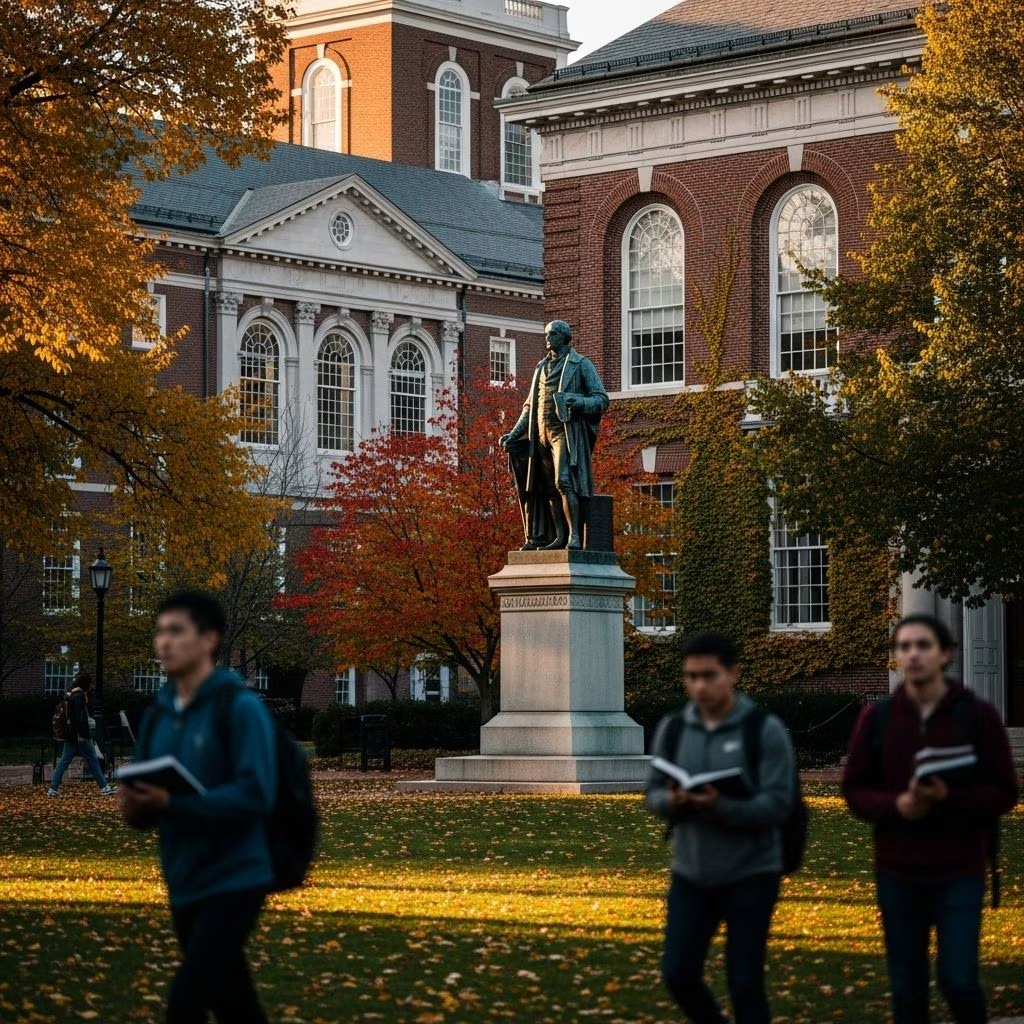
Harvard University’s Ban on Teacher-Student Relationships
In 2015, Harvard University implemented a sweeping policy barring romantic or sexual relationships between faculty and undergraduate students. This decision marked a significant moment in higher education, as Harvard joined a small but growing number of universities willing to enact a full ban rather than rely on less explicit discouragement policies. The ban is rooted in concerns over the inherent power imbalance between instructors and students, issues of consent, and the need to strengthen institutional responses to sexual harassment.
Background and Context
The policy emerged after Harvard’s Faculty of Arts and Sciences Committee on Sexual Misconduct Policy and Procedures, led by Professor Alison Johnson, undertook a review of university standards in response to federal investigations into how Harvard and other institutions were handling sexual abuse and harassment complaints. Previously, Harvard had a narrower policy, barring relationships between professors and students only when the professor had direct supervisory or instructional authority over the student. However, the revised policy extended the prohibition to all undergraduate-faculty relations, regardless of classroom connection.
- No faculty member in the Faculty of Arts and Sciences may request, accept, or initiate sexual or romantic relationships with any undergraduate at Harvard College.
- Faculty, staff, undergraduate, and graduate students are additionally barred from engaging in relationships with any graduate student subject to their supervision.
- The ban covers teaching staff, including graduate student instructors, lab workers, and dissertation advisors, prohibiting relationships with those they grade or evaluate.
Comparative Landscape: Policies at Other Institutions
While many universities discourage teacher-student relationships due to ethical and consent issues, most do not enact total bans. Harvard’s new rule mirrors recent moves by institutions such as Yale University and the University of Connecticut, which have similarly prohibited these relationships. Columbia University and other schools have come under scrutiny in recent years due to concerns of mishandling sexual harassment cases, prompting policy reforms.
| Institution | Policy on Teacher-Student Relationships |
|---|---|
| Harvard University | Comprehensive ban for faculty and undergraduates; extends to graduate supervisors |
| Yale University | Ban on undergraduate-faculty romantic/sexual relationships |
| University of Connecticut | Ban similar to Harvard’s; covers faculty and instructional staff |
| Columbia University | Discourages but does not fully ban teacher-student relationships |
Core Rationale Behind the Ban
Harvard’s policy is motivated by several interrelated concerns:
- Power Imbalance: Faculty possess considerable authority over students’ academic progress, making genuine consent in possible relationships complex.
- Sexual Harassment Prevention: The American Association of University Professors and legal experts emphasize how relationships of unequal status leave institutions exposed to harassment allegations.
- Federal Mandates: The U.S. Department of Education highlighted deficiencies in Harvard’s prior sexual misconduct policies, including compliance with Title IX standards.
- Academic Integrity: Relationships may impact grading, classroom dynamics, and perceptions of fairness among students.
Faculty and Student Perspectives
The policy revision sparked varied reactions among students and faculty:
- Support for the Ban: Many students and faculty members, including history professor Alison Johnson, supported the policy as a means of protecting students and upholding professional standards. Johnson noted that the rule is clear: “If you are supervising, evaluating or grading someone, you should not have a sexual relationship with that person.”
- Comparative Views: Some students at other institutions, such as BYU-Hawaii, found such bans irrelevant, suggesting the campus culture already discourages these relationships, especially as most faculty are married.
- Calls for Consistency: Others believe consistent policies across institutions set clear expectations and reduce ambiguity surrounding instructor-student interactions.
Key Features of Harvard’s Sexual Misconduct Policy
- Explicit Prohibition: The language of the policy unambiguously forbids faculty from seeking or accepting romantic or sexual favors from undergraduate students. The policy became more detailed and comprehensive after revision, explicitly stating faculty expectations and setting a clear institutional standard.
- Graduate Student Supervisors: The ban extends beyond faculty to include graduate instructors, teaching assistants, and lab supervisors. Any graduate student teaching or grading an undergraduate is similarly prohibited from engaging in a romantic or sexual relationship with students under their supervision.
- Scope and Enforcement: While the policy establishes clear expectations, it reportedly does not define specific punishments, leaving flexibility for case-by-case consideration.
Wider Implications for Academic Communities
The Harvard ban on teacher-student relationships may serve as a template for other universities. As growing awareness of sexual harassment issues places increased scrutiny on academic environments, the move reflects a desire to create safer, fairer campuses.
- Ethical Standards: Upholds a professional boundary; fosters trust in grading and mentoring relationships.
- Legal Compliance: Meets federal expectations under Title IX, protecting universities from potential liability due to claims of harassment or discrimination.
- Institutional Accountability: Promotes responsive and responsible action from administration, preventing conflicts of interest and appearance of favoritism.
- Cultural Shift: Signals to other higher education institutions the importance of formalizing protections against misconduct.
Common Arguments For and Against Such Bans
- For the Ban:
- Protects student wellbeing from potential exploitation.
- Prevents conflicts of interest and maintains academic fairness.
- Aligns with contemporary standards on workplace romances involving power differentials.
- Against the Ban:
- Concerns over individual autonomy and freedom of association.
- Skepticism regarding the prevalence of such relationships or effectiveness of formal bans.
- Potential for excessive regulation that fails to recognize cases where parties are of equal status.
Policy Details: What Is (and Is Not) Allowed
| Relationship Type | Is It Allowed Under Harvard’s Ban? |
|---|---|
| Faculty – Undergraduate Student | No; explicitly forbidden, regardless of classroom or supervisory connection. |
| Faculty – Graduate Student Supervised by Faculty | No; forbidden while supervisory role continues. |
| Graduate Student (TA) – Undergraduate Student Taught/Evaluated | No; forbidden during instructional or evaluative period. |
| Faculty – Graduate Student (no supervisory connection) | Not prohibited when there is no supervisory, grading, or evaluative role. |
Frequently Asked Questions (FAQs)
Q: Why did Harvard implement a total ban on undergraduate-faculty romantic relationships?
A: The ban addresses concerns about power imbalance, difficult consent dynamics, and institutional responsibility to prevent sexual harassment and maintain academic integrity.
Q: Does Harvard allow any exceptions to the faculty-undergraduate relationship ban?
A: No; the policy is explicit and encompasses all faculty-undergraduate relationships, irrespective of classroom or supervisory roles. However, it does not outline specific penalties and allows for case-by-case review.
Q: Are graduate student instructors also affected by the ban?
A: Yes; any graduate teaching staff, lab workers, or dissertation advisors who supervise, grade, or evaluate students are prohibited from romantic or sexual relationships with those students.
Q: How does Harvard’s policy compare with other universities?
A: Harvard’s total ban is stricter than most, though some other schools like Yale and the University of Connecticut have enacted similar rules. Many institutions discourage—rather than forbid—teacher-student relationships.
Q: Is this policy likely to spread to other higher education institutions?
A: The policy reflects a broader trend toward more explicit regulation of teacher-student relationships in academia, especially in response to federal pressure and cultural shifts around harassment and consent. Other schools may adopt similar standards over time.
Impacts and Future Directions
Harvard’s new policy carries significant ramifications for faculty, students, and the broader academic environment. It sets a clear precedent for addressing the challenges posed by relationships of unequal power, mandates transparency, and encourages other institutions to follow suit. As awareness of sexual misconduct issues continues to rise, especially under federal oversight and changing cultural norms, it is likely that more universities will adopt comprehensive bans or strengthen existing guidelines.
The effectiveness of such policies depends on transparent enforcement, education about boundaries, and ongoing dialogue within academic communities. While the policy addresses immediate risks associated with teacher-student relationships, its longer-term influence may be to foster a campus climate of trust, equity, and professionalism.
- Academic boundaries are essential for maintaining integrity, fairness, and student safety.
- Harvard’s clear, unambiguous guidelines provide a model for other institutions grappling with similar challenges.
References
- https://time.com/3697799/harvard-sexual-relationships-students-professors/
- https://kealakai.byuh.edu/harvard-officially-bans-teacher-student-relationships
- https://patch.com/massachusetts/jamaicaplain/harvard-bans-professors-having-sexual-relations-students
- https://discriminationandsexualharassmentlawyers.com/harvard-university-bans-relationships-between-professors-and-students-in-effort-to-reduce-reduce-sexual-harassment-complaints/
- https://handbook.college.harvard.edu/sites/g/files/omnuum5551/files/2025-08/Harvard%20College%20Student%20Handbook%202025-2026_0.pdf


