


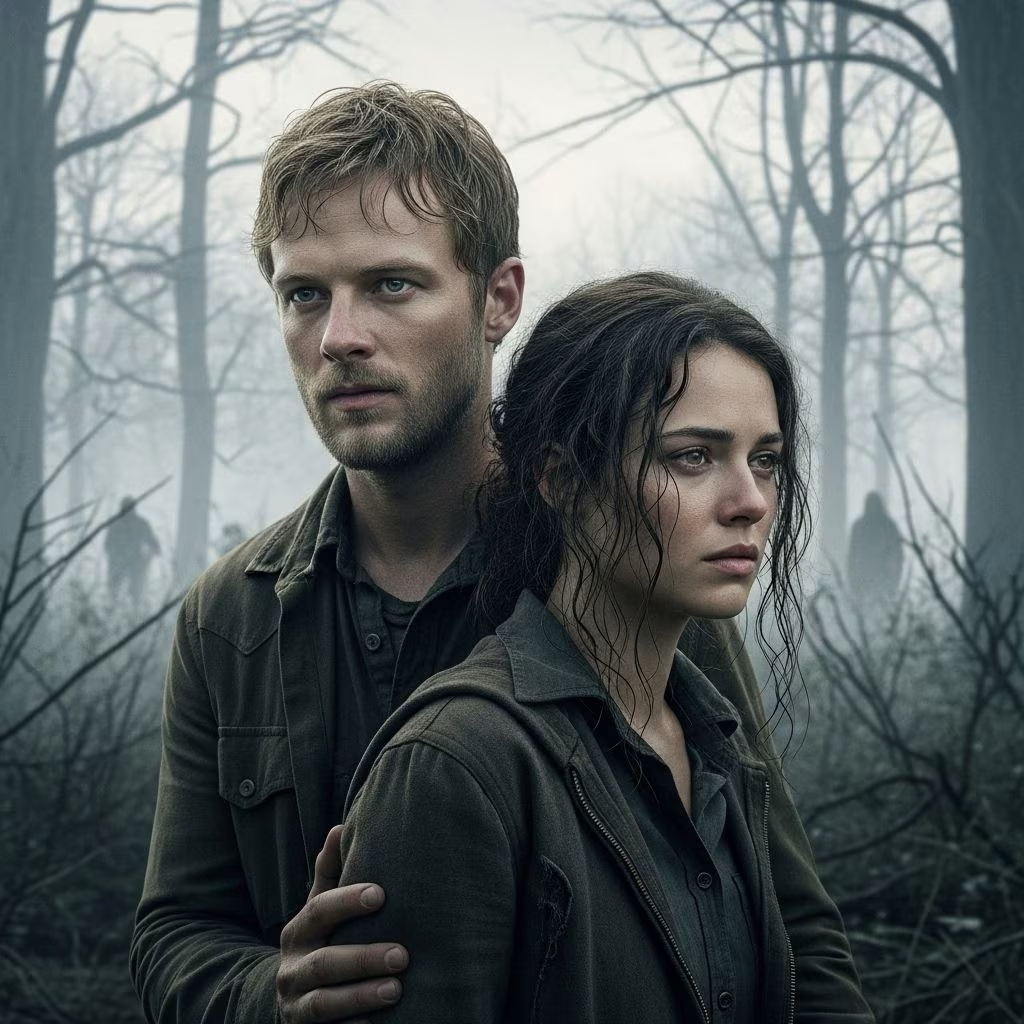
Introduction: A New Romance Amid Apocalypse
Few character pairings in The Walking Dead raised as many questions and generated as much intrigue as the relationship between Henry and Lydia. Their evolving bond, forged within prison walls and deepened by mutual trauma, became a narrative centerpiece during the Whisperer arc of the AMC series. This article delves into how their TV romance is inspired by the comics, examines its deviations, and traces its ripple effect on the wider story world.
From Page to Screen: Origins of Lydia’s Story
In Robert Kirkman’s comic series, Lydia is introduced as a crucial bridge between the survivors and the Whisperers—a group notorious for their macabre tactics in the post-apocalyptic world. In the comics, she develops a significant, albeit unconventional, relationship with Carl Grimes. However, the AMC show made sweeping changes that would see her paired with a different character altogether: Henry—King Ezekiel and Carol’s adopted son, created solely for the series adaptation.
- Carl and Lydia (Comics): Carl is locked up at Hilltop after a violent altercation, ending up in a cell across from Lydia. Their time imprisoned together allows them to bond and form a complicated romantic connection, marked by moments of vulnerability and adolescent curiosity. This relationship continues after Lydia joins the survivor community.
- Henry and Lydia (TV): Henry is not present in the comics. His role in Lydia’s story is constructed by transferring Carl’s comic plotline to Henry—effectively making him a surrogate for Carl’s character arc during the Whisperer War.
How Henry Inherited Carl’s Story
With Carl Grimes killed off in Season 8 (a major divergence from the comics), the TV show needed a new point-of-view character to carry Lydia’s narrative journey. Enter Henry—a teenage apprentice blacksmith at Hilltop. This creative pivot allowed the show to retain much of the original story’s emotional resonance while exploring new dynamics unique to Henry’s character and his relationships.
- Comic Parallel: Carl’s growing relationship with Lydia is central to his coming-of-age arc and the larger community–Whisperer conflict.
- Adapting to TV: Henry’s arc mirrors comic Carl’s: he is locked up at Hilltop, befriends the mysterious Lydia, and becomes instrumental in shaping her choices and allegiances. The pair’s romance is depicted through shared moments, confessions, and joint hardships.
- Noteworthy Differences: Unlike Carl, Henry is shown to be a bit less worldly and street-smart—his naiveté affects the direction and consequences of the relationship.
The Dynamics of Henry & Lydia’s Connection
The interaction between Henry and Lydia in the TV series is characterized by intense vulnerability and adolescent confusion, echoing but never perfectly mirroring their comic counterparts. Their earliest real conversations happen in Hilltop’s jail cells, with both characters searching for understanding, acceptance, and survival in the hostile new world.
- Initial Suspicion: Lydia, fiercely loyal (and fearful) of her mother Alpha, is cautious around Henry. Their first exchanges are tentative, tinged with threats and odd moments, such as Lydia threatening violence or the infamous ‘worm-eating’ scene—both showcasing the odd intimacy of the apocalypse.
- Developing Trust: Despite her rough exterior, Lydia finds Henry’s honesty and empathy disarming. Henry, in turn, is compelled by Lydia’s pain and the abuse she suffered within the Whisperers, leading him to share personal stories and eventually, unintentionally, vital information about the Hilltop’s location.
- Romance and Risk: Their relationship quickly transitions from platonic to distinctly romantic undertones. However, it’s always accompanied by uncertainty: Is Lydia manipulating Henry for her mother, or genuinely seeking safety in the community?
Comic Scenes and TV Adaptation: What Changed?
While Henry and Lydia’s story is directly inspired by Carl and Lydia in the comics, AMC’s adaptation skips, alters, or sanitizes some of the more explicit or controversial moments.
| Comic Book Event | TV Show Adaptation |
|---|---|
| Carl and Lydia bond in prison, sharing traumatic stories and physical intimacy, including a scene involving Carl’s eye socket. | Henry and Lydia bond in Hilltop’s prison cells, mostly through dialogue and awkward, but innocent, adolescent moments (e.g., sharing worms as food). The show omits graphic comic moments for a broader TV audience. |
| After Lydia is handed back to Alpha, Carl pursues the Whisperers to retrieve her. | Henry risks his safety by following Lydia after she is returned to Alpha, paralleling the comic’s rescue mission. |
| Lydia chooses to side with the survivors after a violent confrontation between the communities and Whisperers—her loyalty ultimately shifts to her new friends. | The TV show shows Lydia struggling more with trust and her allegiance, casting doubt on her motivations but eventually depicting her as a victim manipulated by her mother, Alpha. |
The Whisperer War: Stakes and Consequences
Henry and Lydia’s relationship serves as a catalyst for the conflict between the survivors and the Whisperers. Trust, betrayal, and a search for identity are at the core of this drama, creating personal stakes in what is otherwise a battle for group survival.
- Henry’s Impact: Driven by a need to protect Lydia, Henry often acts impulsively, inadvertently endangering himself and others (notably when he leaks sensitive information). This impulsiveness directly leads to pivotal events in the Whisperer War arc.
- Lydia’s Role: Lydia is torn between two worlds: her mother’s brutal regime and the hope offered by her relationship with Henry. Her wavering trust and eventual defection from the Whisperers have vast ramifications for the survivor group.
- Romance as Motivation: Personal feelings—considered a luxury in the apocalypse—become the very force that influences leadership decisions, confrontations, and the broader war between rival communities.
Was Their Relationship Just Young Love?
Some fans—and even characters within the show—questioned whether Henry and Lydia’s relationship was truly meaningful or simply naive adolescent infatuation. The risks taken in the name of love have consequences, and the duo’s separation (and Henry’s tragic fate) left viewers asking “what if?”
- Wasted Potential? With Henry’s death during the pike massacre, the show abruptly cut off a storyline many felt was rich with potential. Lydia, now isolated, struggled for acceptance and purpose amid ongoing suspicion. Their story might have provided a rare point of hope and growth, especially as so many other relationships in the show were falling apart.
- Contrast with Comic: In the comics, Carl and Lydia’s continued relationship offers a stabilizing force and exemplifies the possibility of redemption and belonging for former enemies. The series’ choice to eliminate Henry led to a darker, more cynical narrative arc for Lydia and highlighted the brutality of the world they live in.
Character Development Through Romance
The entwined fates of Henry and Lydia allowed for growth in both characters, even within the limited scope of their on-screen time together.
- Henry’s Journey: He matures from a sheltered, headstrong teen into someone willing to sacrifice for another’s safety. While some of his choices are reckless, his idealism and empathy set him apart from his hardened peers.
- Lydia’s Arc: Lydia’s journey from mistrustful outsider to a valued, albeit vulnerable, community member is accelerated (and complicated) by her feelings for Henry. Without his presence, her adjustment to life among the survivors is more arduous, but her ultimate integration underscores her quiet strength.
- Narrative Impact: The coupling served as a mirror for larger series themes: the power and peril of forging connections in a world defined by isolation and violence.
What The Comics Did Differently
The source material’s treatment of Lydia and Carl’s relationship offers a poignant contrast to the show’s dark narrative choices:
- Survival and Continuity: Comic book Lydia and Carl survive the Whisperer War and continue their relationship, providing continuity and an emblem of hope. This stability acts as a foil to the otherwise frequent tragic endings faced by other couples in the series.
- Adaptation Choices: The TV show’s elimination of both Carl and Henry necessitated ongoing adaptations, often intensifying viewers’ feelings of instability and loss, but also creating opportunities for fresh storytelling.
- Redemption and Growth: Lydia’s ongoing romance with Carl in the comics allows both characters, and by extension the community, a chance to envision a future informed by compassion rather than fear or vengeance.
Fan Reactions and Legacy of the Relationship
The Henry and Lydia pairing has inspired passionate responses from fans and critics alike. Many mourned the loss of a story arc that provided emotional stakes, especially in the often hopeless world of The Walking Dead.
- Missed Opportunities: Viewers lamented the lost “Romeo and Juliet” potential—arguing that their continued relationship could have offered optimism and shown that humanity could still thrive even in chaos.
- Character Trauma: Lydia’s isolation and further hardships after Henry’s death highlight the show’s predilection for tragedy, leaving her character without her sole protector and confidant.
- Future Hopes: Despite the bleak outcome, the relationship remains an iconic example of how youthful love can influence communities, affect leadership decisions, and add layers to character arcs—demonstrating why adaptations, even with creative liberties, provoke such deep viewer investment.
Frequently Asked Questions (FAQs)
Did Henry exist in The Walking Dead comics?
No, Henry is an original character created for AMC’s The Walking Dead. In the comics, Lydia becomes involved with Carl Grimes, who survives longer than his TV counterpart.
Why did the show pair Lydia with Henry and not Carl?
Carl’s character was killed off in Season 8, necessitating the adaptation of his comic storyline for another character—Henry became the proxy for these key plots.
How did Henry’s actions affect the Whisperer War?
Henry’s efforts to protect Lydia, including divulging sensitive information, catalyzed conflicts with the Whisperers and impacted strategic decisions during the war.
Do Lydia and Henry end up together in the show?
No. Their budding romance is cut short by Henry’s death during the Whisperer War storyline, unlike the comics where Lydia and Carl remain together.
What did fans think about Henry and Lydia’s relationship?
Many fans felt the relationship offered much-needed emotional respite and character growth, with some expressing disappointment at the abrupt ending caused by Henry’s death.
Conclusion: Love, Loss, and Legacy in The Walking Dead
Henry and Lydia’s relationship in The Walking Dead stands as a testament to the series’ capacity for blending original storytelling with comic source material. Whether viewed as a symbol of hope or a tragedy of wasted potential, their story left a mainstream impact—highlighting the unpredictable costs and fleeting nature of connection in a post-apocalyptic world.
References
- https://www.bustle.com/p/henry-lydias-the-walking-dead-relationship-is-ripped-straight-from-the-comics-15988320
- https://undeadwalking.com/2021/02/10/henry-lydias-relationship-walking-dead-was-wasted-potential/
- https://www.tvinsider.com/752991/henry-lydia-walking-dead-season-9/
- https://walkingdead.fandom.com/wiki/Lydia_(Comic_Series)
- https://walkingdead.fandom.com/wiki/Lydia_(Comic_Series)/Relationships
- https://www.youtube.com/watch?v=8VbuOCmkiv8
- https://undeadwalking.com/walking-dead-comic-relationships-that-never-happened-series


