


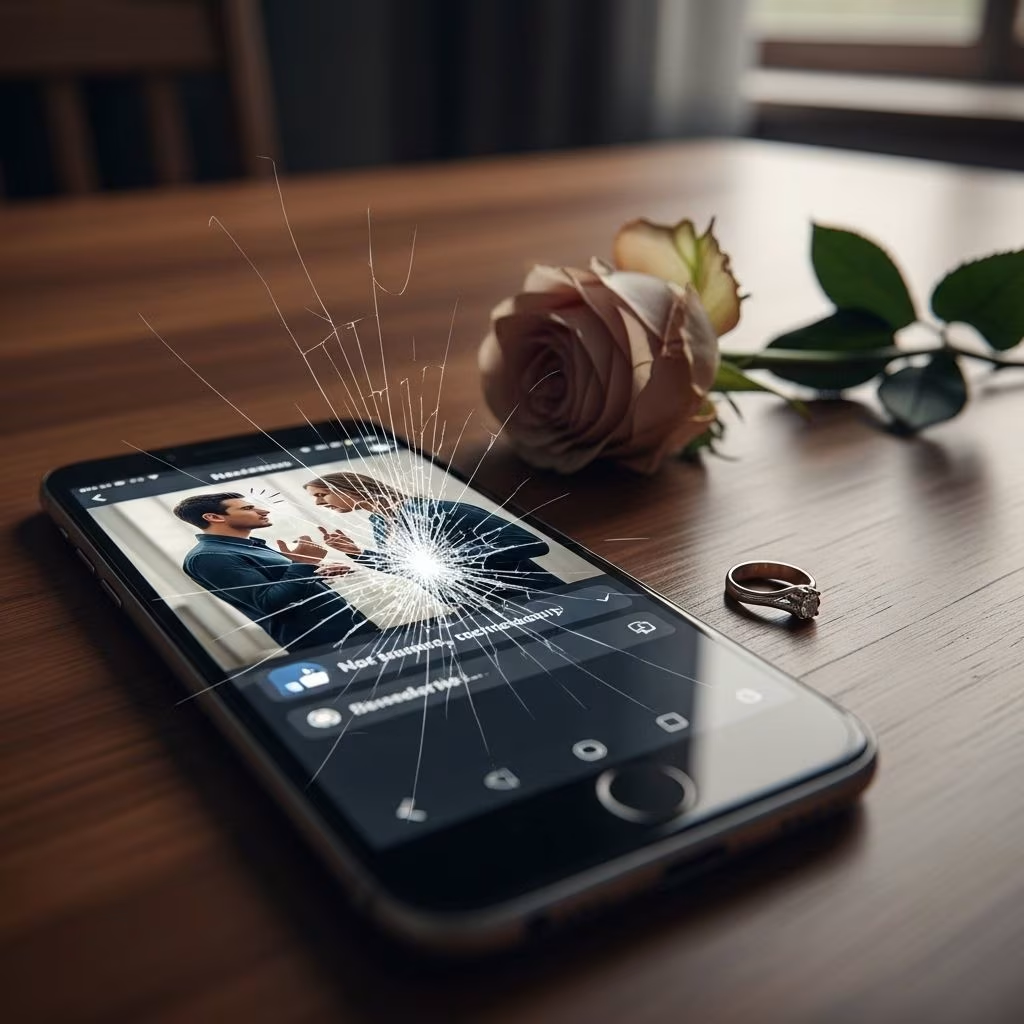
In today’s hyper-connected world, Facebook has become more than just a social networking platform—it has evolved into a significant factor that shapes, influences, and sometimes damages our most intimate relationships. What started as a simple way to connect with friends and family has transformed into a digital minefield where relationship insecurities, misunderstandings, and conflicts can emerge from the most innocuous interactions.
The integration of social media into our daily lives means that our romantic relationships are no longer private affairs between two people. Instead, they exist in a semi-public space where every status update, photo tag, and comment can become fodder for interpretation, jealousy, and arguments. Understanding how Facebook affects relationships and implementing strategies to protect your partnership has become essential for modern couples navigating the complexities of digital age romance.
The Relationship Status Dilemma
One of the most common Facebook-related conflicts in modern relationships centers around the seemingly simple act of updating your relationship status. What should be a joyful declaration of commitment often becomes a source of tension and insecurity between partners. When one person values this digital announcement more than the other, it creates an immediate imbalance that can threaten the foundation of trust.
The scenario plays out predictably: You’ve decided to become exclusive with someone you’ve been dating. Everything feels wonderful in the real world, but then comes the dreaded question—either directly or through a passive-aggressive text message—about why you haven’t updated your Facebook relationship status yet. Suddenly, your private joy becomes entangled with public validation, and your partner’s insecurity manifests through concerns about your digital declaration.
This situation reveals a fundamental issue with social media’s role in relationships: it has created new benchmarks for commitment that have nothing to do with the actual quality of the relationship. Your partner may feel that without the Facebook announcement, the relationship isn’t truly real or legitimate. This external validation requirement places unnecessary pressure on something that should remain between two people, at least in its early stages.
The conflict intensifies when partners disagree about the importance of such updates. One person might view Facebook as an inconsequential tool that bears no reflection on their feelings, while the other sees the status update as a critical symbol of commitment and pride in the relationship. These divergent perspectives can escalate into full-blown arguments, with hurt feelings on both sides—all over a digital checkbox that didn’t exist twenty years ago.
Privacy Concerns and Social Announcement Timing
Beyond the relationship status itself lies another complicated Facebook-related challenge: deciding when to share your new relationship with your broader social network. Many people aren’t ready to announce their relationship to family members, coworkers, or certain friend groups immediately after becoming official. This perfectly reasonable desire for privacy can clash dramatically with a partner’s enthusiasm or need for public acknowledgment.
The problem manifests in various ways. Perhaps your significant other tags you in a photo with a romantic caption before you’ve told your conservative family members about the relationship. Maybe they post about date nights and couple activities when you’re still in the phase of keeping things low-key. These actions, while often well-intentioned, can force your hand in making announcements before you’re comfortable, creating resentment and tension.
Conversely, when you’re not posting about your partner on social media, they might interpret this as hiding the relationship or being ashamed of them. This insecurity can fester, leading to confrontations where you find yourself having what feels like the most absurd conversation imaginable: explaining why you can’t post about someone on a website. The ridiculousness of the situation doesn’t make the feelings any less real or the conflict any less damaging to relationship harmony.
The timing of social media announcements requires careful negotiation between partners with different comfort levels regarding public displays and different relationships with their online networks. What one person sees as a reasonable delay, another interprets as a red flag. This disconnect stems from the varying importance people place on social media validation and the different ways they use these platforms in their lives.
The Photographic Evidence Problem
Few Facebook-related relationship issues carry as much emotional weight as discovering photos of your partner with their ex. Whether you stumble upon them while browsing their profile together or during a late-night scroll through their timeline, these digital remnants of past relationships can trigger intense feelings of jealousy, insecurity, and suspicion—even when there’s absolutely no reason for concern.
The photos themselves often represent nothing more than digital clutter—images that your partner simply forgot existed or never bothered to remove because they didn’t seem important enough to warrant the time and effort of deletion. However, when you discover them, especially early in a relationship when you’re still building trust and security, they can feel like evidence of lingering feelings or unresolved emotional attachments.
This situation creates an uncomfortable dilemma. Is it reasonable to ask your partner to delete photos from previous relationships? What about photos posted on other people’s pages—are they responsible for those too? How far back should they go? Should they also delete photos where they’re simply with friends at events their ex also attended? The questions multiply, and suddenly you’re both navigating a minefield of reasonable requests versus controlling behavior.
The emotional response to these photos often defies logic. Intellectually, you understand that your partner had a life before you, that past relationships are normal and inevitable, and that photos are just pixels on a screen. Emotionally, however, seeing visual evidence of your partner’s intimacy with someone else can trigger primitive feelings of insecurity and competition. You begin asking yourself questions: Why are they still there? Do they look at them? Are they holding onto memories? Do they still have feelings?
These photos become the digital equivalent of finding a shoebox full of love letters and photographs under your partner’s bed—except they’re publicly visible to anyone who cares to look. The public nature amplifies the discomfort, as you imagine mutual friends or acquaintances scrolling through these remnants of relationships past, possibly making comparisons or judgments.
The Infinite Ways Facebook Creates Relationship Friction
The examples above represent just the tip of the iceberg when it comes to Facebook’s potential to damage relationships. The platform creates countless opportunities for misunderstanding, jealousy, and conflict that simply wouldn’t exist without it. A like on someone’s photo becomes evidence of flirtation. A comment exchange with a coworker seems suspiciously friendly. Not being tagged in a photo with your partner’s friends feels like exclusion. Being tagged in an unflattering photo causes embarrassment and fights about asking for removal.
Facebook messenger adds another layer of complexity. The visible timestamp of when messages were read can create expectations about response times. Seeing your partner active on Facebook while ignoring your message breeds resentment. Old message threads with exes or former romantic interests become sources of retrospective jealousy. The platform’s features designed to increase engagement and connectivity inadvertently create surveillance opportunities that undermine trust.
Friend requests and friend lists themselves can become contentious. Who is this person? Why did they friend you? Why did you accept? Why do you have so many attractive people in your friends list? Should you unfriend your ex? What about people you dated casually? The questions never end, and each one chips away at the foundation of trust and security that healthy relationships require.
Social media also changes the nature of arguments themselves. Disagreements that would previously remain private can now become public spectacles if one partner makes a cryptic post or changes their relationship status during a fight. The temptation to air grievances publicly or seek validation from friends through vague-posting creates additional damage beyond the original conflict.
Understanding the Root of Social Media Relationship Problems
At its core, Facebook’s negative impact on relationships stems from several psychological and behavioral factors. First, the platform encourages constant comparison—not just between your relationship and others’, but between your partner’s behavior toward you versus their interactions with others online. This comparison mindset breeds insecurity and dissatisfaction, as you’re always measuring your relationship against curated, idealized versions of other people’s lives.
Second, Facebook creates false intimacy and transparency expectations. Having access to your partner’s online activity can feel like a window into their thoughts and feelings, but it’s actually a distorted and incomplete picture. When you see them liking posts or commenting on photos, you’re getting fragments of interaction without context, which your mind then fills in—often negatively. This pseudo-transparency is actually more dangerous than no transparency at all because it creates the illusion of knowledge while providing ample opportunity for misinterpretation.
Third, the platform is deliberately designed to be addictive. The intermittent reinforcement of likes, comments, and notifications triggers dopamine responses in the brain, creating compulsive checking behavior that interferes with real-world connection. When you’re both scrolling through Facebook instead of talking to each other, you’re choosing digital engagement over genuine intimacy, gradually eroding the quality of your relationship.
Fourth, Facebook eliminates natural relationship boundaries. In the past, your partner’s interactions with friends, coworkers, and acquaintances happened outside your awareness unless they specifically told you about them. Now, you can observe every interaction, every like, every comment—creating opportunities for jealousy and suspicion about completely innocent social behavior. This constant visibility turns normal social interactions into potential relationship threats.
Practical Solutions for Facebook-Damaged Relationships
Recognizing that Facebook damages relationships is the first step; implementing solutions is the next. The most important action couples can take is having honest, explicit conversations about social media expectations and boundaries before problems arise. Discuss your feelings about relationship status updates, photo sharing, friend requests from exes, and appropriate interactions with others online. Establishing clear, mutual agreements prevents misunderstandings and reduces the potential for conflict.
Setting phone-free times and spaces is crucial for maintaining intimacy. Designate specific times—during meals, before bed, during date nights—when both partners commit to staying off their phones entirely. This creates sacred space for genuine connection without digital distraction. The initial discomfort of disconnecting will give way to deeper, more satisfying interactions that strengthen your bond.
Consider adjusting your privacy settings and social media habits to reduce conflict triggers. You might unfollow (not unfriend) people whose posts consistently cause jealousy or insecurity. Disable notifications during certain hours. Limit the amount of time you spend scrolling through feeds. These small adjustments reduce opportunities for Facebook-related problems while allowing you to maintain your presence on the platform if that’s important to you.
For couples experiencing significant Facebook-related conflicts, a temporary or permanent deactivation might be the healthiest solution. This isn’t admitting defeat—it’s recognizing that a social media platform isn’t worth the damage it’s causing to your relationship. Many couples who take this step report feeling liberated, discovering they have more time and emotional energy for each other without the constant distraction and drama social media creates.
The Radical Solution: Deactivation
For some couples, the only effective solution to Facebook’s relationship-damaging effects is complete deactivation. This might seem extreme in our hyper-connected world, but it represents a powerful statement about priorities: choosing your relationship over social media validation and engagement. Couples who take this step often report transformative effects on their partnership.
Without Facebook, you’re no longer distracted by endless scrolling during time together. You’re not comparing your relationship to others’ highlight reels. You’re not worrying about who your partner is liking or commenting on. You’re not arguing about status updates or photo tags. Instead, you’re fully present with each other, giving your relationship the attention and energy it deserves without digital interference.
Deactivation also eliminates external sources of relationship drama. Friends and family can’t insert themselves into your relationship through comments and messages. Exes can’t create jealousy or insecurity through their continued digital presence. You’re not subjected to the opinions and judgments of your extended social network about your relationship choices. This boundary creates space for your relationship to develop naturally without outside influence.
The decision to deactivate doesn’t have to be permanent. Some couples take social media breaks during particularly stressful times or when they notice Facebook causing excessive conflict. Others find that once they’ve experienced life without social media’s constant presence, they have no desire to return. The key is making the choice together, as partners committed to prioritizing your relationship over digital engagement.
Building a Healthier Relationship with Social Media
If complete deactivation feels too extreme, couples can still cultivate a healthier relationship with Facebook and other social media platforms. This requires intentionality, discipline, and ongoing communication about how these platforms are affecting your partnership. Start by honestly assessing whether social media adds more value or stress to your lives together.
Implement a regular check-in system where you discuss any social media-related concerns before they escalate into arguments. Create an environment where both partners feel safe expressing insecurities or discomfort about online interactions without fear of being dismissed or ridiculed. Remember that feelings of jealousy or insecurity, even when logically unjustified, are real and deserve acknowledgment and discussion.
Practice conscious engagement with social media rather than mindless scrolling. Before opening Facebook, ask yourself why you’re doing it. Are you bored? Avoiding something? Seeking validation? Understanding your motivations helps you make more intentional choices about when and how you use the platform. This mindfulness reduces the compulsive checking behavior that interferes with relationship quality.
Focus on creating real-world experiences and connections rather than curating an online persona. The most fulfilling relationships happen offline, in shared experiences, conversations, and physical intimacy that can’t be captured or conveyed through status updates and photos. When you prioritize authentic connection over digital representation, you naturally reduce Facebook’s influence on your relationship.
Frequently Asked Questions
Q: Is it normal to fight about Facebook in relationships?
A: Unfortunately, yes. Facebook-related conflicts have become increasingly common in modern relationships, with disagreements about relationship status updates, photos, and online interactions creating tension between partners. These fights, while feeling trivial, reflect deeper issues about trust, validation, and communication that couples need to address.
Q: Should I ask my partner to delete photos with their ex?
A: This depends on your relationship dynamics and the specific circumstances. Having an honest conversation about how these photos make you feel is reasonable, but demanding deletion can seem controlling. Many couples find compromise by having the ex-partner photos remain but ensuring they’re not prominently displayed or frequently visible.
Q: How much time on Facebook is too much in a relationship?
A: If Facebook usage interferes with quality time together, creates frequent conflicts, or causes one partner to feel neglected, it’s too much. Specific time limits vary by couple, but a good rule of thumb is ensuring you spend significantly more time engaging with your partner than scrolling through social media.
Q: Is deactivating Facebook really necessary to save a relationship?
A: Not for everyone, but for couples experiencing persistent Facebook-related conflicts that other solutions haven’t resolved, deactivation can be transformative. It eliminates the platform as a source of relationship stress and allows partners to focus entirely on each other without digital distractions or drama.
Q: How do I talk to my partner about Facebook without seeming controlling?
A: Frame conversations around your feelings rather than accusations. Use statements like “I feel insecure when” instead of “You shouldn’t.” Focus on finding mutually agreeable solutions rather than imposing rules. Acknowledge that your concerns might seem irrational while still deserving of consideration and discussion.
References
- https://www.elitedaily.com/dating/facebook-damaging-relationship/1585956
- https://www.boucherco.com/social-media-affect-dating-relationships-2014/
- https://www.elitedaily.com/life/changing-social-media-habits/1674645
- https://www.psychologytoday.com/us/blog/close-encounters/201505/how-facebook-affects-our-relationships


