


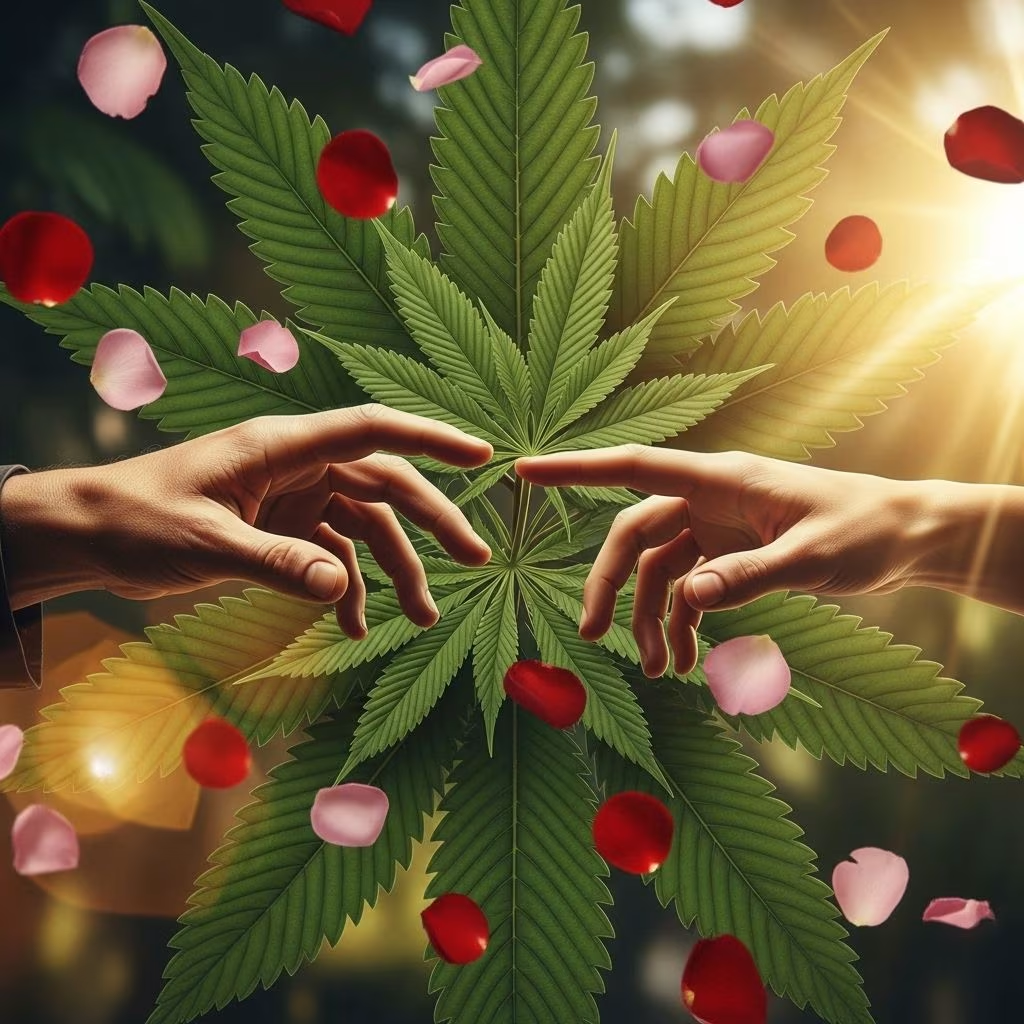
Relationships during adolescence carry a unique intensity—a fusion of first love, identity formation, and the powerful belief that this connection defines everything. When substances enter this already complex dynamic, the results can profoundly shape not just the relationship itself, but the individuals within it. This is a story about how marijuana became intertwined with young love, creating patterns that would ultimately reveal important truths about dependency, authenticity, and personal growth.
The Beginning: Innocence and Good Intentions
At seventeen, life felt remarkably straightforward. The world divided neatly into categories of right and wrong, good and bad, acceptable and forbidden. Growing up as the quintessential “good girl” meant following rules without question—respecting parental boundaries, avoiding alcohol, and certainly staying far away from drugs. While peers began experimenting with substances during those formative teenage years, there remained a steadfast determination to preserve what felt like innocence.
When the relationship began, these values seemed non-negotiable. The boyfriend represented everything desired in a partner—he was caring, understanding, and felt like a soulmate. At seventeen, that connection felt like the entire universe compressed into one person. He wasn’t just a boyfriend; he became a purpose, a reason for existence, the foundation upon which everything else stood.
However, beneath the surface of this seemingly perfect young love, both individuals were navigating their own storms. Anxiety and depression had begun casting shadows over their lives, creating an emotional landscape that felt overwhelming and inescapable. Each person developed their own coping mechanisms for these challenges, though neither fully understood the long-term implications of their chosen methods.
Different Coping Mechanisms, Same Pain
Everyone processes emotional pain differently. Some turn to therapy, others to exercise, creativity, or various forms of self-medication. In this relationship, the boyfriend had discovered marijuana as his method for managing depression. The plant provided temporary relief from the darkness that threatened to consume him, offering moments of peace in an otherwise turbulent mental landscape.
Meanwhile, the coping strategy chosen was perhaps even more complex—using the relationship itself as an emotional anchor. Rather than developing independent tools for managing anxiety and depression, the boyfriend became the solution. His presence, his words, his existence served as the primary method for emotional regulation. This created an unhealthy dependency that neither person recognized at the time, but which would prove just as problematic as any substance use.
Initially, there was strong disapproval of his marijuana consumption. Coming from a place of genuine concern mixed with fear and misunderstanding, there were constant expressions of worry about what cannabis might do to him. The pessimistic tendencies amplified every potential risk, transforming each smoking session into a source of anxiety. This dynamic created tension—one person seeking relief through a substance, the other viewing that very substance as a threat to the person they loved.
The Transformation: Becoming What You Once Opposed
The shift didn’t happen overnight. For an entire year, boundaries remained firm. But relationships have a way of gradually eroding our most firmly held positions, especially when we’re desperate to connect with someone we love. The desire to impress and understand the boyfriend began outweighing the commitment to personal values that once seemed unshakeable.
Trying marijuana for the first time represented more than just experimenting with a substance—it symbolized a willingness to enter his world, to understand his experience, to bridge the gap that seemed to separate them. What began as curiosity evolved into something more regular, more expected, more central to the relationship’s identity. Smoking together became a shared activity, a bonding ritual, a way to feel close when other forms of intimacy felt difficult or distant.
This transformation reveals something crucial about young relationships: the malleability of identity when we’re still forming our sense of self. At seventeen or eighteen, we’re particularly vulnerable to reshaping ourselves to fit what we believe our partners need or want. The boundaries that once felt absolute become negotiable when maintaining connection feels more important than maintaining consistency with our values.
The Illusion of Happiness
Marijuana created what felt like happiness in those moments. The anxieties quieted, the depression lifted temporarily, and being together felt easier, lighter, more enjoyable. These were genuine experiences—the relief was real, the laughter authentic, the sense of connection palpable. But hindsight reveals the distinction between momentary pleasure and sustainable wellbeing, between temporary escape and genuine healing.
The substance became a crutch that prevented the development of healthier coping mechanisms. Instead of learning to communicate difficult feelings, working through conflicts productively, or addressing the underlying issues causing anxiety and depression, marijuana offered a shortcut to feeling better. This created a pattern where problems were temporarily masked rather than genuinely resolved.
Smoking together also created a false sense of compatibility. When both people are high, differences seem less significant, conflicts feel less urgent, and incompatibilities fade into the background. This chemical-induced harmony prevented the natural process of determining whether the relationship truly worked beyond the haze of intoxication. The marijuana didn’t enhance the connection—it obscured the reality of it.
The Cost of Avoiding Reality
Every choice carries consequences, though they’re not always immediately apparent. The decision to incorporate marijuana into the relationship created several significant costs that only became visible with time and reflection. Perhaps most significantly, it prevented the relationship from reaching its full potential—whatever that might have been.
There was never a genuine opportunity to discover whether the connection could thrive without chemical assistance. Could they have communicated more effectively if they’d developed those skills instead of numbing difficult conversations? Would they have addressed their individual mental health challenges more directly if substances hadn’t offered temporary relief? These questions remain unanswerable because the path not taken can never be fully known.
The relationship also lacked proactive problem-solving. Instead of identifying issues early and working to address them, marijuana created a reactive dynamic where problems were noticed only after they’d become significant, and then temporarily forgotten with the next smoking session. This pattern prevented the type of relationship growth that comes from successfully navigating challenges together, learning each other’s communication styles, and building trust through difficult conversations.
On a personal level, the impact extended beyond just the relationship. Abandoning previously held values created internal conflict and confusion about identity. Who was this person who now regularly smoked marijuana after years of passionate opposition? The cognitive dissonance between past beliefs and current behavior created its own form of anxiety, adding another layer of complexity to an already complicated situation.
Reflection and Recognition
Looking back with the clarity that only distance provides, certain truths become undeniable. The relationship was fundamentally damaged not by marijuana itself, but by the dynamics it enabled and the problems it obscured. Taking responsibility for these choices represents an important part of growth—recognizing that decisions made with the best intentions can still lead to harmful outcomes.
The acknowledgment that the relationship was ruined carries weight because it accepts accountability rather than externalizing blame. It wasn’t just about what the boyfriend did or didn’t do, but about personal choices and their consequences. The decision to start smoking, to continue smoking, to prioritize momentary happiness over long-term wellbeing—these were individual choices that shaped the relationship’s trajectory.
This recognition also reveals the danger of using any external factor—whether a substance, a person, or an activity—as the primary method for managing emotional pain. Healthy coping requires internal resources: self-awareness, emotional regulation skills, the ability to sit with discomfort without immediately seeking escape. These capacities don’t develop when we consistently avoid difficult feelings through whatever means available.
The Broader Context: Marijuana and Young Relationships
This personal story reflects broader patterns observed in relationships where substance use plays a significant role. Research consistently shows that marijuana use can impact relationship functioning, particularly when it comes to conflict resolution, emotional availability, and long-term stability. The effects become even more pronounced in adolescent relationships, where identities are still forming and emotional regulation skills are still developing.
Cannabis use can create communication barriers that partners may not even recognize. The cognitive effects—altered perception of time, reduced short-term memory, changes in emotional processing—can make meaningful conversation more difficult even when users don’t perceive these impacts. One partner may feel unheard or dismissed while the other genuinely believes they’re engaged and present.
Additionally, using marijuana together can create a shared dependency that becomes central to the relationship’s identity. Couples may find that their primary bonding activity revolves around substance use, leaving little room for developing other shared interests or deeper forms of intimacy. This creates a fragile foundation—what happens to the relationship if one person wants to stop using?
Lessons About Love and Self-Knowledge
The most valuable insights often come from our most painful experiences. This relationship, despite or perhaps because of its challenges, taught crucial lessons about authenticity, boundaries, and self-worth. The attempt to change fundamental values to please a partner revealed the importance of maintaining personal integrity even within intimate relationships.
Real love shouldn’t require abandoning core aspects of yourself. While relationships naturally involve compromise and growth, there’s a distinction between evolving together and erasing yourself to maintain connection. The latter creates resentment, confusion, and ultimately the loss of the very self that the partner presumably fell in love with initially.
The experience also illuminated the dangers of emotional dependency—of needing another person to feel okay, of believing that a relationship defines your worth or purpose. This type of dependency creates enormous pressure on both individuals: one person carries the impossible burden of being another’s entire reason for living, while the other loses the opportunity to develop their own internal resources for happiness and resilience.
Perhaps most importantly, the story demonstrates that we cannot save or fix another person. The initial belief that love alone could cure the boyfriend’s depression represented a fundamental misunderstanding of how healing works. Everyone must do their own internal work; no relationship, however loving, can substitute for that personal journey.
Moving Forward: Growth and Understanding
Years removed from this relationship, perspective allows for both compassion and clarity. There’s compassion for two young people doing their best to navigate difficult circumstances with limited tools and life experience. The choices made sense within the context of who they were at that time—desperate for relief from pain, searching for connection, believing that love could conquer all obstacles.
But clarity also reveals the patterns that didn’t serve either person well. The reliance on external solutions for internal problems, the willingness to compromise values for relationship harmony, the inability to communicate effectively without chemical assistance—these patterns, once recognized, can be consciously changed in future relationships.
This awareness extends beyond just romantic relationships. The lessons apply to friendships, family dynamics, and most importantly, the relationship with oneself. Learning to sit with discomfort, to process emotions without immediately seeking escape, to maintain personal boundaries even when it feels difficult—these capacities serve us throughout life.
The Reality of Teenage Romance
Teenage relationships carry an intensity that can feel all-consuming precisely because they occur during a developmental period of heightened emotion and identity formation. The brain is still developing, particularly the prefrontal cortex responsible for judgment, impulse control, and long-term planning. This neurological reality means that decisions made during adolescence may not reflect the same reasoning processes that would occur later in life.
Understanding this context doesn’t diminish the validity of teenage experiences or emotions—those feelings are completely real and significant. But it does help explain why patterns developed during this period may not serve us well long-term. The person we are at seventeen is not the person we’ll be at twenty-five or thirty-five, yet relationships during this formative period shape our expectations and behaviors in ways that persist.
The belief that a boyfriend was “the love of my life” and “my purpose for living” at seventeen reflects this developmental stage rather than representing unhealthy attachment alone. Many adolescents experience this intensity, and for most, it’s a normal part of learning about relationships, identity, and emotion. The challenge comes when these intense feelings lead to decisions that compromise wellbeing or personal values.
Substance Use as Escape
Both individuals in this story used substances—one used marijuana, the other used the relationship itself. This parallel reveals an important truth: addiction and dependency come in many forms, not all of which involve chemical substances. The compulsive need for something external to regulate internal emotional states represents the core of addictive patterns, regardless of whether that external thing is a drug, a person, food, work, or any other potentially compulsive behavior.
Marijuana provided escape from depression and anxiety. The relationship provided the same escape. Neither approach addressed the underlying issues causing those painful emotions. Both created temporary relief that prevented the development of more sustainable solutions. And both ultimately proved inadequate for building a healthy, stable life.
This recognition doesn’t mean marijuana or relationships are inherently problematic. Many people use cannabis responsibly without it interfering with their lives, and healthy relationships enhance wellbeing rather than serving as emotional crutches. The issue arises when any external factor becomes the primary method for managing internal distress, preventing the development of genuine coping skills and self-awareness.
The Path Not Taken
One of the most poignant aspects of this story is the acknowledgment that the relationship never received a fair chance. By introducing marijuana as a central component relatively early, the natural evolution of the connection was fundamentally altered. There’s no way to know what might have developed if both people had addressed their mental health challenges directly, developed healthy communication patterns, and built their connection on authentic interaction rather than substance-influenced bonding.
This represents a form of grief—mourning not just the relationship that ended, but the relationship that might have been. The potential that was never realized because of choices that seemed reasonable at the time but proved limiting in retrospect. This type of loss carries its own weight because it involves not just what was, but what could have been.
However, this grief also creates opportunity. Every relationship, successful or not, teaches us something valuable about ourselves, about what we need, about what we’re willing to compromise and what we must protect. The lessons from failed relationships often prove more valuable than those from successful ones because they reveal our vulnerabilities, our patterns, our areas for growth.
Frequently Asked Questions
Q: Can marijuana use destroy an otherwise healthy relationship?
A: Marijuana itself doesn’t destroy relationships, but patterns of use that interfere with communication, emotional availability, or personal values can create significant strain. When substance use becomes a primary coping mechanism or bonding activity, it may prevent couples from developing healthier relationship skills and genuine intimacy.
Q: Is it normal to change your values for a partner?
A: While some compromise and growth within relationships is normal and healthy, completely abandoning core values to please a partner typically leads to resentment and loss of self. Healthy relationships involve mutual respect for each person’s boundaries and beliefs, with changes occurring through genuine personal evolution rather than external pressure.
Q: How can you tell if you’re emotionally dependent on a relationship?
A: Signs of emotional dependency include feeling that the relationship defines your worth, believing you can’t be happy without your partner, losing your sense of identity outside the relationship, or using the relationship as your primary method for managing difficult emotions. Healthy relationships enhance life rather than serving as its sole foundation.
Q: Can love cure depression or anxiety?
A: While supportive relationships can be beneficial for mental health, love alone cannot cure clinical depression or anxiety. These conditions typically require professional treatment, which may include therapy, medication, lifestyle changes, or a combination of approaches. Partners can offer support, but they cannot replace proper mental health care.
Q: What are healthier ways to cope with anxiety and depression in relationships?
A: Effective coping strategies include seeking professional mental health support, developing individual emotional regulation skills, maintaining personal interests and friendships outside the relationship, practicing open communication with your partner about your needs, and using healthy stress-management techniques like exercise, meditation, or creative expression rather than relying primarily on substances or the relationship itself for emotional regulation.
References
- https://www.madregawellness.com/blog/weed-ruins-relationships
- https://www.guystuffcounseling.com/counseling-men-blog/how-marijuana-addiction-impacts-couples-and-relationships
- https://www.elitedaily.com/dating/weed-ruined-relationship/1192366
- https://hightimes.com/culture/weed-almost-ruined-my-marriage-now-im-cannabis-journalist-advocate/
- https://www.elitedaily.com/dating/dating-stoner/1242392
- https://pmc.ncbi.nlm.nih.gov/articles/PMC5025370/
- https://en.wikipedia.org/wiki/Tallulah_Bankhead
- https://www.rutgers.edu/news/cannabis-users-can-misperceive-how-well-their-romantic-relationships-are-functioning


