


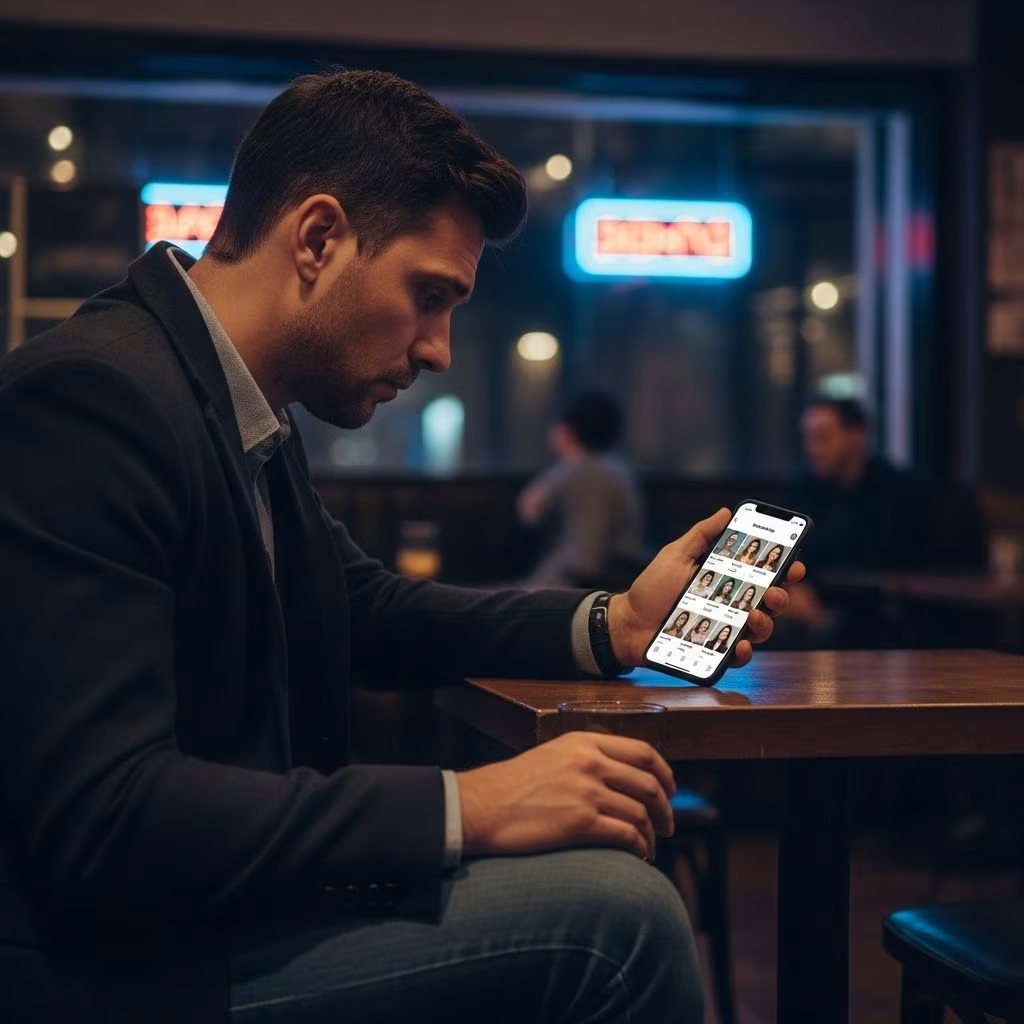
How Online Dating Has Undermined Men’s Approach to Relationships
The rapid rise of online dating apps has changed the way men approach relationships, intimacy, and even their sense of self. While digital platforms promised to make connecting easier, there’s growing concern that these tools have fundamentally altered men’s expectations and the value they place on genuine connection. This article explores the nuanced impacts of online dating on men, why relationships feel less substantial, and what the trend means for the future of romance.
The New Landscape: Online Dating and Its Promises
Online dating platforms emerged as a solution for busy individuals seeking love or companionship outside traditional social circles. Men, in particular, found the prospect appealing as these apps promised access to hundreds of potential matches at their fingertips. Algorithms were marketed to act as digital cupids, theoretically taking the guesswork and awkwardness out of meeting someone new.
- Accessibility: Dating apps provide quick, easy access to a broader pool of prospects than one’s everyday life allows.
- Efficiency: Filters and search functions allow users to narrow partners down by interests, appearance, or even height and career.
- Anonymity: Men who previously felt awkward in social or bar settings could interact with potential dates from behind a screen.
While these features seem empowering at first glance, the market’s abundance has unexpected consequences—especially for men’s attitudes and emotional investments in relationships.
The Paradox of Choice: More Options, Less Satisfaction
The proliferation of potential partners should, in theory, lead to greater happiness and romantic fulfillment. Instead, many men report the opposite: a pervasive sense of dissatisfaction and detachment. Psychologists refer to this phenomenon as the paradox of choice. When faced with endless options, committing to a single person can feel like missing out on something better that may be just a swipe away.
- It breeds restlessness—the urge to keep searching, even after matching with someone promising.
- Men can become overly critical, focusing on minute flaws, always wondering if they could do better.
- Commitment becomes a risk, especially when every app session presents new faces and possibilities.
This mentality undermines the fundamental aspect of relationships: investing, growing, and accepting that no partner is perfect.
Impatience and Emotional Disconnection
Online dating habits reinforce impatience. Men may grow accustomed to instant replies and rapid responses, expecting the same in real-life encounters. When reality fails to match the pace of app communication, frustration grows.
Moreover, emotional investment is often shallow because digital communication strips away vital cues—body language, tone, and subtle expressions—that create intimacy. The anonymity and detachment make it easier to ghost or disregard a match without remorse.
- Interacting via text often leads to miscommunication and a lack of empathy.
- Women and men alike report feeling objectified, as though they are being assessed on fleeting visual details rather than deeper compatibility.
- The safety of turning off a phone or app in uncomfortable situations leads to avoidance, not confrontation or emotional growth.
The “Tinderella Syndrome”: Is Romance Being Rewired?
The term “Tinderella Syndrome” captures the behavioral shift observed—especially among men—where confidence in real-world romantic interactions has eroded. The abundance of online options leads to:
- Diminished motivation to initiate conversations offline.
- Reduced risk-taking in organic settings (e.g., approaching someone in a coffee shop or bar).
- A preference for the low-stakes, disposable nature of app-generated matches.
Some psychologists warn that this has created a class of men for whom digital dating is easier than real-world vulnerability. The result is a “practice” of dating online, but a lack of skills for navigating real-life relationship challenges.
Infinite Swipes: Are We Training Ourselves Out of Monogamy?
Apps are designed to be addictive. The dopamine hit of a new match, the thrill of a witty exchange, and the chase for something novel incentivize swiping over settling. Features such as instant messaging and constantly refreshed pools of users foster short-term excitement but undermine the long-term patience necessary for romance to flourish.
- It’s common for men to juggle multiple conversations without intent to meet or commit (a trend sometimes referred to as “carouseling”).
- The chase—the feeling of “upgrading” to a better match—becomes the goal, not the connection itself.
- As a result, many relationships are never given a fair chance to develop beyond superficial first impressions.
Hookup Culture and the Transactionalization of Connection
Many apps market themselves as serious matchmaking platforms, but a significant subset are designed, intentionally or not, to prioritize hookups over relationships. This transactional mentality leads to:
- Reduced emphasis on emotional vulnerability, as surface-level attributes become primary selection tools.
- Greater likelihood of treating dates as disposable experiences, where a single misstep can lead to instant dismissal in favor of the next person.
- Challenge in building the kind of trust and comfort that fosters longevity in relationships.
This shift is not unique to men, but the cultural pressure for men to quickly initiate, escalate, and impress has intensified under the hookup paradigm. Even men desiring committed relationships may feel pushed toward casualness to “keep up” with the prevailing trends.
The Checklist Mentality: Are We Shopping for Lovers?
Profiles and filters encourage a checklist approach to romance. For men, this means scanning through a menu of traits, rapidly forming judgments, and even searching for partners who fit hyper-specific criteria. This consumer mindset leads to:
- Reduced tolerance for ambiguity or imperfection in potential matches.
- Difficulty appreciating the intangible, slow-emerging qualities that only surface over time.
- Transactional conversations that mimic job interviews, not flirtation or genuine connection.
The very tools meant to improve compatibility may be the ones making meaningful connection less likely.
The Impact on Self-Esteem and Masculinity
For many men, repeated rejection or non-response can erode self-confidence. The gamified nature of apps means validation is measured in matches and messages, fostering a warped sense of self-worth tied to digital feedback.
- Feeling “unmatched” or dismissed can reinforce insecurities about physical appearance, professional achievement, or status.
- Some men overcompensate by adopting more aggressive or inauthentic personas online, hoping to attract more attention.
- The focus on surface-level success ignores the core of masculinity—emotional honesty, commitment, and resilience in the face of rejection.
Summary Table: Traditional Dating vs. Online Dating Patterns
| Aspect | Traditional Dating | Online Dating |
|---|---|---|
| Way of Meeting | In-person (friends, events, work) | Apps, websites, social media |
| First Impressions | Based on real interactions | Heavily image/text dependent |
| Selection Criteria | Natural chemistry, values | Checklists, filters, aesthetics |
| Pace | Slower, face-to-face | Rapid, often asynchronous |
| Closure | Direct conversation | Ghosting, non-response |
| Depth | Usually deeper early on | Often remains superficial |
Expert Opinions: Is Online Dating Doomed to Fail Men?
Many relationship experts and psychologists are split. While some acknowledge the negative effects outlined above, others argue that online dating simply reflects pre-existing trends—commitment-phobia, shallowness, or inequity in dating markets—but amplifies them via technology.
- Some therapists note that apps can help shy men learn to communicate, provided they use the platforms intentionally.
- Others argue that the culture of endless choice and detachment fundamentally undermines the emotional skills needed for lasting love.
Importantly, it’s not the technology itself that’s inherently at fault—it’s how users engage with it, and whether they cultivate self-awareness, boundaries, and authenticity in their search for connection.
What Can Men Do to Reclaim Authentic Relationships?
If online dating apps are here to stay, is it possible for men to build healthier relationships? Experts suggest a shift in attitude and approach:
- Set Clear Intentions: Identify whether you’re seeking superficial fun, friendship, or genuine partnership before starting a conversation.
- Limit App Use: Don’t treat dating apps as the sole or primary way to meet people. Diversify social experiences.
- Practice Real-World Skills: Challenge yourself to engage with women in organic settings, even if just for small talk.
- Allow for Imperfection: Accept that the perfect match does not exist. Meaningful connections require patience and compromise.
- Be Mindful of Validation-Seeking: Resist the urge to equate matches or messages with self-worth.
Successful relationships require emotional labor, vulnerability, and a willingness to sit with discomfort—traits that apps often discourage, but which men can actively cultivate, online and offline.
Frequently Asked Questions (FAQs)
Has online dating really made it harder for men to form serious relationships?
Many men report greater difficulty making deep connections due to abundance of choice, superficial interaction, and rising impatience associated with app-based dating. However, these effects can be mitigated by using platforms intentionally and focusing on quality over quantity.
Do dating apps only encourage casual hookups for men?
While certain apps are more associated with casual encounters, most platforms now offer a range of intentions. That said, the design of many apps, with their emphasis on quick matches and endless options, does tend to foster a more transactional mindset.
Can men still find meaningful relationships online?
Yes, many men have found long-term partners through online dating, but success is more likely for those who maintain self-awareness, patience, and prioritize authenticity rather than treating dating as a numbers game.
What are some common pitfalls men encounter on dating apps?
Common traps include becoming addicted to swiping, developing a checklist mentality, prioritizing visual perfection over substance, and allowing repeated rejection to impact self-esteem. These habits can undermine the ability to connect authentically with potential partners.
How can men improve their online dating experience?
Setting realistic expectations, adopting clear communication, limiting app usage, and prioritizing in-person interactions can significantly enhance the quality of connections men form on dating platforms.
Ultimately, online dating is neither inherently good nor bad. For men wishing to foster deeper, more satisfying relationships, it demands a renewed commitment to patience, self-reflection, and viewing matches as people, not products.
References
- https://www.bustle.com/articles/35268-is-online-dating-ruining-relationships-i-call-bs-on-the-alleged-tinderella-syndrome
- https://www.elitedaily.com/dating/hookup-apps-dating-apocalypse/1175241
- https://www.yourtango.com/love/modern-dating-destroying-relationships-former-player-explains
- https://www.vice.com/en/article/stop-carouseling-on-dating-apps-its-ruining-your-love-life/
- https://www.elitedaily.com/dating/become-norm-date-around-generation/1036707
- https://www.youtube.com/watch?v=gl5Bjn4FAPY


