


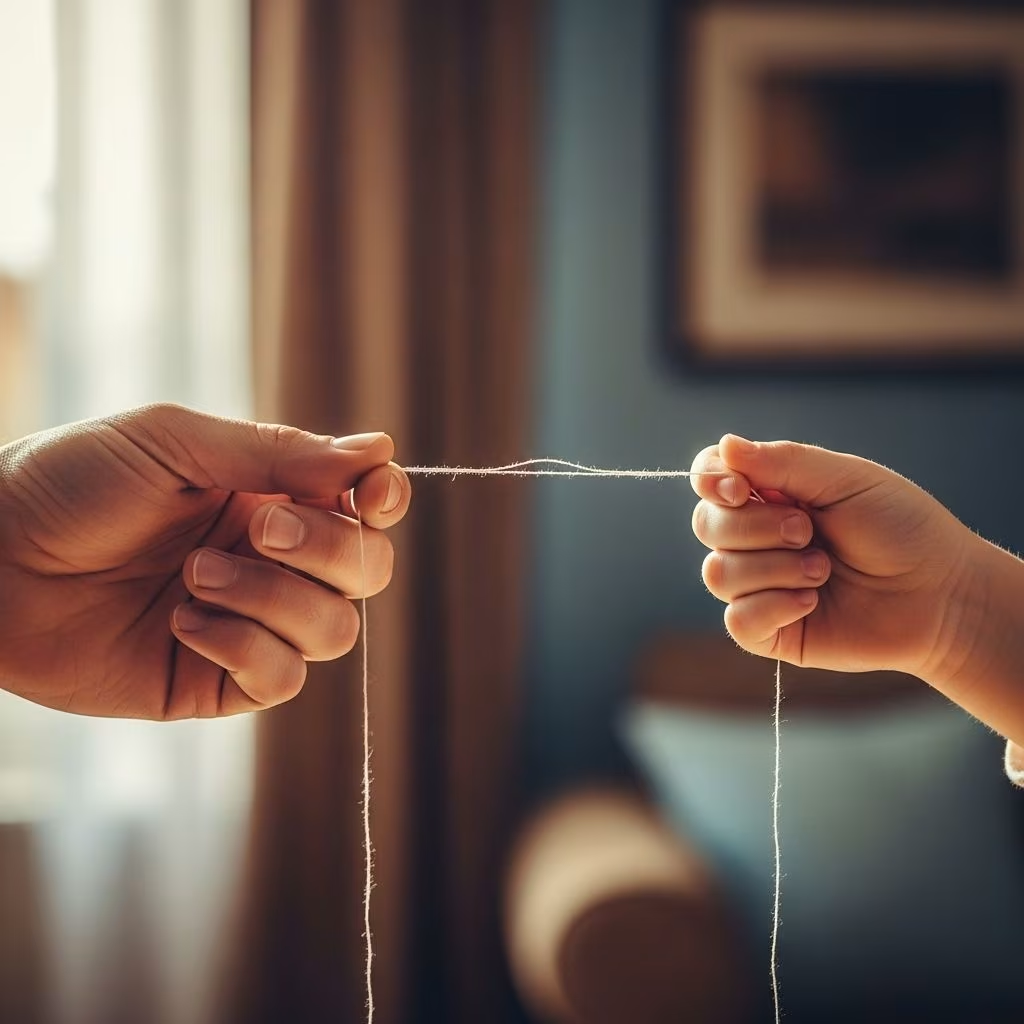
How My Parents’ Separation Shaped My Approach To Relationships
Kids aren’t as resilient as you think. My parents aren’t together anymore. They split up when I was in the fourth grade.
The Unseen Impact Of Parental Separation
When my parents decided to go their separate ways, I was too young to fully grasp the emotional earthquake that had struck our family. At first, the logistics—who I’d live with, where I’d spend my weekends—seemed like the only things that mattered. My friends and teachers reassured me, “Kids are resilient! You’ll bounce back.” But there’s an invisible toll that comes from witnessing the unraveling of the two people who shaped your very world.
I started to notice that my understanding of love, trust, and commitment was quietly rewiring itself. The lessons I learned from my parents’ split weren’t always obvious, but they were powerful—and sometimes paralyzing.
The Lingering Doubt: Will Anything Last?
After my parents separated, I assumed it would soon start to feel normal. Instead, I developed a persistent fear of impermanence. Every card someone gave me, every friend I made, every promise someone offered felt fleeting. If two adults who once promised to love each other forever could walk away, what guarantee did I have that any love in my life would last?
That fear dogged me into adolescence and well beyond. It crept into the corners of my romantic relationships, making me wary and tentative. I hung back, always expecting the other shoe to drop. As a result, I would either keep people at arm’s length—or smother them with a preemptive, anxious affection.
Why Children Internalize Separation
- Security Shaken: Divorce or separation disrupts the foundational sense of safety for children, leading to uncertainty in all future attachments.
- Blame And Guilt: Kids may internalize responsibility for the split, even when reassured otherwise.
- Modeling Relationships: A child’s first concept of romantic partnership is built on their parents’ interactions; when that model collapses, so does their roadmap for love.
Fear Of Intimacy And Vulnerability
The biggest lesson I absorbed from my parents’ messy split was that intimacy can lead to heartbreak. No matter how close you get to someone, there’s always an exit door they might use. For a long time, I guarded myself fiercely.
Whenever a relationship started to get serious, I’d sabotage intimacy by creating distance, picking fights, or refusing to share my true thoughts and feelings. My internal monologue became a loop: If I never let anyone in, they can’t hurt me when they leave.
Common Emotional Reactions To Parental Separation
- Difficulty Trusting Others: Studies show that children of divorced parents are often hyper-vigilant about betrayal and abandonment.
- Anxiety About Commitment: There’s a reluctance to invest in long-term relationships, stemming from fears of repeating parental mistakes.
- Overcompensation Or Withdrawal: Some children of divorce become people-pleasers, bending over backwards to avoid conflict; others retreat and avoid relationships altogether.
Sabotaging Relationships Before They Begin
Each time I felt a relationship reach that precarious ‘serious’ stage—where talks of exclusivity, meeting parents, and making plans arose—a voice in my head screamed: Danger! Don’t get hurt like mom (or dad) did. I’d find faults in partners and amplify their shortcomings, or even end things for no clear reason. It became a form of self-protection; break things off before someone breaks your heart.
This cycle is common among those who watched their parents’ union fall apart. Children observe not just the separation itself, but also the aftermath: the sorrow, anger, loneliness, and sometimes bitterness that lingers. With no blueprint for “forever,” commitment becomes not only unappealing, but actually frightening.
Red Flags From My Childhood
- Always expecting arguments to spiral out of control
- Assuming all relationships must have an expiration date
- Withholding emotions to avoid seeming ‘needy’ or ‘dependent’
- Believing love is more likely to bring pain than joy
Learning That Kids Aren’t As Resilient As Everyone Says
Adults often repeat the refrain that kids are adaptable; they can get through anything. But that’s a myth. Sure, we adjust our behavior on the outside, but internally, we’re wrestling with confusion, loss, and uncertainty. Those deep-seated insecurities don’t vanish at adulthood—they simply manifest in more subtle and sometimes self-destructive ways, especially in our romantic lives.
For me, hearing friends and relatives insist, “You’ll be fine! Kids bounce back so easily,” only made me less likely to express my real struggles. I didn’t want to be the exception—the weak one. So I stuffed my fears down, trying to act as if I didn’t care.
Overcoming The Baggage: Healing Starts With Awareness
The journey to healthier relationships began when I started to acknowledge the weight I was carrying from my parents’ split. It wasn’t until college, when I first tried to maintain a serious relationship, that I realized how much my past shaped my choices and reactions.
Therapy, honest conversations with friends, and a lot of tearful introspection eventually helped. Piece by piece, I started to dismantle the coping mechanisms that once protected me, but were now keeping me from truly connecting.
Steps Toward Healing
- Acknowledgement: Recognize that your fears and patterns stem from early experiences—and that you’re allowed to feel them.
- Communication: Share your anxieties with current or prospective partners. Honesty helps reduce the sense of shame or secrecy.
- Therapy: Professional help can illuminate the roots of commitment issues and provide healthier coping strategies.
- Challenging Assumptions: Remind yourself that not every relationship ends the same way, and that you have agency to shape different outcomes.
- Building Self-Worth: Children of divorce often internalize blame or believe they’re ‘too damaged’ for lasting love. Affirm your own value apart from childhood wounds.
What I’ve Learned About Love (Despite My Fears)
Despite my rocky start, I’ve slowly come to see relationships differently. I’m learning, day by day, that vulnerability isn’t just a risk; it’s a necessity for true intimacy. By letting my past inform me, rather than control me, I’ve been able to gradually open up to love instead of running from it.
Today, I approach relationships with a mixture of skepticism and hope. The skepticism helps me move cautiously and avoid old traps. The hope reminds me that, even after heartbreak, love is possible—and worth the discomfort it can bring.
Key Relationship Insights From Parental Separation
- Communication Is Non-Negotiable: The silent treatment or avoidance only breeds suspicion and fear.
- Conflict Doesn’t Mean Ruin: Arguments are natural; it’s the way partners repair afterward that determines longevity.
- Trust Takes Time—But It’s Possible: Rebuilding trust after a breach (in any relationship) requires transparency and patience from both sides.
- Everyone Has Baggage: Your partner will have fears and insecurities too; empathy goes a long way.
Building A New Narrative: Moving Forward With Compassion
Changing the script isn’t easy, but it’s vital. My parents’ story doesn’t have to become mine. I can decide, consciously, to write a different ending. That means accepting that love is unpredictable and leaving your heart open to possibility, even when there are no guarantees.
It also means forgiving—not only my parents for their choices, but myself for the defenses I built in response. True healing is a process, not a destination.
Actionable Tips For Adults With Divorced Or Separated Parents
- Self-Reflection: Regularly examine your reactions in relationships for possible roots in childhood experiences.
- Establish Boundaries: Know and communicate what you need to feel secure.
- Seek Professional Guidance: Therapists can help unpack long-standing fears and patterns.
- Educate Yourself: Read books and articles on adult children of divorce for greater understanding and support.
| Challenge | Common Response | Healthier Approach |
|---|---|---|
| Fear of Commitment | Sabotaging or avoiding serious relationships | Gradual exposure and honest communication |
| Trust Issues | Hypervigilance or jealousy | Setting clear expectations, building trust slowly |
| Conflict Avoidance | Stonewalling, withdrawing, or shutting down | Learning constructive conflict and repair strategies |
Frequently Asked Questions (FAQs)
Q: Can a parent’s separation really affect their child’s adult relationships?
A: Yes, many adults find that childhood experiences—including parental separation—deeply shape their attachment style, trust levels, and approach to love and conflict.
Q: How can I break the cycle of fear or sabotage in relationships?
A: Awareness is the first step. Reach out to a therapist, communicate openly with partners, and work on challenging old beliefs about love and permanence.
Q: Are there ways to build resilience after experiencing a family breakup?
A: Absolutely. Developing a strong sense of self-worth, supportive friendships, and positive role models for healthy relationships can foster resilience over time.
Q: Should I talk to my partner about my parents’ separation?
A: Sharing your background can build intimacy and help both of you understand potential triggers or fears you may experience in the relationship.
If you grew up with parents who separated, know that your past may influence you, but it doesn’t have to define your future. The most important chapter is the one you write for yourself.
References
- https://grownandflown.com/freshman-separate-from-parents/
- https://www.elitedaily.com/dating/parents-divorce-relationship-lessons/1615433
- https://www.elitedaily.com/dating/parents-separation-relationship/1509343
- https://drdanielleforshee.com/articles-press/
- https://www.aubreenichols.com/published-article/2017/6/22/elite-daily-my-past-abusive-relationship-makes-it-hard-for-me-to-say-no-to-men
- https://www.garybrowntherapy.com/media


