


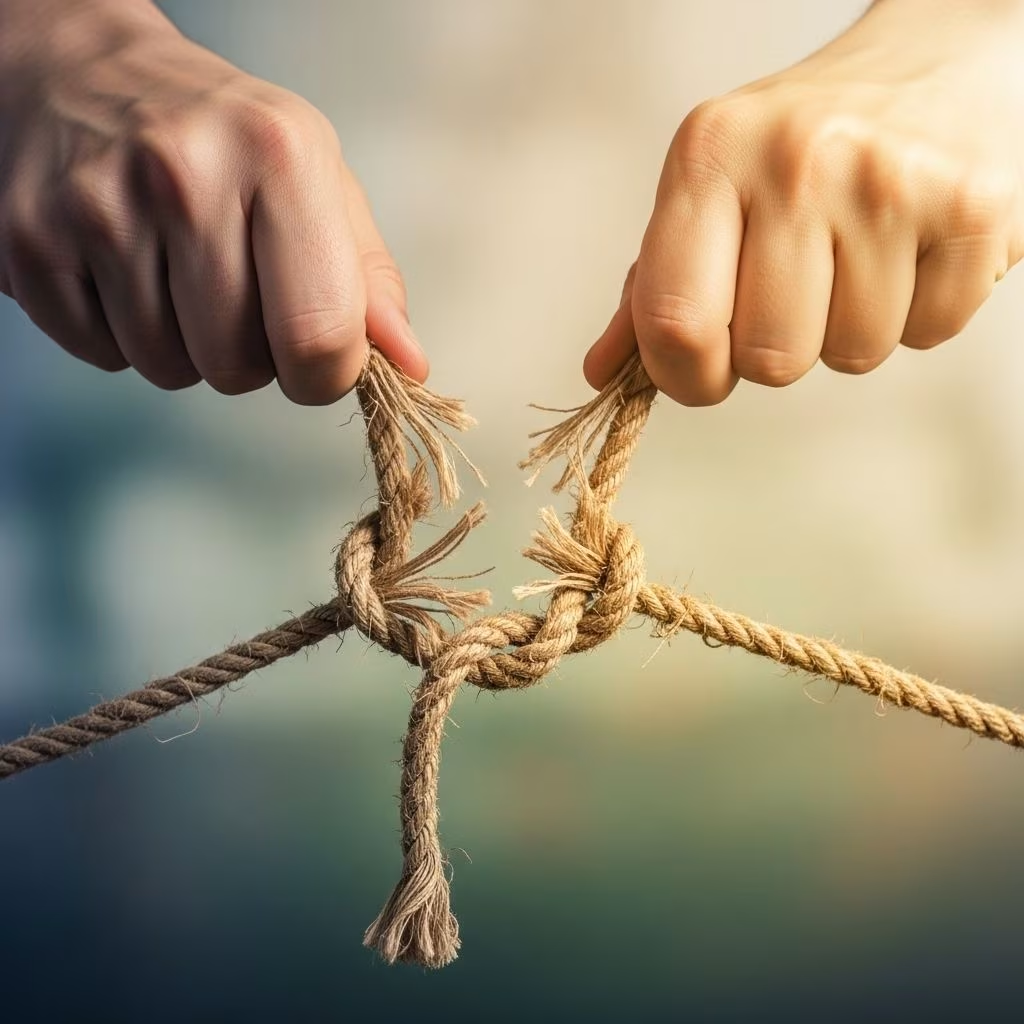
Many of us find ourselves caught in a relentless cycle of painful, dramatic relationships that leave us emotionally exhausted and wondering why we keep attracting the same type of partner or experiencing the same problems. The truth is that these patterns don’t emerge from nowhere—they’re deeply rooted in our past experiences, particularly our childhood wounds and early attachment experiences. Understanding this connection is the first step toward breaking free from these destructive cycles and creating healthier, more fulfilling relationships.
The cycle of painful relationships often begins long before we enter our first romantic partnership. Our early experiences with caregivers shape how we view ourselves, others, and what we can expect from intimate connections. When these foundational relationships are marked by trauma, abandonment, or inconsistency, we develop coping mechanisms and relationship patterns that follow us into adulthood, often manifesting as the very drama we desperately want to avoid.
The Roots of Relationship Drama
Children who grow up in secure, stable environments develop a healthy sense of self and learn to trust both themselves and others. They internalize the message that they are worthy of love and that relationships can be safe, predictable, and nurturing. However, when children experience trauma, abuse, neglect, or abandonment, they don’t develop this secure foundation. Instead, they grow up anxious, insecure, and struggling to trust—qualities that profoundly impact their adult relationships.
These early wounds create what psychologists call insecure attachment patterns. People with insecure attachment may become anxiously attached, constantly seeking reassurance and fearing abandonment, or avoidantly attached, keeping emotional distance to protect themselves from hurt. Some develop a disorganized attachment style that combines both anxious and avoidant behaviors, creating even more confusion and drama in their relationships.
The painful reality is that most people who engage in what others perceive as “crazy” relationship behavior are subconsciously replaying their childhood wounds. These wounds demand to be worked through, and if we don’t address them consciously and intentionally, they will continue to manifest repeatedly with every new partner we choose. What appears to be irrational or dramatic behavior is actually pain turned outward—a desperate attempt to heal old hurts through new relationships.
Understanding the Fear of Abandonment
One of the most common drivers of relationship drama is an intense fear of abandonment. This fear often originates from early experiences of loss, whether through a parent’s physical absence, emotional unavailability, or inconsistent presence. When a child experiences abandonment, they internalize a deep-seated belief that they are somehow unworthy of staying for, that there is something fundamentally wrong with them that causes people to leave.
This fear doesn’t simply disappear when we become adults. Instead, it lurks beneath the surface, coloring every romantic interaction and relationship decision. People with abandonment wounds often find themselves in a constant state of hypervigilance, scanning for signs that their partner might leave. They may interpret normal relationship ups and downs as evidence of impending abandonment, leading to behaviors designed to prevent the very outcome they fear most.
The cruel irony is that these fear-driven behaviors often push partners away. Excessive neediness, constant reassurance-seeking, jealousy, and controlling behaviors can suffocate a relationship and create the exact abandonment scenario the person was trying to avoid. This becomes a self-fulfilling prophecy that reinforces the core belief that they are unworthy of love and destined to be left alone.
The Pattern of Obsessive Love
When someone carries deep wounds from childhood, their approach to romantic relationships often becomes distorted. Rather than entering relationships as whole individuals seeking connection with another whole person, they enter relationships from a place of lack, searching for someone to complete them and fill the voids created by early trauma. This creates what can be described as obsessive or codependent love patterns.
This type of relationship dynamic typically looks like this: an intense, immediate connection that feels like destiny, followed by an all-consuming focus on the partner that eclipses everything else in life. The wounded person may neglect friendships, hobbies, career goals, and self-care in favor of focusing entirely on their romantic relationship. They use the relationship as a distraction from addressing their own pain and working on their own healing.
The underlying message in these obsessive relationship patterns is essentially: “Please complete me and fulfill every part of my life that needs fulfillment. Allow me to focus on your life so I can avoid fixing what’s wrong with mine. Accept my suffocating love because I don’t believe I’m worthy of yours, and because I’m terrified you’ll leave.” This intensity rarely leads to lasting love. Instead, it creates an unhealthy dynamic that eventually drives partners away, triggering the very abandonment the person feared from the beginning.
When Relationships End: The Spiral of Desperate Behavior
For people with unhealed childhood wounds, the end of a relationship can trigger a complete emotional crisis. The pain of a breakup doesn’t just feel like the loss of a partner—it feels like a reenactment of the original abandonment that wounded them as a child. This emotional regression can lead to behavior that, from the outside, appears completely irrational or “crazy.”
When gripped by abandonment panic, rational thought becomes nearly impossible. The fear and pain are so overwhelming that they overpower judgment, dignity, and self-respect. This can lead to behaviors like showing up uninvited at an ex-partner’s home or workplace, sending countless texts and calls, making dramatic gestures, or even more extreme actions designed to win the person back or prevent them from moving on.
Many people who engage in these behaviors feel trapped inside their own bodies, watching themselves act in ways they know are destructive but feeling powerless to stop. They can see what they’re doing and may even despise their actions, but the pain and fear of being alone is so intense that it overpowers their desire to maintain dignity or break destructive patterns. This is the moment when unhealed wounds take complete control, driving behavior that damages reputations, destroys self-respect, and reinforces negative beliefs about worthiness and lovability.
The Unconscious Partner Selection Process
One of the most fascinating and frustrating aspects of relationship patterns is how consistently we choose partners who will help us recreate our childhood wounds rather than heal them. This isn’t a conscious decision—in fact, most people would be horrified to realize they’re doing it—but it happens with remarkable frequency.
We unconsciously choose partners who will play specific roles that allow us to relive our past with the hope of achieving a different outcome this time. Someone abandoned by a parent might repeatedly choose emotionally unavailable partners, unconsciously trying to finally be “chosen” and prove their worthiness. Someone who grew up with criticism might choose partners who are harsh or demanding, trying to finally be “good enough.”
On a deeper level, many wounded people continue these patterns because they know that a healthy, drama-free relationship would leave them no choice but to actually deal with their pain and wounds. Creating drama becomes a defense mechanism—if we’re constantly focused on relationship chaos, we can avoid the harder work of looking inward and healing our deepest hurts. Wounded people keep creating drama to keep avoiding themselves.
The Turning Point: Accepting the Need for Change
Breaking free from painful relationship cycles requires reaching a turning point where the pain of staying the same finally exceeds the fear of change. This often happens after years of repeated patterns, countless tears, and significant losses. It requires honest self-reflection and the courage to accept that something within us needs to change, not just our choice of partners.
This acceptance is not easy. It means acknowledging our wounds and our role in creating or perpetuating unhealthy dynamics. It means facing the reality that we’ve been living in patterns we created, however unconsciously, and that we have the power to create something different. For many people, this realization comes when they can no longer stand who they’ve become—when they can’t bear being seen as “the crazy ex” or continuing to act in ways that contradict their true values and self-image.
The journey toward healthier relationships begins with this honest self-assessment. It requires looking deeper into ourselves, understanding where our patterns come from, and committing to doing the inner work necessary to heal old wounds rather than continuing to act them out in our relationships.
Steps to Break the Cycle
Breaking free from painful relationship patterns is a process that takes time, patience, and consistent effort. While the journey is different for everyone, certain steps can help facilitate healing and create space for healthier relationship dynamics.
Recognize Your Patterns: The first step is developing awareness of your relationship patterns. Look honestly at your relationship history and identify recurring themes. Do you always choose unavailable partners? Do you become anxious and clingy when you feel a relationship getting serious? Do you sabotage good relationships because intimacy feels uncomfortable? Writing down your observations can help clarify patterns you might not consciously recognize.
Connect Present Behavior to Past Wounds: Once you’ve identified your patterns, work on understanding their origins. How do your current relationship behaviors connect to your childhood experiences? What were you taught about love, worthiness, and relationships? What wounds are you trying to heal through your romantic partnerships? This connection helps you understand that your behavior isn’t crazy—it’s a logical response to pain, even if it’s not serving you well.
Develop Self-Awareness in the Moment: As you become more familiar with your patterns, start practicing awareness in real-time. When you feel the urge to engage in familiar dramatic behaviors, pause and notice what’s happening. What triggered this response? What am I really feeling beneath the surface? What childhood wound is being activated? This pause creates space between trigger and reaction, allowing you to choose a different response.
Build a Relationship with Yourself: Much of relationship drama stems from looking to others to fill voids that can only be filled from within. Commit to building a strong, loving relationship with yourself. This means developing self-compassion, learning to self-soothe when you’re anxious, and finding ways to meet your own emotional needs rather than demanding your partner fulfill them all.
Seek Professional Support: Working with a therapist, particularly one trained in attachment theory or trauma-informed approaches, can accelerate healing significantly. A skilled therapist can help you process childhood wounds in a safe environment, develop healthier coping mechanisms, and practice new ways of relating before bringing them into romantic relationships.
Practice Sitting with Discomfort: Much of dramatic relationship behavior is an attempt to avoid uncomfortable feelings. Learning to sit with discomfort—whether it’s anxiety, fear of abandonment, or loneliness—without immediately acting on it is crucial. Practice tolerating these feelings in small doses, recognizing that they won’t destroy you and that you can survive them without engaging in destructive behaviors.
Choose Differently: As you heal, you may find that the partners you once felt drawn to no longer appeal to you. Allow your partner selection criteria to evolve. Instead of choosing based on intense chemistry or familiar patterns, look for partners who demonstrate emotional maturity, consistency, and the capacity for healthy communication. This might feel boring or “wrong” at first because it’s unfamiliar, but give it time.
Creating Space for Healthy Love
As you do the work of healing childhood wounds and breaking old patterns, you create space for a fundamentally different kind of relationship—one based on security, mutual respect, and genuine intimacy rather than drama and fear. Healthy relationships don’t require constant intensity to feel real. They don’t need crisis and chaos to maintain connection.
In healthy relationships, both partners maintain their individual identities while also creating a strong bond. There’s trust without constant testing, love without suffocation, and connection without codependence. Conflicts arise, as they do in any relationship, but they’re handled through communication and compromise rather than through dramatic fights or emotional manipulation.
The journey from painful, dramatic relationships to healthy ones isn’t linear. There will be setbacks and moments when old patterns resurface. The difference is that as you heal, you become better equipped to recognize these moments and course-correct more quickly. You develop compassion for yourself and understanding that healing is a process, not a destination.
Frequently Asked Questions
Q: How long does it take to break painful relationship patterns?
A: There’s no set timeline for healing relationship patterns. It depends on the depth of your wounds, your commitment to the healing process, and whether you’re working with professional support. Some people notice significant shifts within months, while others need years of consistent work. The key is patience and persistence.
Q: Can I heal while in a relationship, or do I need to be single?
A: Both approaches can work, depending on your situation. If you’re in a relatively healthy relationship with a patient, understanding partner, you can do healing work while maintaining the relationship. However, if you’re in an actively toxic relationship, it’s often necessary to step away to create space for genuine healing. Many therapists recommend a period of intentional singleness to focus on inner work.
Q: What if my partner won’t work on their issues?
A: You can only control your own healing journey, not your partner’s. While it’s ideal when both partners commit to growth, you can still break your own patterns regardless of what your partner does. That said, if you’re doing significant healing work and your partner remains stuck in destructive patterns, you may outgrow the relationship. This is a natural consequence of growth.
Q: How do I know if I’m choosing a healthier partner or just repeating old patterns?
A: Healthy partners demonstrate consistency, emotional availability, respect for boundaries, and the capacity for mature communication. They don’t create constant drama, don’t play games, and don’t trigger your deepest insecurities. If you feel calm and secure rather than anxiously obsessed, that’s often a good sign. However, because healthy relationships can feel “boring” to those used to intensity, working with a therapist during this transition can help you distinguish between genuine health and familiar dysfunction.
Q: Is it possible to have a healthy relationship if I had a traumatic childhood?
A: Absolutely. Having a traumatic childhood doesn’t doom you to unhealthy relationships forever. Many people who experienced significant childhood trauma go on to create deeply loving, secure relationships. The key is doing the inner work to heal wounds and develop healthier patterns. Your past doesn’t have to determine your future—it simply requires conscious effort to create something different.
References
- https://tinybuddha.com/blog/how-to-break-the-cycle-of-painful-dramatic-relationships/
- https://tinybuddha.com/blog/how-pain-can-cause-us-to-act-crazy-in-relationships/
- https://tinybuddha.com/blog/13-insights-about-relationships-that-could-save-you-a-lot-of-pain/
- https://tinybuddha.com/blog/when-we-hold-onto-relationships-that-hurt-us/
- https://tinybuddha.com/blog/7-things-you-need-to-know-if-youre-going-through-a-painful-breakup/
- https://tinybuddha.com/blog/how-to-love-more-and-hurt-less-in-relationships/
- https://tinybuddha.com/blog/7-crucial-steps-to-minimize-drama-in-your-life/
- https://tinybuddha.com/blog/how-to-break-unstable-relationship-patterns/
- https://tinybuddha.com/blog/egos-create-drama-relationships-how-to-avoid-it/


