


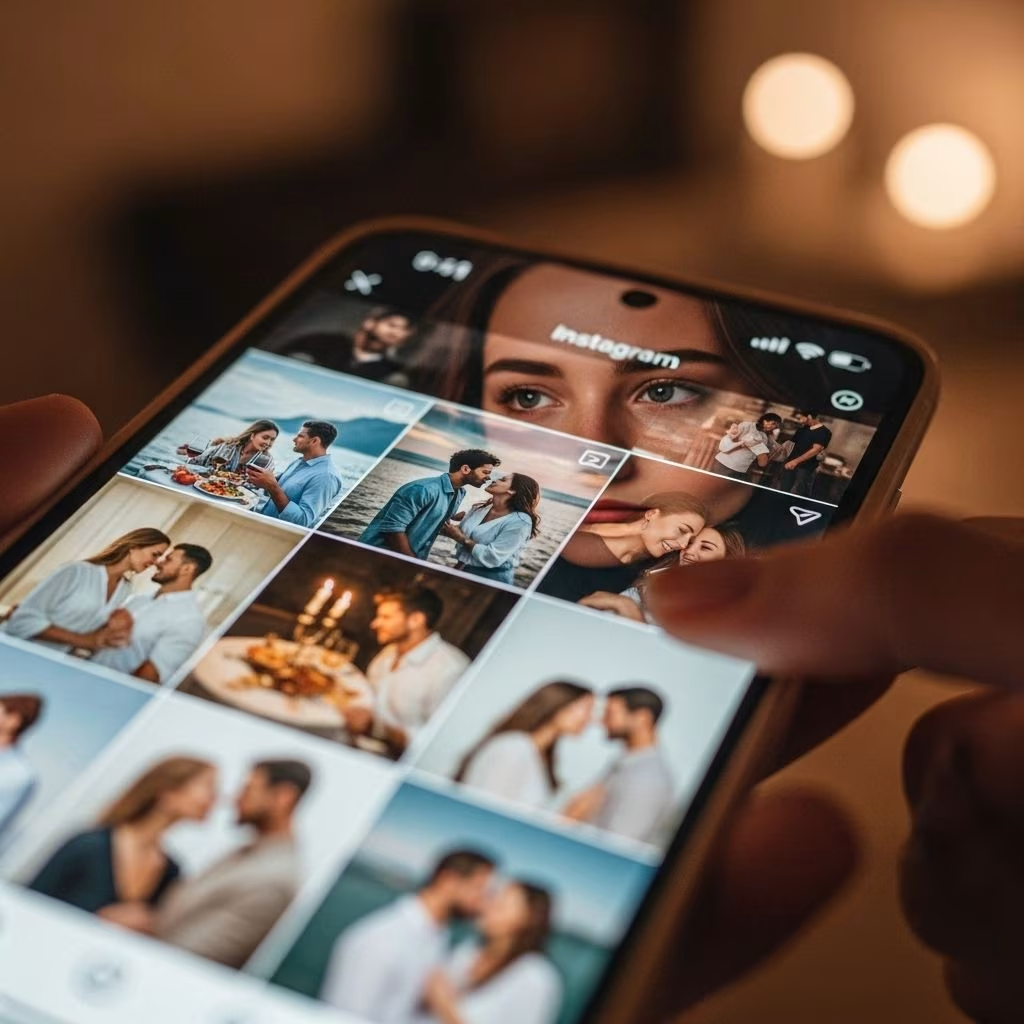
Relationships Under the Lens: The Impact of Instagram Comparison Syndrome
In today’s digital age, our perceptions of relationships are shaped more than ever by social media. Platforms like Instagram, with their endless scroll of picture-perfect couples, luxury vacations, and #relationshipgoals, have transformed how we view our own connections. While these platforms can inspire and showcase love, they also foster a potent culture of comparison, often sowing seeds of self-doubt and insecurity. This phenomenon, commonly referred to as Instagram Comparison Syndrome, touches on deeper issues of self-worth, happiness, and contentment within relationships.
What Is Instagram Comparison Syndrome?
Instagram Comparison Syndrome describes the habitual act of measuring our own relationships against idealized versions seen on social media. Unlike face-to-face interactions, Instagram’s curated feeds amplify highlight reels—filtered snapshots designed to show life’s best moments, often omitting struggles and imperfections. For many, this can trigger feelings of inadequacy, jealousy, and anxiety about their own romantic lives.
How the Comparison Trap Begins
- Highlight Reel Effect: Users share only their happiest, most glamorous moments, rarely revealing conflicts or mundane realities.
- Upward Social Comparison: Psychologists define this as comparing oneself to someone perceived as better off, which is frequent on Instagram and can damage global and physical self-esteem.
- FOMO (Fear of Missing Out): Seeing others’ milestones online can make users feel they’re behind or not achieving enough, affecting self-assessment and relationship satisfaction.
- Implicit Comparison: Individuals may not realize they’re making comparisons, yet the negative impact accumulates unconsciously.
Why Do We Compare?
The tendency to compare our lives to others has deep roots in social comparison theory. We naturally gauge our progress, worth, and happiness by observing others. Instagram intensifies this instinct through visual cues, instant feedback, and the pressure to present our best selves. Researchers have consistently found that frequent exposure to idealized representations on social media mediates the relationship between platform use and lowered self-esteem, especially in the context of relationships.
- Self-Esteem Seeking: People often look for reassurance or validation by benchmarking their relationships against others.
- Perceived Social Ranking: Seeing others ‘doing better’ can threaten one’s sense of social standing, increasing vulnerability to anxiety and depression.
- Cultural Pressure: Societal expectations around love, success, and happiness are amplified by social media trends.
Real Relationships vs. Instagram Relationships
Couples who feel secure and content offline may find their confidence shaken after scrolling through social feeds. Common thoughts include:
- “Are we missing out because we’re not traveling or celebrating grand gestures?”
- “Should my partner and I be posting more couple content to prove our love?”
- “Is our relationship less fulfilling than those I see online?”
These questions stem from comparing private realities to public performances. In truth, social media rarely showcases arguments, compromises, or daily routines that build genuine intimacy in healthy relationships.
Psychological Effects of Instagram Comparison
- Reduced Self-Esteem: Upward comparisons on Instagram consistently correlate with lower self-worth and dissatisfaction in multiple research studies.
- Relationship Anxiety: Constant comparison can introduce doubt and insecurity, even in solid relationships.
- Emotional Exhaustion: Attempting to keep up with online appearances leads to stress and emotional fatigue.
- Symptoms of Depression: Evidence shows higher Instagram usage and perceived exposure to upward comparisons increases depressive symptoms.
- Fear of Missing Out: Feeling left out or inadequate can disrupt the sense of fulfillment in your relationship.
| Psychological Effect | Manifestation | Impact on Relationships |
|---|---|---|
| Self-Esteem Loss | Comparing milestones, looks, lifestyle to others | Questioning self-worth and relationship value |
| Relationship Anxiety | Worrying about matching online standards | Doubting partner’s commitment or happiness |
| Emotional Fatigue | Feeling burnt out from curating posts | Resentment or withdrawal from partner |
| Depressive Symptoms | Sadness, apathy, loss of interest | Decreased relationship satisfaction |
Who Is Most Vulnerable?
Not all individuals or couples experience Instagram Comparison Syndrome equally. Research outlines several risk factors:
- Young adults and adolescents tend to be more susceptible, as they are still forming self and relationship identities.
- High social media users are at greater risk for developing low self-esteem and depressive symptoms.
- Individuals with pre-existing insecurity may find comparison effects more pronounced.
- Couples experiencing life transitions (e.g., new marriage, parenting) may become more sensitive to digital comparison.
The Paradox of Connection in the Digital Era
While Instagram offers connection and positive engagement, the paradox is that users can feel more isolated and less satisfied in their own relationships. Comment threads, likes, and relationship hashtags might validate online personas, but they rarely capture the depth and resilience of offline bonds. The rise of ‘Insta-couples’ who broadcast every romantic gesture can distort expectations about love and fulfillment, leading followers to believe happiness is linked to aesthetic perfection or constant excitement.
- Surface-Level Engagement: Online interactions often lack nuance and authenticity.
- Invisibility of Reality: Real struggles and growth don’t make for viral content.
- Emotional Distance: Trying to emulate online love can create disconnect in true intimacy.
Is It All Bad? The Positive Side of Social Media
Despite the drawbacks, Instagram can have positive effects on relationships when used mindfully:
- Celebration: Sharing genuine moments of joy can bolster connection and serve as relationship reminders.
- Support: Community and peer validation may encourage relationship growth and resilience.
- Inspiration: Learning from others’ creative date ideas or communication tips can invigorate your own connection.
The key lies in distinguishing inspiration from unhealthy comparison: enjoying others’ happiness without letting it diminish your own.
Strategies to Overcome Instagram Comparison Syndrome
Building resilience against comparison starts with conscious changes, online and offline. Research and expert advice highlight several actionable methods:
- Acknowledge the Comparison: Notice when scrolling leads to self-doubt or relational anxiety.
- Set Usage Boundaries: Limit time spent on Instagram or schedule social media breaks.
- Curate Your Feed: Unfollow accounts that trigger negative feelings; follow those who promote kindness, authenticity, and positivity.
- Seek Offline Balance: Invest in your relationship in the real world—quality time, open communication, shared experiences.
- Educate Yourself: Understand social comparison theory and its effects. Awareness is the first step toward minimizing harm.
- Practice Gratitude: Focus on what is working well in your relationship, celebrate wins, and reflect on growth together.
- Ask for Support: Talk to friends, a partner, or a therapist if comparison habits impact your mental health.
Redefining Relationship Success in the Age of Instagram
Relationship fulfillment is subjective and multi-dimensional; it cannot be adequately measured by online applause or curated photos. Couples who thrive in the digital era do so by grounding their connection in mutual respect, trust, and authenticity—qualities that are not always visible or measurable on Instagram.
- Set your own goals: Decide as a couple what matters most to you, independent of online trends.
- Be authentic online: If you choose to share, highlight real moments—successes and setbacks alike.
- Foster honest conversation: Discuss with your partner your feelings about social media and how it impacts you both.
Case Study: When Social Media Makes Me Doubt My Relationship
Personal stories pepper the conversation about comparison syndrome. Many users express contentment with their partnerships, yet still feel inferior after browsing Instagram feeds. For example, a happily married person may report:
- Feeling lucky and fulfilled most days
- Suddenly questioning if their life is “exciting enough” after seeing others’ travels or milestones
- Experiencing a cycle of gratitude, then insecurity, caused purely by online exposure
This narrative is common, proving that comparison culture can impact anyone—regardless of how strong or happy their relationship is offline.
Expert Insights: What Research Really Says
- Upward social comparisons on Instagram mediate reduced self-esteem and increased depressive symptoms across age groups.
- Research finds a fully mediated link between Instagram use, upward comparison, and mental health decline, especially in heavy users.
- Strategies that promote digital literacy and mindful consumption can help buffer these harmful effects, especially for vulnerable groups.
- Building awareness and community conversations about healthy social media practices supports individual and relational wellbeing.
| Research Area | Key Finding | Implications |
|---|---|---|
| Self-esteem | Upward comparison leads to lowered esteem | Target for intervention and awareness programs |
| Depression | Instagram use associated with increased symptoms via comparison | Limit exposure; build digital resilience |
| Couples dynamics | Comparison breeds doubt even in healthy relationships | Promote communication and authenticity |
Frequently Asked Questions (FAQs)
Q: Why do people compare their relationships on Instagram?
A: Social media amplifies natural comparison instincts by presenting only highlight reels. As a result, users often benchmark their relationships against highly curated and idealized profiles, leading to feelings of inadequacy and envy.
Q: How does Instagram comparison syndrome affect mental health?
A: Consistent studies show that upward comparison on Instagram can mediate reduced self-esteem and increases vulnerability to anxiety and depressive symptoms, especially among heavy users and adolescents.
Q: What can I do to stop comparing my relationship to others online?
A: Limit or curate your Instagram feed, spend more time offline, practice gratitude, and openly communicate your feelings with your partner. Professional support can also help if comparison worsens mental wellbeing.
Q: Are social media relationships real?
A: Online couples often display only their best moments, omitting conflict and challenges. While some accounts strive for authenticity, most do not fully reflect real life, so it’s crucial not to judge your relationship against these curated portrayals.
Q: Can Instagram ever be positive for relationships?
A: Used mindfully, Instagram can celebrate love, offer support, and spark inspiration. The challenge is to keep sharing and scrolling rooted in authenticity rather than competition or comparison.
Final Thoughts
The pressure to compare on Instagram is a modern challenge, but it can be met with conscious, compassionate strategies. By understanding the psychological effects of comparison culture and setting boundaries, couples can protect their relationship satisfaction and personal wellbeing while still enjoying the connective potential of social media. Real love thrives in moments unseen by followers—and those are worth celebrating most of all.
References
- https://www.stylist.co.uk/life/comparing-ourselves-to-others-comparison-culture-research-self-esteem-instagram-social-media-success-careers-fitness-relationships/345725
- https://www.lemon8-app.com/@cleonataliee/7541207504760816183?region=us
- https://www.frontiersin.org/journals/psychology/articles/10.3389/fpsyg.2025.1597241/full
- https://www.betterhelp.com/advice/general/how-does-comparing-yourself-to-others-on-social-media-impact-your-mental-health/
- https://pmc.ncbi.nlm.nih.gov/articles/PMC10182465/
- https://journals.sagepub.com/doi/10.1177/21582440231193916


