


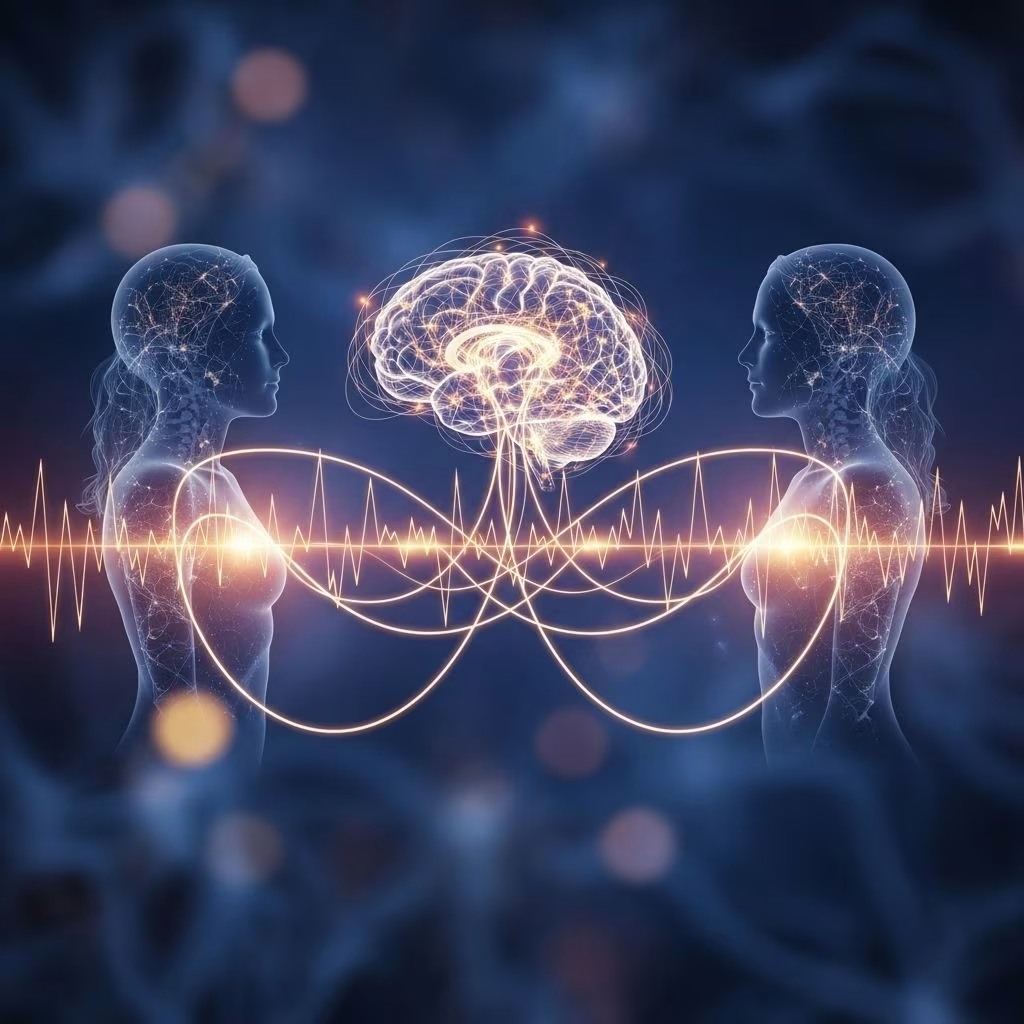
Introduction to Interpersonal Neurobiology
Interpersonal neurobiology (IPNB) is a multidisciplinary approach that examines how the mind, brain, and relationships interact and influence each other. Developed by Dr. Dan Siegel, IPNB highlights the interconnectedness of human connections and neural pathways, emphasizing how our early experiences, attachment styles, and social environment shape our brain development and behavior.
The Triune Brain Model
The concept of the triune brain, proposed by Paul D. MacLean, plays a crucial role in understanding IPNB. It suggests that the brain consists of three main parts: the reptilian complex, the limbic system, and the neocortex. Each part contributes uniquely to our survival, emotional responses, and rational thinking, respectively.
- Reptilian Complex: Controls basic survival functions like heart rate and body temperature.
- Limbic System: Manages emotions and memory, crucial for forming social bonds and attachments.
- Neocortex: Responsible for higher-order thinking, decision-making, and social behavior.
Relationships and Neural Integration
IPNB emphasizes the role of relationships in fostering neural integration. When we engage in healthy, empathetic interactions, our brains develop better connections between different regions, enhancing cognitive and emotional regulation. Conversely, negative experiences can lead to chaotic or rigid neural patterns, affecting mental health.
Couples Therapy and IPNB
Couples therapy benefits from IPNB by promoting differentiation and linkage in relationships. Differentiation refers to respecting individual differences, while linkage involves forming compassionate connections. This integration supports healthy self-regulation and resilience during conflicts, helping couples navigate their differences effectively.
Attachment Styles and Conflict
Understanding attachment styles is essential in IPNB. Anxious/avoidant attachment patterns can lead to conflict, as some individuals may seek more independence (islands) while others require co-regulation (waves). Recognizing these needs helps in addressing feelings and fostering a more harmonious relationship.
Neural Integration and Well-being
Neural integration is key to well-being, as it enables differentiated areas of the brain to communicate effectively. This integration supports executive functions like attention, emotion regulation, and decision-making. Relational integration, where individuals attune to each other’s internal states, can stimulate neural growth and improve mental health.
Practical Applications of IPNB
IPNB offers practical tools for improving emotional regulation and relationships. Practices such as mindfulness, empathy, and compassion can enhance neural development and social harmony. By understanding the mind-brain relationship triad, individuals can foster more empathic connections and promote personal and interpersonal growth.
Q: What is the main focus of interpersonal neurobiology?
A: IPNB focuses on the interconnectedness of the mind, brain, and relationships, exploring how these interactions shape our behavior and well-being.
Q: How does the triune brain model relate to relationships?
A: The triune brain model helps explain how different brain systems (reptilian, limbic, neocortical) contribute to our responses in social interactions, influencing emotional regulation and decision-making.
Q: Can IPNB improve mental health?
A: Yes, IPNB can improve mental health by promoting neural integration, enhancing emotional regulation, and fostering healthier relationships through differentiation and linkage.
References
- https://grimaldocounseling.com/learn/what-is-interpersonal-neurobiology
- https://www.couplesinstitute.com/couples-therapy-interpersonal-neurobiology/
- https://dcal.dartmouth.edu/sites/dcal.prod/files/center_for_advancement_learning/wysiwyg/the_mind_in_psychotherapy_-_an_interpersonal_neurobiologu_framework_for_understanding_and_cultivating_mental_health.pdf
- https://jakelohwaterlcsw.com/interpersonal-neurobiology/
- https://drdansiegel.com/interpersonal-neurobiology/
- https://www.icc.institute/iccm/what-is-interpersonal-neurobiology-ipnb/
- https://pmc.ncbi.nlm.nih.gov/articles/PMC9897608/
- https://www.thecenterforconnection.org/approach
- https://www.journalofanevolvingteacher.com/blog/the-mind-brain-and-relationships-triad


