


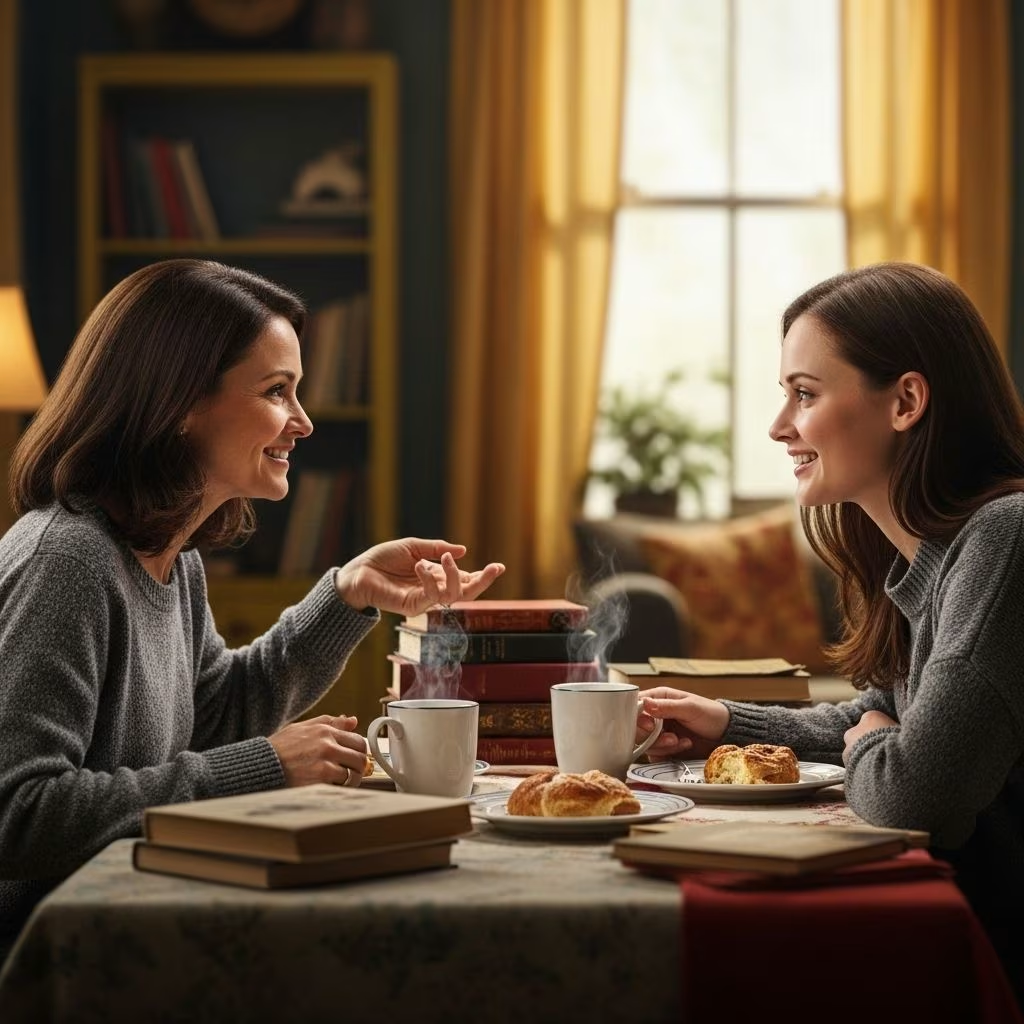
When Gilmore Girls first aired, the refreshing portrayal of Lorelai and Rory Gilmore’s mother-daughter dynamic quickly captured the hearts of viewers. Their rapid-fire banter, constant support, and seemingly boundaryless friendship set a new pop culture ideal. For many, this relationship became a blueprint for what mother-daughter bonds could be—not just loving, but genuinely close. But is this BFF-style connection realistic or even healthy for most families? What lessons can we actually draw from Lorelai and Rory’s unique dynamic, and how might it influence real-life relationships?
The Allure of the ‘Gilmore Girls’ Blueprint
Lorelai and Rory’s relationship stands out because of its extraordinary closeness. Their routines—shared movie nights, endless cups of coffee at Luke’s Diner, and unfiltered conversations—encourage the idea that a mom can also be her daughter’s best friend. Fans often see their bond as the ultimate goal, wishing to swap everyday misunderstandings for witty repartee and unwavering alliance.
- Pop culture phenomenon: The series is a staple for many millennials, particularly women, who nostalgically recall watching the duo’s adventures with their own mothers.
- Intense friendship: Lorelai and Rory often blur the lines between parent and peer, treating each other as confidantes first and family second.
- Appeal of emotional openness: Their ability to talk about nearly everything—from crushes to career dramas—emphasizes a radical transparency many families lack.
For countless viewers, the Gilmore Girls dynamic represents not just escapist television but an aspirational guidebook for familial connection.
The Downside: When Boundaries Get Blurry
While the Lorelai-Rory relationship is iconic, family therapists and psychologists caution that real-life versions can have unintended consequences. The most significant critique centers around the erosion of traditional parent/child boundaries. In the Gilmore household, Lorelai frequently involves Rory in adult problems, sometimes leaning on her daughter for emotional support that would traditionally come from a peer or partner.
- Role reversal: Lorelai is sometimes emotionally dependent on Rory, who is ‘parentified’—forced into an adult’s responsibilities and confidences before she’s developmentally ready.
- The flow of care: Family therapists note that, ideally, emotional care should flow downward—from parent to child—to create a feeling of stability and safety. In Gilmore Girls, that flow often reverses.
- Independence at a cost: Rory’s extraordinary self-sufficiency and responsibility can read as impressive but also hint at a childhood spent over-functioning emotionally.
These factors can produce a relationship where the daughter, like Rory, feels compelled to take care of the parent, often at the expense of their own needs and boundaries.
Fighting Fair: Communication Gaps Beneath the Banter
Despite their quick wit and frequent dialogue, the Gilmores do not always model healthy conflict resolution. Lorelai often claims that she and Rory never fight, but in reality, they sometimes give each other the silent treatment rather than address their feelings directly.
- Conflict avoidance: Disagreements are often met with withdrawal or silence, rather than open discussion and resolution.
- Misconceptions about harmony: Many viewers mistake lack of open fighting for harmony, but therapists argue that voicing differences and working through them is crucial for healthy bonds.
- Parental responsibility: Mothers have the responsibility to model active listening and empathy, rather than defensiveness or avoidance, to validate their daughters’ feelings.
The superficial harmony can undermine deeper communication and the daughter’s ability to express her real needs without fear of disrupting the relationship.
Parenthood After ‘Gilmore Girls’: Lessons for Real Moms and Daughters
Many women who grew up idolizing the Gilmore dynamic are now parents themselves and have reevaluated what healthy closeness should look like. Family therapists and writers who rewatch the show as adults often notice elements that seemed enviable as teenagers, but worrying when viewed through a parental lens.
- Shifting perspectives: Childhood viewers admired Rory and Lorelai’s best-friend closeness. As adults, some recognize the drawbacks of a friendship-first approach.
- Childhood boundaries revisited: Healthy parent-child relationships often involve clear expectations, support, and boundaries—even if it means being the ‘bad guy’ sometimes.
- Importance of modeling boundaries: Demonstrating healthy relational boundaries equips children with better emotional tools for adulthood.
Revisiting the show as an adult or a parent emphasizes the importance of balancing warmth with structure in any family relationship.
Pros of a Gilmore-Style Relationship
| Benefit | Description |
|---|---|
| Emotional closeness | The ability to talk about nearly everything fosters trust and honesty. |
| Supportive environment | Encourages the daughter to pursue her dreams, knowing her mother backs her up. |
| Joyful rituals | Shared activities and traditions (like movie nights) create lasting memories. |
| High empathy | Both mother and daughter feel seen, heard, and understood. |
Cons of a Gilmore-Style Relationship
| Drawback | Description |
|---|---|
| Poor boundaries | Daughter may feel burdened by adult problems and responsibilities. |
| Role confusion | Lines between parent and peer are blurred; emotional care may flow upward. |
| Difficulty with conflict | Issues may be avoided rather than resolved, leading to silent resentment. |
| Pressure for perfection | Trying to maintain an ‘ideal’ bond can create guilt or feelings of failure if problems arise. |
Finding the Balance: How to Build Healthy Mother-Daughter Bonds
For those who crave a Lorelai-and-Rory-style connection but want to avoid the pitfalls, experts recommend focusing on the following relationship pillars:
- Set healthy boundaries: Keep adult issues between adults; allow daughters to be children and grow into adulthood without premature responsibilities.
- Encourage open (but age-appropriate) communication: Create safe spaces for real conversations without oversharing.
- Model emotional regulation: Parents should demonstrate how to navigate and resolve conflict constructively.
- Celebrate individuality: Support daughters’ different personalities and choices, as Lorelai did with Rory’s academic passions.
- Balance friendship and authority: Enjoy closeness but remain a guide and protector when necessary, even if it means setting unpopular boundaries.
Ultimately, the healthiest bonds take the best of the Gilmore template—warmth, humor, caring—and pair it with mindful parenting that allows children to grow into their own identities.
Generational Patterns: The Lorelai-Emily Effect
Much of Lorelai’s parenting style is a reaction to her own upbringing with Emily, her perfectionistic and controlling mother. In seeking friendship with Rory, Lorelai tries to create the relationship she wishes she’d had, but as a result, sometimes swings too far in the opposite direction—favoring friendship over structure.
- Cycle of reaction: Many modern parents attempt to create bonds unlike the rigid relationships of their own childhoods, but swinging too far can create new challenges.
- Room for growth: Recognizing the patterns that shaped one’s own parenting can help find a more balanced, nurturing approach.
Media Influence: Why We’re Drawn to the Gilmore Vision
Television shapes our expectations for our real lives, often in subtle ways. The Lorelai-Rory ideal circulates on social media, memes, and even in advice columns. It’s worth remembering that TV simplifies or glosses over issues that require hard work, patience, and sometimes less-than-pretty debates in reality.
- Aspirational relationships: Pop culture often creates benchmarks that are difficult—or impossible—to achieve in real life, leading to unnecessary comparison and disappointment.
- Power of representation: Representation of affectionate, witty, close family relationships can still inspire positive changes when taken with a grain of realism.
Frequently Asked Questions (FAQs)
Q: Is it healthy for mothers and daughters to be best friends?
A: While a close and supportive bond is beneficial, experts caution against a total absence of boundaries. A best-friend relationship can compromise the space needed for healthy growth, emotional development, and parental guidance.
Q: What is parentification, and does it happen in ‘Gilmore Girls’?
A: Parentification occurs when a child takes on roles and responsibilities meant for a parent, including providing emotional support. Rory often fills this role for Lorelai, which can lead to stress and loss of childhood independence.
Q: How can real parents avoid the downsides of a boundaryless relationship?
A: Maintaining open communication while establishing clear roles, protecting children from inappropriate adult issues, and fostering independence are key steps for healthy bonds.
Q: Was Lorelai a good mother to Rory?
A: Lorelai demonstrated immense love and support for Rory, helping her become a confident, successful adult. However, she sometimes failed to provide adequate boundaries, placing emotional burdens on Rory that ideally would be carried by adults.
Q: Can I use ‘Gilmore Girls’ as a guide for my own family?
A: The show offers positive models of closeness and support, but real-life parenting requires more nuanced boundaries and distinct roles between parent and child. Use the warmth as inspiration, but build your own family’s relationship rules.
Key Takeaways for Building Your Own Gilmore-Inspired Bond
- Embrace closeness: Find joy in shared interests and open communication, but recognize the importance of limits.
- Model respect: Allow for respectful disagreements and learn from mistakes together.
- Support your child’s individuality: Let them have space to develop their own identity, separate from the parent.
The Gilmore Girls’ mother-daughter relationship captured imaginations by showing how love, laughter, and deep conversation can thrive within a family. The healthiest modern parent-child bonds are built on the same foundations, but with the understanding that friendship and parenthood are not mutually exclusive—when guided by empathy, boundaries, and a willingness to grow together.
References
- https://www.businessinsider.com/gilmore-girls-family-therapist-wont-watch-with-daughter-2023-11
- https://www.cpccounseling.com/blog/gilmoregirlsandfamilydynamics
- https://www.wellandgood.com/lifestyle/is-gilmore-girls-mother-daughter-relationship-healthy
- https://girlintrouble.substack.com/p/the-complex-motherdaughter-relationships
- https://www.purewow.com/family/gilmore-girls-rewatch-with-daughter


