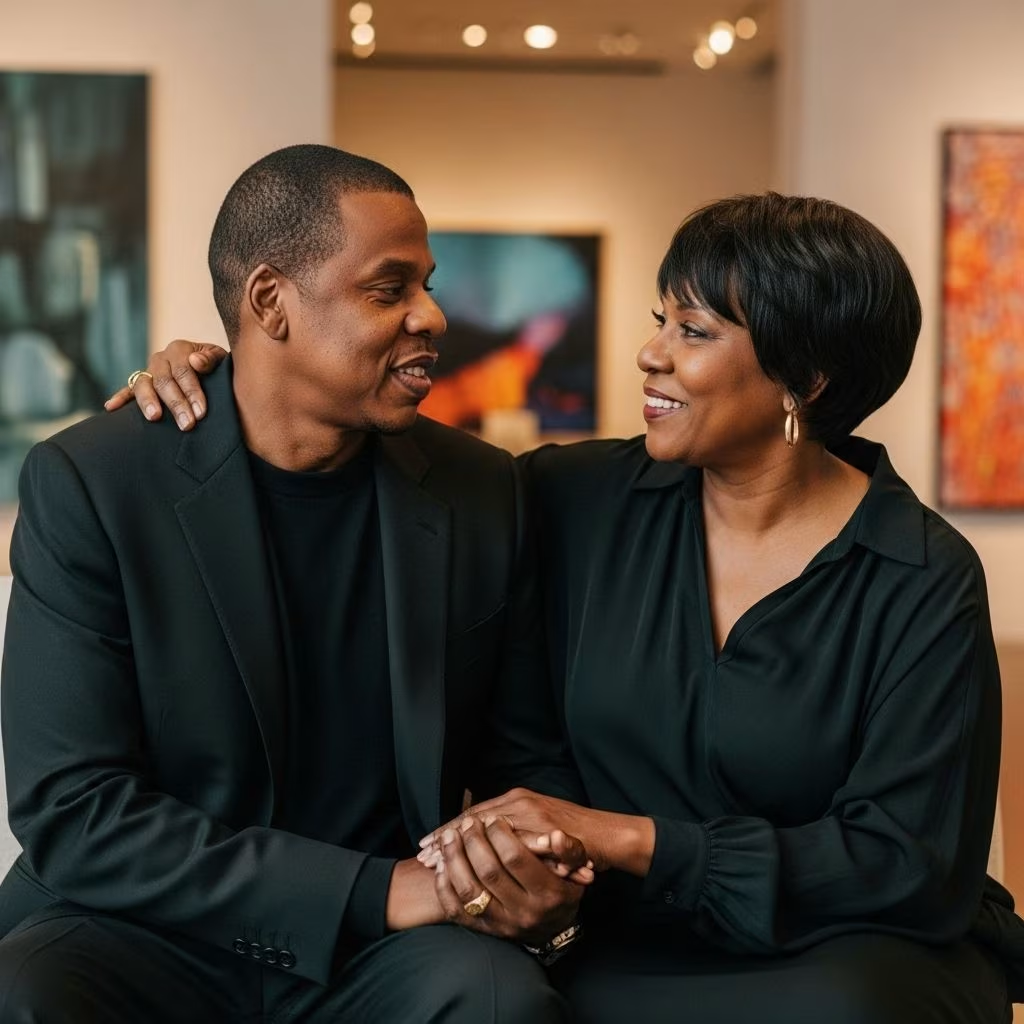
The relationship between a parent and child can be one of life’s most profound connections, shaped by love, understanding, and mutual respect. When Jay-Z’s mother, Gloria Carter, publicly came out as a lesbian, their bond became a powerful symbol of the progress the LGBTQ+ community has achieved in recent years. This story transcends celebrity gossip—it represents a cultural shift that has transformed how society views and accepts diverse sexual orientations and gender identities.
In an industry historically known for homophobia and hypermasculinity, Jay-Z’s public support for his mother’s truth stands as a revolutionary act. His 2017 album 4:44 featured the deeply personal track “Smile,” which chronicled Gloria Carter’s journey of living authentically after decades of hiding her true identity. The song not only revealed intimate family details but also challenged the hip-hop community to confront its prejudices and embrace acceptance.
The Weight of Silence: Gloria Carter’s Hidden Life
For years, Gloria Carter lived what she described as a “different” life—one marked by the necessity of concealment rather than the freedom of authenticity. As a single mother raising four children in Brooklyn, including the boy who would become one of hip-hop’s most influential figures, she carried the additional burden of hiding her sexual orientation. The fear of societal judgment, potential harm to her family, and the pervasive stigma surrounding LGBTQ+ identities forced her to suppress her true self.
In the moving lyrics of “Smile,” Jay-Z captured his mother’s struggle with remarkable empathy and understanding. “Mama had four kids, but she’s a lesbian. Had to pretend so long that she’s a thespian. Had to hide in the closet, so she medicate. Society shame and the pain was too much to take,” he rapped, acknowledging the tremendous psychological toll that living in secrecy exacted on his mother. This wasn’t just artistic expression—it was a son bearing witness to his mother’s pain and using his platform to validate her experience.
Gloria’s decision to remain closeted wasn’t made lightly. It reflected the harsh realities faced by LGBTQ+ individuals, particularly in communities where traditional values and religious beliefs often conflicted with acceptance of diverse sexual orientations. The act of hiding became a survival mechanism, a way to protect not only herself but also her children from potential discrimination and prejudice.
A Conversation That Changed Everything
The moment Gloria Carter decided to share her truth with her son marked a turning point in both their lives. Speaking on the D’Usse Friday podcast, she recalled the emotional conversation that inspired “Smile.” “I was sitting there, and I was telling him one day. I just finally started telling him who I was. Besides your mother, this is the person that I am, you know? This is the life that I lived,” she explained.
Jay-Z’s immediate response—tears of compassion and understanding—revealed the depth of their relationship and his emotional maturity. Rather than reacting with shock, disappointment, or rejection, he recognized the courage it took for his mother to be vulnerable and the pain she had endured. Gloria recalled his words: “That had to be a horrible life, ma.” Her response was telling: “My life was never horrible. It was just different.”
This exchange demonstrates the evolution of understanding within families. Gloria’s perspective—that her life wasn’t horrible, just different—speaks to the resilience of LGBTQ+ individuals who have found ways to create meaning and joy despite societal constraints. Jay-Z’s emotional reaction and subsequent decision to record her story show how younger generations can serve as allies and advocates for their elders who lived through more oppressive times.
What makes this moment particularly powerful is that Jay-Z recorded his mother’s confession over the phone during their initial conversation. The raw authenticity of that moment became part of the song itself, preserving the vulnerability and honesty of Gloria’s coming out for the world to hear.
From Private Pain to Public Pride
The release of “Smile” in 2017 transformed Gloria Carter’s private journey into a public statement about LGBTQ+ acceptance. At the end of the track, she delivered a powerful spoken-word poem that resonated with countless individuals living in similar circumstances. Her words painted a vivid picture of the duality many LGBTQ+ people experience—appearing happy and free while internally constrained by fear and secrecy.
“Living in the shadow/Can you imagine what kind of life it is to live? In the shadows people see you as happy and free/Because that’s what you want them to see,” she began, articulating the exhausting performance of heteronormativity that many LGBTQ+ individuals feel compelled to maintain.
Her poem continued with a message of hope and liberation: “But life is short, and it’s time to be free/Love who you love, because life isn’t guaranteed/Smile.” This simple yet profound statement encapsulated the essence of LGBTQ+ advocacy—the fundamental right to love authentically and live truthfully without fear of persecution or judgment.
The cultural impact of Gloria’s revelation extended far beyond her personal story. In hip-hop, a genre often criticized for homophobic lyrics and attitudes, having one of the industry’s most respected figures publicly support his mother’s homosexuality challenged long-standing prejudices. Jay-Z’s verse on “Smile” included the affirming lines: “Cried tears of joy when you fell in love. Don’t matter to me if it’s a him or her. I just wanna see you smile through all the hate.”
Recognition and Celebration of Progress
In 2018, “Smile” received a Special Recognition award at the 29th GLAAD Media Awards in Los Angeles, acknowledging its contribution to LGBTQ+ visibility and acceptance. Gloria Carter accepted the award on behalf of her son, delivering a moving speech that further cemented her role as an advocate for the community.
“Here I am. I’m loving. I’m respectful. I’m productive, and I’m a human being who has a right to love who I love,” she declared, asserting her dignity and humanity in the face of historical marginalization. Her concluding words—“So everybody—just smile, be free. Thank you and God bless”—served as both a personal affirmation and a universal call to liberation for all LGBTQ+ individuals.
The GLAAD recognition highlighted how cultural representation through music and media plays a crucial role in advancing LGBTQ+ rights and acceptance. When prominent figures share authentic stories about their experiences or those of their loved ones, they create pathways for broader understanding and empathy. The award also validated the importance of allyship, demonstrating that support from family members and influential figures can amplify LGBTQ+ voices and experiences.
Love Finds Its Way: Gloria Carter’s Marriage
The culmination of Gloria Carter’s journey toward living authentically came when she married her longtime partner, Roxanne Wiltshire, in a star-studded ceremony held in Tribeca, New York City. The celebration, which lasted until the early morning hours, brought together an impressive gathering of friends, family, and entertainment industry luminaries.
Among the attendees were Jay-Z, Beyoncé, their daughter Blue Ivy, Kelly Rowland, Tina Knowles-Lawson, Tyler Perry, Robin Roberts, Corey Gamble, and many others. The presence of such high-profile guests wasn’t just a testament to Gloria’s connections—it represented the visible support network that has emerged for LGBTQ+ individuals in recent years. The fact that these celebrities publicly attended and celebrated this same-sex union sends a powerful message about acceptance and normalization.
Gloria wore an embroidered white blazer with gray pants, while Roxanne donned a white and silver sequin gown, both looking radiant as they celebrated their commitment. The couple had maintained a relatively private relationship over the years, but their wedding marked a public declaration of their love and partnership. This transition from privacy to public celebration mirrors the broader societal shift that has made it safer and more acceptable for LGBTQ+ individuals to live openly.
The Broader Cultural Shift
Gloria Carter’s story exists within a larger narrative of LGBTQ+ progress that has accelerated dramatically in recent years. The legal, social, and cultural landscape has transformed in ways that would have seemed impossible just a generation ago. The legalization of same-sex marriage across the United States in 2015, increased representation in media and entertainment, and growing corporate and institutional support have created an environment where coming out is increasingly met with acceptance rather than rejection.
However, Gloria’s experience also reminds us that progress is not uniform. Her decades of hiding reflect the reality that many LGBTQ+ individuals, particularly those from older generations or marginalized communities, still face significant barriers to living authentically. The intersection of race, class, religion, and geography continues to shape individual experiences of acceptance and discrimination.
Within the Black community specifically, conversations about homosexuality have historically been complicated by religious traditions, cultural expectations, and the additional burden of representing the community positively in the face of systemic racism. Gloria’s public coming out and subsequent wedding represent important steps toward greater acceptance within Black families and communities, challenging stereotypes and expanding definitions of what Black love and family can look like.
Hip-Hop’s Evolution on LGBTQ+ Issues
The hip-hop community’s relationship with LGBTQ+ issues has been fraught with tension, marked by explicitly homophobic lyrics, the use of slurs, and a culture that often equated masculinity with heterosexuality. For decades, LGBTQ+ artists and fans within hip-hop faced invisibility, ridicule, or outright hostility.
Jay-Z’s public support for his mother represents a significant departure from this history. As one of hip-hop’s most successful and influential figures, his willingness to center his mother’s lesbian identity in his art and celebrate her marriage sends a clear message about the need for acceptance and respect. This doesn’t erase hip-hop’s problematic history with homophobia, but it does suggest that change is possible and that even within traditionally conservative spaces, attitudes can evolve.
Other artists have also contributed to this shift, with figures like Frank Ocean, Lil Nas X, and others coming out and finding commercial success, challenging the notion that openly LGBTQ+ artists cannot thrive in hip-hop. These individual acts of courage, combined with support from allies like Jay-Z, are gradually transforming the culture from within.
The Role of Family Acceptance
Research consistently shows that family acceptance is one of the most important factors in the mental health and well-being of LGBTQ+ individuals. When parents, siblings, and children affirm and support their loved ones’ identities, it dramatically reduces rates of depression, anxiety, and suicidal ideation. Conversely, rejection and lack of support correlate with significantly worse outcomes.
Jay-Z’s acceptance of his mother’s identity exemplifies the life-changing power of familial love and support. His emotional response to her coming out—tears of compassion rather than anger or disappointment—created a safe space for her to live authentically. His subsequent artistic celebration of her identity amplified that support, turning their private family dynamic into a public model of acceptance.
This reversal of traditional family dynamics—where the child supports and validates the parent’s identity—reflects changing generational attitudes toward LGBTQ+ issues. Younger generations, who have grown up with greater exposure to diverse sexual orientations and gender identities, often serve as educators and advocates within their families, helping older relatives understand and accept LGBTQ+ loved ones.
Challenges That Remain
While Gloria Carter’s story represents genuine progress, it’s essential to acknowledge that significant challenges remain for the LGBTQ+ community. Discrimination in employment, housing, and healthcare continues. Violence against LGBTQ+ individuals, particularly transgender women of color, remains alarmingly high. Legal protections vary widely by state and country, and recent years have seen coordinated efforts to roll back LGBTQ+ rights in various jurisdictions.
The fact that Gloria felt compelled to hide her identity for decades—even as she raised children who loved her—speaks to the powerful forces of stigma and discrimination that persist. Her story is one of triumph, but it also serves as a reminder of the countless individuals who never had the opportunity, support, or safety to live authentically.
Moreover, intersectionality matters. LGBTQ+ individuals who are also people of color, immigrants, economically disadvantaged, or members of other marginalized groups face compounded discrimination and barriers to acceptance. Gloria’s story, while inspiring, reflects the experience of someone with certain privileges—including a famous, supportive son and financial stability—that not all LGBTQ+ individuals possess.
Looking Forward: The Next Generation
The evolution of Jay-Z’s relationship with his mother offers hope for future generations. As more families navigate conversations about sexual orientation and gender identity with love and acceptance, the culture shifts incrementally but powerfully. Children growing up today are increasingly likely to know openly LGBTQ+ individuals, to see same-sex couples in their communities, and to understand diversity as a normal part of human experience.
Gloria Carter’s wedding, attended by her grandchildren including Blue Ivy, represents the transmission of acceptance across generations. These young people are learning through example that love is love, that families come in many forms, and that living authentically is worth celebrating. This normalization in the next generation creates the foundation for a more accepting future.
The visibility of stories like Gloria’s also encourages others to come out and live authentically. Every public coming out story, every celebration of LGBTQ+ love and family, contributes to a cultural shift that makes it easier for the next person to be honest about who they are. This ripple effect of courage and acceptance is how social change happens—one story, one family, one conversation at a time.
Frequently Asked Questions
Q: When did Gloria Carter publicly come out?
A: Gloria Carter’s sexual orientation became public knowledge in 2017 when Jay-Z released the song “Smile” on his album 4:44, which detailed her experience as a lesbian woman who had hidden her identity for years.
Q: Who did Gloria Carter marry?
A: Gloria Carter married her longtime partner Roxanne Wiltshire in a ceremony held in Tribeca, New York City, attended by family and friends including Jay-Z, Beyoncé, and other celebrities.
Q: What award did the song “Smile” receive?
A: “Smile” received a Special Recognition award at the 29th GLAAD Media Awards in 2018, honoring its contribution to LGBTQ+ visibility and acceptance.
Q: How did Jay-Z react when his mother came out to him?
A: Jay-Z responded with tears of compassion and understanding, empathizing with the difficult life his mother had lived while hiding her true identity, and expressed his support for her happiness regardless of who she loved.
Q: Why is Gloria Carter’s story significant for the LGBTQ+ community?
A: Her story represents progress in LGBTQ+ acceptance, particularly within the Black community and hip-hop culture. It demonstrates the power of family support and the importance of living authentically, while also highlighting the challenges many LGBTQ+ individuals face in coming out later in life.
References
- https://www.ebony.com/jay-z-mother-gloria-carter-marries-longtime-partner-roxanne-wilshire/
- https://www.scmp.com/magazines/style/entertainment/article/3290520/meet-jay-zs-mother-gloria-carter-single-mum-brooklyn-who-worked-2-jobs-she-became-philanthropist-and
- https://www.essence.com/lifestyle/jay-z-mom/
- https://en.wikipedia.org/wiki/Jay-Z
- https://www.dailymotion.com/video/x8mboig