


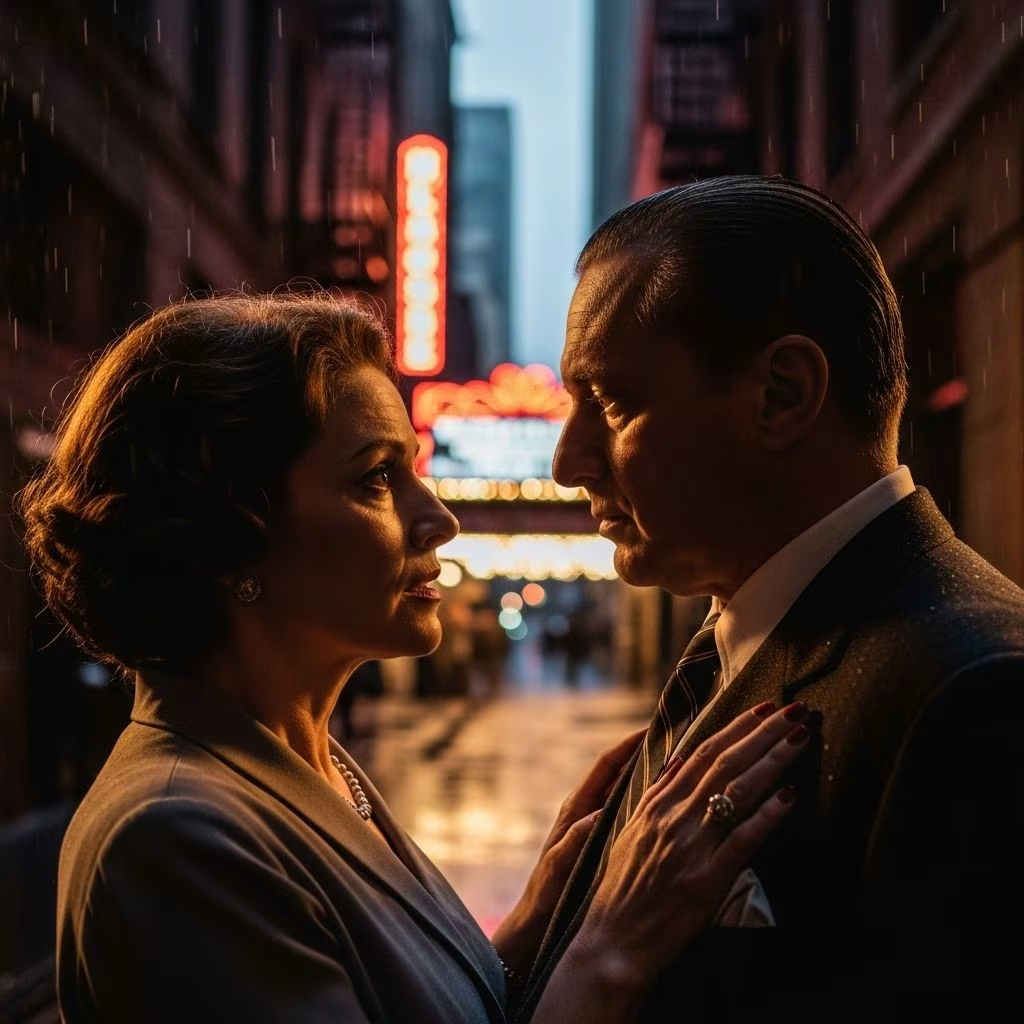
Joan McCracken and Bob Fosse: The Pattern Behind the Marriage
When audiences watched Fosse/Verdon, many were introduced not only to the iconic partnership between Bob Fosse and Gwen Verdon, but also to the lesser-known, yet profoundly influential, relationship between Fosse and his second wife, Joan McCracken. Their turbulent marriage didn’t just shape each other’s destinies—it revealed a pattern in Fosse’s romantic and professional life that would echo for decades.
The Intricate Web of Fosse’s Romantic Life
Famed choreographer Bob Fosse was notorious for his complex relationships. Each of Fosse’s three marriages—first to Mary Ann Niles, then to Joan McCracken, and finally to Gwen Verdon—were not mere footnotes, but essential chapters that influenced his creative evolution. All three women were dancers, and each relationship began with remarkable passion before unraveling amidst infidelity and artistic obsession.
The Early Stardom of Joan McCracken
Joan McCracken carved out Broadway fame in the 1940s, most notably as the scene-stealer in Rodgers and Hammerstein’s Oklahoma! Her signature move—a comic, crowd-pleasing onstage fall—became so celebrated that she earned the nickname “The Girl Who Fell Down”.
By the late 1940s, McCracken was an established star, known for both her physical comedy and her emotional resilience. Her personal life, however, was intricate and as layered as her stage characters. Her first marriage, to author Jack Dunphy, ended after a wartime affair; Dunphy later became Truman Capote’s lifelong companion, and McCracken was rumored to have inspired Capote’s Holly Golightly in Breakfast at Tiffany’s.
- Known For: Comic genius, emotional vulnerability, and trailblazing roles in Broadway musicals.
- First Marriage: Jack Dunphy; ended in divorce after personal complications.
- Cultural Influence: Potential inspiration for Capote’s most iconic character.
Meeting Bob Fosse: A Union of Talent and Turmoil
In 1949, McCracken met Bob Fosse during the Broadway revue Dance Me a Song. McCracken was already a headliner, while Fosse, nearly a decade younger, was an up-and-coming specialty dancer—still married to his first wife and dance partner, Mary Ann Niles.
The connection between McCracken and Fosse was immediate and electric. Their professional collaboration soon gave way to romance, beginning an affair that would upend both their lives and careers. By December 1952, after Fosse’s divorce, they wed in a civil ceremony. Their union, though passionate, was fraught with the same creative intensity and personal complications that characterized Fosse’s work.
The Early Years: Mutual Admiration and Artistic Collaboration
From the beginning, their relationship was defined by deep mutual respect.
- McCracken recognized Fosse’s untapped potential and encouraged him to look beyond his vaudeville roots.
- She was instrumental in convincing Fosse to study more broadly—acting, speech, music, and movement.
- Her support led to his first major break as a Broadway choreographer.
As Fosse recalled later, “She’s the one who encouraged me to be a choreographer. I was very show biz, all I thought about was nightclubs, and she kept saying, ‘You’re too good to spend your life in nightclubs.’ She lifted me up out of that, and I’ll always be grateful.”
Patterns of Infidelity: The Beginning of the End
The pattern that would come to define Fosse’s relationships emerged early with McCracken. Fosse’s burgeoning career meant increasing time away from home and continual exposure to talented women, often the stars of his productions. His affair with McCracken while married to Niles foreshadowed what was to come.
Their marriage, though built on a powerful creative partnership, eventually succumbed to the same strain of infidelity and creative ambition:
- Fosse began an affair with Gwen Verdon while still married to McCracken during the production of Damn Yankees (1955).
- Fosse and McCracken’s personal and professional lives grew increasingly separated as her own career declined—due in large part to severe health problems.
- Despite her loyalty, McCracken struggled with Fosse’s dedication to work and habit of forming romantic relationships with his collaborators.
The Tumultuous Divorce
By the late 1950s, Fosse’s affair with Verdon was an open secret on Broadway, paralleled by their collaborations on New Girl in Town, the film adaptation of Damn Yankees, and Redhead.
McCracken, grappling with declining health and a waning career, filed for divorce in 1959. This marked the end of an era but solidified her lasting impact on Fosse’s trajectory. He would go on to marry Verdon in 1960, only for the cycle of infidelity to repeat.
| Bob Fosse’s Wives | Marriage Years | Relationship Pattern |
|---|---|---|
| Mary Ann Niles | First marriage – pre-1952 | Professional partnership, ended due to affair |
| Joan McCracken | 1952–1959 | Mentorship, infidelity, creative influence |
| Gwen Verdon | 1960–? | Collaborative, also marked by Fosse’s infidelity |
The Personal and Artistic Aftermath
Even after their marriage ended, McCracken’s influence on Fosse remained indelible. She was, according to industry insiders and biographers, “single-handedly responsible for getting Bobby Fosse his first job as a choreographer on Broadway.” Her eye for talent and courage to advocate for Fosse helped birth a new era of American musical theatre.
Sadly, McCracken’s final years were marked by deteriorating health. She suffered from diabetes, which affected her career and ultimately led to her premature death at age 43. Despite this, she found solace in a relationship with actor Marc Adams and enjoyed her last years finding peace away from the spotlight.
- Legacy: McCracken’s artistic and emotional imprint on Broadway and on Fosse’s work is still recognized.
- Death: Passed away in November 1961 from a heart attack, brought on by her diabetes.
- Personal Style: Remembered for her eccentric, uninhibited behavior and spirited joie de vivre, both on and off stage.
The Lasting Legacy: More Than Fosse’s Second Wife
While McCracken may be most frequently cited as Fosse’s second wife, her personal and artistic legacy insists on a fuller recognition:
- She remains an icon for her innovation in dance and acting, bridging Broadway’s golden era with modern musical storytelling.
- Her encouragement, mentorship, and courage to defy conventions helped Fosse transform from a nightclub performer into one of theatre’s greatest choreographers.
- Her influence continued to echo through Fosse’s style, marked by jazz hands, stylized movement, and a probing emotional honesty learned partly from her vulnerability on stage.
As Fosse/Verdon highlights, McCracken’s presence loomed large not as footnote, but as a central force in the life of a man whose work reshaped Broadway. Her story, including her own flaws and heartbreaks, is a reminder that the greatest legacies are often intertwined with struggle, sacrifice, and a relentless pursuit of artistic truth.
Frequently Asked Questions (FAQs)
Q: How did Joan McCracken influence Bob Fosse’s career?
A: McCracken encouraged Fosse to expand his artistic horizons, advocating for him with producers and inspiring his first job as a Broadway choreographer. She urged him to develop his craft beyond nightclubs, fueling his transformation into an iconic choreographer.
Q: Why did Joan McCracken and Bob Fosse divorce?
A: Their marriage ended primarily due to Fosse’s persistent infidelity (notably his affair with Gwen Verdon) and the strain of McCracken’s declining health and career. Fosse’s focus on work and new romantic entanglements made reconciliation impossible.
Q: What is Joan McCracken best remembered for?
A: She is remembered as a groundbreaking Broadway dancer and actor, celebrated for her comedic prowess in Oklahoma! and her honesty on stage. She was also noted for her eccentric personal style and resourcefulness.
Q: Did Joan McCracken remarry after divorcing Fosse?
A: While she never remarried, she had a fulfilling, years-long relationship with actor Marc Adams until her death.
Q: How did Joan McCracken die?
A: She died of a heart attack brought on by complications from diabetes at age 43, having spent her final years away from the public eye.
Key Takeaways from McCracken and Fosse’s Story
- Artistic Partnerships: Collaborative relationships can trigger transformations—not just for individuals, but for whole art forms.
- Personal Sacrifice: Behind many creative legends are stories of personal cost and emotional complexity.
- Patterns Matter: Fosse’s repeated behavior in personal relationships reveals how personal life and art can mirror each other.
Further Reading and Cultural Impact
- For more on McCracken, see Lisa Jo Sagolla’s biography, The Girl Who Fell Down.
- Bob Fosse’s artistic journey is chronicled in various interviews, stage productions, and the acclaimed series Fosse/Verdon.
- The pattern of relationships between Broadway’s luminaries continues to fascinate cultural historians and fans alike.
Joan McCracken’s story is not just one of heartbreak, but of how a single, courageous artist could spark the transformation of a creative giant—and how even the brightest stars cast shadows that shape the legacy of American theater.
References
- https://www.townandcountrymag.com/leisure/arts-and-culture/a26949403/joan-mccracken-bob-fosse-wife-facts/
- https://www.bustle.com/p/joan-mccracken-bob-fosses-marriage-on-fosseverdon-shows-the-choreographers-relationships-followed-a-pattern-17036580
- https://www.factinate.com/people/facts-joan-mccracken
- https://en.wikipedia.org/wiki/Joan_McCracken


