


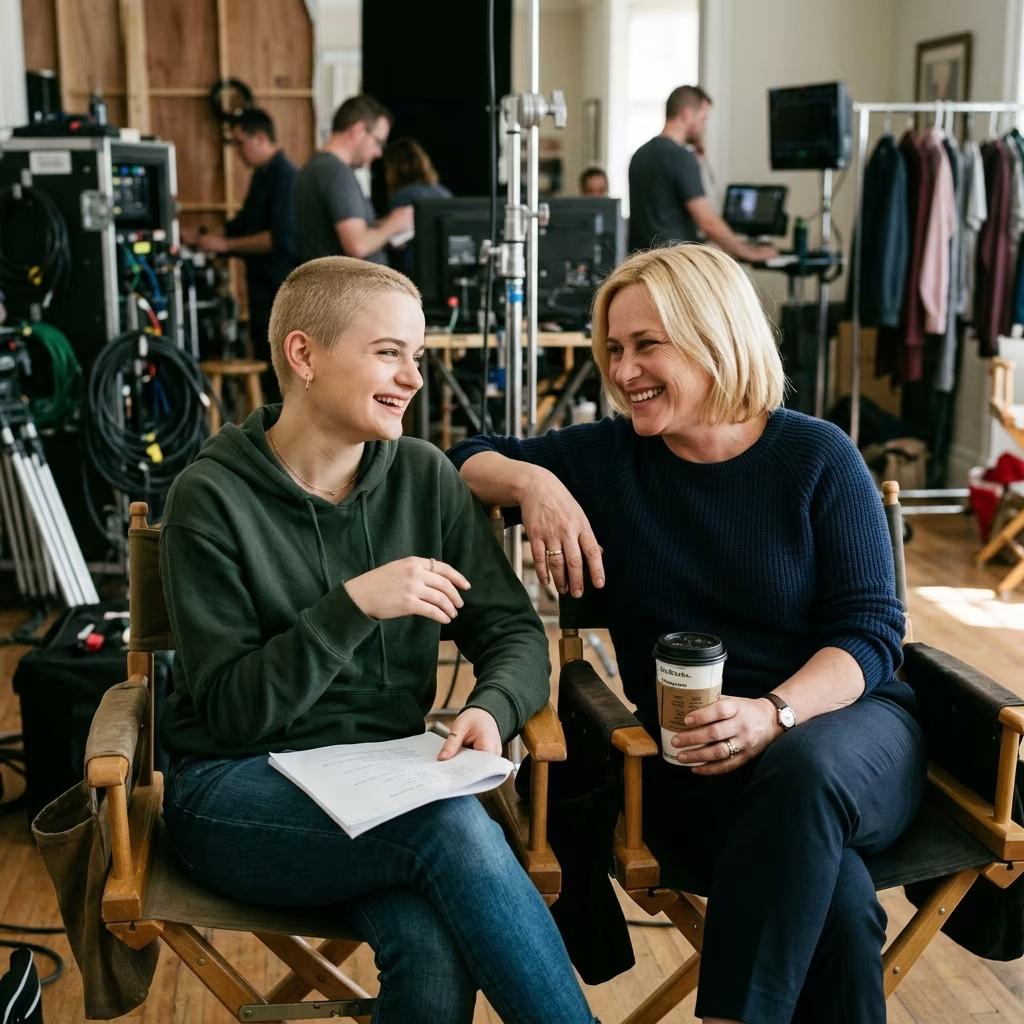
Inside ‘The Act’: Joey King and Patricia Arquette’s Real Relationship vs On-Screen Darkness
When Hulu released The Act, critics and audiences were captivated by Joey King’s astonishing transformation into Gypsy Rose Blanchard and Patricia Arquette’s haunting portrayal of her mother, Dee Dee Blanchard. The series, rooted in one of America’s most disturbing true crime tragedies, explores themes of control, trauma, and survival. Yet, behind the scenes, King and Arquette developed a genuine, nurturing bond—remarkably different from the toxic, manipulative relationship they brought to the screen.
The Reality Behind ‘The Act’
The Act dramatizes the true story of Gypsy Rose Blanchard, who, after years of being subject to medical abuse at the hands of her mother, was convicted of arranging Dee Dee’s murder. The Blanchard case shocked the nation for its depth of deception and tragedy—it spotlighted a rare condition known as Munchausen syndrome by proxy, in which a caregiver induces or fabricates illness in their dependent to gain attention and sympathy.
- Joey King stars as Gypsy Rose, delivering an emotionally and physically demanding performance.
- Patricia Arquette takes on the role of Dee Dee Blanchard, whose manipulation and cruelty drive the story’s darkness.
- The series is based on investigative reporting, most notably Michelle Dean’s acclaimed BuzzFeed article.
The On-Screen Relationship: A Story of Control and Survival
King and Arquette’s characters are at the heart of a chilling mother-daughter relationship. Dee Dee exerts total control over Gypsy, keeping her isolated and dependent, often confining her to a wheelchair and subjecting her to unnecessary medical procedures. The show explores:
- Dee Dee’s psychological manipulation and gaslighting of Gypsy
- The escalating tension as Gypsy seeks autonomy
- The harrowing events leading to Dee Dee’s murder
Their scenes together pulse with dread and heartache. From medical appointments to emotional confrontations, King and Arquette create an atmosphere that’s at once claustrophobic and tragic.
Transforming for the Roles: The Actors’ Process
To embody these real-life figures, both actors underwent profound physical and emotional transformations. Joey King shaved her head to mirror Gypsy’s appearance and meticulously studied her speech patterns and body language. Arquette, meanwhile, altered her posture and employed subtle vocal shifts to match Dee Dee’s demeanor.
- King acknowledged the emotional weight and responsibility of playing a living person with a harrowing history.
- Arquette focused on rendering Dee Dee believable, adding layers of complexity to a character who might easily be reduced to a villain.
Despite the darkness of their material, both actresses prioritized truthfulness in their performances—never sensationalizing the story but ensuring it resonated with compassion for the real Gypsy Rose and the stark horror of her circumstances.
The Real Dynamic: Building Friendship Amid Darkness
Joey King and Patricia Arquette: Nothing Like Dee Dee and Gypsy
While the camera captured moments of cruelty and manipulation, off screen, a remarkable friendship blossomed between King and Arquette. King has openly discussed how filming such traumatic material fostered deep connection and trust between the two.
- King describes Arquette as both a mentor and a fiercely protective colleague.
- Shared vulnerability—especially while filming some of the series’ most difficult scenes—tightened their bond.
- Their supportive rapport created a safe environment on set, helping King navigate the emotional demands of the role.
Support During Challenging Scenes
Filming The Act meant confronting moments of deep discomfort: scenes where Gypsy underwent invasive medical procedures, suffered dental trauma, or agonized under her mother’s emotional manipulation. King credits Arquette’s empathy for helping her through multiple personal and professional firsts, including emotionally intense and exposed scenes.
“Patricia just really took charge, making sure I felt safe and protected during vulnerable scenes. She always explained how every step would go and cared deeply about my well-being, which meant the world to me.”
Learning from a Veteran
King cites Arquette’s generosity, wisdom, and advocacy as major reasons she felt supported. For King, this mentorship was transformative—not only artistically but personally.
- Arquette’s “generosity of spirit” made the young actress feel truly cared for.
- Their trusting dynamic was the antithesis of Gypsy and Dee Dee’s toxic relationship.
Professional Growth: Insights Gained from Collaboration
King has described her friendship with Arquette as one marked by support, inspiration, and learning. Watching Arquette’s meticulous process encouraged King to push herself further as an actress. Both spoke openly about leaning on each other during the densest emotional sequences—trust was crucial, as the subject matter required sensitivity and relentless commitment to truthfulness.
The Psychology of ‘The Act’ and Cultural Impact
Understanding Munchausen Syndrome by Proxy
The Act drew mainstream attention to Munchausen syndrome by proxy (MSBP), a form of child abuse in which a guardian fabricates or induces illness in another person for sympathy or attention. Dee Dee Blanchard’s manipulation upended Gypsy’s life from childhood—limiting her diet, her mobility, and even her voice. The series details:
- The progression of Dee Dee’s control tactics
- Doctors’ complicity or ignorance
- Gypsy’s eventual realization and resistance
By portraying the psychological complexity on both sides—exposing, but not excusing, Dee Dee’s actions—the show invites viewers to reckon with an all-too-rarely discussed form of abuse.
Public and Critical Reaction
The series instantly sparked national conversation upon release:
- Audiences and critics hailed King’s and Arquette’s performances as career-defining.
- Many noted how the show’s stylized cinematography heightened the suffocating atmosphere of the Blanchard home.
- The sensitive, research-driven storytelling drew both praise and debate over dramatizing real-life trauma.
King and Arquette were both lauded for bringing depth and empathy to their performances, humanizing figures who could be seen as a monster or a victim. For King in particular, the project underscored the importance of careful preparation, research, and respect when portraying real-life survivors and perpetrators.
Behind the Scenes: Cast, Crew, and Creative Vision
Developing a True Crime Drama
The Act emerged from extensive investigative journalism, bringing together a writing and production team determined to do justice to the Blanchard story. Michelle Dean (author of the foundational BuzzFeed article) was among the producers, ensuring accuracy and sensitivity remained priorities. The series maintained a close relationship with the material, balancing dramatic license with factual integrity.
- Michelle Dean’s article formed the narrative backbone of the show.
- Writers, directors, and actors worked collaboratively to sustain a respectful and compelling tone.
Cast Chemistry and Set Atmosphere
On set, King and Arquette fostered a family-like support system, crucial for coping with the story’s darkness. Professionalism, warmth, and careful boundaries created an environment where cast and crew could safely explore the depths their characters required.
According to interviews, humor, check-ins, and mutual empathy kept the mood healthy and collaborative, even as they filmed the most disturbing sequences.
The Legacy of ‘The Act’: Raising Awareness and Challenging Narratives
Impact on Audiences
The Act prompted renewed discussion around the signs, consequences, and invisibility of medical child abuse. Audiences grappled with the intricacies of abuse dynamics, prompting empathy for survivors like Gypsy Rose, whose agency was systematically stolen.
- The show’s gripping drama was a vehicle for education as much as entertainment.
- Survivor advocacy organizations noted increased awareness around MSBP and similar conditions following the series’ airing.
Resisting Simplistic Villainy
Both King and Arquette resisted the urge to paint their characters in black-and-white terms. In their hands, Gypsy becomes more than a victim, and Dee Dee, while monstrous in her actions, reveals flashes of vulnerability and delusion. This nuanced approach challenged viewers to look beyond easy answers and engage with the complexity of real human suffering.
The Enduring Bond
For King and Arquette, the experience of making The Act left a lasting mark. Their friendship, born of shared hardship and trust, continues to flourish. Both have spoken about the unique and profound nature of their connection—proof that even in stories of profound darkness, light can emerge behind the scenes.
Frequently Asked Questions (FAQs)
Q: Are Joey King and Patricia Arquette friends in real life?
A: Yes. Joey King describes Patricia Arquette as a mentor and close friend, emphasizing the supportive, caring bond they built behind the scenes—a stark contrast to the manipulative relationship between their characters in The Act.
Q: What true story inspired ‘The Act’?
A: The Act is based on the true story of Gypsy Rose Blanchard and her mother Dee Dee, a case involving years of medical abuse known as Munchausen syndrome by proxy, which culminated in Dee Dee’s murder and Gypsy’s imprisonment.
Q: How did Joey King prepare for the role of Gypsy Rose?
A: King underwent extensive research, shaved her head, and worked closely with the creative team to authentically capture Gypsy’s speech and mannerisms. She also relied on Patricia Arquette’s mentorship to tackle emotionally challenging scenes.
Q: What impact did ‘The Act’ have after its release?
A: The series sparked widespread discussion about hidden abuse, the ethics of dramatizing true crime, and the psychological aftermath for survivors like Gypsy. Both lead performances were extensively praised.
Q: Where can I watch ‘The Act’?
A: The Act is available for streaming on Hulu.
Table: Character Dynamics in ‘The Act’ vs Off-Screen Relationship
| On-Screen (Dee Dee & Gypsy) | Off-Screen (Arquette & King) |
|---|---|
| Manipulation and control | Trust and mentorship |
| Emotional and physical trauma | Mutual support and care |
| Isolation and abuse | Collaboration and friendship |
| Mounting tension and fear | Professional growth and laughter |
Joey King and Patricia Arquette’s work on The Act stands as a testament to the transformative power of storytelling, the necessity of compassion in the face of darkness, and the unique camaraderie that can emerge where art and life collide.


