


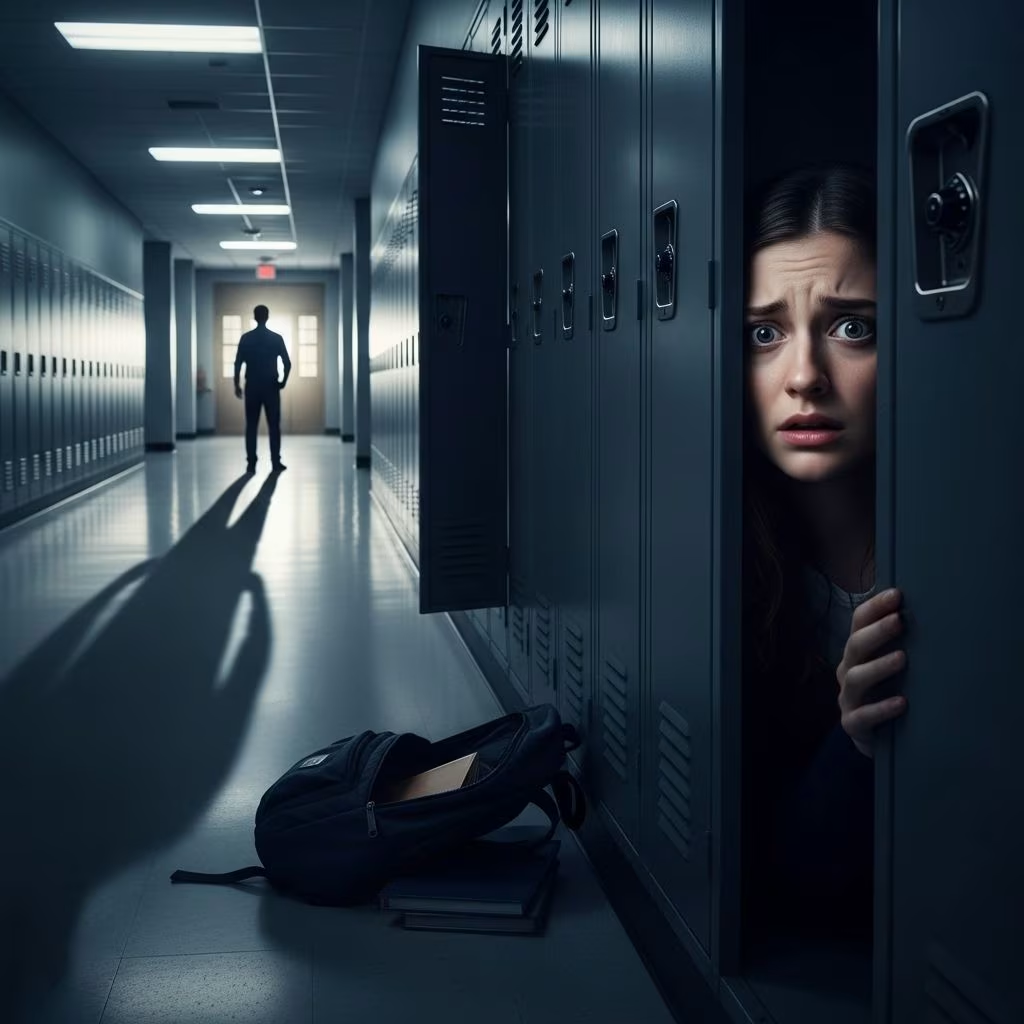
Killer Crush: Lifetime’s Take on Obsession in the Classroom
Lifetime’s Killer Crush offers viewers a suspenseful dive into the consequences of an obsessed student’s dangerous fixation with her teacher, mirroring the real-world dangers lurking within inappropriate student-teacher relationships. While the film’s plot is fictional, the psychological tension and tragic escalation echo multiple documented cases, making the story disturbingly plausible and timely.
Plot Overview: Not Just Another Teacher-Student Story
Paige York, a troubled medical student grappling with family trauma, becomes dangerously obsessed with her charismatic professor, Dr. Lucas Emery. When Paige is hired to care for Dr. Emery’s wife Gabby—who suffers from Multiple Sclerosis—the opportunity becomes a twisted gateway for Paige’s manipulative ambitions. Her infatuation quickly escalates as her mental instability surfaces, leading to deception, murder, and a devastating fallout for everyone involved.
The twist: Paige orchestrates Gabby’s death by poisoning her IV, hoping to remove all obstacles between herself and Dr. Emery. Her manipulation leads to chaos: a wrongful sexual harassment accusation, a police investigation, and further violence when even her sister Tayler tries to intervene. Paige’s tragic spiral ends in self-inflicted injury and coma, leaving lives shattered.
Lifetimes’ Inspiration: When Reality Is Scarier Than Fiction
Although Killer Crush is not based on real events, its premise draws chilling inspiration from actual student-teacher scandals that prove obsession can quickly become criminal. Lifetime frequently explores these dangerous liaisons, not to sensationalize but to spark discussion about boundaries and the psychological vulnerabilities that can be exploited within educational environments. The unsettling tropes of the “obsessed female student” and “naïve teacher” are not just plot devices—they are reflections of real cases that have led to legal, emotional, and societal consequences.
Student-Teacher Relationships: When Lines Get Crossed
The allure and taboo of student-teacher relationships have fueled headlines and courtrooms for decades. While most cases avoid the deadly fixation depicted in Killer Crush, many still involve manipulation, coercion, and long-lasting trauma for all parties involved. Below, we examine several high-profile real-world cases, drawing parallels to the film’s narrative to highlight how fiction and reality intertwine in their warnings.
Case Study Comparisons: Real-Life Student-Teacher Scandals
- Mary Kay Letourneau: Perhaps the most notorious, Letourneau was a married teacher who began a sexual relationship with her sixth-grade student, resulting in two children, criminal charges, and years of media scrutiny. Her case revealed the devastating psychological impact and blurred roles that often characterize these illicit affairs.
- Pamela Smart: Smart was a high school teacher who entered into a secret relationship with a student, ultimately manipulating him into murdering her husband. Her case highlighted how emotional manipulation can escalate to tragedy in the context of authority and vulnerability.
- Debra Lafave: A young Florida teacher convicted of having a sexual relationship with a 14-year-old student, sparking a media firestorm and conversations about mental health, exploitation, and the erosion of trust in educational settings.
- James Hooker: The California teacher left his family for a relationship with a teenage student, triggering investigations and resignations. While not as violent as Killer Crush, the emotional devastation and disruption to community were severe.
These cases, while unique in their circumstances, share disturbing similarities: the exploitation of trust, emotional manipulation, and tragic outcomes for families and communities. Unlike Killer Crush’s explicitly murderous arc, most real-world stories end with legal consequences, public outcry, and lifelong psychological trauma.
Table: Killer Crush Fiction vs. Real-Life Cases
| Aspect | Killer Crush (Fiction) | Real-Life Cases |
|---|---|---|
| Obsession | Extreme, criminal, leads to murder | Often emotional, sometimes criminal |
| Manipulation | Student manipulates teacher and others | Varies, often teacher manipulates student |
| Violence | Multiple murders, suicide attempt | Rarely escalates to murder, more often sexual abuse |
| Legal Consequences | Police involvement, arrest | Criminal prosecution, convictions |
| Lifelong Impact | Family tragedy, lasting trauma | Victims suffer trauma, careers and families ruined |
Psychological Drivers of Obsession
Why do some student-teacher relationships become dangerous obsessions? Psychological research points to several contributing factors:
- Power Dynamics: Teachers wield authority and influence, which can be misinterpreted by vulnerable students as affection or validation.
- Emotional Instability: Students like Paige—dealing with unresolved trauma and family issues—may fixate on strong authority figures as a form of escape.
- Boundary Violations: When boundaries are not enforced, admiration can quickly evolve into unhealthy attachment or stalking behavior.
- Manipulation and Exploitation: In both fiction and reality, manipulation can run both ways—teachers exploiting students, or vice versa.
In Killer Crush, Paige’s toxic obsession is driven by grief, mental illness, and a wanton disregard for personal boundaries. Her misguided sense of connection with Dr. Emery mutates from admiration to possession, culminating in violence.
The Impact: Trauma and Consequences
Whether fictional or real, the consequences of inappropriate student-teacher relationships are multifaceted:
- Victimization: Both parties can suffer, with students often left dealing with lifelong emotional scars, and teachers facing public shame, termination, or imprisonment.
- Family Fallout: Children and spouses are caught in the crossfire, experiencing betrayal and instability.
- Community Distrust: Schools and communities lose faith in educators, fueling policy changes and heightened surveillance of adult-student interactions.
- Media Sensation: Cases become public spectacles, further traumatizing those involved.
Lifetime’s Killer Crush dramatizes these outcomes to their tragic extreme, using the narrative to interrogate the societal impacts of obsession and boundary violations.
Learning from Fiction and Fact: Preventive Lessons
Stories like Killer Crush and the infamous real-life cases prompt crucial conversations about:
- Enforcing Boundaries: Schools must maintain clear policies regarding teacher-student interactions to prevent exploitation or misunderstanding.
- Recognizing Warning Signs: Early signs of obsession, manipulation, or emotional instability should be recognized and addressed.
- Mental Health Support: Both educators and students need access to robust mental health resources, particularly when coping with trauma, grief, or instability.
- Empowering Victims: Victims of inappropriate relationships need safe reporting avenues and support systems to protect and heal.
Media portrayals, while dramatic, serve as warnings and conversation starters—reminding audiences that fiction is often rooted in fact, and safety must always come first.
Frequently Asked Questions (FAQs)
Q: Is Killer Crush based on a true story?
A: No, Killer Crush is a fictional Lifetime TV movie, but it draws inspiration from real-life cases involving dangerous student-teacher relationships.
Q: Why do student-teacher obsessions happen?
A: Obsessions typically arise from psychological vulnerabilities, power dynamics, and boundary violations. Both parties’ emotional needs and misinterpretations can spark unhealthy attachment.
Q: What are the consequences of inappropriate student-teacher relationships?
A: These relationships can lead to emotional trauma, legal prosecution, loss of careers, and public scandal. In rare cases, as fictionalized in Killer Crush, they may result in tragic violence.
Q: How can schools prevent these situations?
A: Prevention hinges on strict policy enforcement, education about boundaries, mental health resources, and accessible reporting and support systems.
Q: Does Lifetime often feature stories about student-teacher obsession?
A: Yes—Lifetime produces several movies exploring the risks and consequences of student-teacher impropriety, often dramatizing real societal issues for discussion and awareness.
Key Takeaways
- Killer Crush explores the tragic reality of obsession within student-teacher relationships, dramatizing risks for all parties involved.
- Fiction often mirrors reality; actual student-teacher scandals have led to legal, emotional, and familial devastation.
- Prevention and awareness are crucial—schools, communities, and families must work together to enforce boundaries and provide support.
- Media can spark necessary conversations, serving as cautionary tales and educating viewers about safeguarding relationships.
References
- https://lifetimeuncorked.com/2015/10/12/killer-crush-2015-lifetime/
- https://www.imdb.com/title/tt3922474/plotsummary/
- https://www.youtube.com/watch?v=Nu-v91YzK3U
- https://www.imdb.com/title/tt3922474/
- https://letterboxd.com/film/killer-crush/
- https://femalevillains.fandom.com/wiki/User_blog:Ezekielfan22/Paige_York_(Killer_Crush)
- https://www.rottentomatoes.com/m/killer_crush_2020
- https://unobtainium13.com/2015/04/11/what-lisa-watched-this-afternoon-119-killer-crush-dir-by-anthony-lefresne/


