


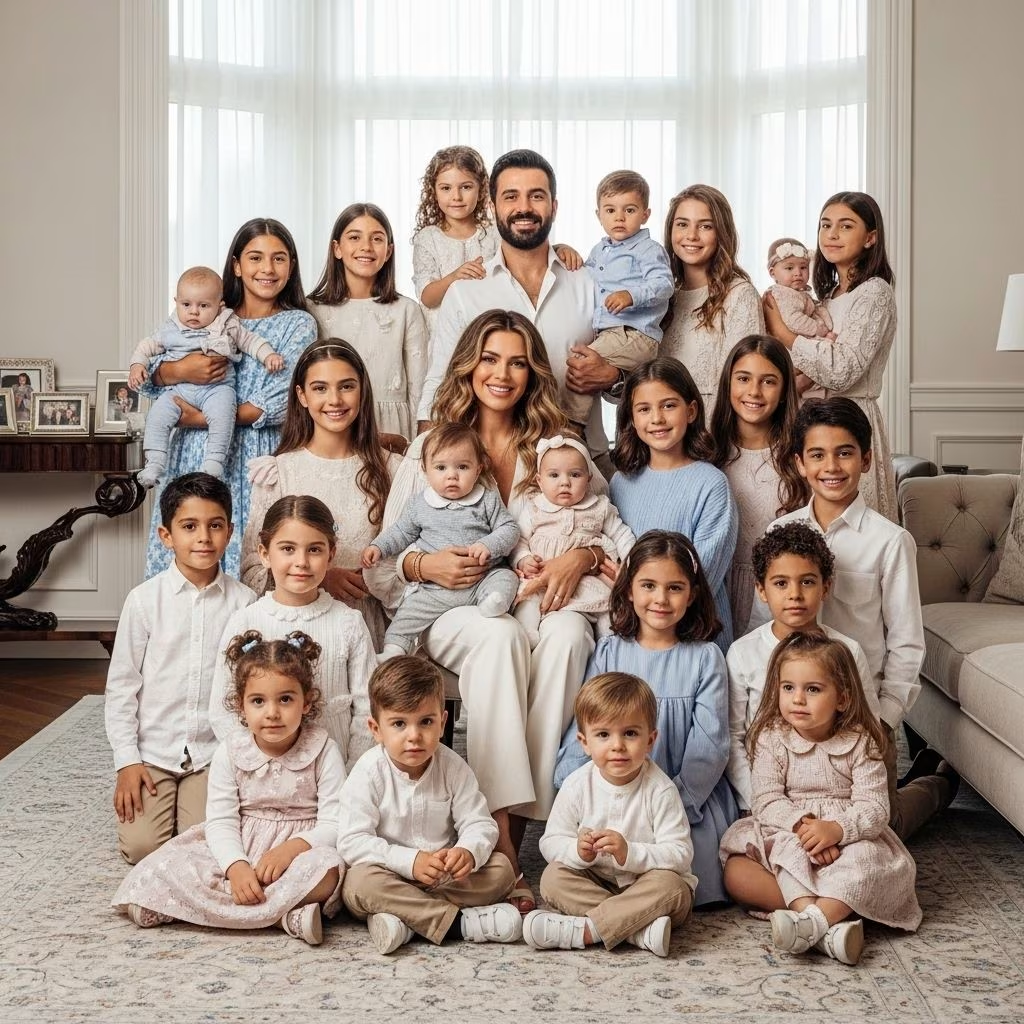
Why This Russian Mother Has 18 Children: Inside Kristina Ozturk’s Surrogate-Fuelled Family
The Modern Face of Motherhood: An Unprecedented Family
In an era when most families are shrinking, Kristina Ozturk, a Russian woman now living in Georgia, defies convention with her massive household of 18 children. Her story is both extraordinary and controversial, capturing global attention for its sheer novelty. Kristina’s journey into large-scale mothering didn’t follow traditional paths—instead, it blends ambition, wealth, and technology in a way few could have imagined.
Who Is Kristina Ozturk?
Kristina Ozturk is a young Russian woman who, together with her Turkish millionaire husband Galip Ozturk, created one of the world’s largest, most unconventional families. Most of Kristina’s children were born via surrogacy, an approach she chose for both physical and practical reasons, betting on science and an army of caretakers to realize her motherhood dream.
- Location: Originally from Russia, Kristina now resides in Georgia.
- Relationship: Married to Galip Ozturk, a businessman with roots in Turkey.
- Family Structure: Though she gave birth biologically only once, Kristina has 18 children, most through surrogacy.
A Marathon of Births: The Role of Surrogacy
Unlike traditional large families, Kristina’s was built almost entirely through surrogacy. Within a single year, she welcomed 20 surrogate-born children—a feat made possible by her family’s wealth and drive for something unprecedented. The surrogacy process is tightly managed, with surrogate mothers selected and counseled by the clinics, rarely meeting Kristina herself.
Key Points about Kristina’s Surrogacy Journey:
- Kristina employs teams of nannies and staff to care for the children, costing over $800,000 a year.
- Her children are all genetically related to her and her husband, Galip.
- Surrogate mothers are carefully screened and managed through the clinic; Kristina has limited direct contact with them.
- She creates meal plans for surrogate mothers to ensure optimal nutrition during pregnancy.
Why Build Such a Large Family?
The motivations fueling Kristina’s extraordinary family size are complex. Some sources report her ambitions of surpassing historical records, dreaming of up to 100 or more children—though she currently pauses expansion due to personal and legal uncertainties.
| Motivation | Details |
|---|---|
| Personal ambition | Desires an exceptionally large family, beyond what is biologically typical. |
| Surrogate technology | Utilizes modern reproductive methods to overcome physical and practical limits. |
| Financial capability | Can afford costs of surrogacy, staff, and childcare. |
| Family legacy | Sees value in building a lasting, unique legacy. |
The Day-to-Day Life in a Mega-Family
Managing 18 young children is a logistical feat. Kristina’s home resembles a bustling nursery, with coordinated schedules and numerous caregivers. She admits, “My days are never boring… Each day is different from planning staff schedules to shopping for my family.” She oversees food, schedules, health checks, and education planning, supported by a team of full-time nannies who are part of the daily routines.
- Each child receives tailored attention from nannies and staff.
- Kristina supervises dietary planning and health monitoring.
- The logistics are akin to running multiple households simultaneously.
- Shopping, schedules, and staff management are daily core tasks.
Controversy and Criticism: Ethical and Practical Questions
Kristina’s case draws praise and severe criticism. Supporters admire her devotion and innovative use of technology. Detractors raise concerns about the emotional development of children born through surrogacy, and the ethics of commissioning dozens of births for personal ambition.
- Overpopulation and Resource Use: Critics say such reproductive choices strain resources in a crowded world.
- Emotional Welfare: Skeptics question whether children in large surrogate families receive adequate emotional care.
- Parental Responsibility: Some observers doubt whether one or two parents, even with staff, can emotionally nurture so many children.
- Economic Security: Ongoing support for dozens of children demands significant wealth and financial planning.
Historical Context: The World’s Largest Families
Kristina’s ambition cannot be understood without the history of large families. In Russia, historical records cite the wife of Feodor Vassilyev as the most prolific mother, reportedly giving birth to 69 children between 1725 and 1765 through a staggering series of twins, triplets, and quadruplets. Modern medicine makes such outcomes less likely naturally, but surrogacy opens new possibilities.
- Valentina Vassilyev purportedly bore 27 sets of multiples over 40 years—though the accuracy is debated.
- Today, most large contemporary families rely on assisted reproductive technology for rapid expansion.
Table: Largest Known Families in History
| Mother | Location & Era | Children | Notes |
|---|---|---|---|
| Valentina Vassilyev | Russia, 18th Century | 69 | Natural multiple births over 40 years |
| Kristina Ozturk | Russia/Georgia, 21st Century | 18 (so far) | Mostly via surrogacy in one year |
The Science and Limits of Pregnancy
From a biological perspective, it’s difficult for a woman to bear more than 20 children without taking extreme health risks. That’s why Kristina chose surrogacy: “The physical strain on her body would have been too much,” admitting the need for help. Modern advances allow families to expand rapidly, but not without questions about medical ethics, surrogate rights, and health risks.
- Surrogates undergo counseling and health checks to ensure successful pregnancies.
- Kristina’s only biological birth was her daughter; all other babies are carried by surrogates.
- Some surrogates wish for contact post-birth, but families and clinics usually avoid this to prevent complications.
The Role of Wealth in Family Expansion
A key factor allowing Kristina’s family to thrive is financial resources. Her husband’s businesses fund the surrogacy process, the nannies, and the specialized household. Reports estimate over $800,000 annually for nannies alone, plus surrogacy costs totaling more than $160,000 in a single year. Critics question what happens if fortunes change or legal challenges arise—her husband, Galip, faced prison sentences for unrelated crimes.
- Being able to afford surrogacy means accessing clinics and top-tier care.
- Economic security is essential for supporting a mega-family across years and generations.
Social Media and Public Reaction
Kristina’s story exploded on social media, with posts sparking intense debate. Comments range from awe and curiosity to condemnation, calling her family “monstrous” or “disturbing.” Some accuse her of treating children as “dolls,” while others highlight broader social and ecological implications.
- Many commenters express concern over emotional care for surrogate-born children.
- Questions arise about parenting responsibility and the future of such families.
- Some advocate for adoption instead of biological expansion, citing overpopulation.
Challenges Kristina Faces
The Ozturk household is not immune to complications. Besides the daily logistics, Kristina faces:
- Legal uncertainties: International surrogacy is governed by complex laws.
- Personal strain: Coordinating a household of dozens is emotionally and physically demanding.
- Marital issues: Galip has faced legal trouble, raising questions about long-term family stability.
- Children’s futures: Planning for schooling, socialization, and individual identity is ongoing.
Looking Forward: Will Kristina Have More Children?
Kristina has not ruled out further biological births in the future, but practicalities and her husband’s absence mean expansion is paused. She has stated, “We’re just not ready to talk about the final number. Everything has its time.”
Frequently Asked Questions (FAQs)
Q: Why did Kristina Ozturk choose surrogacy instead of natural birth?
A: Surrogacy enabled Kristina to overcome physical limits, avoid health risks, and rapidly expand her family—her body would not withstand so many pregnancies.
Q: Are Kristina’s children genetically hers?
A: Yes, the children are genetically related to Kristina and her husband Galip, though almost all were gestated by surrogates selected via clinics.
Q: How does Kristina manage raising so many children?
A: She employs up to 16 full-time nannies, developing diets, schedules, and routines to care for all children. She directly supervises health and education planning.
Q: What are the biggest controversies over Kristina’s family?
A: Controversy centers on ethical questions about surrogacy, overpopulation, emotional welfare, and whether parents can adequately care for so many children.
Q: Is Kristina planning to expand her family further?
A: For now, Kristina is pausing due to legal and personal reasons, but she has not ruled out more children in the future.
Conclusion: Rethinking Motherhood in the 21st Century
Kristina Ozturk’s massive family challenges everything we think we know about parenthood and reproduction. Her use of surrogacy turns the impossible into reality, but it comes with social, ethical, and practical costs. Her story prompts debate about the limits of science, the meaning of family, and society’s responsibility to children born in unconventional ways. Whether Kristina’s family is a triumph of modern ingenuity or a cautionary tale remains for the public—and her children—to decide.


