


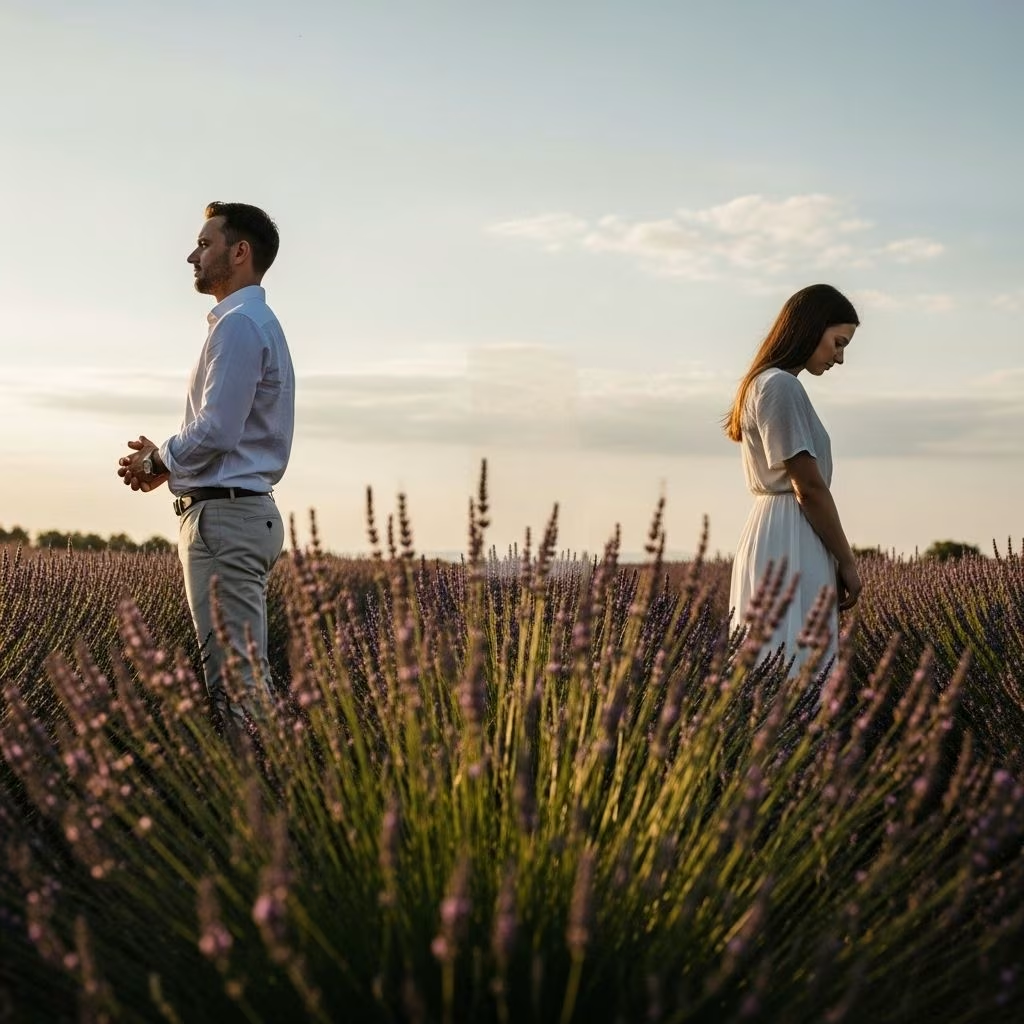
Lavender Marriage: Understanding Mixed-Orientation Unions Past and Present
Throughout much of the 20th century—and in some places, even today—societal views on sexuality have compelled many individuals to hide their true identities. One of the most significant outcomes of this pressure is the phenomenon known as a lavender marriage. These unions, entered into by couples with mixed sexual orientations, offer a fascinating window into the struggles for authenticity, safety, and acceptance. This article delves deep into the origins, evolution, and lived experience of lavender marriages, revealing both their historical weight and their current resurgence.
What Is a Lavender Marriage?
A lavender marriage is a legally binding union between a man and a woman in which at least one partner is homosexual or queer, and the marriage functions primarily as a marriage of convenience rather than romantic or sexual partnership. In these marriages, the participants may be open with each other about their sexual orientation, but they present as a heterosexual couple to the broader world.
- Not about romance: These marriages are commonly platonic; sometimes, deep friendship or mutual care defines the relationship rather than conventional romantic or sexual attraction.
- Founded on honesty and respect: At their best, lavender marriages are rooted in clear communication, honesty, and shared agreement about their purpose and boundaries.
- Survival mechanism: Historically, they provided a means of protection from discrimination, social ostracism, and even legal repercussions for LGBTQIA+ individuals.
Origins of the Term “Lavender Marriage”
The term ‘lavender marriage’ stems from the historical association of the color lavender with queerness and homosexuality. The connection can be traced back to the late 19th and early 20th centuries. For example:
- Lavender in LGBTQIA+ culture: Early literary allusions, such as Sappho’s “violet tiaras” and Oscar Wilde’s “purple hours,” linked the color lavender with same-sex attraction and camaraderie.
- Code word in Hollywood: By the 1930s, ‘lavender’ entered popular use as a subtle indicator of homosexuality. In Hollywood’s Golden Age, actors would enter such marriages to present a traditional image while concealing their true orientation.
- Political usage: In the 1950s, the “lavender scare” paralleled McCarthyism, targeting queer government workers. The color became a symbol of both vulnerability and solidarity.
The Historical Context: Survival and Secrecy
Lavender marriages have been predominantly a response to societal oppression. Several factors motivated individuals to pursue such unions:
- Criminalization and stigma: Where homosexuality was illegal, being ‘out’ could result in arrest or public disgrace.
- Career preservation: Actors, politicians, and other public figures risked their jobs and livelihoods if their true orientation became known.
- Family and cultural expectations: Social and familial pressure to marry and produce children made deviation dangerous or impossible for many.
During the 20th century, numerous public figures reportedly entered lavender marriages. These partnerships allowed for participation in societal rituals—weddings, family life, and public appearances—while maintaining private relationships more aligned with personal desires.
Lavender Marriages: Rules, Dynamics, and Realities
There is no fixed template for how a lavender marriage functions. The key elements often include:
- Platonic or fluid intimacy: Some partnerships are entirely non-sexual, but others may involve limited physical affection, emotional closeness, or even shared parenting.
- External relationships: Frequently, partners in a lavender marriage have romantic or sexual partners outside the marriage, often with each other’s knowledge and consent.
- Explicit communication: Building a sustainable lavender marriage requires deep, ongoing conversations about finances, living arrangements, boundaries, emotional support, and definitions of commitment.
Therapists who work with such couples emphasize:
- Regular check-ins to reassess boundaries and needs
- A shared vision—where both partners actively co-create how the relationship looks
- An openness to evolving as needs shift over time
Despite intentional planning, lavender marriages are not immune to emotional complexity. As with any long-term partnership, emotional needs may change, boundaries may blur, and heartache can occur if the arrangement no longer reflects those involved.
Why Do People Enter Lavender Marriages Today?
While the historical motives centered on survival and secrecy, there is a growing shift in the intentions behind lavender marriages in the 21st century:
- Strategic mutual benefit: In some environments, presenting as a heterosexual couple still provides safety and access to social privileges otherwise denied to queer individuals.
- Rejection of traditional romantic expectations: Some prefer a partnership based on friendship, practical goals, or shared values rather than romantic love.
- Co-parenting and stability: Lavender marriages can offer a stable environment for co-parenting, pooling resources, or supporting each other as chosen family.
- Personal agency: Today, many LGBTQIA+ individuals choose such partnerships openly, not out of shame but as a form of self-definition and empowerment.
Modern Perceptions: Rewriting the Rules
Recent years have seen a resurgence of interest in lavender marriages—not purely for secret-keeping, but as a conscious rejection of prescriptive ideas of what marriage must be. For some, a lavender marriage represents:
- Mutual care and community: A partnership built on trust, respect, and the freedom to craft private arrangements without concern for outside judgment.
- Alternative family structures: For queer individuals who wish to raise children or care for each other without romantic involvement, lavender marriages offer a viable framework.
- Resistance to compulsory heteronormativity: By choosing to define their own relationships, couples challenge societal norms and expand the notion of what constitutes a valid marriage.
Potential Challenges
- Emotional complexity: Feelings can shift over time, leading to confusion or conflict if original boundaries are tested.
- Lack of societal recognition: Legal and social structures remain tailored to conventional marriages, which can cause issues with recognition, rights, or support.
- External pressure: Lingering cultural stigma—both about queerness and nontraditional marriage structures—still presents significant hurdles.
Famous Historical and Cultural Examples
Many lavender marriages in the public eye occurred in eras where secrecy was essential for survival:
- Hollywood Golden Age: Renowned actors, actresses, and creatives entered such unions to protect their images and careers. Since public identification of homosexuality could derail a person’s livelihood, these arrangements were carefully guarded.
- Political figures: Many government officials, both in the U.S. and abroad، used marriage to conform to expectations while privately maintaining same-sex relationships.
Historically، these partnerships enabled many to lead fulfilling personal lives under difficult circumstances—even though the emotional toll could be immense.
The Emotional Realities: Affirmation and Heartache
Lavender marriages can be both liberating and fraught. Some individuals find these relationships deeply affirming، gaining companionship، shared values، and a sense of chosen family. Others، however، may experience:
- Loneliness or repression: Suppressing romantic or sexual desires can cause pain or frustration when mismatched with one’s true orientation.
- Invisible labor: Upholding a façade for the outside world can be exhausting and emotionally costly.
- Evolving needs: As people grow، relationships may need reevaluation and redefinition to remain healthy for both partners.
Professional therapists and counselors often encourage regular communication and support networks for those considering or currently in a lavender marriage.
Comparing Lavender Marriages to Other Relationship Models
| Relationship Model | Main Purpose | Nature of Bond | Sexual/Romantic Involvement | Societal Perception |
|---|---|---|---|---|
| Lavender Marriage | Conceal orientation; practical alliance | Friendship، mutual support; sometimes platonic | Usually minimal or with outsiders | Often assumed “traditional” by society |
| Traditional Marriage | Romantic love، partnership | Emotional، often familial | Expected to be exclusive | Socially normative |
| Cohabiting Friendship | Practical support، companionship | Friendship | None | Sometimes misunderstood |
Contemporary Discussions and the Evolving Conversation
Increasing visibility of diverse family structures and public conversations about queer issues have made it possible for some to be open about their intentions in lavender marriages. Notably، some now choose these partnerships for reasons beyond hiding:
- Open partnerships: Rather than secrecy، some partners openly acknowledge their arrangement to friends and community members، if not publicly.
- Role as chosen family: More individuals and couples see lavender marriages as a way to choose their kin and community، rather than as solely a means of self-protection.
- A form of liberation: Defining a marriage outside the bounds of romance or sex can be an act of reclaiming agency and expanding relationship norms.
Frequently Asked Questions (FAQs)
What is a lavender marriage?
A lavender marriage is a union between a man and a woman in which one or both partners are queer، designed primarily to conceal their true sexual orientation from society or to mutually benefit from the social legitimacy the marriage confers.
Are lavender marriages still happening today?
Yes. While less common than in the past، lavender marriages occur in regions، families، and professions where being openly queer risks safety، family honor، or career. Some also choose lavender marriages voluntarily to build supportive platonic partnerships.
Is a lavender marriage always platonic?
Not always. Many are non-romantic and non-sexual، but some include emotional intimacy، co-parenting، or caretaking. Partners often negotiate outside romantic or sexual relationships according to explicit agreements.
Why would someone choose a lavender marriage voluntarily?
People may select a lavender marriage for various reasons: to build chosen family، to raise children together، to pool resources، or as a pragmatic arrangement aligned with their personal identities and values، not just secrecy or protection.
Can lavender marriages succeed emotionally?
They can، if both partners are honest، compatible in goals، and open to ongoing negotiation. However، challenges like loneliness، boundary evolution، or outside pressures can occur—making regular communication crucial.
Key Takeaways
- Lavender marriages are unions entered for practical، social، or safety reasons، often concealing true sexual orientation.
- While historically rooted in oppression، modern iterations sometimes reflect intentional choice and self-determination.
- Open communication، mutual respect، and flexibility are essential to navigating the unique dynamics and potential challenges of these arrangements.
For anyone considering a lavender marriage، or simply seeking to understand the evolving landscape of relationships، the key is recognizing that love، partnership، and family can take infinite shapes—and all are valid when rooted in respect and mutual care.
References
- https://feeld.co/ask-feeld/how-to/lavender-marriageswhat-are-they-and-why-are-they-gaining-in-popularity-again-
- https://www.theknot.com/content/lavender-marriage
- https://en.wikipedia.org/wiki/Lavender_marriage
- https://www.marriage.com/advice/marriage-fitness/lavender-marriages/
- https://www.psychologytoday.com/us/blog/understanding-the-erotic-code/202412/the-return-of-lavender-marriages
- https://www.autostraddle.com/new-definition-gay-lavender-marriage/


