Confessions Of Marathon Spouses
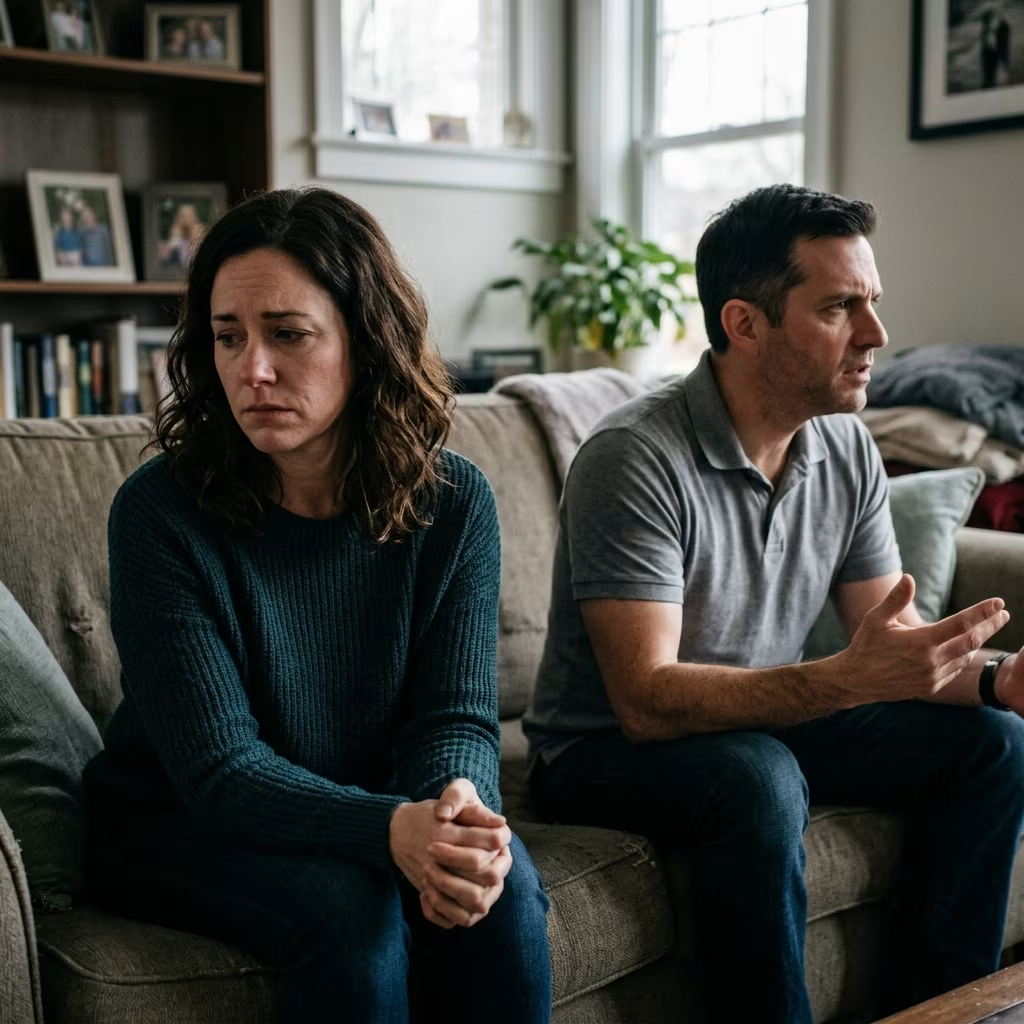
Behind each marathon finisher, there is often a partner walking the line between support and sacrifice. As marathon training consumes weekends, challenges family time, and sometimes triggers silent resentments, ‘marathon spouses’—often dubbed ‘marathon widows’—find themselves navigating a relationship defined by rigorous routines and solitary swings in the park. This article delves deep into the emotional landscape, everyday realities, and personal growth inherent to relationships bound by the relentless rhythm of running.
The Marathon Schedule: Love on a Training Plan
For couples where one partner trains for marathons, the household routine often revolves around the training schedule posted on the fridge. Saturdays become synonymous with solo parenting or quiet mornings as the runner heads out at dawn. Social lives contract, and even spontaneous weekend trips may be sidetracked by long runs or recovery days.
- Training Dictates Schedules: Marriages and partnerships adapt to early morning runs, specialized nutrition plans, and recovery periods.
- Solo Time Increases: Non-running partners may find themselves spending more time alone or with children while their spouse trains.
- Social Life Changes: Nightlife and leisurely brunches get swapped for carb-loading dinners and pre-run stretching routines.
What It Means to Be a ‘Marathon Widow’ or Spouse
Many spouses express a blend of pride and frustration towards their partner’s dedication. The term ‘marathon widow’ captures the sense of absence and loneliness that can accompany each training cycle.
- Diana, a project manager, describes planning outings only to have them overshadowed by a friend’s training regimen, noting the constant talk about mileage and routines.
- Courtney, whose partner ran the New York City Marathon, points out the tension in how marathoners treat their achievement as uniquely special, despite the sheer number of people who cross finish lines every year.
Despite real affection and pride in their partner’s accomplishment, many spouses find themselves reflecting on what might be lost—parity in pursuits, attention, and a mutual sense of leisure.
Jealousy and the Search for Personal Fulfillment
One of the more complicated emotions described is not necessarily the time lost with a marathoner, but the realization that the runner has found something deeply fulfilling beyond family and relationship—a purpose, a goal, and a break from domestic repetition.
- Self-Discovery: The runner’s commitment throws into sharp relief the other partner’s lack of personal hobby or self-driven passion.
- Ambient Jealousy: Even supportive spouses can experience envy, not of the marathon itself, but of the sense of achievement and independence running grants their partner.
- Reclaiming Identity: The article highlights the importance for the non-running partner to identify unmet personal needs and seek fulfillment in their own right, outside the relationship or parental roles.
Casual vs. Serious Leisure: A Relationship Divide
Sociologists distinguish between ‘serious leisure’ (activities demanding significant time, effort, and personal growth) and ‘casual leisure’ (short-term, relaxing pursuits). Relationships where only one person is devoted to serious leisure often require negotiation and adaptation.
| Serious Leisure | Casual Leisure |
|---|---|
| Running marathons, training for Ironman, competing in athletic events | Watching TV, reading, light recreation |
| Time-intensive, requires commitment, deeply fulfilling | Short-term, relaxing, easy to fit into daily life |
| May occur alone or with limited support | Often social or shared, less disruptive to routine |
This divide can foster both appreciation and tension, particularly when serious leisure begins to crowd out shared family activity or expose inequalities in each partner’s pursuit of selfhood.
Finding Joy While Cheering From the Sidelines
Race day crystallizes many conflicting feelings. Partners and children cheer from the sidelines with genuine pride, tracking their loved one across city blocks, waving homemade signs, offering encouragement. Despite the effort of supporting from the margins, pride and affection often shine through.
- Family involvement can be deep, from creating banners to tracking runner splits between boroughs.
- Race day is both a celebration and a reminder of the partnership’s sacrifice.
Lessons Learned: Communication, Support, and Negotiation
Through rigorous training cycles and marathon seasons, couples learn to renegotiate their understanding of quality time, teamwork, and love.
- Quality Time: Partners embrace new definitions, such as cheering on the sidelines, sharing post-run meals, or spending time in creative ways that fit around demanding training.
- Supportive Teamwork: Even if one partner’s commitment is greater, the relationship thrives on mutual support and adaptable priorities.
- Communication: Open dialogues about needs, wants, and emotional responses are essential to avoiding resentment and building resilience.
Marathon Running’s Impact on Relationship Dynamics
The pursuit of marathon excellence can redefine relationship boundaries and strengthen bonds, but not without challenge.
- Conflict: Unspoken jealousy and time constraints may fuel arguments or subtle withdrawal.
- Growth: Many couples become more aware of their values, boundaries, and ambitions.
- Adaptation: Partners often learn to carve space for their own passions or negotiate novel solutions for togetherness.
Tips For Partners of Marathoners: Navigating Training Season
- Set Expectations Early: Discuss upcoming race schedules and plan family time accordingly.
- Maintain Open Communication: Express feelings about time apart and negotiate equitable solutions for togetherness.
- Identify Personal Interests: Use solo time to pursue hobbies or cultivate your own ‘serious leisure’ activities.
- Cheer and Celebrate: Be present on race day and make celebrations a joint event, recognizing both the runner’s effort and the supporter’s contribution.
- Seek Balance: Plan post-race recovery or family activities that recenter the partnership once training ends.
Frequently Asked Questions (FAQs)
Q: How do marathon spouses manage family life?
A: Marathon spouses adapt by planning schedules around training, using support systems, and maintaining open communication to ensure children and family life remain priorities.
Q: Why do marathon runners need so much support?
A: Marathon training requires substantial commitment—physical, mental, and emotional. Support from partners helps runners manage time, motivation, and emotional challenges.
Q: What are common challenges faced by ‘marathon widows’?
A: Challenges include increased solo parenting or household responsibilities, feelings of loneliness, and jealousy towards the runner’s sense of personal achievement.
Q: How can non-running partners find personal fulfillment?
A: By identifying their own interests, pursuing new hobbies or ‘serious leisure’ activities, and seeking support from friends or community.
Q: Does supporting a marathoner strengthen or strain relationships?
A: It can do both. The relationship may strengthen through teamwork and shared goals, but strains can arise if communication fails or one partner’s needs remain unmet.
Balancing Ambition and Affection: Final Thoughts
Marathon running is rarely a solitary achievement. The ripple effects shape family dynamics, redefine quality time, and challenge partners to grow. Whether lingering as ‘widows’ or forging deeper connection through shared support and celebration, marathon spouses personify the complexities—and possibilities—of love surrounded by ambition.