


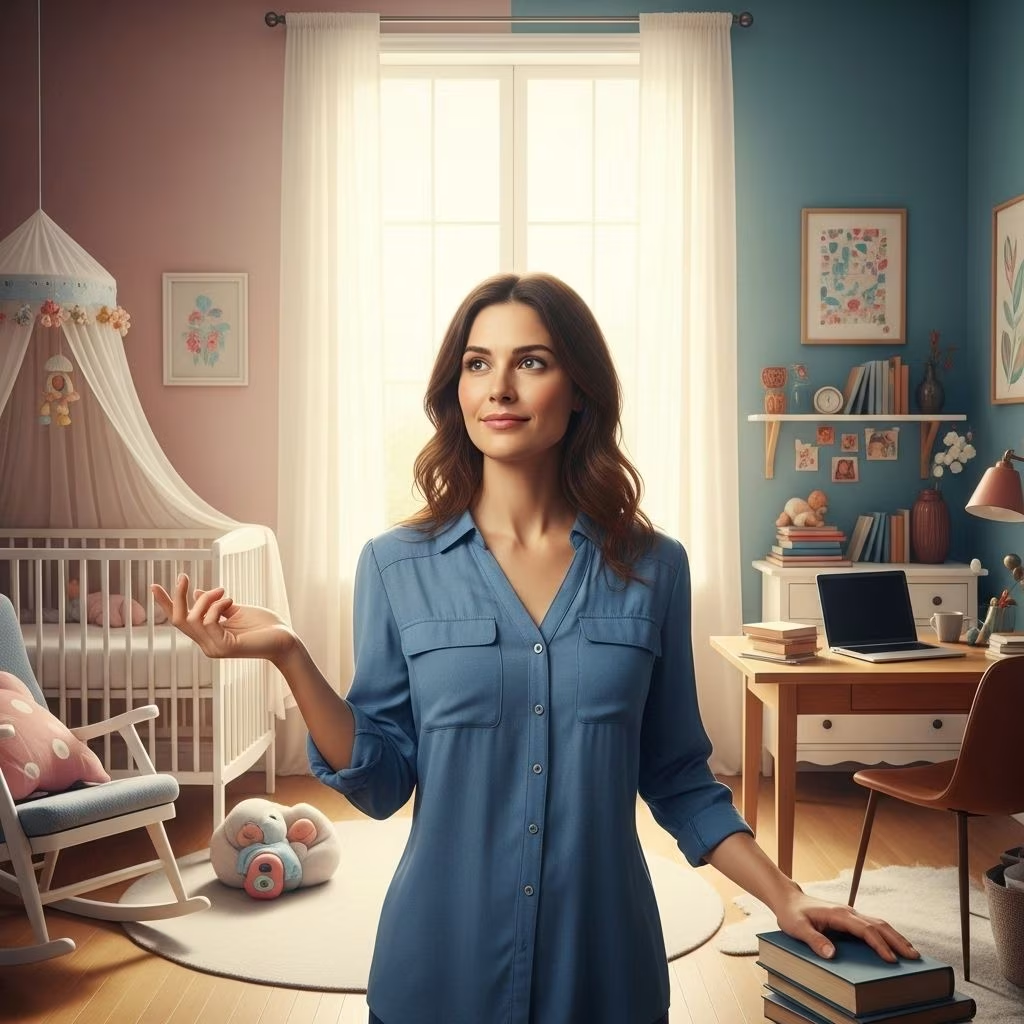
Motherhood Myths and the Power of Choice: Rethinking Expectations
Motherhood is often described as the ultimate female experience—a source of universal fulfilment, identity, and purpose. Yet, behind this idyllic portrait lie myths, societal pressures, and complicated realities that shape every woman’s life in unique ways. This article dives deep into cultural narratives, personal stories, and expert insights to reveal how the myth of motherhood can overshadow the very real importance of autonomy, choice, and identity for women everywhere.
Category: Sex & Relationships
Unraveling the Myth: Motherhood Is Not One Size Fits All
From childhood through adulthood, many women are told, both explicitly and implicitly, that motherhood is not only natural but inevitable. This narrative suggests there is something inherently lacking or wrong with women who do not feel fulfilled by parenting, or those who choose a different path altogether.
- Societal pressure often paints motherhood as a required milestone and a universal source of joy.
- The myth that all women should want to be mothers remains a dominant cultural story, making it difficult for some women to voice different desires or experiences.
- Women are expected to mother, to partner, and to do so in a prescribed order—these expectations rarely account for individual aspirations or circumstances.
The Impact of Upbringing and Generational Trauma
Understanding motherhood involves looking back at our family histories, especially how previous generations had limited choices in their lives. Many mothers and grandmothers entered parenthood not out of desire, but because it was the prescribed norm for women of their time.
- Choices around parenthood were often constrained by cultural, legal, and economic factors.
- Generational cycles of wounding and trauma can be traced back to these imposed life paths—which sometimes left women emotionally depleted or yearning for liberation.
- Healing from childhood wounds requires a nuanced approach, acknowledging both the love of caregivers and the negative impacts of being forced into roles they might not have chosen.
Personal Stories: The Weight of Expectation and Liberation
When women share their authentic experiences of motherhood and choice, we notice recurring themes: the longing for agency, the pain of unfulfilled identities, and the process of finding meaning beyond social mandates.
- For some mothers, parenting becomes a journey marked by joy and fulfillment; for others, it can feel like an obligation that overshadows personal well-being.
- Liberation—whether in midlife or earlier—often means breaking away from the expectation that a woman’s sole identity must be that of a mother.
- Letting go of motherhood as an obligatory role is not about rejecting children—it is about embracing oneself as a full, multidimensional person.
The Pill, Legal Rights, and Cultural Realities
The historical availability of contraception and legal abortion (such as the landmark Roe v. Wade case) did not instantly translate into cultural acceptance of women’s right to choose if, when, and how to parent.
- Many women of past generations technically had access to reproductive choices, but societal norms kept these options out of reach.
- The path not taken—a life outside motherhood—often remained invisible or stigmatised, reinforcing the myth that every woman is naturally destined to become a mother.
- As culture began to shift, more women were able to claim their right to choose, challenging long-held narratives about fulfillment and identity.
Debunking the Biggest Motherhood Myths
Beyond the love and connection that parenting can bring, there are persistent myths that shape how we perceive motherhood—and how mothers perceive themselves.
- Myth 1: Every woman is naturally suited to motherhood.
- Myth 2: Motherhood fulfills everyone equally.
- Myth 3: A woman who struggles with motherhood is flawed or lacking.
- Myth 4: Choosing not to have children is selfish.
- Myth 5: Motherhood means the end of personal ambitions or dreams.
Disrupting these myths is an essential process for many women and a key to developing a broader understanding of wellbeing and self-actualization.
The Modern Conversation: Voices, Choices, and Nuance
Today’s women—across different generations—are more vocal than ever about their needs, struggles, and chosen paths. Whether through podcasts, essays, or social media, diverse stories challenge the stigma and silence around ambivalence, regret, or joy in motherhood.
- Women’s healing often revolves around accepting complex truths: a mother can love her children and still feel unfulfilled by the role itself.
- Open conversations about ambivalence and choice are essential for breaking cycles of shame and isolation—and for supporting women in making empowered decisions.
- Representation matters: women need to see and hear the full range of motherhood experiences, from passionate embrace to thoughtful refusal.
Identity Beyond Motherhood
The myth that motherhood becomes a woman’s sole identity persists, even as new generations push for recognition of personal ambitions, careers, and inner growth.
- Women’s dreams and passions don’t end at parenthood—they evolve, shift, and sometimes become even more urgent.
- Preserving and nurturing personal identity is vital, whether or not children are part of one’s life.
- Modern parenthood conversations encourage women to hold space for multiple roles, aspirations, and definitions of success.
Healing: Making Peace with the Past
Healing from the wounds of imposed identity and limited choices requires courage, reflection, and community. Mothers and their children can move forward not in denial, but through honest dialogue about pain, sacrifice, love, and self-discovery.
- Acknowledging parental choices (or lack thereof) helps individuals depersonalize wounds and see caretakers as whole humans.
- Compassion for self and others is key: the liberation of one generation can pave the way for greater freedom and wellbeing in the next.
- Healing is ongoing and multidimensional, involving grief, forgiveness, and a conscious choice to define one’s life on personal terms.
Motherhood and Societal Change: Looking Forward
As feminist movements, legal reforms, and changing cultural narratives expand women’s rights and possibilities, new generations are confronting motherhood with fresh perspectives. The conversations today include:
- The right to choose parenthood—or not—and to do so without shame or judgment.
- Recognition of the diversity within the maternal experience: joy, struggle, ambivalence, regret, and growth.
- Support for mothers who feel trapped, isolated, or unfulfilled, and validation for those who flourish in the role.
- A reevaluation of expectations, moving beyond binary models of success and failure in parenting.
Table: Common Motherhood Myths and Realities
| Myth | Reality |
|---|---|
| Every woman wants to be a mother. | Desire for motherhood is individual and shaped by diverse factors. |
| Motherhood is always fulfilling. | Motherhood can bring pain, joy, ambivalence, or regret—sometimes all at once. |
| Struggling as a parent means you are inadequate. | Struggle is part of the human experience; support and self-care are vital. |
| Choosing not to have children is selfish. | Autonomous choices reflect self-respect and awareness, not selfishness. |
| Parenting defines a woman’s entire identity. | Women are multifaceted; identity is broader than a single life role. |
Frequently Asked Questions (FAQs)
Are all women naturally suited to motherhood?
No. Individual temperaments, life circumstances, and desires mean that not every woman is necessarily suited to, or wants, motherhood.
Diverse experiences of fulfillment and identity are normal.
Why do motherhood myths persist in society?
Many myths are reinforced by cultural norms, media depictions, and historical traditions.
Breaking down these myths requires open dialogue and representation of varied experiences.
How can women heal from the pain of imposed motherhood or lack of choice?
Healing involves acknowledging wounds, understanding generational trauma, and embracing one’s full humanity. Supportive communities and therapeutic approaches are also valuable.
Recognizing the humanity of caregivers helps depersonalize wounds and foster compassion.
Is it possible to be a fulfilled woman without being a mother?
Absolutely. Many women find meaning, success, and joy through careers, passions, relationships, and inner growth.
Motherhood is not the only path to fulfillment.
What can society do to support women’s choices around motherhood?
Societal support includes respecting autonomy, providing resources for parents and non-parents, and creating safe spaces for candid conversations about ambivalence and regret.
Representation and policy changes are also key.
Ways Forward: Embracing Choice and Complexity
The conversation around motherhood and choice is expanding. More women are rejecting binary notions of success and failure, choosing fuller, richer lives defined by complex realities rather than cultural scripts.
- Advocate for choice: Legal, cultural, and interpersonal support for a woman’s right to decide her path is essential.
- Destigmatize ambivalence: Normalize conflicted feelings and provide emotional tools for navigating them.
- Share diverse narratives: Uplift stories of joy, struggle, healing, and liberation to break down stereotypes.
- Encourage healing: Support women in processing intergenerational wounds and defining selfhood beyond prescribed roles.
Resources for Further Listening and Support
- Podcasts: Explore platforms that feature honest conversations about motherhood, identity, and choice. Episodes with therapists and women who share their lived experiences offer deep insight and comfort.
- Therapeutic support: Seek counseling, community groups, or online forums addressing intergenerational trauma and the journey of defining identity.
- Reading: Books and essays about motherhood myths, feminist history, and personal narratives can help reframe expectations.
Conclusion: Defining Motherhood (and Womanhood) on Your Own Terms
Society’s stories about motherhood are evolving, but persistent myths and pressures remain. By recognizing the diversity of maternal experiences, confronting generational trauma, and affirming each woman’s right to choose, we move closer to a world where identity, happiness, and wellbeing are defined by individuals, not by expectations. The most profound moments of healing come from seeing ourselves and our mothers as full human beings, capable of holding contradictory truths, grieving old wounds, and creating new narratives based on autonomy, compassion, and hope.
References
- https://www.youtube.com/watch?v=fUcJz6ISK4E
- https://katiecouric.com/video/health/dr-mary-claire-haver-menopause-myths/
- https://www.instagram.com/reel/DJYIt9SzoPo/?hl=en
- https://www.youtube.com/watch?v=W2ChjSuHuKM
- https://podcasts.apple.com/us/podcast/our-mothers-ourselves/id1515071638
- https://www.iheart.com/podcast/1119-i-choose-me-with-jennie-g-166689577/episode/i-choosemore-of-dr-mary-claire-270510853/


