


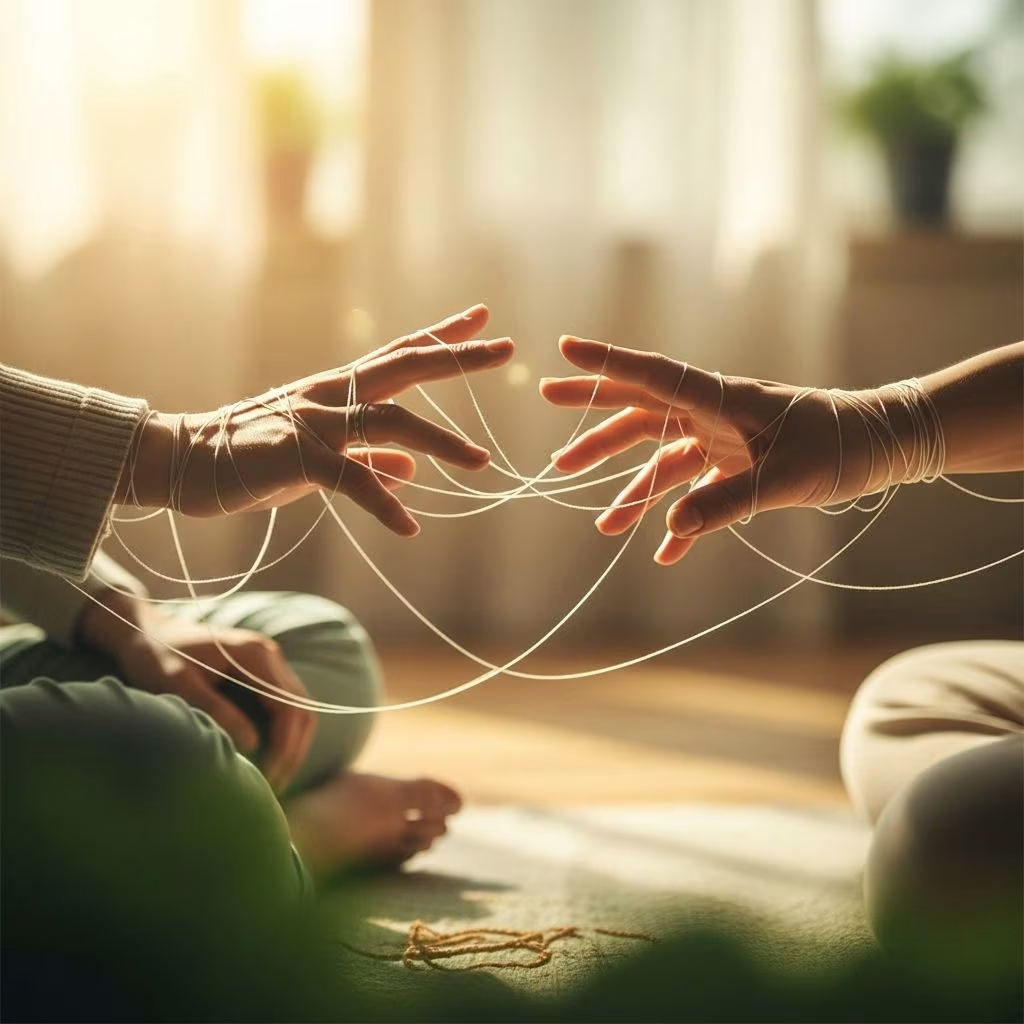
The Paradox of Non-Attachment in Love
The idea that non-attachment—letting go of the need to control or possess—can benefit romantic relationships may seem contradictory at first glance. Conventional wisdom often equates love with closeness, possession, and a desire for assurance that the other person will stay. However, the article from Tiny Buddha reveals that clinging to these expectations can create an invisible burden, suffocating the very connection we seek to nurture.
What Does Non-Attachment Really Mean?
Non-attachment is not about emotional detachment or avoiding intimacy. Rather, it’s about enjoying love and connection without becoming dependent on another person for your happiness or sense of self-worth. It means maintaining your own identity, interests, and emotional well-being outside the relationship. This mindset allows both partners to engage freely, without the fear, pressure, or resentment that often comes from clinging.
The Perils of Attachment
The author describes how her own attachment led to anxiety and fear: she wanted guarantees in the relationship, needed constant reassurance, and became preoccupied with the fear of loss. This created pressure on both partners, leading to intermittent emotional shutdowns and pushing the other person away. Ultimately, clinging to the relationship—holding on too tightly—can be as harmful as holding on too loosely out of fear of vulnerability.
- Fear of loss can manifest as controlling behavior, neediness, or excessive jealousy.
- Dependency on a partner for happiness leads to emotional instability.
- Pressure to maintain the relationship can stifle natural growth and authenticity.
Attachment Theory and Buddhist Perspectives
Classic attachment theory suggests that secure attachment allows individuals to be both close and independent. However, insecure attachment—marked by anxiety or avoidance—can lead to clinging or withdrawal during conflict, both of which stem from fear and a lack of inner security.
Buddhism teaches that suffering arises from clinging—not from having desires or relationships, but from being unable to let go. The key is to enjoy the relationship without becoming addicted to it, so that if it ends, the pain is manageable and doesn’t lead to prolonged suffering. The path is to find a balance between attachment and non-attachment, to love fully but without possession.
The Benefits of Non-Attachment
Reduced Pressure and Anxiety
Practicing non-attachment relieves both partners from the burden of expectation. When you are not dependent on the relationship for your happiness, each interaction becomes lighter and more authentic. There is no need to manipulate, control, or seek constant reassurance, which can alleviate anxiety and allow space for genuine connection.
Greater Emotional Freedom
Non-attachment allows you to experience emotions without being overwhelmed by them. Sadness, joy, or disappointment can be felt deeply, but they do not define your existence. This emotional resilience fosters healthier communication and conflict resolution, as issues are addressed from a place of calm rather than desperation.
Encourages Independence and Growth
When both partners maintain their own interests, friendships, and personal growth, the relationship is enriched. Each person brings new experiences and perspectives into the partnership. This independence is not a threat to the relationship, but a source of strength and vitality.
Deeper Connection
Paradoxically, letting go can create a deeper bond. When two people come together from a place of wholeness, rather than neediness, the connection is based on mutual respect and genuine affection. There is no fear of loss clouding the present moment; instead, each moment together is appreciated for what it is, not for what it might become.
How to Cultivate Non-Attachment in Your Relationship
Developing non-attachment is a gradual process that requires self-awareness, patience, and practice. Here are practical steps inspired by the article and broader Buddhist teachings:
1. Recognize Your Patterns
- Notice when you feel anxious about the relationship or seek reassurance.
- Identify behaviors that stem from fear of loss or abandonment.
2. Practice Self-Sufficiency
- Cultivate hobbies, friendships, and goals outside the relationship.
- Develop a sense of self-worth that is independent of your partner’s validation.
3. Communicate Openly and Honestly
- Share your feelings without expectation or manipulation.
- Encourage your partner to do the same, creating a safe space for vulnerability.
4. Embrace Uncertainty
- Accept that there are no guarantees in life or love.
- Focus on the present moment rather than worrying about the future.
5. Let Go of Outcomes
- Allow the relationship to unfold naturally, without trying to force it in a particular direction.
- Recognize that clinging to a specific outcome can prevent genuine connection.
Balancing Romantic and Spiritual Partnership
In the Buddhist tradition, the ideal of non-attachment does not mean avoiding deep, committed relationships. Instead, it invites a “double vision”—holding the realities of impermanence and human vulnerability alongside the capacity to love fully and compassionately.
Relationships become a spiritual practice, a mirror for self-discovery and growth. The challenges that arise—conflict, misunderstanding, and change—are opportunities to practice letting go, to free the heart from the grip of self-centered desire, and to cultivate a “spacious mind of release”.
Myths and Misconceptions About Non-Attachment
Some people misinterpret non-attachment as emotional coldness or an unwillingness to commit. However, true non-attachment is about engagement with open hands—participating fully in the relationship while remaining free from the compulsion to control it.
It’s also worth noting that non-attachment is not about suppressing feelings. Sadness, longing, or disappointment are natural responses to loss or change; non-attachment simply means not becoming addicted to those feelings or allowing them to define your happiness.
Common Challenges and How to Overcome Them
- Fear of Abandonment: This deep-seated fear can make non-attachment feel unsafe. Therapy, self-reflection, and meditation can help address these underlying wounds.
- Cultural Conditioning: Society often equates love with possession and exclusivity. It takes conscious effort to unlearn these messages and embrace a healthier model of relationship.
- Partner’s Expectations: If your partner is accustomed to more enmeshed dynamics, open communication is essential to align expectations and foster mutual understanding.
Non-Attachment and Relationship Longevity
Interestingly, relationships grounded in non-attachment often have greater longevity and satisfaction. By releasing the need to control or possess the other person, partners are free to grow both individually and together. This creates a dynamic, evolving partnership that can adapt to life’s inevitable changes.
Frequently Asked Questions (FAQs)
Q: Does non-attachment mean I shouldn’t care about my partner?
A: Not at all. Non-attachment means caring deeply but without dependence or the need to control. It’s about loving freely, without clinging or fear.
Q: Can I practice non-attachment if I have a history of insecure attachment?
A: Yes. While it may be more challenging, self-awareness, therapy, and mindful practices can help shift from insecure to secure and non-attached relating.
Q: Is non-attachment the same as being single or avoiding commitment?
A: No. Non-attachment is a mindset, not a relationship status. You can be deeply committed and still practice non-attachment.
Q: How do I know if I’m practicing non-attachment or just avoiding intimacy?
A: Non-attachment involves presence, openness, and vulnerability. Avoidance is rooted in fear and withdrawal. Self-honesty and reflection are key to distinguishing the two.
Practical Tips for Everyday Life
- Meditate regularly to cultivate mindfulness and emotional resilience.
- Journal about your feelings and attachment patterns.
- Seek support from friends, mentors, or therapists who understand non-attachment.
- Practice gratitude for the present moment with your partner.
Comparing Attachment and Non-Attachment in Relationships
| Aspect | Attachment | Non-Attachment |
|---|---|---|
| Emotional Source | Happiness dependent on the partner | Happiness comes from within |
| Response to Change | Fearful, resistant, controlling | Accepting, adaptable, open |
| Conflict Resolution | Defensive, blaming, withdrawing | Calm, honest, collaborative |
| Long-Term Outcome | Potential for resentment, stagnation | Growth, deeper connection, mutual respect |
Conclusion: A New Way of Loving
Non-attachment offers a profound shift in how we experience love and relationships. By releasing the need to control or possess, we create space for authenticity, growth, and genuine connection. This does not mean loving less, but loving more freely—embracing the impermanence of life while cherishing each moment with our partner. As the author discovered, letting go can be the very thing that allows love to flourish.
References
- https://tinybuddha.com/blog/how-non-attachment-can-benefit-your-relationship/
- https://tinybuddha.com/topic/attachment-relationships-and-misconceived-buddhism/
- https://tinybuddha.com/blog/nothing-is-permanent-letting-go-attachment-to-people/
- https://tinybuddha.com/blog/letting-go-of-attachment-from-a-to-zen/
- https://tinybuddha.com/topic/how-to-practice-non-attachment-advicequotespersonal-stories-appreciated/
- https://tinybuddha.com/topic/starting-a-new-way-of-approaching-relationships/
- https://www.sarahconover.com/spokane-faith-and-values/balancing-romance-and-non-attachment


