


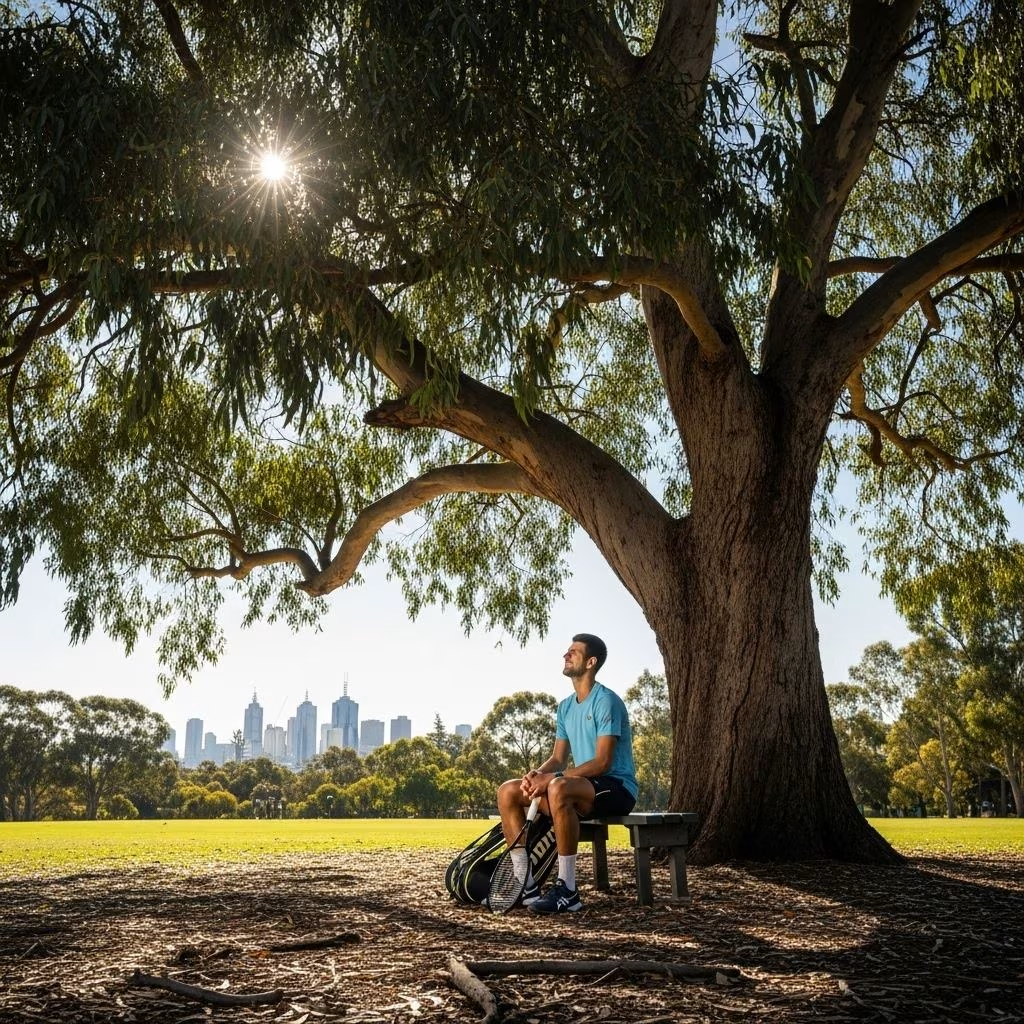
In a revelation that has captured the imagination of tennis fans worldwide, Novak Djokovic, the world’s number one tennis player, has opened up about his extraordinary 15-year relationship with a tree in Melbourne’s Royal Botanic Gardens. This disclosure came during the 2024 Australian Open, offering a rare glimpse into the Serbian champion’s mental preparation rituals and spiritual practices that have contributed to his remarkable success on the tennis court.
The 36-year-old tennis legend made this intriguing confession following his four-set victory over Australia’s Alexei Popyrin at the Rod Laver Arena. When questioned by journalists about his visits to a particular tree in the botanical gardens, Djokovic candidly shared details of what he describes as a special relationship that has become an integral part of his Australian Open routine.
The Discovery of a Sacred Connection
Djokovic’s connection with this mysterious tree began approximately 15 years ago, making it one of his longest-standing traditions at the Australian Open. The tennis champion explained that his bond with the tree developed organically, driven by an inexplicable attraction to its physical characteristics and spiritual presence. What drew him to this particular tree was its impressive root system, trunk, and branches – elements that resonated deeply with his own quest for stability and grounding in the high-pressure world of professional tennis.
The Serbian star began his ritual by climbing the tree years ago, a practice he has continued throughout his career. This physical interaction with nature has evolved into a profound meditation practice that helps him find balance and inner peace during one of the most demanding tournaments on the tennis calendar. For Djokovic, this tree represents more than just a natural landmark; it embodies a sanctuary where he can escape the intense scrutiny and pressure that comes with being a world-class athlete.
The Meditation Practice and Spiritual Grounding
Djokovic’s tree-climbing meditation is part of his broader approach to mental and physical wellness, which has always set him apart from many of his contemporaries. The practice serves multiple purposes in his preparation routine. Primarily, it allows him to ground himself – a term he uses to describe the process of reconnecting with nature and finding his center amidst the chaos of tournament play.
The act of climbing and spending time with the tree provides Djokovic with a unique form of meditation that combines physical engagement with mental relaxation. This holistic approach reflects his well-documented interest in alternative wellness practices, including yoga, mindfulness, and plant-based nutrition. By incorporating nature into his routine, Djokovic demonstrates how elite athletes can benefit from unconventional methods of maintaining peak performance.
His relationship with the tree also speaks to a deeper philosophical understanding of interconnectedness. Djokovic has expressed his appreciation for the entire Royal Botanic Gardens, which he considers an incredible treasure for Melbourne. The fact that such extensive natural beauty exists in the heart of a bustling city provides him with a perfect retreat from the intense atmosphere of tournament play.
Keeping the Secret: The Mystery Tree’s Location
Despite revealing the existence of his special tree, Djokovic has remained deliberately vague about its exact location within the expansive Royal Botanic Gardens. When pressed by journalists, he firmly stated his intention to keep the tree’s identity secret, explaining that discretion is necessary to preserve the sanctity of his private moments. This decision to maintain some mystery around his meditation spot demonstrates his understanding of the importance of personal space and boundaries, even for public figures.
The secrecy has sparked considerable interest among fans and local residents, with some attempting to identify the tree based on old photographs and sightings. Social media investigations and amateur detective work have turned the search for Djokovic’s tree into something of a treasure hunt, with various individuals claiming to have located the sacred spot. However, the tennis champion’s refusal to confirm or deny these claims has only added to the intrigue.
This discretion serves a practical purpose as well. By keeping the tree’s location private, Djokovic ensures that he can continue to visit it without attracting crowds or disrupting his meditation practice. The moment the tree becomes publicly identified, it risks becoming a tourist attraction, which would fundamentally change the nature of his relationship with it.
A History of Nature Connection
Djokovic’s relationship with trees extends beyond his Melbourne tradition. The tennis star has shared photographs on social media over the years showing his interactions with various trees around the world. In 2018, he posted an image of himself standing barefoot in a tree in London, suggesting that his tree-climbing meditation practice is not limited to the Australian Open but forms part of a broader lifestyle philosophy.
These public glimpses into his nature-based practices align with Djokovic’s overall approach to wellness and spirituality. He has long been an advocate for holistic health practices, often discussing the importance of mental strength, meditation, and alternative therapies in achieving sporting excellence. His openness about these practices, even while maintaining some privacy about specific details, has helped normalize conversations about mental health and unconventional wellness approaches in professional sports.
The barefoot element of his tree practice is particularly significant, connecting to the concept of earthing or grounding – a practice based on the theory that direct physical contact with the earth’s surface can have beneficial effects on health and wellbeing. For Djokovic, this physical connection with nature through trees represents a tangible way to stay connected to fundamental natural rhythms despite his jet-setting lifestyle.
The Royal Botanic Gardens: Melbourne’s Urban Sanctuary
The setting of Djokovic’s meditation practice – Melbourne’s Royal Botanic Gardens – is itself worthy of attention. Spanning 38 hectares in the heart of Melbourne, the gardens are home to over 8,500 plant species from around the world. The gardens’ combination of exotic and native Australian flora creates a diverse ecosystem that offers visitors a genuine escape from urban life.
For Djokovic, these gardens represent more than just a convenient green space near the tournament venue. He has described them as an incredible treasure, emphasizing his appreciation for having such extensive parkland and natural beauty in the middle of a major city. This accessibility allows him to maintain his nature-based wellness practices even while competing at one of tennis’s most prestigious events.
The gardens’ history dates back to 1846, and they contain numerous significant trees, some of which are heritage-listed. The variety of tree species, from towering eucalypts to exotic figs, provides countless options for someone seeking a special connection. The fact that Djokovic has maintained loyalty to one particular tree for 15 years speaks to the depth of his commitment to this practice.
Confrontation on Court: The Heckler Incident
The same press conference that revealed Djokovic’s tree relationship also addressed a confrontational moment during his match against Popyrin. At a crucial point in the contest, Djokovic took issue with comments from a spectator and approached the stands to challenge the heckler, telling him to come here and say it to my face.
When questioned about what the heckler said, Djokovic responded cryptically, stating that journalists wouldn’t want to know the details. He explained that throughout the match, particularly from that corner of the arena, he had been subjected to numerous provocative comments. After tolerating the abuse for most of the match, he finally reached a breaking point and decided to confront the situation directly.
Interestingly, Djokovic suggested that this confrontation might have been exactly what he needed at that moment. He admitted to feeling emotionally and performance-wise flat during parts of the match, particularly the end of the second set and most of the third set. The confrontation with the heckler appeared to provide the emotional jolt he needed to refocus and find the intensity required to secure victory.
Performance Under Pressure
Djokovic’s candid assessment of his performance during the match revealed a champion’s mentality. He acknowledged that he hadn’t been playing or feeling at his best in the week leading up to the match, expressing frustration with his level of tennis and the uncharacteristic mistakes he was making on court. However, he also demonstrated the mental resilience that has defined his career by emphasizing the importance of finding a way to win even when not performing optimally.
This ability to triumph despite not feeling at his best is a hallmark of elite athletes. Djokovic recognized that both his recent opponents – players who possessed great quality – came onto the court believing they could win. They were confident, hitting the ball well, and had tactical clarity about how to challenge him. The fact that he could overcome these obstacles while not playing his best tennis demonstrates the depth of his competitive spirit and mental strength.
His connection to the tree and his meditation practices likely play a role in this mental fortitude. By maintaining these grounding rituals, Djokovic ensures he has tools to manage the psychological pressures of competition, even when his physical game isn’t firing on all cylinders.
The Search for the Mystery Tree
Following Djokovic’s revelation, various media outlets and individuals launched their own investigations to identify the specific tree. One particularly determined journalist from Guardian Australia retraced her steps from 11 years earlier when, at age 14, she had spotted Djokovic near a tree in the gardens. Armed with an old photograph (complete with vintage sepia filter), she embarked on a quest to relocate the tree.
The search proved challenging, requiring consultation of the Royal Botanic Gardens’ database of trees and a considerable amount of walking. After approximately two hours of searching and following various leads – including a tip from someone on social media who claimed to have romantic memories near a particular tree – the investigator believed she had found the likely candidate. However, her investigation was cut short by a wedding being set up nearby, adding an element of comedy to the serious quest.
This amateur detective work highlights the fascination that Djokovic’s revelation has generated. The idea that a world-class athlete has maintained such an unusual and spiritual practice has captured public imagination, turning a simple tree into a symbol of the unconventional approaches that can contribute to peak performance.
The Broader Implications for Athletic Performance
Djokovic’s tree meditation practice raises interesting questions about the role of unconventional wellness practices in elite sports. While traditional training methods focus on physical conditioning, tactical preparation, and sport-specific skills, Djokovic’s approach demonstrates the value of incorporating nature-based practices and spiritual elements into an athlete’s routine.
The concept of grounding – both literally and metaphorically – that Djokovic seeks through his tree practice addresses a fundamental challenge faced by professional athletes: maintaining psychological balance while operating under intense pressure. By creating a ritual that removes him from the tournament environment and connects him with something ancient and unchanging, Djokovic has found a way to gain perspective and reset his mental state.
This approach aligns with growing research into the benefits of nature exposure for mental health and performance. Studies have shown that spending time in natural environments can reduce stress, improve mood, and enhance cognitive function. For an athlete competing at the highest level, these benefits could provide a crucial edge in maintaining consistency and mental clarity throughout a tournament.
Djokovic’s Quest for Grand Slam Glory
At the time of these revelations, Djokovic was pursuing his 11th Australian Open title, attempting to win the first Grand Slam tournament of the year once again. His track record at Melbourne Park is extraordinary, with the tournament representing his most successful Grand Slam venue. The connection between his long-standing tree meditation practice and his exceptional success in Melbourne is worth considering.
While it would be simplistic to attribute his victories solely to a tree, the ritual clearly plays a role in his overall preparation and mental state. The consistency of the practice – returning to the same tree year after year – creates a sense of continuity and familiarity that can be comforting in the often chaotic world of professional tennis. This stability, combined with his world-class skills and competitive drive, contributes to his remarkable success rate at the Australian Open.
Frequently Asked Questions
Q: How long has Novak Djokovic been visiting his special tree in Melbourne?
A: Djokovic has been visiting the tree for approximately 15 years, making it a long-standing tradition during his Australian Open appearances since around 2009.
Q: Where exactly is Novak Djokovic’s meditation tree located?
A: Djokovic has deliberately kept the tree’s exact location secret, only confirming that it is somewhere within Melbourne’s Royal Botanic Gardens. He wishes to maintain privacy for his meditation practice.
Q: What does Djokovic do at the tree?
A: Djokovic climbs the tree and uses it as a meditation spot to ground himself and find inner peace during the intense Australian Open tournament. He has been practicing this ritual for years.
Q: Why did Djokovic choose this particular tree?
A: Djokovic was drawn to the tree’s physical characteristics, particularly its roots, trunk, and branches. He felt a natural connection with it and began climbing it years ago, developing what he describes as a special relationship.
Q: Has anyone successfully identified Djokovic’s tree?
A: While various people have claimed to have found the tree, including journalists who retraced old sightings, Djokovic has not confirmed any specific location, maintaining the mystery around his meditation spot.
Q: Does Djokovic practice tree meditation in other locations?
A: Yes, Djokovic has shared images on social media of himself with trees in other locations, including a 2018 photo of him standing barefoot in a tree in London, suggesting this is part of his broader wellness philosophy.


