


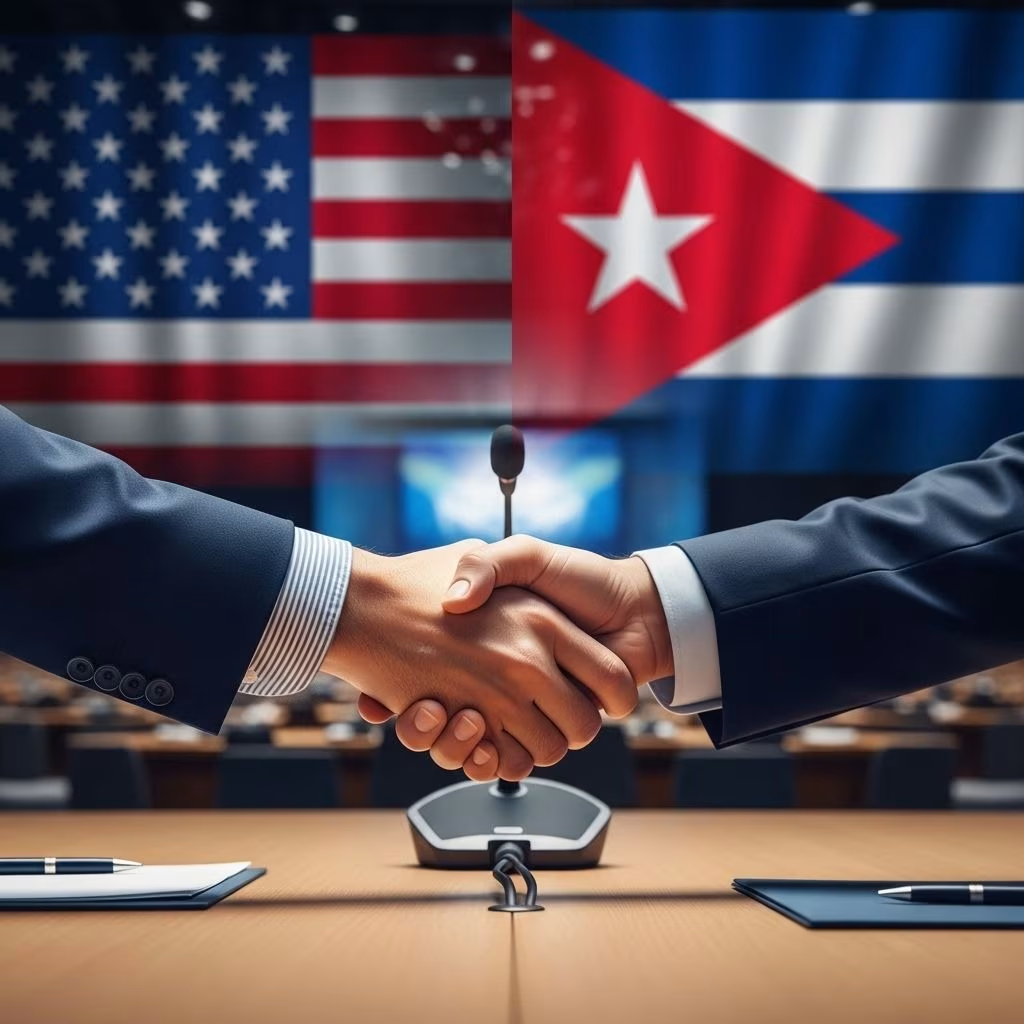
The arrival of President Barack Obama and Cuban President Raul Castro in Panama City for the seventh Summit of the Americas represented a watershed moment in hemispheric diplomacy. For the first time in more than half a century, leaders from all nations of the Americas gathered under one roof, with Cuba’s participation marking the end of its decades-long exclusion from regional dialogue. This historic convergence set the stage for what would become the first formal bilateral meeting between American and Cuban heads of state in 55 years, signaling a dramatic shift in a relationship that had been frozen in Cold War animosity.
The significance of this moment extended far beyond the personal interaction between two leaders. It embodied a fundamental reassessment of hemispheric relations, challenging long-held assumptions about diplomacy, ideology, and the possibilities for reconciliation. As both presidents prepared to sit down together, the world watched with anticipation, recognizing that this encounter could reshape not only US-Cuba relations but the entire landscape of inter-American cooperation.
A Historic Gathering in Panama City
The seventh Summit of the Americas, held in Panama City in April 2015, brought together leaders from across North and South America to discuss pressing issues affecting the region. This tradition of hemispheric dialogue had been established to foster cooperation and address shared challenges, but the 2015 gathering carried special significance. For the first time since the summit’s inception, Cuba participated as a full member, ending its historical exclusion from these gatherings.
President Obama’s journey to Panama reflected his administration’s commitment to reimagining America’s role in the hemisphere. Six years earlier, at his first Summit of the Americas, Obama had pledged to break free from old arguments and grievances that had trapped regional relations in the past. He promised a new era of cooperation based on equal partnership, mutual interest, and mutual respect. The Panama summit represented the culmination of that vision, demonstrating sustained commitment to transforming hemispheric relationships.
The summit’s agenda encompassed multiple dimensions of regional cooperation. Beyond the headline-grabbing US-Cuba rapprochement, leaders discussed economic development, democratic governance, energy security, and civil society engagement. President Varela of Panama, as host, emphasized the importance of including civil society organizations as formal partners in the summit for the first time, recognizing that the voices of citizens must be heard in shaping the region’s future.
The Thaw in US-Cuba Relations
The Obama-Castro meeting did not materialize suddenly. It resulted from months of careful diplomatic groundwork, secret negotiations, and a fundamental reassessment of a policy that had remained unchanged for five decades. In December 2014, both Obama and Castro had simultaneously announced a dramatic shift in their countries’ relationship, stunning the world and setting in motion a process that would lead to their face-to-face encounter in Panama.
Obama’s decision to pursue normalized relations with Cuba stemmed from a pragmatic assessment that the existing policy had failed to achieve its stated objectives. The decades-long embargo and diplomatic isolation had not brought about democratic change in Cuba, while simultaneously limiting opportunities for the Cuban people and constraining America’s diplomatic flexibility in the hemisphere. Obama concluded that engagement, rather than isolation, offered the best path forward for advancing American interests and values.
The announcement of policy changes set in motion several practical steps toward normalization. Both countries began working to reestablish diplomatic relations, with plans to open embassies in Havana and Washington, D.C. The Obama administration moved to ease travel restrictions, allowing more Americans to visit Cuba for educational, cultural, and humanitarian purposes. Expanded telecommunications access and increased opportunities for commerce promised to connect the Cuban people more directly with the outside world.
The First Face-to-Face Encounter
When President Obama and President Castro finally sat down together in Panama, the encounter carried profound symbolic weight. Obama opened by acknowledging the complexity of the history between their nations and the deep mistrust that had developed over decades of hostility. He noted that after 50 years of unchanged policy, it was time to try something new, to engage more directly with the Cuban government and people.
The meeting’s atmosphere reflected both the historic nature of the moment and the practical challenges ahead. Obama and Castro discussed their shared histories and the significant changes in policy that had made this conversation possible. Both leaders acknowledged that majorities in their respective countries had responded positively to the thaw in relations, suggesting strong popular support for reconciliation despite political opposition in some quarters.
Neither leader harbored illusions about the persistence of significant differences between their governments. Obama made clear that the United States would continue to advocate for democracy and human rights, values central to American foreign policy. Castro, in his passionate speech to the full summit, articulated Cuba’s own concerns about US policy and its historical impact on the island nation. The key breakthrough lay not in resolving these differences but in agreeing that they could disagree with respect and civility, creating space for dialogue despite divergent perspectives.
Immediate Tasks and Long-Term Vision
The Panama meeting focused on concrete steps to advance normalization. The most immediate task involved establishing formal diplomatic relations and opening embassies, a process that required technical negotiations on everything from property arrangements to staffing levels. These practical matters, while seemingly mundane, carried symbolic significance as tangible manifestations of the changing relationship.
Obama emphasized his call for Congress to lift the embargo, acknowledging that executive actions alone could not fully normalize relations. The legislative branch held authority over the comprehensive sanctions regime that had been built over decades, and ending it would require congressional action. While Obama faced significant opposition from some lawmakers, particularly those representing Cuban-American constituencies in Florida, he expressed confidence that expanded people-to-people exchanges would build support for complete normalization over time.
The long-term vision extended beyond mere diplomatic recognition. Obama articulated a hope that normalized relations would facilitate humanitarian projects, expand telecommunications access, and promote the free flow of information. These objectives reflected a belief that engagement would empower the Cuban people, providing them with resources and opportunities that isolation had denied. The administration framed its approach as being ultimately about improving lives and advancing cooperation throughout the hemisphere.
Regional Context and Hemispheric Implications
The US-Cuba rapprochement resonated throughout the Americas, where many countries had long urged Washington to change its approach. Latin American and Caribbean nations had increasingly viewed the Cuba embargo as an anachronistic relic of Cold War thinking, and several had threatened to boycott the Panama summit if Cuba remained excluded. The breakthrough removed a persistent source of friction in hemispheric relations, potentially enabling more productive cooperation on other issues.
During the summit, Obama held bilateral meetings with numerous leaders, including Brazilian President Dilma Rousseff and Panamanian President Juan Carlos Varela. These conversations addressed shared priorities such as food security, climate change, economic competitiveness, and energy cooperation. The cost of energy in Central America and the Caribbean posed particular challenges to economic development, and Obama pledged American support for clean energy initiatives to address this constraint.
Obama also participated in a CEO summit alongside business executives and heads of state from Brazil, Canada, Chile, Colombia, Costa Rica, El Salvador, Guatemala, Jamaica, Mexico, Panama, Peru, and Trinidad and Tobago. This gathering highlighted the economic dimension of hemispheric relations, emphasizing the potential for expanded trade, investment, and commercial ties. The normalization of US-Cuba relations promised to unlock new economic opportunities, not only between Washington and Havana but throughout the region.
Civil Society and Democratic Values
A notable feature of the Panama summit was the formal inclusion of civil society organizations in summit proceedings. Obama strongly endorsed this innovation, commending President Varela for making civil society groups partners in the dialogue. He argued that civil society should become a permanent part of future summits, reflecting his belief that the voices of citizens must be heard in shaping regional policy.
This emphasis on civil society engagement reflected broader themes in Obama’s approach to hemispheric relations. He repeatedly invoked the Inter-American Democratic Charter, which states that “the peoples of the Americas have a right to democracy.” Obama framed the US government’s role as upholding universal freedoms and rights, while acknowledging that other governments might define these concepts differently. The tension between advocating for democratic values and respecting national sovereignty remained a delicate balancing act in American diplomacy.
In the context of US-Cuba relations, this tension became particularly acute. Obama pledged to continue raising concerns about democracy and human rights, issues that had long justified American opposition to the Castro government. However, the shift toward engagement represented a tactical change in how the United States sought to advance these values, moving from confrontation and isolation toward dialogue and influence through connection.
Challenges and Opposition
Despite the historic nature of the Obama-Castro meeting, significant obstacles remained on the path to full normalization. In the United States, opposition from some members of Congress threatened to block the lifting of the embargo, which required legislative action that executive authority alone could not accomplish. Critics argued that Obama had given away American leverage without extracting sufficient concessions from Cuba on human rights and political reform.
Cuban-American politicians, particularly Senator Marco Rubio of Florida, emerged as vocal opponents of the policy shift. They contended that the Castro government remained a repressive dictatorship unworthy of American engagement, and that normalization would strengthen the regime rather than empower the Cuban people. This opposition reflected generational and ideological divisions within the Cuban-American community, with older exiles generally more hostile to engagement than younger Cuban-Americans.
In Cuba, hardliners within the government and Communist Party also harbored reservations about rapprochement. While Raul Castro had initiated economic reforms and pursued diplomatic opening, powerful factions remained suspicious of American intentions and resistant to changes that might undermine the revolution’s achievements. The Cuban government insisted that normalization must respect Cuba’s sovereignty and political system, rejecting any suggestion that engagement would lead to regime change.
The Path Forward
As Obama and Castro concluded their historic meeting in Panama, both leaders expressed cautious optimism about the future. They acknowledged that the road ahead would be difficult, marked by disagreements and setbacks alongside progress. However, they also recognized that the decision to turn the page on decades of hostility created possibilities that isolation had foreclosed.
Obama framed the policy shift as a choice to look forward rather than remain imprisoned by the past. He expressed belief that as exchanges between Americans and Cubans expanded, as commerce and interactions resumed, the deep connections between the two peoples would manifest in a more positive and constructive governmental relationship. This people-to-people approach reflected confidence that engagement would organically generate pressure for continued opening.
The technical work of normalization proceeded on multiple tracks. Diplomats negotiated the details of embassy openings, working through complex issues of property, security, and protocol. Teams addressed telecommunications infrastructure, banking relationships, and regulatory frameworks to facilitate expanded travel and commerce. Educational and cultural exchange programs began to proliferate, connecting Americans and Cubans in ways that had been impossible for decades.
Historical Significance and Legacy
The Panama summit and the Obama-Castro meeting will be remembered as a pivotal moment in hemispheric history. For the first time in more than 50 years, all nations of the Americas sat together to address their collective future, ending Cuba’s isolation and creating new possibilities for regional cooperation. The encounter between Obama and Castro demonstrated that even the most entrenched conflicts could be reimagined, that leaders could choose pragmatism over ideology when circumstances warranted.
The broader significance extended beyond bilateral US-Cuba relations. The summit showcased a vision of hemispheric cooperation based on equality, mutual respect, and shared interests rather than ideological conformity or great power dominance. Obama’s emphasis on partnership rather than hegemony, on listening as well as leading, reflected an evolving understanding of America’s role in a multipolar world.
Yet the ultimate success of the normalization process remained uncertain as the summit concluded. Much would depend on subsequent implementation, on whether both governments could manage the practical complexities of normalization while navigating domestic political opposition. The opening created in Panama would need to be carefully nurtured, protected from setbacks and spoilers who might seek to derail the process.
Frequently Asked Questions
Q: Why was the 2015 Summit of the Americas historically significant?
A: The 2015 Summit marked the first time in over 50 years that all nations of the Americas met together, with Cuba’s inclusion ending its decades-long exclusion from regional gatherings and enabling the first formal meeting between US and Cuban heads of state since the 1950s.
Q: What were the main topics discussed during the Obama-Castro meeting?
A: The leaders discussed their shared histories, the policy changes that enabled their meeting, plans to normalize diplomatic relations and open embassies, and their continuing differences on issues like democracy and human rights, agreeing to disagree with respect and civility.
Q: What immediate steps toward normalization were announced?
A: Both countries committed to working on establishing formal diplomatic relations and opening embassies in Havana and Washington, D.C. Additionally, the US began easing travel restrictions and expanding opportunities for telecommunications access and cultural exchanges.
Q: What role did civil society play in the Panama summit?
A: For the first time, civil society organizations from across the region were included as formal partners in the summit. President Obama strongly supported this innovation and called for civil society to become a permanent part of future summits.
Q: What obstacles remained to full US-Cuba normalization after the summit?
A: Significant challenges included congressional opposition to lifting the embargo, concerns from Cuban-American politicians about legitimizing the Castro government, and resistance from hardliners in both countries who remained suspicious of rapprochement and its implications.
References
- https://obamawhitehouse.archives.gov/blog/2015/04/13/seventh-summit-americas-presidents-trip-and-historic-meeting
- https://obamawhitehouse.archives.gov/the-press-office/2015/04/11/remarks-president-obama-first-plenary-session-summit-americas
- https://www.youtube.com/watch?v=CgwJwQJGFbM
- https://laist.com/shows/take-two/obama-castro-break-decades-old-freeze-to-talk-us-cuba-relations


