


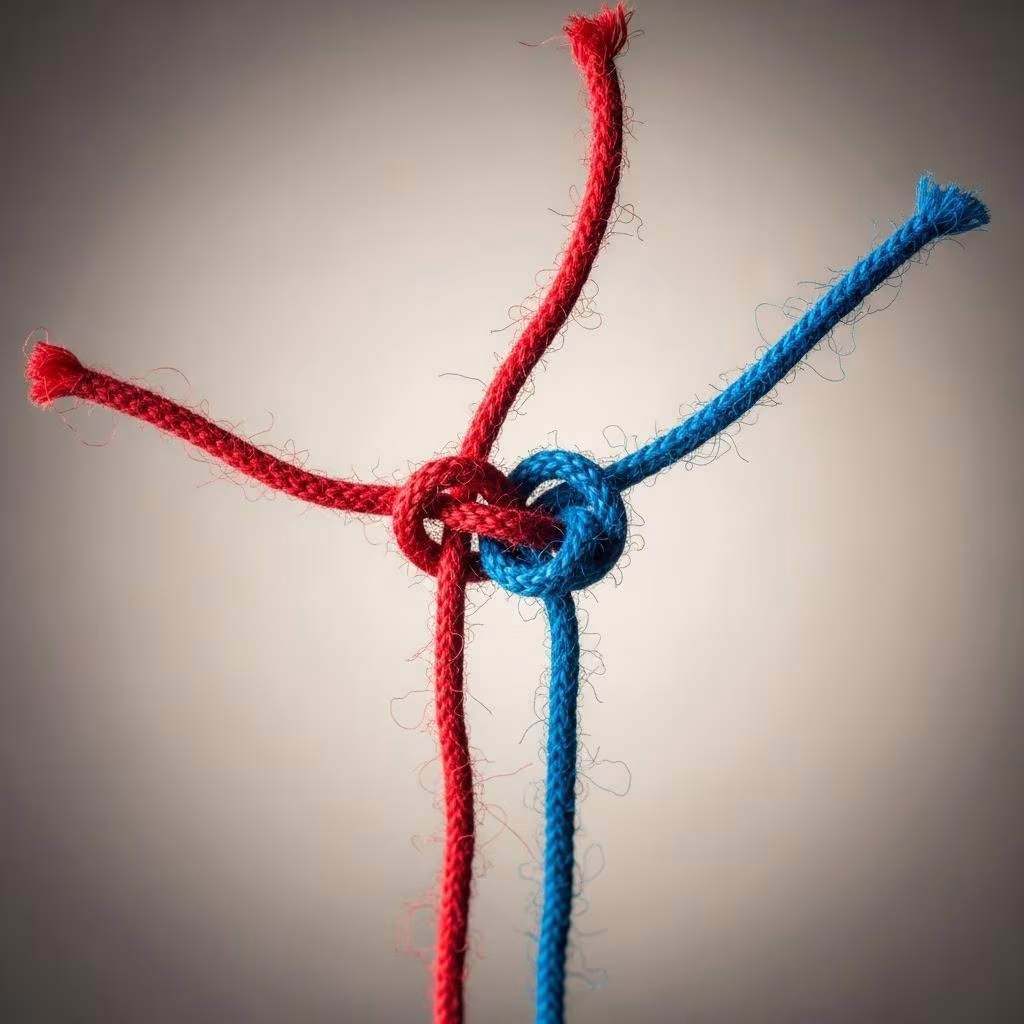
Introduction: The Allure and Reality of On-And-Off Relationships
On-and-off relationships—those marked by repeated breakups and reconciliations—are a common plotline in movies, TV shows, and real life. They often feel intense, passionate, and even romantic in their unpredictability. But beneath the surface, this kind of relationship cycling can take a significant emotional toll, leaving both partners exhausted and uncertain about the future. If you’ve found yourself stuck in this pattern, you’re not alone. Understanding the psychology behind these relationships, their impact on your well-being, and how to recognize when it’s time to walk away for good can help you make healthier choices for your heart and mind.
Why Do On-And-Off Relationships Happen?
It’s natural to wonder why some couples can’t seem to stay together—or stay apart. In reality, there are many reasons people end up in this cycle:
- Fear of Loneliness: The comfort of familiarity can outweigh the discomfort of being single, even if the relationship isn’t fulfilling.
- Unresolved Issues: Couples may break up over recurring problems but reunite without truly addressing the root causes.
- Hope for Change: One or both partners may believe that “this time will be different,” despite a history of similar outcomes.
- External Pressures: Social circles, family expectations, or even pop culture narratives can romanticize the idea of getting back together with an ex.
- Attachment Styles: Individuals with anxious or avoidant attachment styles may find themselves drawn back into relationships that offer intermittent reinforcement.
The Emotional Toll: How Cycling Affects Mental Health
Research from the University of Missouri highlights that on-and-off relationships can have a lasting negative impact on mental health, with increased symptoms of depression and anxiety that can persist for over a year after the relationship ends. The rollercoaster of breaking up and making up creates emotional instability, erodes trust, and can make it harder to fully invest in other areas of life.
Key findings from the study include:
- Lower Satisfaction: Partners in cyclical relationships report less relationship satisfaction and poorer communication over time.
- Reduced Commitment: The repeated uncertainty makes it difficult to build genuine commitment.
- Increased Distress: Frequent cycling is linked to higher levels of psychological distress, including anxiety and depressive symptoms.
- Potential for Unhealthy Dynamics: These relationships are also associated with higher rates of conflict and even intimate partner violence.
While media often portrays these relationships as passionate and destined, the reality is that the lack of consistency can undermine the sense of safety and dependability that is crucial for a healthy partnership.
6 Signs Your On-And-Off Relationship Isn’t Working
Not all on-and-off relationships are doomed, but some clear red flags indicate when the cycle is unhealthy and it’s time to consider moving on for good.
1. You Feel Fatigued
If the constant breaking up and making up leaves you emotionally drained, it’s a sign that the relationship is no longer serving you. Emotional exhaustion is a clear signal that the connection is fading and it may be time to call it quits—at least for a while.
2. You Feel Resentful
Resentment can build when the same issues arise repeatedly without resolution. If you find yourself feeling bitter or angry both when you’re together and apart, the relationship may have run its course.
3. The Time Apart Is Increasingly Shorter
If the intervals between breakups and reconciliations become shorter, it’s often a sign that the relationship is stuck in an unhealthy pattern rather than evolving.
4. You See the Relationship as a Burden
When being together feels like a chore rather than a source of joy, it’s a strong indication that the relationship is no longer adding value to your life.
5. You Have to Convince Your Partner (Or Yourself) to Make It Work
Healthy relationships are built on mutual desire and effort. If you feel like you’re “selling” the relationship to your partner—or yourself—it’s probably not the right match.
6. You Can’t Articulate Why You’re Getting Back Together
If neither you nor your partner can clearly state why you’re reuniting, it’s likely that fear, habit, or external pressures are driving the decision—not genuine connection or growth.
The Biggest Problem: Lack of Consistency
According to relationship expert Dr. Gary Brown, the core issue with on-and-off relationships is the lack of consistency. Human beings crave stability and predictability in their closest bonds. When a relationship is constantly in flux, it’s hard to build trust, security, or a shared vision for the future. This instability can leave both partners feeling anxious and uncertain, making it difficult to fully invest in the relationship or in personal growth.
When On-And-Off Relationships Can Work (And When They Can’t)
While most on-and-off relationships are unhealthy, there are rare cases where time apart can lead to positive change. For this to happen, both partners must:
- Honestly address the reasons for past breakups.
- Commit to making tangible changes.
- Communicate openly about expectations and boundaries moving forward.
If the cycle repeats without real growth or resolution, however, the relationship is unlikely to improve—and may even get worse over time.
How to Move On From an On-And-Off Relationship
Ending the cycle can be challenging, but it’s often necessary for emotional well-being. Here are some practical steps to help you move forward:
- Accept the Reality: Acknowledge that the relationship is not meeting your needs and that hope alone is not enough to sustain it.
- Create Distance: Limit contact with your ex to avoid falling back into old patterns.
- Reflect and Learn: Take time to understand what drew you into the cycle and what you need in a healthy relationship.
- Seek Support: Lean on friends, family, or a therapist to process your feelings and build a support system.
- Focus on Yourself: Invest in hobbies, goals, and self-care to rebuild your sense of identity outside the relationship.
Frequently Asked Questions (FAQs)
Q: Are all on-and-off relationships unhealthy?
A: Not necessarily, but most are. If both partners are willing to address the underlying issues and make real changes, there’s a chance for improvement. However, repeated cycling without growth is a red flag.
Q: How do I know if it’s time to end things for good?
A: If you feel exhausted, resentful, or unable to articulate why you’re together, it’s probably time to move on. Trust your instincts—if the relationship feels more like a burden than a joy, it’s not serving you.
Q: Can time apart ever make a relationship stronger?
A: Sometimes, time apart can provide clarity and help both partners appreciate what they have. But this only works if both are committed to growth and change—otherwise, the cycle will likely repeat.
Q: How long do the negative effects of an on-and-off relationship last?
A: Research shows that the negative mental health effects—such as increased anxiety and depression—can linger for more than a year after the relationship ends.
Q: What should I do if I keep going back to my ex?
A: Reflect on what’s driving the pattern. Are you afraid of being alone? Hoping things will change? Seeking support from a therapist can help you break the cycle and build healthier relationships in the future.
Conclusion: Choosing a Healthier Path
On-and-off relationships can feel exciting and even romantic in the moment, but the long-term emotional cost is often high. Recognizing the signs of an unhealthy cycle, understanding the impact on your mental health, and taking proactive steps to move forward can empower you to seek relationships that are stable, fulfilling, and genuinely supportive. While it’s never easy to walk away, doing so can open the door to greater happiness and well-being in the long run.
References
- https://www.elitedaily.com/p/6-signs-your-on-again-off-again-relationship-isnt-working-you-should-break-up-for-good-8313488
- https://www.aau.edu/research-scholarship/featured-research-topics/on-again-off-again-relationships
- https://www.elitedaily.com/p/the-biggest-problem-with-on-again-off-again-relationships-according-to-experts-17295768
- https://www.elitesingles.co.uk/em/from-single-to-couple/ending-a-relationship
- https://boards.cruisecritic.com/topic/2992259-elite-daily-cocktail-hour/
- https://affirmativetherapycollective.com/elite-daily-exercise-article/
- https://www.austintherapyemdr.com/blog/feature-emoji-communication


