


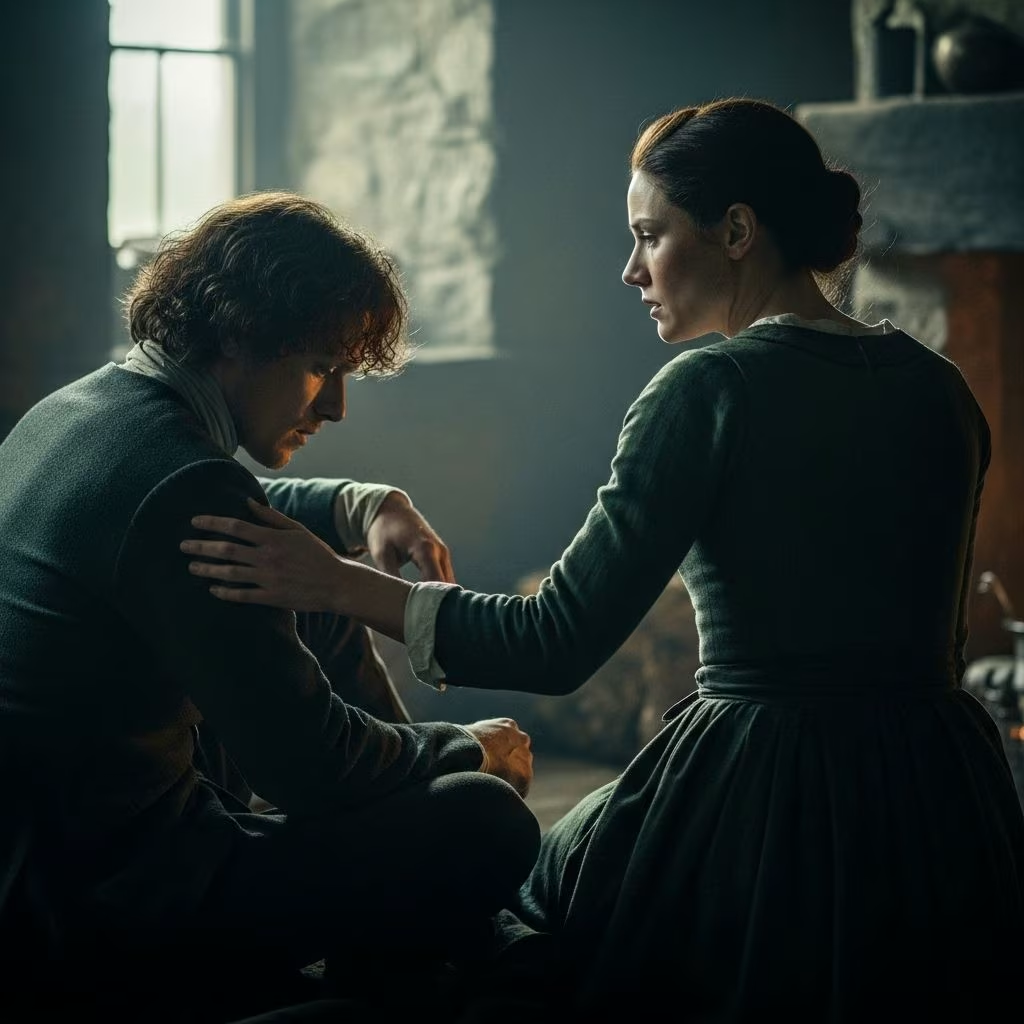
After the Rescue: Jamie, Claire, and the Real Threat to Their Bond
The Outlander series has always woven its narrative tapestry with a blend of romance, danger, history, and emotional turmoil. In the much-anticipated premiere episode, Jamie’s desperate rescue of Claire from the sadistic Black Jack Randall is a dramatic high point, but it’s the aftermath—the shaken foundation of their relationship—that offers the most powerful drama. This article examines how Jamie and Claire’s reunion is deeply complicated, why their love is the true battleground, and what Outlander reveals about the enduring consequences of trauma, trust, and healing.
Heated Peril: Jamie’s Rescue of Claire
As the episode opens, the stakes are clear: Black Jack Randall, a figure of relentless torment and violence, has captured Claire. Jamie’s arrival is nothing short of heroic. He bursts in, sword drawn, his determination to save Claire at any cost propelling the action. The rescue itself is viscerally intense, marked by violence, fear, and desperation. The episode’s direction lingers on the peril Claire faces, making Jamie’s intervention all the more cathartic.
Key elements of the rescue sequence:
- Intense Confrontation: The power dynamics between Jamie, Randall, and Claire explode in a tense, physical confrontation.
- Claire’s Vulnerability: The narrative does not shy from depicting the terror and trauma Claire experiences.
- Jamie’s Reckoning: Forced to violence, Jamie’s acts are driven equally by love and fury, signifying both heroism and cost.
Yet as the immediate threat recedes, it’s clear that survival comes at a price. Trauma lingers, and the safety Jamie provides cannot erase what’s been endured.
The Cost of Trauma: Beyond Physical Harm
Outlander rarely allows its characters the luxury of peace after violence. The show delves into the lingering psychological costs of trauma, both for Claire and Jamie.
- Claire’s ordeal is more than a physical threat; it is a violation that assaults her sense of security, autonomy, and identity.
- Jamie, while depicted as the rescuer, absorbs his own trauma—witnessing Claire’s suffering, and feeling responsible for failing to protect her sooner.
These experiences cast long shadows. The episode excels in rendering these aftershocks not as melodrama, but as authentic obstacles to intimacy and trust.
| Character | Source of Trauma | Lingering Effects |
|---|---|---|
| Claire | Physical attack, captivity by Randall | Nightmares, trust issues, hypervigilance |
| Jamie | Helplessness, guilt, violence required in rescue | Shame, anger, difficulty expressing support |
The Challenges of Healing: Relearning Trust
Jamie’s impulse, post-rescue, is to comfort and protect Claire, reaffirming his love through physical presence and assurances of safety. However, Outlander is precise in showing that this is not enough. The couple is left emotionally raw, unable to simply pick up where they left off. The show explores how trauma affects relational intimacy, creating distance even between those most devoted to each other.
- Misaligned Needs: Claire needs space and time, while Jamie wants immediate repair and closeness. Their differing responses to trauma cause friction, not for lack of love, but because pain cannot be hurried away.
- Communication Breakdown: Where once they shared deep understanding, now words falter. Misread intentions occur, causing hurt on both sides.
- Trust Rebuilding: Trust, once shaken, must be rebuilt brick by brick. The episode highlights that forgiveness—in this case, self-forgiveness and mutual understanding—is a process.
Unspoken Tensions: The Ripple Effect of Violence
The episode’s strength lies in its portrayal of unspoken wounds. Silence, hesitancy, and physical withdrawal are rendered with subtlety. Sometimes, the deepest injuries do not bleed but ache beneath the surface. Outlander refuses easy answers, showing that:
- The effects of violence are not limited to the victim—it envelops those who love them.
- Even shared trauma can isolate, creating gaps where connection once flourished.
- Finding the way back to each other is an act of courage, vulnerability, and persistence.
The Fragility and Strength of Love
If violence and trauma are storm winds, then love is portrayed here as both battered and resilient. Jamie and Claire’s relationship has always withstood formidable challenges: the collision of centuries, the violence of war, and the threats of jealousy and rivalry. Yet, the scars left by Randall’s cruelty expose cracks in their foundation. Is love enough when both parties are broken?
Outlander admits that love does not magically heal all wounds. Rather, it is the persistent choice to stay, to return, to try again, that matters most. Some key observations from this narrative arc:
- Love as Process: The episode demonstrates that love is not a static feeling but a series of choices, a process that is tested and remade in the aftermath of trauma.
- Vulnerability Required: Healing requires both partners to risk vulnerability anew—sharing fears, acknowledging pain, and opening oneself to the possibility of rejection or misunderstanding.
- Growth Through Struggle: Paradoxically, the trauma may ultimately deepen their connection, granting them a new level of empathy and understanding for each other’s suffering.
The Test of Time: Comparing This Crisis to Earlier Challenges
This is not the first time Jamie and Claire’s relationship has been threatened—or even by Black Jack Randall. Their marriage began out of necessity, developed into passion, and grew through adversity. Past trials have included forced separations, physical injury, emotional betrayal, and the death of loved ones. Each ordeal leaves marks, but also opportunities for growth.
The show’s narrative structure often juxtaposes earlier milestones to emphasize development:
- Their forced marriage that grew into real devotion.
- Jamie’s own ordeal at the hands of Randall, which Claire helped him heal from.
- Previous departures and reunions that tested their commitment.
These echoes remind viewers that while some wounds never heal entirely, the act of facing them together is the core of Jamie and Claire’s story.
The Bigger Picture: Community, Duty, and External Pressures
The aftermath is not contained in isolation. The couple’s lives are deeply entwined with their community at Lallybroch and the broader upheavals of 18th-century Scotland. Their private pain is magnified by public expectations and the need to keep moving forward, whether to maintain safety or secure the future.
This context influences their recovery:
- Protective Instincts: Jamie must balance his wish to shelter Claire with his obligations as laird, son, and leader.
- Public Versus Private Faces: Maintaining a façade of strength before others is necessary, but can delay or complicate honest healing behind closed doors.
- The Oncoming Storm: The larger political backdrop—incipient rebellion, the threat of further violence, and the uncertainty of time travel—means there is little room for prolonged vulnerability.
Heroism Redefined: Beyond the Sword
Outlander ultimately redefines what it means to be heroic. Jamie’s initial heroism is sword-wielding and physical, a rescue from immediate harm. But the true heroism both he and Claire exhibit is quieter: the courage to face woundedness, to admit fear or anger, and to choose one another again and again, despite pain.
This redefinition rejects simple savior narratives, insisting on a more complex, equal partnership. Claire is not merely a damsel in distress; she must also rescue herself, ask for what she needs, and voice her fears. Jamie, for his part, must accept that he cannot fix everything, and that love sometimes means bearing witness rather than solving.
The Future: Will Their Relationship Survive?
As the episode draws to its subdued conclusion, the way forward remains uncertain. The threat of Randall may have receded (at least for now), but the real question lingers: can Jamie and Claire heal together, or will the scars of violence drive them apart? The season leaves viewers with the sense that the battle is not over, but hope persists. With history as their witness, their greatest challenge may not be external, but in safeguarding the fragile trust and affection between them.
Frequently Asked Questions (FAQs)
Q: Did Jamie really save Claire from Black Jack Randall?
A: Yes, Jamie’s timely intervention rescued Claire from physical harm at Randall’s hands. However, both characters are left dealing with the aftereffects of violence and trauma, which strains their bond.
Q: What impact does trauma have on Claire and Jamie’s relationship?
A: Trauma introduces emotional distance and miscommunication, complicating healing and trust. Both suffer with feelings of guilt, anger, and vulnerability that take time to address.
Q: How do Jamie and Claire try to heal after the rescue?
A: They attempt to reconnect, but must navigate differing needs and pain. Honest conversation, time, and patience play crucial roles in their gradual recovery.
Q: Is their relationship unique compared to other TV couples?
A: Outlander stands out in its willingness to confront the hard truths of trauma and love. Jamie and Claire’s relationship is forged not only from passion but from shared hardship and effort to grow together.
Q: Does Outlander suggest that love can overcome any adversity?
A: The series argues that love is powerful, but not infallible or easy. It must be nourished through active choices and vulnerability, especially in the aftermath of trauma.
References
- https://www.townandcountrymag.com/leisure/arts-and-culture/a62854900/outlander-season-7-sneak-peek-sam-heughan-caitriona-balfe/
- https://www.youtube.com/watch?v=J1SZLgfiONo
- https://screenrant.com/outlander-jamie-claires-relationship-timeline-explained/
- https://outlander.fandom.com/wiki/Season_Seven
- https://outlander.fandom.com/wiki/Claire_Fraser


