


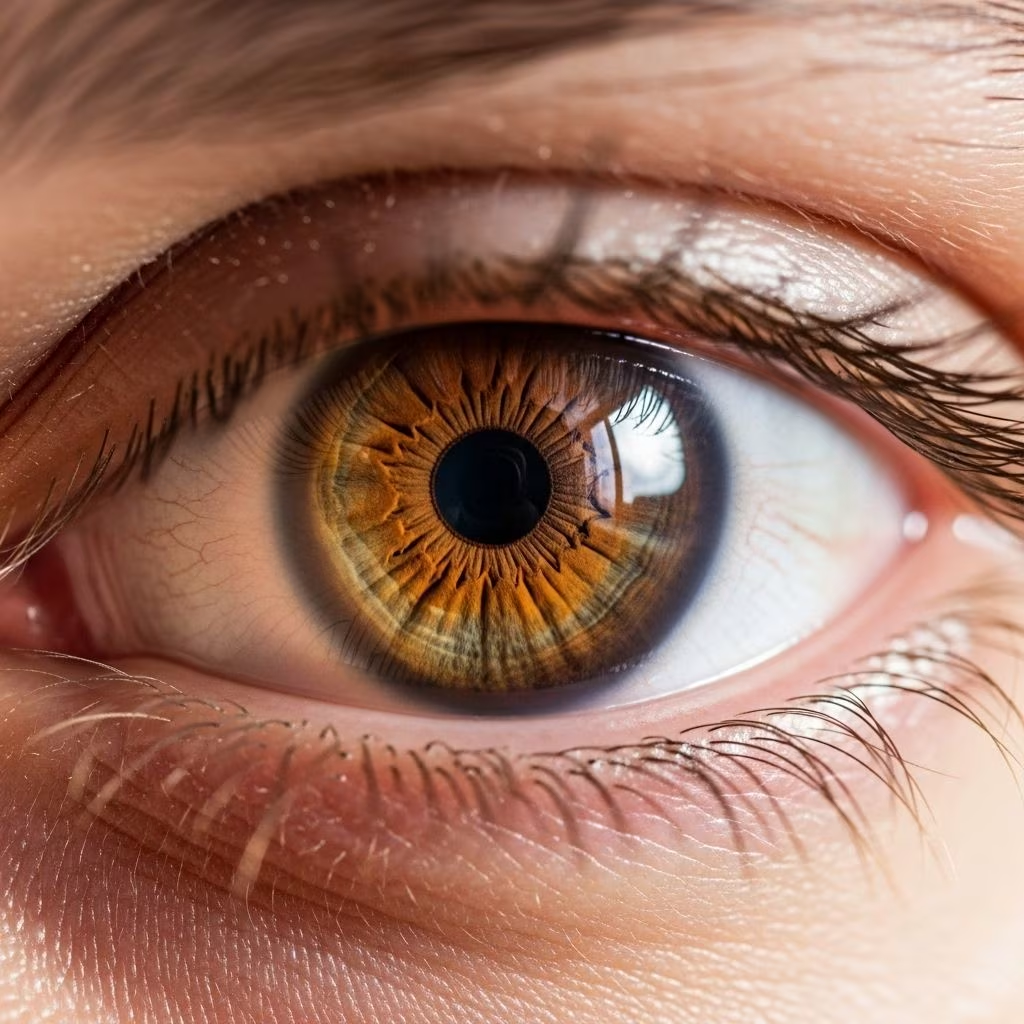
Prolonged Eye Contact: Understanding Its Meaning and Impact
Eye contact—one of humanity’s most ancient and powerful forms of communication—can evoke profound responses that transcend words. When two people engage in prolonged eye contact, the exchange carries layers of meaning, influences brain chemistry, and can strengthen or strain relationships depending on context. This article explores the psychology behind sustained gazes, examines the intentions signaled by them, highlights the effects on our minds and emotions, and answers your most pressing questions about this striking form of nonverbal communication.
What Does Prolonged Eye Contact Mean?
Trying to decipher why someone locks eyes with you for more than a fleeting moment? The answer isn’t always straightforward. Here are the core intentions often behind prolonged eye contact:
- Checking You Out: When someone repeatedly glances your way or maintains a steady gaze, it’s a classic sign they’re physically or romantically interested. This may be a precursor to them working up the courage to approach or spark a conversation.
- Genuine Interest in Conversation: In discussions, extended eye contact reflects genuine attention. The listener values your opinions and wants you to feel heard, signaling respect, trust, and connection.
- Evaluating or Judging: Sometimes, a long stare signals that someone is sizing you up—assessing your confidence, honesty, or emotional state. This can occur in professional, competitive, or even social situations.
- Seeking Dominance or Asserting Power: In certain scenarios, prolonged eye contact can be an attempt to assert dominance or gain control. This is common in negotiations, disagreements, or confrontational interactions.
- Flirtation and Romantic Interest: Often, extended eye contact is a playful and subtle way to communicate romantic attraction, especially if accompanied by a soft smile or dilated pupils.
- Sign of Trust and Openness: In personal relationships, longtime eye contact can indicate vulnerability, openness, and trust, fostering emotional intimacy.
The Psychological Effects of Eye Contact
Eye contact is far more than meets the eye. Researchers and therapists agree that sustained gazes wield substantial influence over our emotional bonds and mental states. Here’s what happens psychologically:
- Enhanced Empathy and Emotional Connection: Prolonged eye contact activates the release of hormones such as oxytocin (the “love hormone”), which fosters intimacy and emotional bonding, and dopamine, which is associated with pleasure and motivation. These neurochemical changes can deepen romantic attachment or platonic trust.
- Heightened Psychological Arousal: Studies show that staring into someone’s eyes increases physiological arousal—your heart rate may increase, and you may feel more alert, especially when emotions such as attraction, tension, or excitement are involved.
- Trust Building: Eye contact encourages vulnerability and fortifies trust and respect between people, essential ingredients in developing strong relationships.
- Improved Communication: Direct gazes help convey sincerity and attentiveness, improving comprehension, memory retention, and cooperative behavior during interactions.
- Physical and Emotional Discomfort: Prolonged eye contact is powerful, but if it feels unreciprocated or forced, it can quickly shift from intimate to intrusive. This discomfort is common if the person feels threatened, shy, or uninterested.
Expert Insight: Counselors emphasize that mutual enjoyment is key—if eye contact begins to feel forced or becomes uncomfortable, it may hinder connection instead of optimizing it. Respect for boundaries ensures that eye contact remains a bridge rather than a barrier.
The Science Behind Prolonged Eye Contact
Researchers have delved deeply into what happens in the brain during face-to-face gazes:
- Social Synchronization of Brain Activity: EEG studies reveal that when two people engage in eye contact, their neural patterns often synchronize, leading to increased social attunement and better understanding between them.
- Neurochemical Cascades: Prolonged eye contact can flood the brain with oxytocin and dopamine, enhancing feelings of bonding, pleasure, and overall connectedness. This is especially true in close relationships or romantic contexts.
- Cognitive and Emotional Processing: Maintaining eye contact helps us process emotional cues and interpret the intentions of others, sharpening our emotional intelligence skills.
- Duration Matters: While fleeting eye contact is normal, studies suggest that eye contact lasting longer than 5 seconds is often considered “prolonged.” In scientific experiments, mutual gazes lasting 16 to 38 seconds had marked effects on feelings of connection and arousal, though most natural eye contact during conversation is much shorter.
| Eye Contact Duration | Common Interpretation |
|---|---|
| 1-2 seconds | Attentive, polite, or neutral engagement |
| 3-5 seconds | Interest, connection, listening |
| 6-15 seconds | Flirtation, deep interest, or assertion |
| 16+ seconds | Intense emotional connection or dominance |
Positive Effects of Prolonged Eye Contact
- Strengthens Bonds: Deep eye contact cultivates a sense of belonging, increases intimacy, and can be especially impactful between couples, friends, and family.
- Boosts Confidence: Meeting someone’s gaze asserts self-assurance and can lead to more fulfilling connections.
- Improves Social Perception: Being able to maintain appropriate eye contact can enhance how others perceive your warmth, honesty, and social skills.
- Facilitates Communication: Can help bridge language barriers, support nonverbal cues, and increase mutual understanding even in situations where words fall short.
Potential Drawbacks of Prolonged Eye Contact
- Overstepping Boundaries: Unreciprocated or forced gazes can feel invasive and may be interpreted as aggression, intimidation, or inappropriate interest.
- Social and Cultural Differences: In some cultures or contexts, prolonged eye contact is discouraged or even seen as disrespectful.
- Discomfort and Anxiety: For socially anxious or introverted individuals, too much eye content can cause significant unease and withdrawal.
- Misinterpretation: Without understanding intent, prolonged gazes may be misconstrued, potentially leading to awkwardness or conflict.
How to Respond to Prolonged Eye Contact
Your reaction should depend on context and your comfort level:
- If appreciated: Smile softly, maintain gentle eye contact, and acknowledge the other person, signaling openness and confidence.
- If unwanted: Break the gaze, shift your body, or use nonverbal cues to signal discomfort and establish boundaries.
- In professional settings: Return a polite, steady gaze but avoid overextending it, which may be perceived as confrontational or distracting.
- In difficult conversations: Balance brief direct looks with breaks to avoid increasing tension or perceived aggression.
Tips for Mastering Appropriate Eye Contact
- Follow the “60-70% rule”: Maintaining eye contact for about 60–70% of the time during conversation is generally received as positive, indicating engagement without overwhelming the other person.
- Pair eye contact with natural facial expressions and nods to show you’re following.
- Avoid staring—periodic breaks are normal and comfortable for most people.
- Be mindful of cultural backgrounds and personal preferences, especially in diverse environments.
- Practice in front of a mirror or with friends to increase naturalness and reduce anxiety.
Frequently Asked Questions (FAQs) About Prolonged Eye Contact
Q: What does it mean when a stranger gives prolonged eye contact?
A: It could indicate attraction, curiosity, or an intent to communicate or connect. Sometimes, it may also be a subconscious act when someone is lost in thought or assessing their surroundings. Context and accompanying body language provide critical clues.
Q: Can prolonged eye contact build romantic feelings?
A: Eye contact stimulates hormones and brain chemicals that foster connection, which can deepen existing attraction. However, research also shows that if there’s no initial interest, eye contact alone doesn’t usually spark romantic feelings—a mutual emotional foundation is essential.
Q: How long is considered “prolonged” eye contact?
A: Most routine eye contact in conversations lasts 1–5 seconds. Anything consistently above 5 seconds, or exchanges that feel intense, are generally categorized as “prolonged.”
Q: Is prolonged eye contact always positive?
A: No. While it often creates connection or warmth, it can also communicate dominance, challenge, or discomfort depending on context and intent.
Q: How can I become more comfortable with eye contact?
A: Practice gradually by starting with short glances, lengthening eye contact in safe, comfortable settings, and pairing it with deep breaths and positive facial expressions. Remember, genuine eye contact should feel natural and reciprocal, not forced.
Takeaway: Prolonged Eye Contact in Human Connection
Prolonged eye contact is a powerful tool in human interactions, shaping the way we bond, communicate, and perceive each other. Its effects vary depending on personal boundaries, cultural background, and the nature of each relationship. When used wisely and mutually, it can enhance empathy, connection, and trust. As with most nonverbal cues, its true meaning is best interpreted in context, paired with other signs and emotions shared between people.
References
- https://www.momjunction.com/articles/prolonged-eye-contact_00696315/
- https://psychcentral.com/relationships/prolonged-eye-contact
- https://pmc.ncbi.nlm.nih.gov/articles/PMC9068716/
- https://www.uoosd.com/eyes-of-love
- https://www.frontiersin.org/journals/psychology/articles/10.3389/fpsyg.2018.01587/full
- https://www.discovermagazine.com/were-beginning-to-understand-the-power-of-eye-contact-43693
- https://pmc.ncbi.nlm.nih.gov/articles/PMC3596353/


