


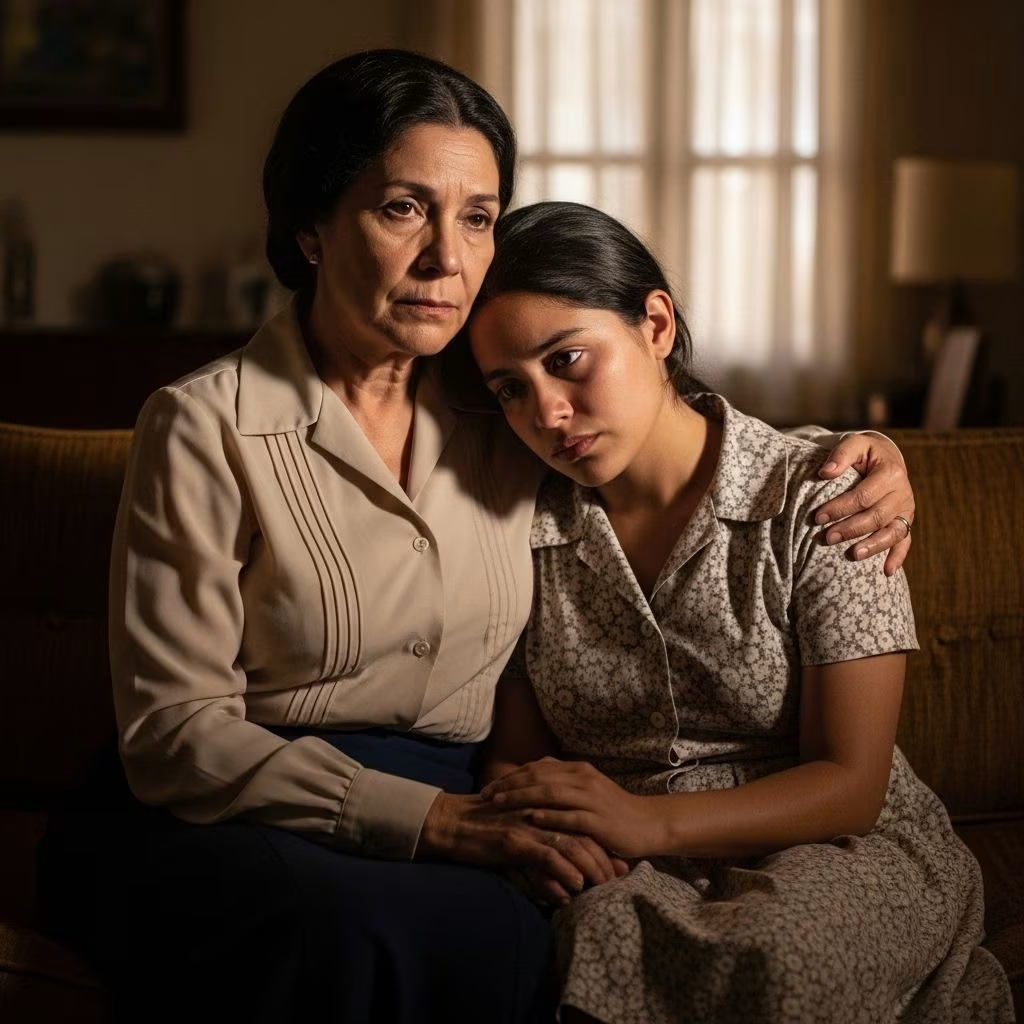
How Roma Captures the Loneliness and Strength of Women
Alfonso Cuarón’s autobiographical drama Roma, set in 1970s Mexico, isn’t merely an epic about his childhood—it’s a layered narrative about women: those who nurture, endure, and survive. At the center stands Sofía (Marina de Tavira), the harried matriarch, and Cleo (Yalitza Aparicio), her Indigenous maid. The film, streaming on Netflix and gracing international cinema screens, is dedicated not just to Cuarón’s mother but to Libo, his childhood caretaker—the real-life inspiration behind Cleo’s character.
The Intricate Bond: Sofía & Cleo’s Relationship
The connection between Sofía and Cleo defies easy definition. Are they friends, colleagues, family? By the film’s end, labels seem inadequate. Their relationship is forged not only by proximity but by mutual solitude, resilience, and secrets shared in silence.
- Cleo lives within Sofía’s household, tending to domestic duties and providing childcare, but remains distanced by class and ethnicity.
- Sofía oscillates between warmth and authority, often blurring the lines between employer and confidante.
- Their intimacy ebbs and flows: on the sofa huddled together they seem a family, but a single request for Cleo to serve tea revives their hierarchy.
The Unspoken Loneliness at the Heart of Roma
“No matter what they tell you, we women are always alone,” Sofía admits after another failed attempt to park her car—her words echoing the persistent, private struggle of womanhood. Both women navigate abandonment: Sofía’s marriage dissolves, while Cleo’s pregnancy leaves her exposed to trauma. Despite being surrounded by family, this ache of isolation binds and distances them simultaneously.
- Sofía’s Solitude: Following her husband Antonio’s repeated absences and eventual desertion, Sofía strives to shelter her children from upheaval while wrestling with her own vulnerability.
- Cleo’s Isolation: Cleo faces judgment, loss, and heartbreak with little direct support, her emotional journey exacerbated by the invisibility often endured by those in service roles.
- Mutual Witnessing: Cleo and Sofía are both compelled to witness each other’s pain—forming a fragile kinship rooted in shared struggle rather than shared status.
Womanhood, Class, and the Limits of Solidarity
Roma is not merely a portrait of household intimacy; it’s a sharp study in the constraints imposed by class, race, and patriarchal norms. As Cleo and Sofía move through Mexico City and beyond, their experiences diverge and intersect in profound, sometimes painful ways:
| Aspect | Sofía | Cleo | Intersection |
|---|---|---|---|
| Social Status | Middle-class matriarch | Indigenous domestic worker | Employer-employee; power imbalance |
| Family | Mother of four | Single, estranged from her own family | Mothering roles converge; emotional boundaries blur |
| Emotional Burden | Abandoned, newly single | Unwanted pregnancy, profound loss | Both endure, rarely confide beyond each other |
| Autonomy | Limited by social expectations of motherhood | Limited by employment, ethnicity, gender | Women’s agency restricted across class |
Material & Emotional Support: Crossing Boundaries
Sofía’s treatment of Cleo oscillates throughout the film. At her most compassionate, she offers emotional and practical aid—comforting Cleo after her pregnancy, refusing to dismiss her, and giving her opportunities to heal. Yet moments of withdrawal, and even aggression, surface, making clear that the limits of their solidarity are set by boundaries neither woman can fully cross.
- Cleo’s presence is cherished by Sofía’s children, who profess love, yet their respect for her authority is inconsistent.
- Sofía’s support is a “gift to bestow,” not a given—a reminder of the persistent inequality at the relationship’s core.
- The house itself feels like a stage, with open common areas and private nooks, illustrating both their proximity and distance.
The Cinematic Lens: Storytelling That Transcends Borders
Critics and scholars have lauded Roma for its subtle yet searing portrayal of life’s unpredictability and humanity’s intimate struggles. Margherita Tortora, Yale’s Latino and Iberian Film Festival founder, calls it “perfectly constructed”—a work that resonates not only with Mexicans but with viewers worldwide.
- The film’s existential angle underscores how life often “unfolds chaotically, with each day an unknown”.
- Through Cleo’s journey—her fears, her self-realization, her reluctant heroism—audiences are reminded of the universal human quest for identity and worth.
Breaking Stereotypes: Women as More Than Victims
Roma could have easily depicted Cleo as a saintly, abused maid, yet Cuarón resists simple tropes. Both women are complex—privileged, flawed, emotionally raw, yet fiercely nurturing. Sofía embodies the contradictions of a “friend and employer,” managing responsibilities and heartbreak, while Cleo gives endlessly, witnessing and absorbing the pain of those she serves and her own.
The Climax: Ocean, Sacrifice, and Emotional Truth
The story’s emotional centerpiece arrives at the beach, where Cleo saves Sofía’s children from drowning—an act that catalyzes the family’s open declaration of love. Yet, this love, however real, does not alter the underlying power structure. Cleo remains apart, her role and sacrifices recognized but never truly equal.
- The ocean waves symbolize cleansing and rebirth; for a moment, Cleo becomes the family’s savior, transcending class boundaries through courage and selflessness.
- Her confession that she “didn’t want her baby” and her subsequent guilt add new layers to her character, revealing the messiness of her emotional reality.
- The family’s return to Mexico City after the trip feels like a new beginning—a momentary unity forged from deep pain and mutual dependence.
Why Roma Resonates: The Universal Search for Connection
Cuarón’s deft handling of the film’s women is a cinematic tribute—drawn not just from his own memories but from universal themes of longing, endurance, and transformation. It asks viewers to witness not only the slow dissolution of a family but the persistent drive to build something new from its ashes.
- Women’s resilience is highlighted throughout: whether as mothers, caretakers, or survivors.
- The impossibility of simple relationships within rigid societal frameworks becomes a mirror for our own attempts to define love and connection.
- The film’s slow pacing and meticulous detail immerse audiences in the characters’ worlds, inviting reflection and empathy beyond the screen.
Frequently Asked Questions (FAQs)
Q: How does Roma explore themes of loneliness?
A: Roma meditates on loneliness through both Cleo and Sofía’s experiences. Though constantly surrounded by others, both women endure isolation—Sofía through her crumbling marriage, Cleo amid class-based invisibility. Their bond is shaped by shared solitude, even while physically close.
Q: Why is Cleo’s relationship with the family so complex?
A: Cleo is “one of the family when it suits them,” but her place is never secure. Sofía moves between warmth and authority, gifting Cleo moments of kindness but always retaining power, while the children love Cleo but do not always respect her.
Q: What makes Roma resonate with audiences worldwide?
A: The film’s existential themes, intricate characterizations, and honest portrayal of daily life make it universally relatable. Its focus on human resilience, the illusion and reality of family, and the limitations imposed by class and gender transcend its Mexican setting.
Q: Was Roma inspired by real people?
A: Yes. Director Alfonso Cuarón based Sofía on his own mother and Cleo on Libo, his childhood caretaker. The film is an homage to these women, reflecting personal and cultural truths.
Q: Does the film address Mexico’s social and political climate?
A: While Roma’s focus remains on private lives, political unrest is a backdrop that heightens Cleo’s vulnerability. Her experience as a domestic worker and an Indigenous woman is shaped by the era’s social tensions, though the film chooses subtlety over overt commentary.
Key Takeaways and SEO-Optimized Bullet Points
- Roma centers on the undefined, multifaceted relationship between Sofía and Cleo, spotlighting the interplay of intimacy, authority, and societal divisions.
- The film is celebrated for its authentic portrayal of womanhood and the universal search for connection in a fractured world.
- Class and race animate the boundaries between family and service, making Cleo’s emotional journey as important as her employer’s struggles.
- Critics praise Roma for existentialist storytelling, meticulous detail, and emotional richness, establishing it as a modern cinematic classic.
- Through Cleo’s sacrifice and confession, Roma asks viewers to reflect on the cost—and impossibility—of total belonging.
Further Reflection on Roma’s Legacy
In the end, Roma leaves audiences not with answers, but with questions: about the nature of care, love, kinship, and what it means to be both indispensable and invisible. Through Sofía and Cleo’s layered relationship, Cuarón invites us to witness, contemplate, and empathize—making the film’s emotional truth linger long after its closing scene.
References
- http://wrongquestions.blogspot.com/2018/12/five-comments-on-roma.html
- https://www.cautionspoilers.com/film-reviews/roma/
- https://blogs.umb.edu/cinemastudies/2019/02/25/roma-film-review/
- https://www.bustle.com/p/roma-star-marina-de-tavira-cant-define-sofia-cleos-relationship-either-thats-what-makes-it-so-real-15733569
- http://reelhoney.com/what-i-wanted-from-roma-alfonso-cuaron/
- https://globalist.yale.edu/2018-2019-issues-2/move/experimental-perfectly-constructed-and-existentialist-a-review-of-roma/


