


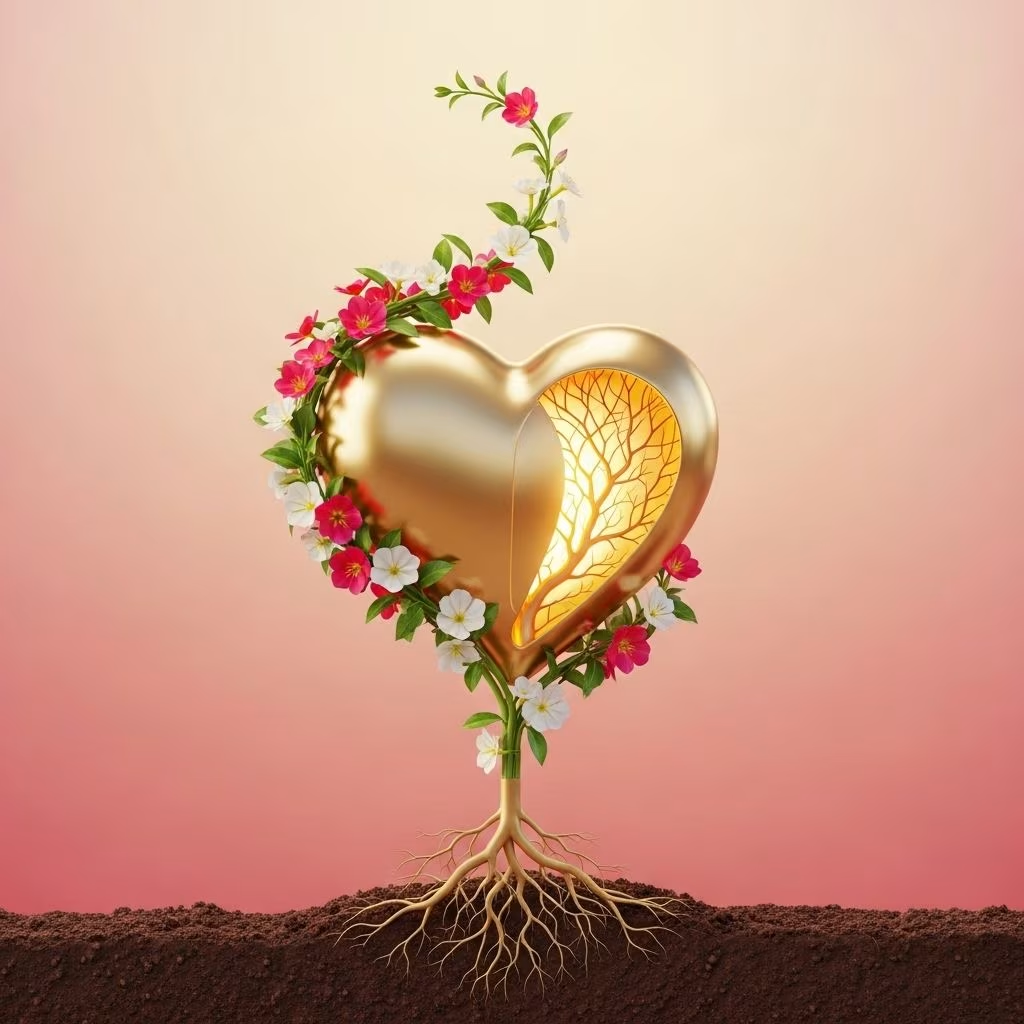
Know You’re Worthy: How Self-Worth Attracts Healthy Love
Many of us yearn for healthy, loving relationships, yet find ourselves struggling with patterns of disappointment, self-doubt, and emotional distance. At the heart of these struggles lies a core belief that is as transformative as it is essential: you are already worthy of love. This article explores what it means to embrace your inherent worth, how it impacts your ability to connect, and the practical ways you can nurture the self-worth needed to attract and sustain fulfilling relationships.
Why Feeling Worthy Matters in Love
To attract a healthy relationship, your sense of self-worth is not a mere accessory—it’s the very foundation. If you believe you’re unworthy of love, you may unconsciously accept less than you deserve, tolerate unhealthy behavior, or distance yourself from intimacy out of fear of rejection. Believing in your value enables you to:
- Set healthy boundaries without fear of abandonment
- Communicate openly and directly
- Choose partners who respect and cherish you
- Walk away from relationships that no longer serve you
- Experience mutual support, trust, and genuine connection
Conversely, when you lack a sense of worthiness, your choices may be guided by fear—fear of being alone, not enough, or unlovable. These fears often lead to self-sabotage, clinging, or settling for less. Developing self-worth is the antidote to these patterns, creating space for relationships rooted in authenticity instead of fear.
Signs You May Not Feel Worthy of Love
Recognizing worthiness struggles is the first step toward breaking free from them. Common signs include:
- Overanalyzing every interaction and fearing you said or did something wrong
- Attracting unavailable, critical, or emotionally distant partners
- Staying in unhealthy relationships out of fear you won’t find anything better
- Constantly seeking reassurance or validation from your partner
- Feeling unlovable because of past mistakes or perceived flaws
- Struggling to receive love, compliments, or support without guilt or discomfort
- Believing you must earn or prove your worthiness through perfection, people-pleasing, or self-sacrifice
If several of these resonate, know that you are not alone. Many people are conditioned to doubt their worth, but it is possible to unlearn this pattern and reclaim your ability to give and receive love freely.
Where Our Struggles With Worthiness Begin
Our beliefs about self-worth are rarely chosen consciously; they are shaped in childhood and adolescence by our families, culture, and formative experiences. You may have learned to:
- Link self-worth with achievement or pleasing others
- Internalize criticism, neglect, or rejection as evidence you are fundamentally flawed
- Hide or suppress authentic feelings to avoid conflict or disapproval
Over time, these patterns become ingrained, guiding our choices and interactions in love. Healing begins when you recognize that your worth is intrinsic—not contingent on perfection, approval, or meeting others’ expectations.
Embracing Your Inherent Worth
It is a radical act to declare, “I am worthy, just as I am.” The journey toward self-acceptance often includes:
- Challenging old beliefs by questioning stories of unworthiness
- Reframing mistakes as growth, not proof of inadequacy
- Practicing self-compassion in moments of struggle or self-doubt
- Treating yourself with the same care and understanding you would offer a dear friend
Only by embracing all parts of yourself—the strengths and the perceived flaws—can you step into relationships and life from a place of fullness, not lack.
Steps to Cultivate Self-Worth
Developing self-worth is a lifelong journey, composed of daily choices and small shifts in perspective. Consider the following practical steps:
1. Acknowledge Your Humanity and Imperfection
Perfection is an illusion. Embrace your flaws as part of your uniqueness and your growth. Remember: No mistake defines your ultimate value.
2. Practice Self-Compassion
- Be gentle with yourself, especially when you fall short of your own expectations
- Replace self-criticism with encouragement and understanding
- Speak to yourself as kindly as you would to a loved one in pain
3. Challenge Limiting Beliefs
- Whenever you notice a thought rooted in unworthiness (e.g., “I’m not good enough”), pause
- Ask yourself: “Is this belief true? Where did I learn it?”
- Rewrite limiting narratives into empowering ones, such as “I am deserving of love and respect”
4. Identify and Affirm Your Values
- List qualities you appreciate in yourself, such as kindness, resilience, or creativity
- Affirm these traits daily to reinforce your positive self-image
5. Prioritize Self-Care and Boundaries
- Nurture yourself physically, emotionally, and mentally through healthy routines and rest
- Set boundaries to protect your energy and well-being, even if it feels uncomfortable at first
6. Celebrate Your Progress
- Recognize and honor small victories on your self-worth journey
- Keep a journal of positive feedback, accomplishments, and moments of self-kindness
7. Surround Yourself With Supportive People
- Engage with friends, family, communities, or professionals who affirm your worth
- Limit time spent with individuals who undermine your self-esteem
Maintaining Worthiness in Relationships
Feeling worthy is a foundation that must be continually nurtured, especially within relationships. Here’s how to keep your self-worth strong as you connect with others:
- Honor your needs and express them openly
- Notice patterns where you may seek validation from others and gently bring the focus back to self-acceptance
- Recognize that rejection, conflict, or difficulties do not diminish your worth—they are natural parts of human relating
- Seek partners who reflect your growing sense of self-love by treating you with respect, honesty, and care
Overcoming Common Obstacles
Several challenges may arise on the path to deeper self-worth:
- Fear of Judgment
- Letting your true self be seen can feel risky. Remember, authentic relationships can only form when you show up as your real self. Those who accept you as you are are the ones worth keeping close.
- Old Stories and Shame
- Release the belief that you are defined by past mistakes. Your story is still unfolding, and your vulnerabilities are sources of strength and empathy.
- Social Comparison
- Notice when you fall into the trap of comparing your worth to others. Instead, shift focus to your own growth and unique qualities.
Overcoming these obstacles takes time, patience, and repeated practice. Keep reminding yourself: worthiness is your birthright, not something to be earned or proven.
Frequently Asked Questions (FAQs)
Q: How can I start believing I am worthy of love after years of feeling unworthy?
A: Begin by identifying the origin of your negative beliefs. Practice small acts of self-kindness daily, challenge self-criticism with compassionate self-talk, and seek support from people or professionals who model acceptance and encouragement.
Q: Does feeling worthy mean I’ll never feel insecure?
A: Not at all. Insecurity is a human experience; the difference is that you do not let it define you or your actions. Worthy people acknowledge insecurity but move forward with self-respect.
Q: Can I attract a healthy relationship if I still struggle with my self-worth?
A: It is possible, but loving yourself makes it easier to recognize (and reciprocate) love from others. Relationships often reflect the beliefs we hold about ourselves, so strengthening self-worth enhances your ability to attract and sustain healthy connections.
Q: What should I do if my partner diminishes my sense of worth?
A: Communicate openly about your needs and feelings. If the partner continues to undermine your worth, consider prioritizing your self-respect and well-being—even if it means leaving the relationship for the sake of your mental health.
Summary Table: Self-Worth vs. Self-Doubt in Relationships
| Self-Worth | Self-Doubt |
|---|---|
| Sets boundaries calmly & clearly | Fears conflict, avoids expressing needs |
| Receives love openly | Deflects compliments, distrusts affection |
| Walks away from disrespect | Tolerates unhealthy behaviors |
| Feels enough, even with flaws | Constantly seeks approval, perfection |
| Seeks connection from abundance | Fears rejection, clings to relationships |
Final Reflection: Claim Your Birthright
Your worth does not need to be earned, justified, or proven. It simply is. When you reclaim your inherent value, everything in your life—including your relationships—transforms. Love becomes something you share and receive freely, no longer clouded by fear or self-doubt. You are worthy of love, happiness, and connection, just as you are. Begin—today—to believe it, embrace it, and let it reshape your world.
References
- https://tinybuddha.com/blog/if-only-i-knew-my-worth/
- https://tinybuddha.com/blog/7-ways-to-know-if-your-sacrifices-are-worth-it/
- https://tinybuddha.com/blog/worth-not-dependent-accomplish/
- https://tinybuddha.com/blog/accept-value-yourself-ways-embrace-who-you-are/
- https://sobrief.com/books/tiny-buddhas-guide-to-loving-yourself
- https://tinybuddha.com/blog/you-have-nothing-to-prove-knowing-youre-good-enough/
- https://tinybuddha.com/blog/realizing-your-self-worth-and-believing-in-your-path/
- https://tinybuddha.com/blog/how-to-finally-believe-that-you-are-enough/
- https://www.youtube.com/watch?v=bFQ8Mh4kjWU


