


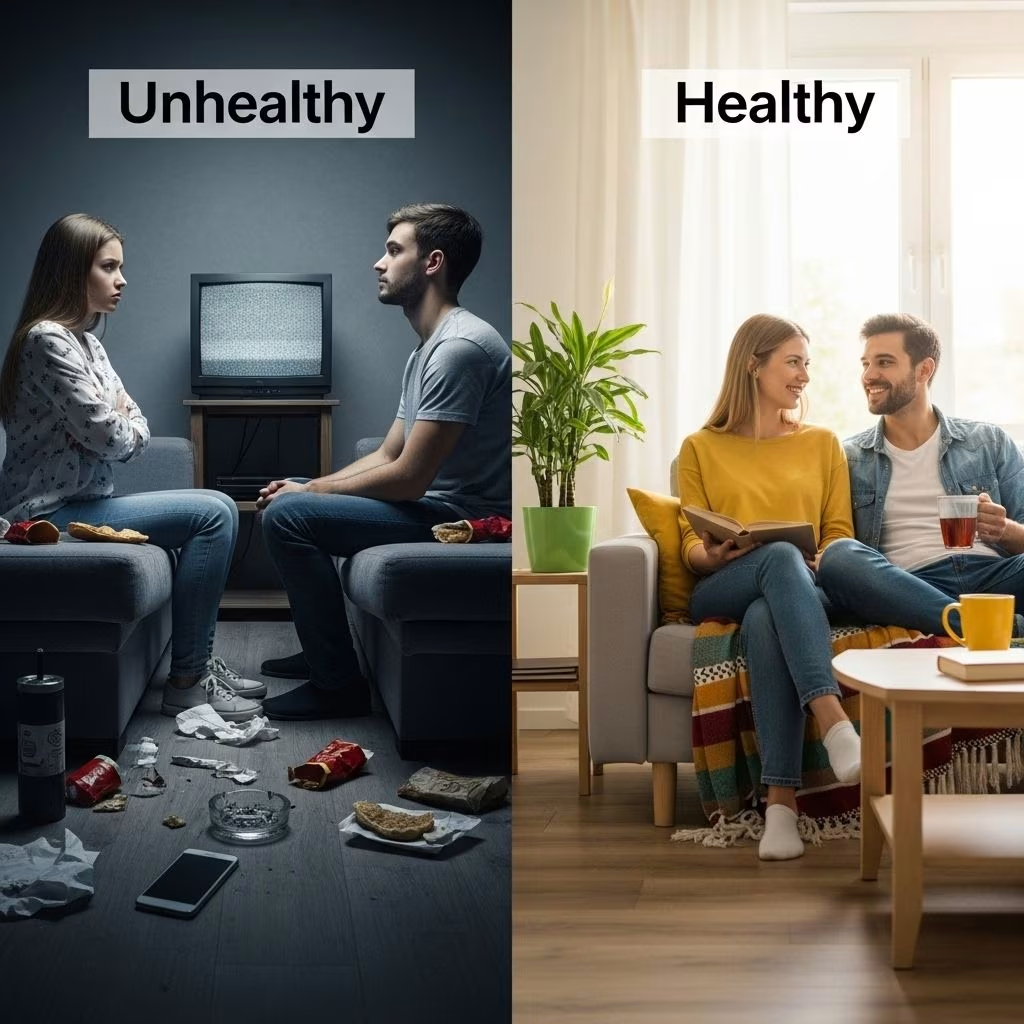
Navigating the landscape of modern relationships can feel like walking through a minefield blindfolded. One moment you’re experiencing the euphoric highs of new love, and the next you’re questioning whether your partnership is actually good for you. The line between a relationship that’s simply going through a rough patch and one that’s fundamentally unhealthy can sometimes blur, leaving many people confused about where they stand. Understanding this distinction isn’t just important—it’s essential for your emotional well-being and long-term happiness.
The reality is that no relationship is perfect all the time. Every couple experiences disagreements, misunderstandings, and moments of frustration. But when do these normal relationship struggles cross the line into unhealthy territory? And more importantly, how can you tell if you’re in a relationship that’s nurturing your growth or slowly diminishing your sense of self?
Understanding the Foundation of Healthy Relationships
Before diving into the warning signs of unhealthy relationships, it’s crucial to establish what a healthy relationship actually looks like. At its core, a healthy relationship is built on mutual respect, trust, honest communication, and genuine support for each other’s individual growth. Both partners should feel empowered to be themselves, pursue their own interests, and maintain connections outside the relationship without fear of judgment or repercussion.
In a healthy dynamic, conflicts are resolved through open dialogue rather than manipulation or control. Both people take responsibility for their actions, apologize when they’ve made mistakes, and work together to find solutions that benefit the relationship as a whole. There’s a sense of balance where neither person feels like they’re constantly sacrificing their needs or walking on eggshells to keep the peace.
Healthy relationships also respect boundaries and personal autonomy. Your partner should celebrate your friendships, family connections, and individual pursuits rather than viewing them as threats. They should trust you to make your own decisions and support your goals, even when those goals don’t directly involve them. This foundation of independence within togetherness creates a strong, resilient partnership that can weather life’s inevitable storms.
The Suffocating Grip of Constant Togetherness
One of the most deceptive signs of an unhealthy relationship is the expectation of constant togetherness masked as devotion. While it’s natural to want to spend significant time with someone you love, especially in the early stages of a relationship, there’s a critical difference between choosing to be together and feeling obligated to be together at all times. When a partner expects you to be available constantly or expresses hurt, anger, or suspicion when you want time alone or with others, you’ve entered dangerous territory.
This type of behavior erodes your sense of self and personal autonomy. You may find yourself canceling plans with friends, skipping activities you once enjoyed, or feeling guilty for wanting space. Your world gradually shrinks until it revolves entirely around your partner and their needs. What might initially feel like intense love and connection is actually a form of control that prevents you from maintaining the individual identity that makes you who you are.
Maintaining independence within a relationship isn’t selfish—it’s essential. Having your own interests, friendships, and personal time actually strengthens your relationship by ensuring you both remain interesting, fulfilled individuals who choose to come together rather than two people who’ve lost themselves in codependency. If your partner can’t respect or support your need for individuality, that’s a significant red flag that shouldn’t be ignored.
When Criticism Targets Your Support System
Another insidious warning sign emerges when your partner begins to systematically criticize or undermine your relationships with friends and family. While it’s normal for partners to sometimes have different opinions about the people in your life, there’s a stark difference between occasional disagreements and a pattern of deliberately driving wedges between you and your support network.
A partner who frequently puts down your loved ones, suggests they’re bad influences, or finds reasons why you shouldn’t spend time with them is engaging in isolation tactics. This behavior serves a specific purpose: by distancing you from the people who know you best and have your best interests at heart, they create a situation where you’re more dependent on them and less likely to recognize or challenge unhealthy dynamics in the relationship.
Your friends and family represent your support system—the people who can offer perspective, validation, and help when you need it. When that network is compromised, you become more vulnerable to manipulation and control. If you notice that seeing your loved ones always leads to arguments, or if you find yourself making excuses for why you can’t attend social events or family gatherings, it’s time to seriously examine whether your relationship is healthy.
The Privacy Invasion Disguised as Trust
In the digital age, the question of privacy in relationships has become increasingly complex. While some couples naturally share passwords or have access to each other’s devices as a matter of convenience, there’s a fundamental difference between voluntary transparency and demanded surveillance. When a partner insists on having access to your phone, email, social media accounts, or other private communications as a condition of trust, they’re not building intimacy—they’re establishing control.
This behavior reveals a deep-seated insecurity or controlling nature that will likely manifest in other areas of the relationship. A partner who feels entitled to monitor your every digital interaction doesn’t trust you, and a relationship without trust is fundamentally unhealthy. Moreover, this invasion of privacy denies you the right to have private conversations with friends, family, or even just private thoughts and spaces that aren’t shared with your partner.
True trust in a relationship doesn’t require constant verification or surveillance. It’s built through consistent behavior, open communication, and mutual respect over time. If your partner claims that their demand for your passwords is about trust, recognize it for what it really is: a red flag indicating controlling behavior that will likely escalate if left unchecked.
The Toxic Nature of Persistent Jealousy
Jealousy is one of those emotions that can initially feel flattering but quickly reveals itself as corrosive to relationship health. A small amount of jealousy in specific situations might be understandable—we’re all human, after all. However, when jealousy becomes a constant presence in your relationship, manifesting in suspicion about your interactions with others, accusations about your intentions, or restrictions on your activities, you’re dealing with a serious problem.
Chronic jealousy creates an atmosphere of tension and mistrust that’s exhausting to navigate. You might find yourself constantly explaining where you’ve been, who you’ve talked to, or why you smiled at someone. You may start modifying your behavior to avoid triggering your partner’s jealousy—changing how you dress, limiting who you interact with, or avoiding certain places or situations. This isn’t love; it’s control disguised as care.
The insecurity that drives persistent jealousy is your partner’s issue to work through, not yours to manage by restricting your life. A healthy partner trusts you to interact with the world while maintaining appropriate boundaries. They feel secure enough in themselves and the relationship to not view every interaction as a threat. If you’re constantly walking on eggshells to avoid jealous outbursts, you’re in an unhealthy dynamic that will only damage your sense of self over time.
Gaslighting and the Distortion of Reality
Perhaps one of the most psychologically damaging aspects of unhealthy relationships is gaslighting—a manipulation tactic where your partner distorts reality to make you question your own perceptions, memories, and sanity. This can manifest in numerous ways: denying things they’ve said or done, insisting you’re too sensitive when you express hurt about their behavior, telling you that you’re remembering things wrong, or turning the tables to make you feel like the problem when you bring up legitimate concerns.
Gaslighting is particularly insidious because it operates subtly at first. You might notice small inconsistencies or feel confused after arguments, wondering how a conversation about their hurtful behavior somehow became about your supposed overreaction. Over time, this erosion of your confidence in your own perceptions can leave you feeling unstable, constantly second-guessing yourself, and increasingly dependent on your partner’s version of reality.
When someone refuses to take accountability for their actions and instead makes you feel crazy for having a normal emotional response, they’re engaging in emotional abuse. Your feelings are valid, your perceptions matter, and you have the right to expect a partner who acknowledges when they’ve hurt you rather than making you doubt your own experience. If you regularly find yourself questioning whether you’re too sensitive or wondering if you’re imagining problems, it’s time to seriously evaluate the relationship.
Recognizing Patterns of Control and Manipulation
Unhealthy relationships often feature patterns of control and manipulation that extend beyond any single behavior. These patterns might include your partner making unilateral decisions that affect both of you, managing or controlling finances in ways that limit your independence, dictating what you wear or how you present yourself, or using threats (whether of leaving, harming themselves, or other consequences) to get their way.
Control can also manifest more subtly through guilt trips, silent treatment, withholding affection as punishment, or creating situations where you feel obligated to put their needs ahead of your own wellbeing. The common thread in all these behaviors is that they position your partner as having authority over you rather than being your equal partner. This power imbalance is fundamentally unhealthy and tends to worsen over time.
A healthy relationship operates on principles of mutual respect and shared decision-making. Both partners have equal say in matters that affect the relationship, and neither uses emotional manipulation to get their way. If you feel like you’re constantly trying to appease your partner, afraid of their reactions, or unable to make basic decisions about your own life without their approval, you’re experiencing controlling behavior that needs to be addressed immediately.
The Emotional Rollercoaster of Unpredictability
Relationships in unhealthy territory often feature dramatic emotional swings that leave you feeling unstable and anxious. Your partner might be incredibly loving and attentive one moment, then cold and distant the next, with no clear reason for the shift. They might pick fights over minor issues, have extreme reactions to small problems, or create drama that keeps you emotionally off-balance.
This volatility serves a purpose in unhealthy dynamics: it keeps you focused on managing their emotions and trying to maintain peace rather than addressing legitimate issues in the relationship. You become so consumed with navigating their moods that you lose sight of your own needs and whether the relationship is actually serving you well. The unpredictability also creates a trauma bond where the good moments feel extra special because they’re such a relief from the tension.
Healthy relationships have a foundation of emotional stability. While everyone has bad days and emotional moments, there should be an overall sense of security and predictability in how your partner treats you. You shouldn’t feel like you’re constantly trying to read their mood or anticipate the next blow-up. If you’re living in a state of emotional hypervigilance, that’s a clear sign something is seriously wrong.
Understanding the Impact on Your Self-Worth
One of the most telling indicators of an unhealthy relationship is how it affects your sense of self-worth. Do you feel better about yourself when you’re with your partner, or worse? Has your confidence decreased since entering the relationship? Do you find yourself accepting treatment or behavior that you would have rejected in the past? These changes in how you view yourself are significant warning signs.
Healthy relationships should enhance your life and make you feel more confident, supported, and secure. Your partner should be your biggest cheerleader, celebrating your successes and supporting you through challenges. If instead you feel diminished, criticized, or like you’re never quite good enough, the relationship is taking a toll on your mental health and self-esteem.
Pay attention to how you feel about yourself over time. Have you stopped pursuing goals or interests because your partner was unsupportive? Do you criticize yourself more harshly? Have you started believing negative things about yourself that your partner has said? These shifts indicate that the relationship is damaging rather than nurturing your sense of self, which is one of the clearest signs that something needs to change.
The Path Forward: Making Healthy Choices
Recognizing that you’re in an unhealthy relationship is the first step, but it’s not the only one. Once you’ve identified problematic patterns, you need to decide what action to take. Sometimes, if both partners are willing to acknowledge issues and do the work, a relationship can move from unhealthy to healthy through therapy, better communication, and genuine behavior change. However, this requires both people to be fully committed to transformation.
More often, though, relationships that have crossed into clearly unhealthy territory need to end. This can be incredibly difficult, especially if you still have feelings for your partner or have invested significant time in the relationship. But staying in a dynamic that damages your mental health, self-worth, and wellbeing is far more costly than the pain of leaving. You deserve a relationship that builds you up rather than tears you down.
If you’re struggling to leave an unhealthy relationship, reach out to your support system. Talk to friends and family, consider seeing a therapist, and remember that leaving isn’t failure—it’s choosing yourself and your wellbeing. The right relationship will enhance your life without requiring you to shrink yourself or compromise your fundamental needs for respect, trust, and autonomy.
Building a Healthier Future
Whether you’ve just left an unhealthy relationship or you’re working to improve your current one, it’s important to reflect on what you’ve learned and what you need going forward. Understanding the difference between healthy and unhealthy dynamics helps you set better boundaries, recognize red flags earlier, and make choices that prioritize your wellbeing.
Take time to reconnect with yourself, rebuild your support network if it’s been damaged, and rediscover the interests and activities that make you feel alive. Work on strengthening your sense of self outside of romantic relationships so that you enter future partnerships as a whole, confident person rather than someone looking for validation or completion from another person.
Remember that experiencing an unhealthy relationship doesn’t mean you’re damaged or incapable of healthy love. It means you’re human, and you deserve better. Use what you’ve learned to create healthier patterns moving forward, and don’t settle for less than a relationship that truly enhances your life and respects who you are.
Frequently Asked Questions
Q: How can I tell if I’m overreacting or if my relationship is actually unhealthy?
A: Trust your instincts. If you consistently feel anxious, diminished, controlled, or unhappy in your relationship, those feelings are valid regardless of whether specific behaviors seem “bad enough” to justify them. Consider whether your concerns would sound reasonable if a friend described them to you. Also, healthy partners take your concerns seriously rather than dismissing them as overreactions.
Q: Can an unhealthy relationship become healthy again?
A: It’s possible if both partners genuinely acknowledge the problems, take full responsibility for their contributions to unhealthy dynamics, and commit to making real changes through therapy and consistent effort. However, this requires honest self-reflection and sustained behavior change from both people, which is rare. If your partner denies problems exist or blames you for issues, the relationship is unlikely to improve.
Q: Is it normal to feel guilty about wanting to leave an unhealthy relationship?
A: Yes, feeling guilty is extremely common, especially if your partner has made you feel responsible for their happiness or if you’ve invested significant time in the relationship. However, staying in an unhealthy relationship out of guilt damages both you and your partner. You’re not responsible for their emotional wellbeing, and choosing yourself isn’t selfish—it’s necessary for your mental health.
Q: How do I rebuild my confidence after an unhealthy relationship?
A: Start by reconnecting with your support system and engaging in activities that remind you of who you are outside the relationship. Consider therapy to process the experience and rebuild your sense of self. Practice setting boundaries, pursue interests that make you feel confident and capable, and give yourself time to heal. Confidence returns gradually as you reclaim your independence and remember your worth.
Q: What’s the difference between normal relationship challenges and unhealthy patterns?
A: Normal challenges involve specific issues that couples work through together with mutual respect and compromise. Unhealthy patterns involve ongoing behaviors like control, manipulation, criticism, or disrespect that one partner refuses to acknowledge or change. In healthy conflicts, both people feel heard and valued; in unhealthy patterns, one person consistently feels diminished or controlled.
References
- https://www.elitedaily.com/dating/toxic-relationship-warning-signs/2081866
- https://susanwinter.net/7-red-flags-you-might-be-too-obsessed-with-your-relationship-elite-daily-interview/
- https://www.elitedaily.com/dating/healthy-relationship-having-unhealthy/1088868
- https://thehobbyistpost.wordpress.com/elite-daily/
- https://www.joinonelove.org/signs-unhealthy-relationship/
- https://www.yourtango.com/love/what-your-long-history-toxic-relationships-trying-tell-you


