


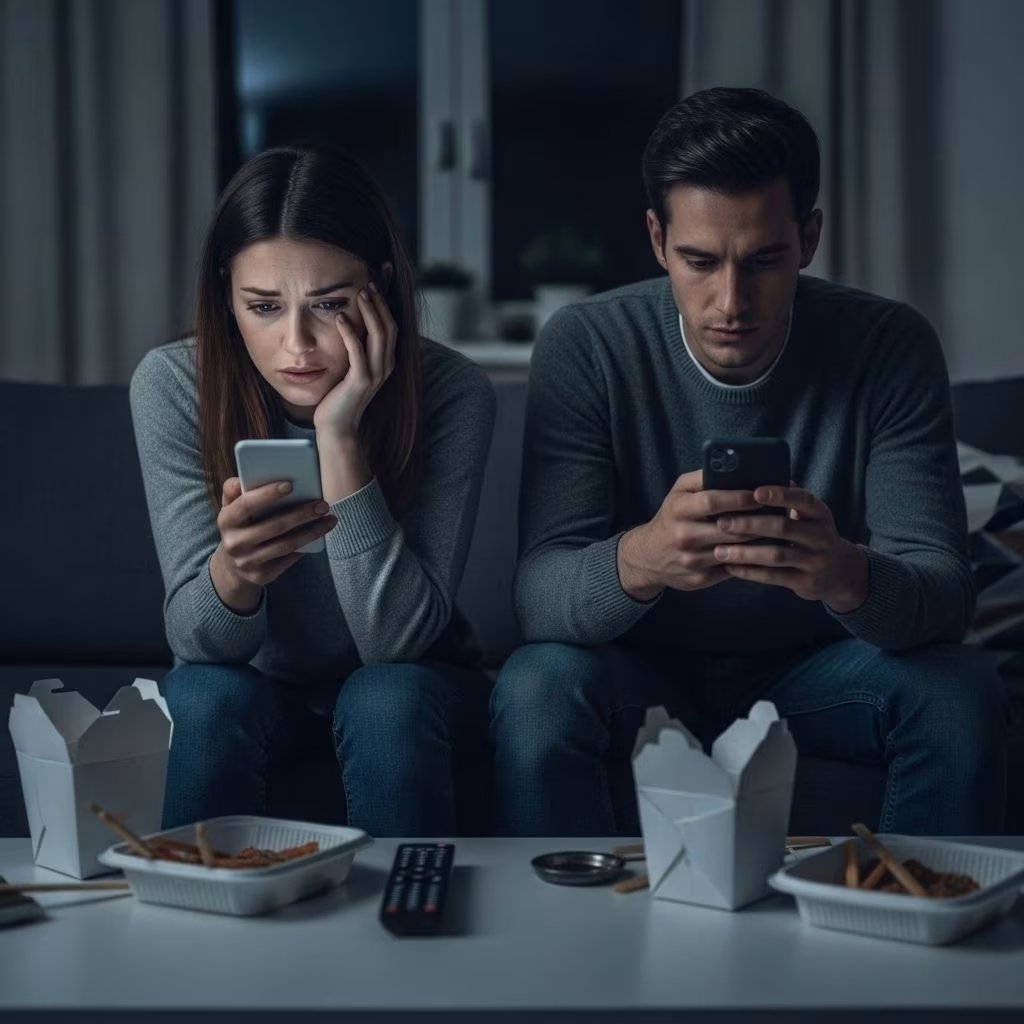
The Growing Link Between Smartphones, Relationship Problems, and Depression
In the digital age, smartphones have become inseparable from daily life, but their impact on romantic relationships is increasingly concerning. Research now confirms that cellphone use can undermine the very foundation of personal happiness—our romantic partnerships—leading not only to conflicts but also to higher levels of depression.
What Is Partner Phubbing (Pphubbing)?
“Pphubbing”—short for “partner phone snubbing”—describes the act of being distracted by or attending to one’s phone while in the presence of a romantic partner. According to Baylor University’s Hankamer School of Business, Pphubbing is a common source of conflict. Their research, published in the journal Computers in Human Behavior, involved two surveys of U.S. adults and revealed that almost half (46.3%) reported being “phubbed” by their partner, with more than a fifth (22.6%) saying it caused relationship conflict.
The Science Behind Cellphone-Related Relationship Problems
Pphubbing and Relationship Satisfaction
Multiple studies have found that Pphubbing is empirically distinct from general attitudes about cellphones, cellphone involvement, or even addiction. It specifically refers to the distractions that occur during couple interactions. Common behaviors include:
- Keeping the phone within sight or reach during conversations
- Holding the phone in hand while together
- Glancing at the phone mid-conversation
- Checking the phone during lulls in conversation
These seemingly minor distractions accumulate. When one partner perceives being “phubbed,” it creates conflict and lowers relationship satisfaction. This dissatisfaction, in turn, reduces overall life satisfaction and increases the risk of depression. In fact, only 32% of respondents in the Baylor study reported being “very satisfied” with their relationship—a disturbing statistic for the digital dating era.
Attachment Style and Vulnerability
Researchers found that individuals with “anxious” attachment styles—those less secure in their relationships—were more likely to report higher levels of cellphone conflict when phubbed. Those with secure attachment styles were less affected by such behavior, but the overall trend was clear: Pphubbing is a significant stressor in modern relationships.
Smartphone Addiction and Mental Health
Beyond relationships, excessive smartphone use is closely linked to poor mental health outcomes. Studies show a strong correlation between high levels of mobile phone addiction and increased negative emotions, including depression, anxiety, and stress.
Direct and Indirect Effects on Well-Being
Recent path analysis reveals that mobile phone addiction does not directly reduce life satisfaction. However, negative emotions—especially depression—act as a powerful mediator, magnifying the negative impact of phone addiction on overall well-being. In other words, the more addicted someone is to their phone, the more likely they are to experience depression, and it is this depression that drives down life satisfaction.
Stress and Academic Pressure
For younger populations, particularly students, mobile phone addiction often interacts with academic and social stress, creating a vicious cycle where increased phone use worsens emotional turmoil. This is especially relevant as young people spend more time on digital devices for both work and socializing.
Smartphones and Depression: The Evidence
Empirical studies consistently show a dose-dependent relationship: the more someone uses their smartphone, the greater their risk for depression and anxiety symptoms. This effect is observed across age groups but is particularly pronounced among teenagers and young adults.
The Role of Social Media
While not the sole cause, social media use—a major component of smartphone activity—has been linked to feelings of loneliness, anxiety, and even suicidal ideation. However, the act of phubbing itself, irrespective of social media, is enough to trigger conflict and dissatisfaction in romantic relationships.
How to Mitigate the Negative Effects of Smartphones
Practical Steps for Couples
- Set tech-free zones and times: Designate certain areas (e.g., bedroom, dining table) or times (e.g., date night, meals) as phone-free.
- Communicate openly: Discuss how phone use affects your relationship and agree on boundaries that work for both partners.
- Practice mindful phone use: Be aware of how often and why you pick up your phone, especially when spending quality time with your partner.
- Prioritize face-to-face interaction: Make a conscious effort to engage directly with your partner, showing that they are your priority.
Individual Well-Being
On a personal level, reducing screen time and seeking alternative coping mechanisms for stress—such as exercise, hobbies, or therapy—can help break the cycle of depression and phone addiction.
Frequently Asked Questions
Can smartphone use really cause depression?
Yes, multiple studies have shown that excessive smartphone use is associated with higher rates of depression, particularly when it leads to social isolation or replaces meaningful offline relationships.
Is “phubbing” really a problem for couples?
Absolutely. Research shows that being ignored in favor of a phone (phubbing) can cause significant conflict and lower satisfaction in romantic relationships, sometimes leading to depression.
Are some people more affected than others?
People with anxious attachment styles (those less secure in their relationships) report greater distress from phubbing, but everyone is vulnerable to its negative effects.
What can be done to improve relationship satisfaction in the smartphone era?
Establishing tech boundaries, communicating openly, and prioritizing in-person connection are all effective strategies for couples struggling with digital distractions.
Is it possible to be addicted to your phone?
Yes, smartphone addiction is a recognized issue, characterized by compulsive use, withdrawal symptoms, and negative impacts on mental health and daily life.
Summary Table: Effects of Smartphone Overuse
| Effect | Relationship Impact | Mental Health Impact | Mitigation Strategies |
|---|---|---|---|
| Phubbing (phone snubbing) | Increases conflict, lowers satisfaction | Contributes to depression | Set tech boundaries, communicate |
| Smartphone addiction | Replaces quality time, reduces intimacy | Linked to anxiety, depression, stress | Limit screen time, seek alternatives |
| Social media overuse | Can trigger jealousy, mistrust | Increases loneliness, depressive symptoms | Curate social media use, foster in-person connections |
Conclusion
Smartphones, while indispensable in modern life, carry hidden costs for romantic relationships and mental health. Phubbing—distracting oneself with a phone during couple time—creates conflict and dissatisfaction, which can spiral into depression. Similarly, smartphone addiction is increasingly linked to negative emotions and reduced life satisfaction, especially when depression acts as a mediator. Couples and individuals can take proactive steps to mitigate these risks, but awareness and intentional action are key to preserving both love and well-being in the digital age.
References
- https://news.web.baylor.edu/news/story/2015/baylor-study-cellphones-can-damage-romantic-relationships-lead-depression
- https://www.frontiersin.org/journals/psychiatry/articles/10.3389/fpsyt.2025.1542040/full
- https://www.nature.com/articles/s41598-024-71947-6
- https://pmc.ncbi.nlm.nih.gov/articles/PMC10587281/
- https://www.columbiapsychiatry.org/research/research-areas/child-and-adolescent-psychiatry/sultan-lab-mental-health-informatics/research-areas/smartphones-social-media-and-their-impact-mental-health
- https://pmc.ncbi.nlm.nih.gov/articles/PMC9716159/
- https://www.butler.org/blog/phone-affecting-your-mental-health


