


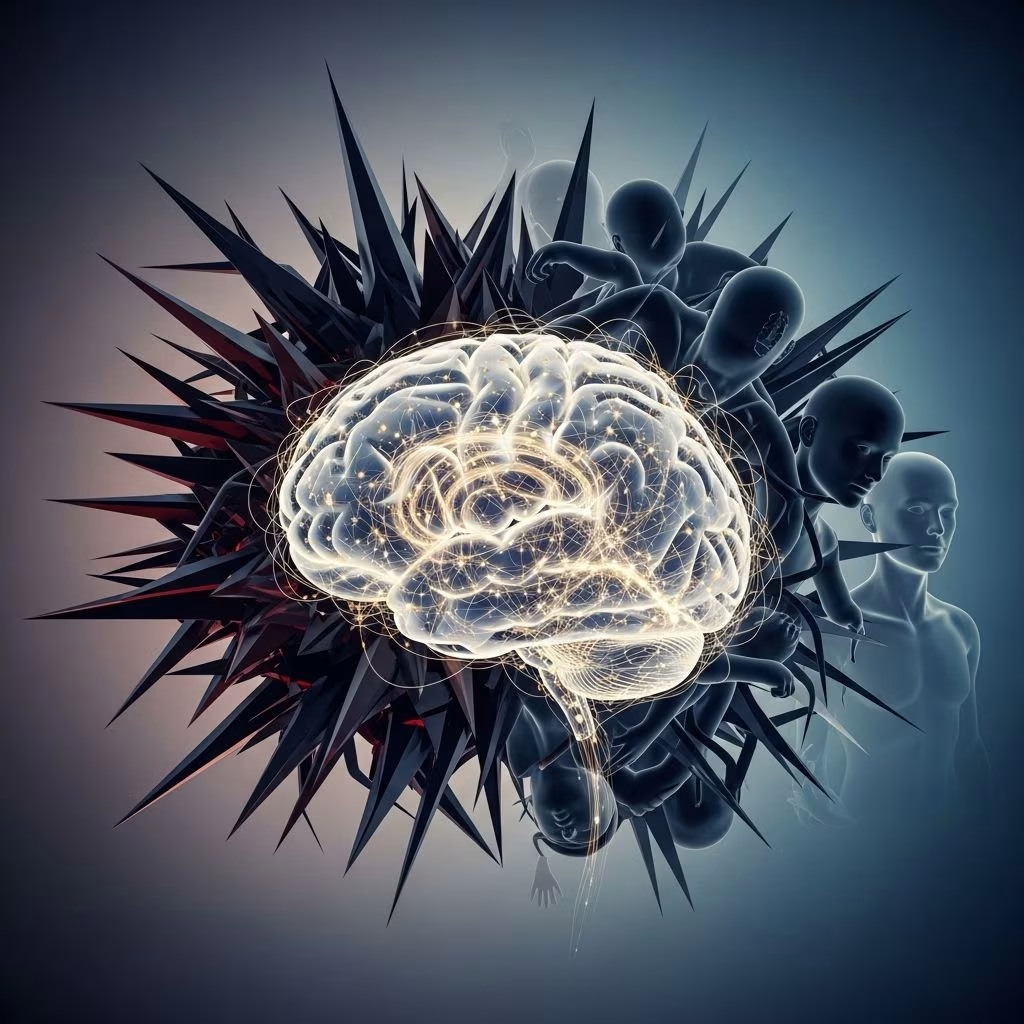
The Neuroscience of Racism and Its Entanglement with Toxic Masculinity
Racism and toxic masculinity are powerful social forces that shape the lives of individuals and societies alike. By examining these phenomena through the lens of neuroscience, we can better understand the roots of prejudice and the pervasive influence of cultural norms on the human brain, identity, and relationships.
Understanding the Brain’s Role in Bias
Recent advances in neuroscience have shed light on how the human brain forms and retains unconscious biases, including those related to race and gender. At the core of this process are certain brain structures and neural pathways:
- The amygdala: Critical for threat detection and emotional processing, the amygdala can be activated by perceived differences, including racial features, even outside of conscious awareness.
- Mirror neuron systems: These networks, involved in empathy and understanding others, can be less responsive to those perceived as “out-group,” reinforcing distance or suspicion.
- Automatic associations: Implicit associations formed early in life—through family, media, and socialization—can become ingrained and persist, guiding judgments and behaviors below the conscious level.
Studies using functional MRI have demonstrated that even when individuals consciously reject racist beliefs, unconscious biases can quickly and automatically trigger emotional and behavioral responses. This has profound implications for understanding why racism persists and how difficult it can be to unlearn.
The Social Construction of Race and Masculinity
While racial categories lack a solid biological basis, their societal significance is real and deeply consequential. Historical, political, and economic processes have constructed race as a means of categorizing and stratifying people, while masculinity itself has been rigidly defined and policed within cultures.
Toxic masculinity refers to social expectations that associate masculinity with dominance, aggression, emotional suppression, and control. These norms enforce rigid gender roles, discouraging vulnerability and empathy in men, while defining any deviation from the norm as weakness or failure.
- Men are often expected to prove themselves through competitive or aggressive behaviors.
- Boys are encouraged to reject traits labeled as “feminine,” such as nurturing, sensitivity, or emotional openness.
- Ethnic and racialized notions of masculinity may layer additional pressures or interpretations, complicating the experience further.
Intersections: How Racism and Toxic Masculinity Connect
The intersection of racism and toxic masculinity produces unique social dynamics, both for individuals targeted by these systems and for broader communities. The entanglement is manifested in several ways:
- Racial and gender stereotypes reinforce each other, shaping expectations of how men of different backgrounds should behave.
- Men of color, especially Black and Indigenous men, face a double bind: assertiveness or pride, admired in white men, can be deemed threatening or criminal in them.
- Internalized racism and masculinity norms can lead to emotional suppression, isolation, and difficulties in relationships and mental health.
This dynamic has historical roots. Colonization, slavery, and segregation not only imposed racial hierarchies but also prescribed rigid norms for masculinity and femininity. The legacies of these systems persist, influencing present-day institutions, policies, and individual beliefs.
Neuroscientific Roots of Implicit Bias
Implicit biases are learned, not innate. Neuroscientific research points to how the brain encodes social information through repeated exposure:
- Hebbian learning: “Neurons that fire together wire together.” Frequent pairing of social categories (e.g., “Black” and “dangerous”) in media or culture strengthens neural connections, making biased associations more automatic.
- Plasticity: While implicit biases are durable, the brain’s plasticity means these associations can be changed with sustained effort and conscious reconditioning.
- Empathy circuits: Growth of empathy and reduction of bias are facilitated when individuals develop meaningful, positive relationships with people of different backgrounds, challenging in-group/out-group assumptions.
However, overcoming automatic bias requires more than good intentions; it demands ongoing self-awareness, new learning experiences, and sometimes formal interventions.
Performance of Masculinity Across Racial Lines
Not all masculinity is experienced or perceived the same way. Racial, ethnic, and socioeconomic factors shape how masculinity is taught, performed, and judged:
- Men of color, particularly Black, Indigenous, and racialized minorities, are often held to a more restrictive or punitive code of masculinity.
- The same traits (assertiveness, dominance) praised in white men may be penalized in men of color, seen as threatening or deviant.
- This double standard may pressure men of color to either overperform masculinity in hypermasculine ways or risk being devalued or made invisible.
| Aspect | White Men | Men of Color |
|---|---|---|
| Assertiveness/Leadership | Often celebrated | May be seen as threatening |
| Emotional Expression | Sometimes discouraged | Frequently discouraged; labeled as weak |
| Vulnerability | Slowly gaining acceptance | Rarely accepted; may result in more severe social penalties |
Historical Roots: How Society Built These Norms
The categories of race and gender have been used throughout history to legitimize social hierarchies and exert control. From colonial laws to contemporary media portrayals, the meaning of manhood and the justification for racism have evolved together. In the United States, for instance:
- Early legal codes positioned white masculinity as normative and superior, rationalizing exclusion, violence, and exploitation of others.
- Media representations have perpetuated stereotypes of racialized men as hypersexual, violent, or less civilized, while idealizing white masculinity as strong, rational, and heroic.
- These biases accumulate generation after generation, encoded both in institutional policies and in implicit predispositions.
The effects extend beyond public life, shaping relationships, self-image, and mental health. Evidence shows high rates of stress, depression, and anxiety among men contending with racism and rigidity in gender roles. The drive to “measure up” to impossible standards can stifle authentic self-expression and emotional wellbeing.
The Emotional Toll: Identity, Self-Esteem, and Internalized Oppression
When societal messages continually devalue certain groups or ways of being, individuals often internalize those attitudes, leading to what psychologists call internalized oppression or internalized racism:
- Lowered self-esteem
- Increased psychological distress
- Feelings of inadequacy and shame
- Difficulty building trust and intimacy in relationships
For men of color, juggling the stereotypes imposed by both toxic masculinity and racism can be overwhelming. They may suppress vulnerability to avoid ridicule, but find no reward in attempting to embody white, Western masculine ideals that are culturally or structurally inaccessible.
The “Dark Triad” and Masculinity
Certain personality traits, collectively known as the Dark Triad—narcissism, psychopathy, and Machiavellianism—are frequently associated with rigid or toxic masculinity:
- Personality research suggests that the endorsement of traditional masculine norms is correlated with higher self-esteem but also with increased narcissism and emotional manipulation.
- These traits tend to be viewed as more masculine, and are more common in men across populations.
- For men of color, these traits may be interpreted less as strengths and more as evidence of danger or deficit, invoking harsher social and institutional responses.
This dynamic helps explain why similar behaviors in different men are not judged the same, perpetuating cycles of marginalization and misunderstanding.
Challenging the System: Awareness, Advocacy, and Healing
To reduce the harms of racism and toxic masculinity, both neuroscientific and social psychological research point to concrete interventions:
- Increasing self-awareness through education, implicit bias training, and reflection helps individuals recognize the ways bias operates unconsciously.
- Supporting healthy models of masculinity—which welcome vulnerability, emotional expression, and empathy—challenges old narratives and fosters wellbeing.
- Promoting diverse and accurate representation in media, leadership, and social roles disrupts the repetition of harmful stereotypes.
- Creating safe spaces for men (especially men of color) to discuss race, masculinity, and emotional health fosters support and resilience.
Ongoing social activism is also invaluable—advocating for systemic change in laws, institutions, and organizational policies. The process is both individual and collective, requiring communities to challenge and reimagine what it means to be both human and masculine in a diverse world.
Moving Forward: The Role of Compassion and Connection
Healing from the wounds of racism and toxic masculinity demands compassion—not only for others, but also for oneself. Neuroscience shows that empathy, curiosity, and nonjudgmental connection can “re-wire” entrenched biases and foster greater openness and justice.
- Forging meaningful relationships across lines of difference undermines stereotypes and bolsters mutual respect.
- Encouraging boys and men to embrace the full range of human emotions nurtures resilience and deeper relationships.
- Recognizing and honoring the diversity of masculine identities helps break down both racial and gender hierarchies.
Frequently Asked Questions (FAQs)
Q: What is “implicit bias”?
A: Implicit bias refers to unconscious attitudes or stereotypes that can influence behavior without conscious awareness. These are often ingrained through repeated social exposure and are resistant to change without intentional effort.
Q: How are racism and toxic masculinity linked in society?
A: Racism and toxic masculinity reinforce each other by setting up restrictive norms for behavior and value based on both race and gender. These intertwined systems shape expectations, opportunities, and judgments—affecting everything from emotional expression to societal opportunities.
Q: Can people overcome their implicit biases?
A: Yes, while implicit biases are persistent, neuroscience demonstrates that new experiences, relationships, and self-reflection can “rewire” these responses over time, especially when combined with conscious intention and diverse exposure.
Q: Why do men of color face unique pressures regarding masculinity?
A: Men of color navigate a “double bind,” where demonstrating traditional masculine traits is often penalized rather than rewarded, and showing vulnerability can lead to further social exclusion or stigmatization—compared to their white peers.
Q: What are healthy alternatives to toxic masculinity?
A: Healthy masculinity embodies empathy, emotional openness, respect for others, and authentic self-expression, rather than rigid adherence to dominance and suppression of emotion.
References
- https://irl.umsl.edu/cgi/viewcontent.cgi?article=2219&context=dissertation
- https://www.cassa.ca/wp-content/uploads/2024/12/Understanding-Toxic-Masculinity-Report.pdf
- https://therapistuncensored.com/episodes/tu82-the-paradox-of-masculinity-with-guest-esther-perel/
- https://journals.sagepub.com/doi/10.1177/19485506221077861
- https://www.webmd.com/sex-relationships/what-is-toxic-masculinity


