


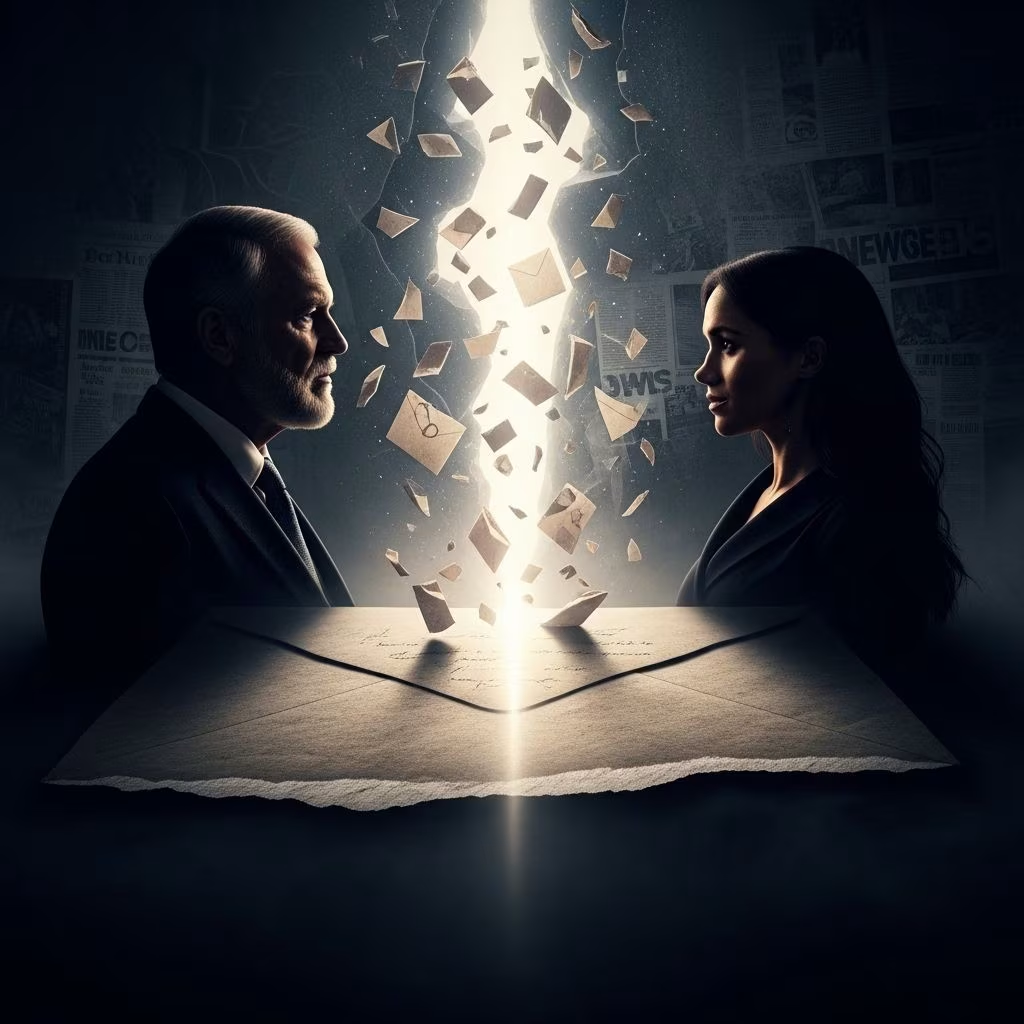
Thomas Markle’s Response to Meghan Markle’s Private Letter — The Escalation of a Family Rift
What was once an intensely private matter between Meghan Markle and her father, Thomas Markle, became headline news across the world in 2019. The catalyst: the publication of a handwritten letter Meghan sent to her father after their relationship became strained in the lead-up to her royal wedding. In this article, we examine the origins and contents of Meghan’s letter, Thomas Markle’s controversial response and decisions, the legal and media storm that followed, and the lasting ramifications for the Markle family’s delicate relationship.
The Background: A Fraying Father-Daughter Bond
The relationship between Meghan Markle, now the Duchess of Sussex, and her father Thomas Markle had reportedly been close before her engagement to Prince Harry. However, the intense scrutiny of the British tabloids entered both their lives after Meghan’s relationship with Harry became public. In the weeks prior to the 2018 royal wedding, this scrutiny reached its peak.
- Thomas Markle became the subject of controversies after it was revealed by the Daily Mail that he had staged paparazzi photographs in an effort to reshape his public image.
- Days before the royal wedding, he was hospitalized for heart surgery, leaving him unable to attend his daughter’s ceremony — a blow that contributed to emotional strain between father and daughter.
- Following the wedding, Thomas Markle gave a series of media interviews that many believe added to Meghan’s distress and fueled ongoing tensions.
The Letter: Meghan’s Attempt at Resolution
In the aftermath, Meghan reportedly composed a five-page handwritten letter to her father in August 2018. According to court documents and published excerpts, the letter was heartfelt, expressing sorrow over their deteriorating relationship:
- Meghan detailed the pain caused by their estrangement and the media attention.
- She pleaded with her father to “stop victimizing her through the media” and not to believe false tabloid narratives.
- The letter expressed anguish—she wrote he had “broken her heart into a million pieces.”
Although intended as a private, conciliatory gesture, the existence and contents of the letter would soon become public, sparking a new chapter in their conflict.
The Media Storm: Letter Publication and Legal Fallout
In February 2019, portions of Meghan’s letter were published by the UK newspaper Mail on Sunday. The tabloid claimed that Thomas Markle had agreed to publication so he could “set the record straight” after unnamed friends of Meghan described the letter in a People magazine article. In that piece, friends portrayed Meghan’s note as a heartfelt plea for reconciliation.
Thomas Markle, however, stated that he felt compelled to make the letter public after reading the version described in People magazine, which he claimed misrepresented his actions and the nature of their relationship.
- He argued that the letter was “not the conciliatory missive” it had been presented as, and said he needed to defend his own reputation in the public eye.
- The publisher, Associated Newspapers, argued in court that public interest justified publishing selected portions, especially after Meghan’s friends had publicly discussed the letter’s existence.
Legal Action: Meghan’s Response
Meghan Markle filed a lawsuit against Associated Newspapers, the publisher of the Mail on Sunday and MailOnline, alleging:
- Misuse of private information
- Breach of the Data Protection Act
- Copyright infringement, stating that as author of the handwritten letter, she retained legal rights over its content
Her legal team further asserted that the publication had “cherry-picked” damaging or salacious sections in order to manipulate readers, rather than portray the full, nuanced context of the letter. This partial publication, they argued, was a violation of privacy and trust.
The Courtroom Battles: Privacy Versus Press Freedom
The case quickly became a landmark in the debate over media ethics and individual privacy. Some of the main arguments and issues included:
| Stakeholder | Argument |
|---|---|
| Meghan Markle | The publication of a private, personal letter without consent was a gross invasion of privacy and a deliberate effort to distort the truth. |
| Thomas Markle | Publishing the letter was necessary to defend himself after Meghan’s friends portrayed him in a negative light, and he wanted the public to see his side of the story. |
| Associated Newspapers | Believed there was overwhelming public interest, especially following the disclosure of the letter’s existence in an American magazine. |
Ultimately, the High Court sided overwhelmingly with Meghan.
- The judge ruled that the letter was personal and private, and its reproduction in the press was an unlawful misuse of her private information.
- It was also decided that Meghan held the copyright to her own words, and that neither her former communications secretary nor the Crown could be considered co-authors, as had been claimed by the tabloid defense.
- The court ordered the publisher to pay damages and limited the duration and visibility of statements about Meghan’s legal victory.
Thomas Markle’s Public Defense
In media interviews, Thomas Markle has maintained that he felt driven to release the letter to defend his character, suggesting Meghan’s friends’ comments in People magazine distorted who he really was. He expressed regret over the public breakdown of their relationship but continued to grant interviews and comment on Meghan’s actions, even after the letter controversy.
- He asserted that Meghan had “dumped” him and that he did not understand why he had become estranged from his daughter.
- He also accused Meghan, in later interviews, of inauthenticity and suggested that her public persona was carefully managed for cameras, not genuinely spontaneous.
How Did the Letter’s Publication Change Their Relationship?
The fallout from the letter’s publication and subsequent lawsuit effectively solidified the wall between Meghan and her father. While their relationship suffered prior to the event, court records and interview excerpts indicate that this very public betrayal closed off almost any realistic path to reconciliation.
- The family rift became the subject of global fascination and nearly constant tabloid coverage.
- Thomas Markle’s repeated criticisms—of Meghan, her marriage, and even her subsequent media projects—perpetuated the rift and prolonged public interest.
- For Meghan and Harry, the episode was a defining example of intrusive media behavior they cited as a reason for withdrawing from royal duties and seeking a more private life in North America.
The Broader Implications: Lessons about Privacy, Family, and the Media
Throughout the saga, commentators and legal experts have said the situation raises important questions about privacy rights, media ethics, and the consequences of making private communications public.
- Media responsibility: The willingness of tabloids to publicize private correspondence for commercial gain continues to spark public debate about responsible journalism versus sensationalism.
- Family reconciliation: Many observers say that once private letters or sensitive communications are published, repairing delicate personal relationships can become nearly impossible.
- Legal precedent: The case reinforced the notion that privacy and copyright protections can apply even when aspects of the information have been referenced in a different context or by outside parties.
In their 2021 interview with Oprah Winfrey, Meghan described how the experience impacted her emotionally. She recounted feeling unable to process why her father made certain choices, and said she could not imagine inflicting that pain on her own future children.
Timeline of Major Events
| Date | Event |
|---|---|
| Early 2018 | Tabloids report on Meghan and Harry’s wedding preparations; Thomas Markle caught staging paparazzi photos. |
| May 2018 | Thomas Markle is hospitalized and unable to attend Meghan’s wedding. |
| Summer 2018 | Meghan sends handwritten letter to her father, urging reconciliation and privacy. |
| February 2019 | Mail on Sunday publishes excerpts of Meghan’s letter; family rift becomes highly publicized. |
| 2020–2021 | Court proceedings; Meghan wins lawsuit over privacy and copyright infringement in 2021. |
Frequently Asked Questions (FAQs)
Q: What did Meghan Markle’s letter to her father say?
A: Meghan’s handwritten letter reportedly expressed sorrow about their strained relationship, asked her father to stop engaging with the media, and emphasized that he had hurt her deeply.
Q: Why did Thomas Markle choose to release the letter to the press?
A: Thomas Markle claimed he released the letter after Meghan’s friends referenced it in People magazine, asserting he needed to defend his reputation and provide his side of the story.
Q: What was the outcome of Meghan Markle’s lawsuit?
A: A UK High Court ruled in Meghan’s favor, finding that the Mail on Sunday invaded her privacy and infringed copyright by publishing her letter. Meghan was awarded damages, and the newspaper had to issue a statement acknowledging her victory.
Q: Have Meghan and her father reconciled since the lawsuit?
A: As of the most recent updates, the relationship between Meghan Markle and Thomas Markle remains fractured, with little to no communication and ongoing public commentary from Thomas.
Q: How has this case influenced public conversations about privacy?
A: The legal case spotlighted the boundaries between public interest and an individual’s right to privacy, especially for public figures, and set a precedent for future disputes involving personal communications.
Summary: A Private Conflict Made Public
The story of Meghan Markle, Thomas Markle, and the infamous letter is more than a tale of celebrity intrigue; it is a cautionary narrative about the real-world consequences of mixing family disputes with global press attention and legal drama. While the original intention behind Meghan’s letter was to heal, its publication only served to widen the rift, with millions watching. Their experience stands as a modern reflection on family, fame, and the boundaries of privacy in a hyper-connected world.


