


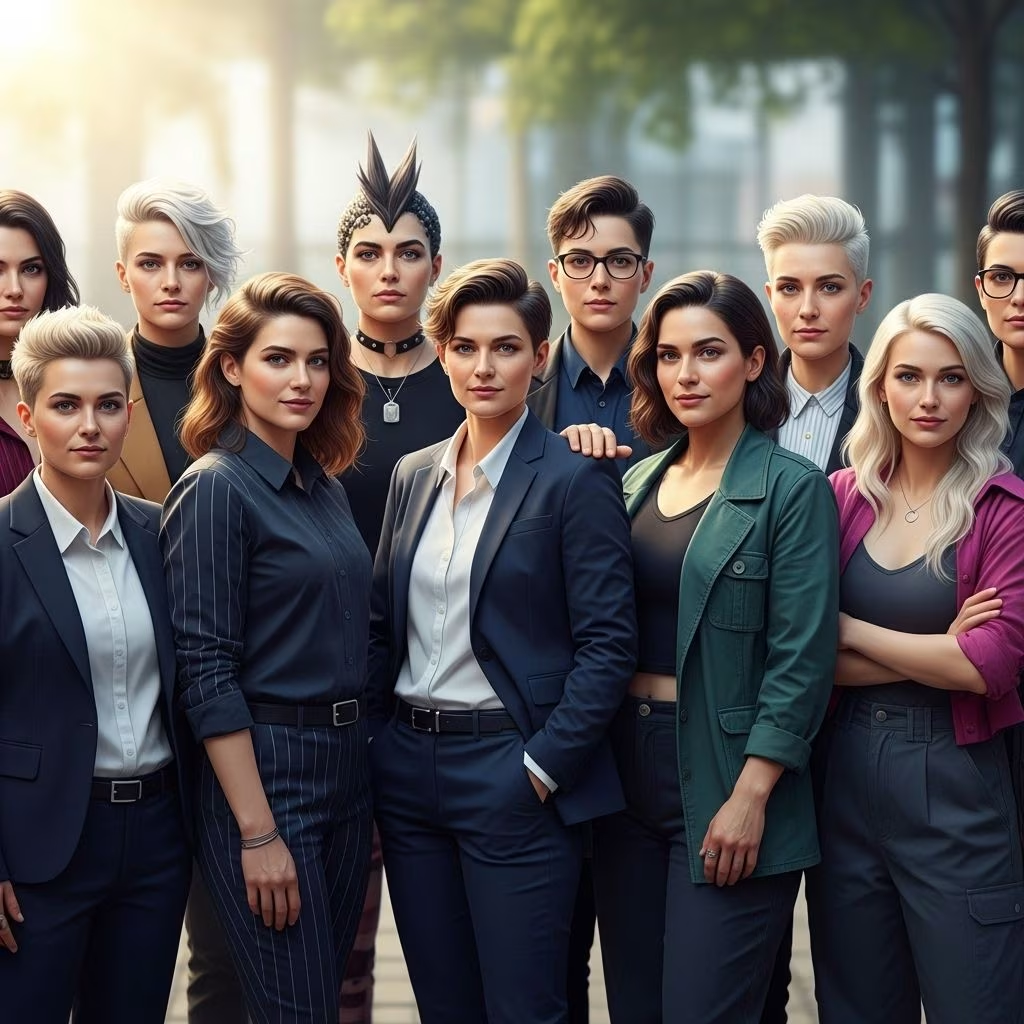
Introduction to Types of Lesbians
When discussing the lesbian community, it’s common to encounter various labels and identities. These labels are not only about aesthetics but also reflect a range of preferences, lifestyles, and cultural backgrounds. Understanding these types can help break down stereotypes and foster greater appreciation for the diversity within the LGBTQ+ community.
## Common Types of Lesbians### 1. The Butch Lesbian
### 2. The Femme/Lipstick Lesbian
### 3. The Chapstick Lesbian
Chapstick lesbians are often described as being somewhere in the middle of the masculine-feminine spectrum. They may not fully identify as butch but still adopt some masculine traits while maintaining a softer edge.
### 4. The Stud Lesbian
### 5. The Stem Lesbian
Stem lesbians are a combination of stud and femme, balancing both masculine and feminine traits. This label is less commonly discussed but represents a blend of styles and preferences.
### 6. The Stone Butch Lesbian
Stone butch lesbians are more masculine in appearance and demeanor. The term “stone” indicates a preference for giving rather than receiving emotional or sexual pleasure, often acting as the “giver” in intimate relationships.
### 7. The Stone Femme Lesbian
Although not as commonly discussed, the stone femme lesbian also uses the “stone” label to indicate similar boundaries, but with a feminine presentation.
### 8. The Pillow Princess Lesbian
Pillow princesses are women who prefer to receive pleasure during intimacy without necessarily reciprocating. This does not mean they never give back, but their preference is generally to be on the receiving end.
### 9. The Soft Butch Lesbian
Soft butch lesbians fall on the butch spectrum but do not fully embody traditional masculine roles. They are “softer” than typical butches in their gender expression.
### 10. The Baby Dyke Lesbian
A baby dyke is a term used for someone who has recently come out as lesbian. They are in an exploratory phase of their identity and may not yet identify with specific labels like butch or femme.
### 11. The Power/Suit Lesbian
Power lesbians are confident, assertive, and often successful women who may not fit strictly into masculine or feminine categories. They are known for their authority and self-assurance.
## Additional Types of Lesbians### The Boi Lesbian
Boi lesbians are often described as being more boyish in appearance and attitude. They might be attracted to older partners and enjoy casual relationships.
### The Emo Lesbian
Emo lesbians are characterized by their style and musical preferences, often embracing emo culture. They may wear darker makeup and dress in a way that reflects their musical and lifestyle choices.
### The Hasbian
Though not a widely appreciated term, a hasbian refers to someone who has previously identified as lesbian but now identifies as straight or bisexual. This term is somewhat controversial and should be approached with sensitivity.
## Table of Types of Lesbians| Type of Lesbian | Description ||——————|————-|| Butch Lesbian | Masculine presentation, challenges traditional female roles || Femme/Lipstick | Embraces traditional femininity, often with makeup and fashion || Chapstick Lesbian| Balances masculine and feminine traits || Stud Lesbian | Similar to butch, specifically applied to Black lesbians || Stem Lesbian | Combination of stud and femme traits || Stone Butch | Gives rather than receives pleasure, often masculine in appearance || Stone Femme | Gives rather than receives pleasure, feminine in appearance || Pillow Princess | Prefers to receive pleasure in intimate relationships || Soft Butch | Softer version of butch, not fully masculine in presentation || Baby Dyke | Recently come out, exploring identity || Power/Suit | Confident, assertive, and often successful || Boi | Boyish in appearance and attitude, often attracted to older partners || Emo | Embraces emo culture, style, and music || Hasbian | Previously identified as lesbian, now identifies differently |## Discussion and ImplicationsUnderstanding these types of lesbians is crucial for recognizing the diversity within the LGBTQ+ community. Each label reflects not only a personal style but also a set of preferences and values that define an individual’s identity and lifestyle.## Frequently Asked Questions (FAQs)
Q: Are these labels binding?
A: These labels are not binding; individuals may identify with multiple labels or none at all. They are meant to provide a framework for understanding and expressing one’s identity.
Q: How do I approach someone who identifies with one of these labels?
A: Approach with respect and an open mind. Understand that each person’s identity is unique and may evolve over time.
Q: Can someone change their label over time?
A: Yes, identities can evolve as individuals grow and explore their preferences and expressions.
References
- https://www.lovepanky.com/my-life/relationships/types-of-lesbians
- https://www.datingadvice.com/lesbian/types-of-lesbians
- https://queersapphic.com/lesbian-dating/different-types-of-lesbians-types/
- https://onceuponajrny.com/types-of-lesbians/
- https://www.lovepanky.com/flirting-flings/naughty-affairs/what-is-a-pillow-princess
- https://weareher.com/types-of-lesbians/
- https://cedar.wwu.edu/cgi/viewcontent.cgi?article=1056&context=wwuet
- https://vc.bridgew.edu/cgi/viewcontent.cgi?article=1312&context=honors_proj
- https://www.lotl.com/opinion/blogger/lesbians-the-5-main-types/


