


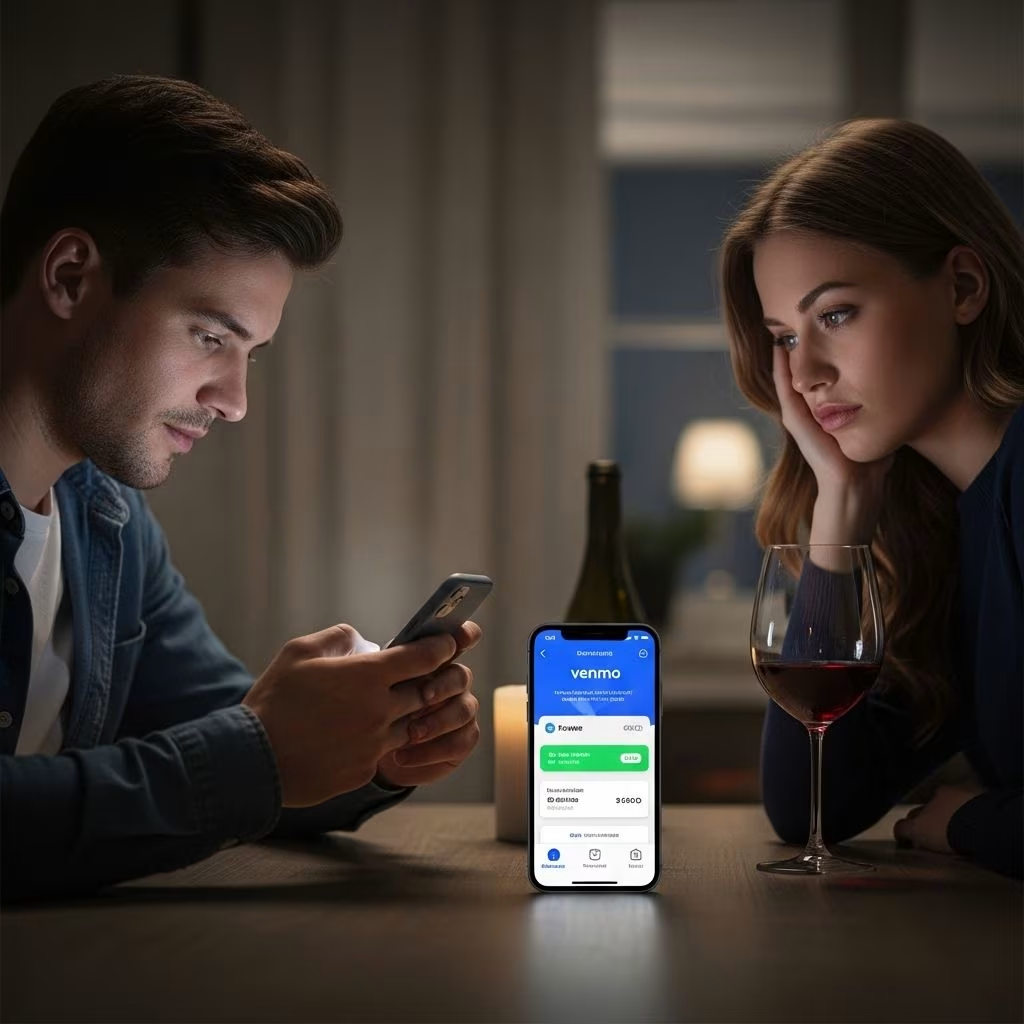
Venmo & The New Rules of Modern Romance
Technology relentlessly transforms every facet of human connection and dating is no exception. As apps for money—even those designed primarily for splitting checks or paying back friends, like Venmo—become ubiquitous, their impact extends beyond mere convenience. Increasingly, tools built for simple transactions are reshaping the core dynamics of how couples interact, communicate, and manage one of the most emotionally-charged issues in relationships: money.
Category: Relationships & Dating
Today, financial apps aren’t just about settlements; they are becoming windows into attitudes about fairness, intimacy, and emotional vulnerability. Dating in the 21st century often involves navigating the blurry boundaries between convenience and connection, transparency and pettiness, digital ease and traditional romance.
The Rise of Venmo: Convenience or Curse?
For millennials and Gen Z, Venmo and similar payment platforms are as integral to daily life as texting or social media. Born between 1981 and 1996, millennials have grown up immersed in technology, and use it to solve problems—including negotiating who pays for drinks, dinner, or shared experiences. This digital ease is both a blessing and a hidden peril.
- Splitting bills is easier; awkward in-person negotiations are replaced by silent notifications.
- Conversations about what is ‘fair’ now happen via app requests instead of face-to-face exchanges.
- Couples tuning financial boundaries and expectations often do so through the lens of transaction records, not emotional dialogue.
Apps like Venmo are making these micro-transactions effortless, but are they undermining the emotional depth of relationships by making every favor or shared moment subject to instantaneous balancing?
Digital Transactionalism: When Romance Is Split to the Penny
Researchers studying the impact of precise payments—like paying a friend $25.10 for dinner—found that digital platforms often make people more likely to pay exact amounts, rather than rounding or leaving room for goodwill. This precision, while practical, can come at an emotional cost:
- Individuals who pay or request exact amounts are perceived as more petty.
- Such behavior can signal a lack of generosity or investment in the relationship.
- Small amounts matter: the difference between rounding up or down is more than math—it’s about emotional intent.
Your friend who pays $25 instead of $25.10 is, research shows, seen as warmer and more likable. The same logic applies when dating: a partner who splits everything to the last dollar—and tracks it—may inadvertently poison the well of commitment and intimacy.
Table: Transaction Precision vs. Relationship Appeal
| Scenario | Social Perception |
|---|---|
| Exact payment ($25.10) | Petty, less likable, overly transactional |
| Rounded payment ($25) | Generous, communal, more likable |
| Tracking time precisely (1 hr 56 min) | Petty, overly technical |
| General time (2 hours) | Relaxed, easy-going, more attractive |
The Emotional Fallout: When Venmo Requests Go Wrong
Stories abound of dates where polite offers to pay are later undercut by a Venmo request for a drink that was meant as a treat. Research and anecdotal evidence suggest these micro-bills can wreck budding romances and strain friendships:
- People feel caught off-guard by requests for payment after dates.
- The gesture of picking up the bill loses emotional value if later reversed digitally.
- Receiving a Venmo request for a small sum can feel more like a break-up than a bill.
This digital ping can undermine feelings of trust, generosity, or even romantic possibility. In some cases, awkward settlements can permanently damage relationships between friends, roommates, or romantic partners.
Case Study: The Martini Mishap
Emily, a young professional, accepted drinks from a date who insisted on paying. Two days later, a Venmo request arrived charging her for precisely the cost of her drink. The gesture soured the budding relationship, making her reconsider not just the person, but the emotional calculus that technology is infusing into dating.
Why Millennials & Gen Z Struggle to Talk about Money
Unlike previous generations, today’s singles increasingly avoid real-world conversations, especially about money. Dating apps, social media, and payment platforms streamline everything—the good, and the awkward.
- Confrontation is rare: most arguments happen in text, not face-to-face.
- Breaking up, negotiating, even discussing financial values—these all go digital, losing the emotional resonance of real conversation.
Behavioral psychologists suggest this is rewiring social development—people learn less about true intimacy and vulnerability.
Expert Insight
Wendy Dickinson, a behavioral psychologist, notes, ‘Venmo isn’t the problem; it’s a tool. The problem is how we use these tools.’ Instead of working through financial boundaries and values, people increasingly decrease connection—and lose opportunities for growth through difficult conversation.
Is Venmo Making Us Less Likable—or Just More Honest?
Studies indicate that leaving room for ambiguity and rounding payments up or down signals trust, generosity, and a belief that the relationship will last. Key findings include:
- Partners seen as overly precise about splitting resources are rated lower for commitment and likability.
- Survey participants favored people who rounded time or money; precision was often viewed suspiciously.
- Perception of intention matters: if a precise payment is triggered by a system (like a pre-set gift card), it may be judged less harshly than if someone chooses the amount deliberately.
Ultimately, the message is clear—if you treat your partner or friend like a bank teller, the relationship shifts from communal to transactional. Intimacy suffers.
The Hidden Risks: Transactional Relationships and Emotional Detachment
By making every act countable and payable instantly, apps like Venmo risk stripping relationships of communal warmth. The danger is subtle but potent:
- The relationship feels businesslike, not personal.
- Partners may secretly dread being ‘nickel-and-dimed.’
- Small tensions may snowball, especially if one person feels constantly scrutinized or judged.
Research finds that partners reporting high precision in splitting costs are less committed and less optimistic about the future of the relationship. Leaving some ‘slack’ in transactions signals that you see the partnership as enduring—not an account to be settled daily.
Finding Balance: Apps as Tools, Not Replacements for Intimacy
The solution, according to experts, is not the abandonment of technology, but mindful usage. Apps like Venmo are incredibly useful for splitting dinner, utilities, or shared purchases, but should not replace conversations about:
- Financial values and boundaries
- Expectations for generosity in fostering intimacy
- How partners handle shared expenses over time
Developing a healthy approach means leveraging technology without letting it override the need for real discussion and emotional openness. Vulnerability—the uncomfortable step of talking about feelings and money—is key to strong relationships.
Practical Tips for Navigating Money Apps in Relationships
- Discuss expectations before or after dates; don’t let a Venmo request be your voice.
- Be generous with rounding—signal trust and warmth by not splitting every penny.
- Have hard conversations in person; use the app for simplicity, not avoidance.
- Don’t use Venmo as a breakup tool; don’t weaponize payment requests.
The healthiest relationships use digital aids for convenience, but know that lasting intimacy is built through honesty, generosity, and just a touch of good old-fashioned messiness.
Frequently Asked Questions (FAQs)
Q: Does using Venmo for split payments hurt dating relationships?
A: Research shows that paying or requesting exact amounts can make a relationship feel transactional, lowering likability and commitment between partners.
Q: Are millennials and Gen Z worse at talking about money in dating?
A: Many studies and experts agree; reliance on money apps reduces in-person dialogue about financial boundaries, making difficult conversations less common.
Q: Should couples avoid Venmo altogether?
A: Not necessarily; experts advise using apps mindfully, but not as replacements for meaningful conversation about money and expectations.
Q: Is precise payment always bad?
A: It depends on the perceived intention. Precision often feels less generous, but pre-programmed system choices (like fixed gift cards) may escape negative judgment.
Q: What is the best way to handle shared expenses while dating?
A: Open, direct communication is essential. Discuss values and expectations, and use payment apps for convenience—but never as the only strategy.
Conclusion: The Real Cost of Transactional Love
As Venmo and other apps become entwined with the rituals of modern dating, it’s clear the risks extend beyond awkward payments—they reach into the heart of intimacy itself. By transforming relationships from communal partnerships into transactional arrangements, apps risk making love more brittle, less generous, and ultimately, less human. The answer is not to abandon technology, but to use it to strengthen, not supplant, real connection—the foundation on which all romance must be built.
References
- https://newsroom.paypal-corp.com/2025-02-13-Love-and-Money-Surprising-Insights-into-Modern-Romance
- https://news.virginia.edu/content/venmo-making-you-less-likable
- https://www.foxbusiness.com/features/for-millennials-venmo-is-an-emotional-wrecking-ball
- https://ideas.darden.virginia.edu/is-venmo-making-you-less-likable


