


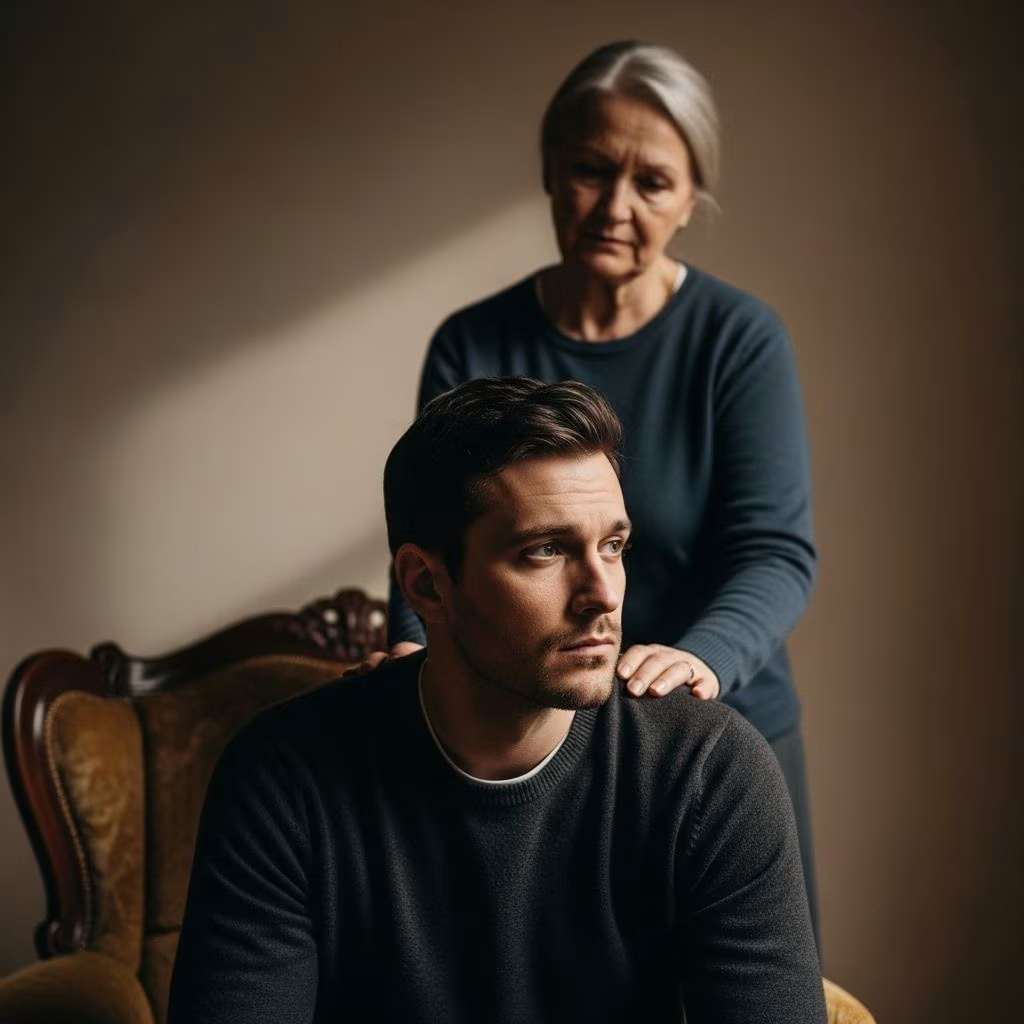
When you start dating someone new, you’re not just getting to know them as an individual—you’re also learning about the relationships that shaped them. Among all the formative connections in a man’s life, few are as influential as his relationship with his mother. This bond serves as a template for how he understands love, respect, communication, and emotional intimacy. Understanding the dynamics of this relationship can provide valuable insights into what kind of partner he might become.
The mother-son relationship is complex and multifaceted, influencing everything from how a man treats women to how he handles conflict and expresses emotions. While it’s not the only factor that determines compatibility, it’s certainly a significant piece of the puzzle worth examining as you navigate the dating world.
The Foundation of All Relationships
A man’s relationship with his mother often serves as the blueprint for all his future romantic relationships. This isn’t about Freudian psychology or outdated theories—it’s about understanding that our earliest relationships teach us fundamental lessons about trust, communication, and emotional availability. The way his mother treated him and the way he learned to interact with her creates patterns that often repeat throughout his life.
Men who grew up with mothers who were emotionally available, supportive, and appropriately nurturing tend to be more comfortable with emotional intimacy. They’ve learned that vulnerability isn’t weakness and that expressing feelings is a normal part of healthy relationships. These men typically have an easier time communicating their needs and responding to their partner’s emotional needs with empathy and understanding.
Conversely, men who experienced inconsistent nurturing, emotional neglect, or overbearing control may struggle with attachment issues. They might have difficulty trusting partners, expressing emotions, or maintaining appropriate boundaries. Understanding these patterns doesn’t mean making excuses for poor behavior, but rather recognizing where certain traits originate and whether someone is willing to work on themselves.
Respect and How He Treats Women
One of the most telling indicators you can observe is how a man speaks about and treats his mother. This provides a window into his fundamental attitudes toward women in general. A man who treats his mother with genuine respect—listening to her opinions, valuing her contributions, and showing appreciation for her efforts—is more likely to extend that same respect to his romantic partner.
Pay attention to the nuances of this respect. Does he dismiss her opinions or talk over her? Does he expect her to serve him without reciprocating? Does he speak condescendingly about her interests or achievements? These behaviors often translate directly into how he’ll eventually treat you once the honeymoon phase wears off.
However, it’s equally important to recognize that respect should be healthy and balanced. A man who puts his mother on an unrealistic pedestal may have equally unrealistic expectations of his partner. He might compare you unfavorably to her or expect you to fulfill the same caregiving role she played in his life. Healthy respect means seeing his mother as a complete person—with strengths and flaws—and treating her with dignity while maintaining appropriate adult boundaries.
The Mama’s Boy Dilemma
There’s a significant difference between a man who loves and respects his mother and one who hasn’t successfully individuated from her. The term “mama’s boy” gets thrown around casually, but it describes a real dynamic that can seriously impact romantic relationships. A mama’s boy hasn’t established healthy boundaries with his mother, often allowing her opinions and needs to supersede those of his partner.
Warning signs of this dynamic include a mother who is overly involved in her adult son’s decisions, a man who can’t make choices without consulting his mother first, or situations where the mother-son relationship consistently takes priority over the romantic relationship. This isn’t about how often he calls his mom or whether he helps her with tasks—it’s about whether he’s established himself as an independent adult capable of prioritizing his own family unit.
The mama’s boy dynamic often stems from mothers who struggle with letting go or sons who find it easier to remain in a dependent role rather than facing the challenges of full adulthood. While this pattern can sometimes be addressed through therapy and conscious effort, it requires the man to recognize the issue and actively work to establish healthier boundaries. Without this recognition and effort, you may find yourself constantly competing for priority in his life—a competition you’re unlikely to win.
Emotional Intelligence and Communication Patterns
The mother-son relationship significantly influences a man’s emotional intelligence and communication style. Boys learn crucial lessons about emotions from their mothers—whether feelings are safe to express, how to identify and name emotions, and how to respond to others’ emotional needs. Mothers who encourage emotional expression and validate their sons’ feelings tend to raise men who are more emotionally articulate and empathetic.
If a man grew up in an environment where emotions were dismissed, ridiculed, or punished, he likely learned to suppress his feelings. This often manifests in adult relationships as emotional unavailability, difficulty discussing feelings, or an inability to recognize and respond to his partner’s emotional needs. These men might seem stoic or “strong and silent,” but this often masks a deep discomfort with emotional vulnerability.
Communication patterns established in the mother-son relationship also tend to repeat in romantic partnerships. Did his mother communicate clearly and directly, or did she rely on passive-aggressive hints and guilt trips? Did she listen actively to his concerns, or did she dismiss them? Men often unconsciously adopt similar communication styles or, conversely, develop specific reactions to the communication patterns they experienced growing up.
Independence Versus Dependence
A healthy mother-son relationship evolves as the son matures, transitioning from dependence to independence while maintaining connection. By adulthood, this relationship should be characterized by mutual respect between two independent individuals who choose to maintain a loving bond. Problems arise when this transition doesn’t occur successfully.
Some men remain financially or practically dependent on their mothers well into adulthood—relying on her for cooking, cleaning, financial support, or decision-making. While life circumstances sometimes necessitate temporary dependence, chronic reliance on a mother for tasks a grown man should handle himself suggests an inability or unwillingness to fully embrace adult responsibilities. This pattern often continues in romantic relationships, with these men expecting their partners to assume a maternal role.
On the flip side, some men react to overbearing or controlling mothers by completely cutting off contact or maintaining only superficial relationships. While establishing boundaries is healthy, a complete inability to maintain any positive relationship with his mother—especially if she wasn’t abusive—might indicate difficulty with compromise, forgiveness, or managing complex relationships. After all, all significant relationships require navigating disagreements and imperfections.
Values and Life Lessons
Mothers play a crucial role in transmitting values to their sons—lessons about honesty, integrity, work ethic, kindness, and respect. A man’s core values often reflect what his mother emphasized during his upbringing. If she modeled and taught compassion, generosity, and integrity, he’s more likely to embody these qualities. If she demonstrated selfishness, dishonesty, or cruelty, he may have internalized these patterns unless he consciously worked to develop different values.
Pay attention to the stories he tells about his childhood and his mother. What lessons does he remember learning from her? What does he admire about her? What does he wish had been different? These reflections reveal both his values and his level of self-awareness. A man who can thoughtfully discuss both the positive and negative aspects of his upbringing, acknowledging how these experiences shaped him, demonstrates emotional maturity and insight.
The values his mother instilled also influence his approach to partnership. If she modeled egalitarian values and taught him that household responsibilities should be shared, he’s more likely to be a truly equal partner. If she reinforced traditional gender roles where women serve men, you might find yourself battling against deeply ingrained expectations about who should do the cooking, cleaning, and emotional labor in the relationship.
Conflict Resolution and Stress Management
How a man learned to handle conflict and stress in his relationship with his mother often predicts how he’ll handle these challenges in romantic relationships. Did his mother teach him to address problems directly and work toward solutions, or did she model avoidance, explosive anger, or manipulative behavior? These early lessons create templates that can be difficult to override without conscious effort.
Men who grew up with mothers who managed stress effectively and addressed conflicts constructively tend to approach relationship challenges with greater maturity. They’re more likely to remain calm during disagreements, listen to their partner’s perspective, and work collaboratively toward resolution. They understand that conflict is a normal part of relationships and can be navigated without destroying the connection.
However, men who witnessed or experienced unhealthy conflict patterns may struggle with appropriate conflict resolution. They might shut down and withdraw when problems arise, explode in disproportionate anger, or engage in manipulative tactics like guilt-tripping or gaslighting. Understanding the source of these patterns can help you determine whether someone is capable of learning healthier approaches or whether these behaviors are too deeply ingrained to change.
The Role of Absent or Difficult Mothers
Not all mother-son relationships are positive, and the absence or toxicity of this bond can be equally revealing. Some men grew up with mothers who were physically or emotionally absent due to addiction, mental illness, work demands, or simply lack of interest. Others had mothers who were abusive, highly critical, or emotionally manipulative. These difficult backgrounds don’t doom a man to relationship failure, but they do create specific challenges that require self-awareness and often professional help to overcome.
Men who experienced maternal abandonment or rejection may struggle with trust and fear of abandonment in romantic relationships. They might test their partners constantly, looking for proof that they’ll be left again, or they might avoid deep commitment altogether to protect themselves from potential pain. Some become overly clingy and dependent, desperately seeking the maternal love they never received, while others remain emotionally distant, having learned not to rely on women for emotional support.
Similarly, men who grew up with highly critical or controlling mothers might be hypersensitive to criticism, defensive when receiving feedback, or alternatively, they might seek out partners who replicate this dynamic because it feels familiar. The key factor is whether the man has done the work to understand how his difficult maternal relationship affected him and actively works to develop healthier patterns. Therapy, self-reflection, and conscious effort can help men overcome difficult backgrounds, but only if they recognize the need and commit to the work.
Meeting His Mother: What to Observe
When you eventually meet his mother, this interaction provides invaluable information. Watch how they interact—not just on their best behavior for your benefit, but in natural, unguarded moments. Does he light up when she enters the room? Does he tense up? How do they greet each other? How do they communicate?
Pay attention to how she treats you. Is she warm and welcoming, or suspicious and territorial? While you can’t control her behavior, his response to it matters immensely. Does he defend you if she’s rude or dismissive? Does he set boundaries if she oversteps? Or does he excuse her behavior and expect you to simply tolerate disrespect? A man who allows his mother to mistreat his partner is showing you exactly how much he’ll prioritize your wellbeing when it conflicts with keeping his mother happy.
Also observe how he treats her during this meeting. Does he show her basic courtesy and consideration? Does he introduce you proudly, or does he seem embarrassed or uncomfortable? Does he include her in conversation appropriately, or does he ignore her or dominate every discussion? These dynamics reveal volumes about his character and what you can expect in your own relationship with him.
Cultural Considerations
It’s important to recognize that mother-son relationships exist within cultural contexts that influence expectations and behaviors. In many cultures, strong family ties and respect for parents—especially mothers—are deeply valued. What might seem like excessive dependence in one cultural context might be completely normal and healthy in another. Sons from cultures that emphasize filial piety may naturally prioritize their mothers’ needs and opinions more than sons from cultures that emphasize individualism.
Understanding these cultural differences requires open communication and cultural competence. The question isn’t whether his relationship with his mother matches your cultural expectations, but whether it’s healthy within his cultural context and whether his approach to family relationships aligns with your values and needs. Can you both find a balance that honors his cultural background while building a healthy, independent partnership? Are you both willing to communicate openly about expectations and find compromises that work for your unique situation?
Red Flags Versus Green Flags
Certain patterns in a man’s relationship with his mother should raise concerns. Red flags include speaking disrespectfully about his mother, allowing her to disrespect you, being financially or practically dependent on her without working toward independence, making all major decisions based on her input rather than as an independent adult, comparing you unfavorably to her, or being unable to set any boundaries with her. These patterns suggest potential problems in how he’ll treat you and prioritize your relationship.
Green flags, on the other hand, indicate emotional health and relationship potential. Positive signs include speaking respectfully about his mother while acknowledging she’s human and imperfect, maintaining appropriate boundaries while staying connected, making independent decisions while valuing her input, treating her with consideration and appreciation, defending you if she’s disrespectful, and demonstrating that he’s successfully transitioned to independent adulthood while maintaining a positive relationship with her. These patterns suggest he’s capable of healthy, balanced relationships.
What This Means for Your Relationship
Understanding a man’s relationship with his mother isn’t about judging him based on factors outside his control. It’s about gathering information to make informed decisions about compatibility and relationship potential. No one chooses their family or their childhood experiences, but as adults, we all have responsibility for recognizing how these experiences affect us and working to develop healthy relationship patterns.
The most important question isn’t whether his maternal relationship was perfect—few are—but whether he demonstrates self-awareness about this relationship and how it shaped him. Is he willing to discuss his family dynamics thoughtfully? Can he recognize both positive and negative patterns? Has he done or is he willing to do the work to overcome negative patterns? These factors matter far more than the specifics of his upbringing.
Ultimately, his relationship with his mother is just one piece of information about who he is and what kind of partner he might be. Use this insight alongside everything else you’re learning about him—his values, his behavior, his communication style, his treatment of others, and his willingness to grow and work on himself. Together, these factors will help you determine whether this relationship has the potential to become the healthy, fulfilling partnership you deserve.
Frequently Asked Questions
Q: Is it a red flag if a man is very close to his mother?
A: Not necessarily. A close relationship with his mother can be healthy and positive. The concern arises when this closeness prevents him from establishing appropriate boundaries, making independent decisions, or prioritizing his romantic relationship. Healthy closeness means genuine affection and connection while maintaining adult independence.
Q: What if his mother doesn’t like me?
A: While a mother’s approval can make life easier, what matters most is how he responds to this situation. Does he defend you and maintain boundaries with his mother? Does he prioritize your relationship while still treating his mother respectfully? His response to conflict between you and his mother reveals his priorities and relationship skills.
Q: Can a man with a difficult relationship with his mother still be a good partner?
A: Absolutely. Many men who had challenging maternal relationships do significant personal work to overcome these difficulties and become excellent partners. The key factors are self-awareness, willingness to work on themselves (often through therapy), and demonstrated progress in developing healthy relationship patterns.
Q: How soon should I meet his mother?
A: There’s no universal timeline, but meeting parents typically happens once a relationship has become serious and exclusive. The timing matters less than his attitude about the meeting—does he want you to meet her? Is he proud to introduce you? Does he seem anxious or reluctant? His feelings about this milestone reveal his level of commitment.
Q: What if he has no relationship with his mother?
A: This requires understanding the reasons behind the estrangement. If his mother was abusive or toxic, establishing distance may have been the healthiest choice. However, if he cut off contact over minor disagreements or his inability to compromise, this might indicate difficulty maintaining relationships when challenges arise. Context matters enormously in these situations.


