


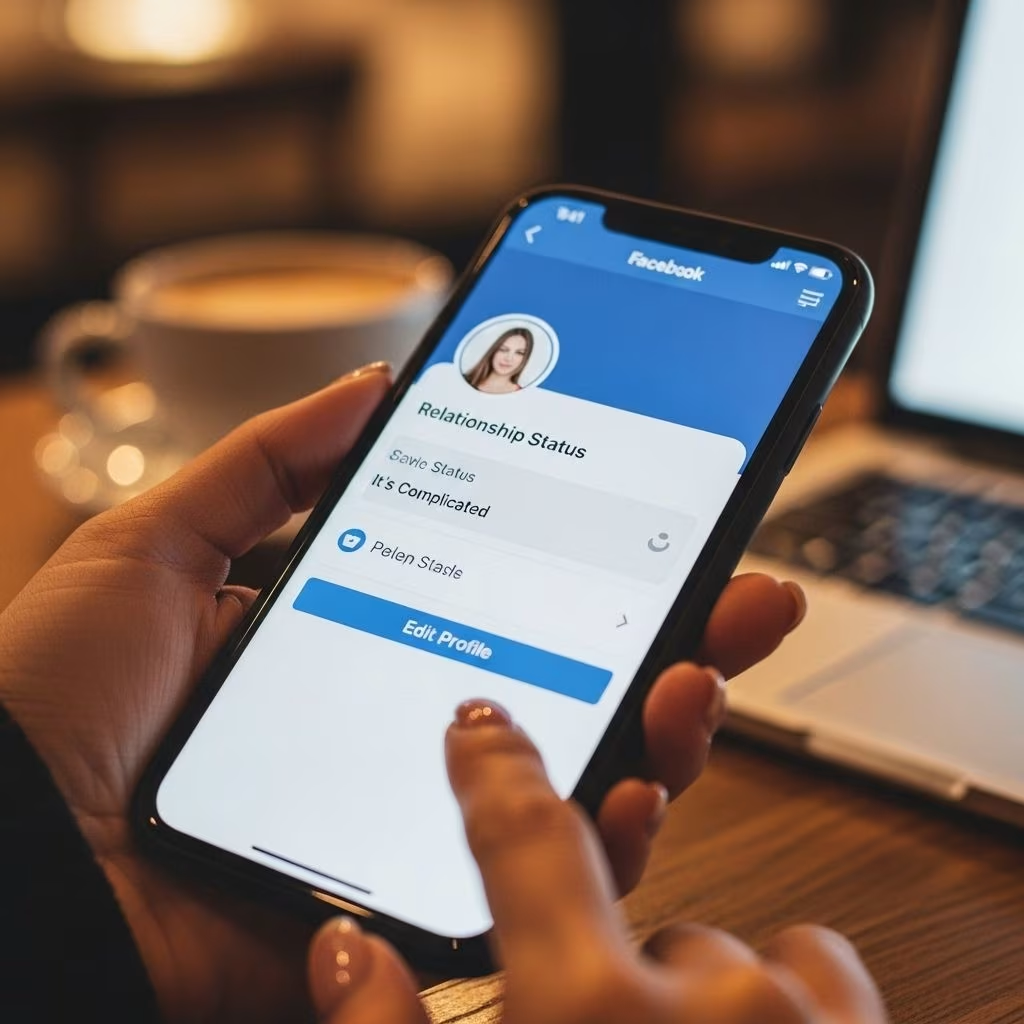
In the digital age, few things carry as much weight in modern relationships as the seemingly simple Facebook relationship status. What appears to be a harmless dropdown menu selection has become a battleground for couples, a source of anxiety for singles, and a window into the insecurities and dynamics of relationships everywhere. The number of relationships that have ended over disputes about changing or refusing to change a Facebook status is astounding, yet many people still question why something so seemingly trivial matters so much.
The truth is that your Facebook relationship status says far more about you than you might think. It reveals your level of security in your relationship, your need for validation, your desire to mark territory, and sometimes even your maturity level when it comes to romantic partnerships. While you always have the option to leave your relationship status blank and let people draw their own conclusions, the choice to actively select a specific status sends a deliberate message to your network of friends, family, and acquaintances.
Let’s dive deep into the psychology behind each relationship status option and uncover what your choice really communicates about you, your relationship, and your approach to love in the social media era.
The Psychology Behind Displaying Your Relationship Status
Before examining each status individually, it’s important to understand why relationship statuses on Facebook matter so much to people. Social media has transformed how we present ourselves to the world, creating a curated version of our lives that we broadcast for public consumption. Our relationship status becomes part of this carefully constructed identity, signaling our availability, commitment level, and relationship success to everyone in our digital sphere.
The act of changing your relationship status is also a form of digital declaration, making your romantic situation official in a way that feels more permanent than simply telling friends. It’s a public announcement that carries weight precisely because it’s visible to hundreds or thousands of people simultaneously. This visibility creates pressure, accountability, and sometimes conflict when partners disagree about what should be displayed.
What “Single” Really Means
When someone actively selects “Single” as their Facebook relationship status, they’re making a deliberate choice to advertise their availability. You could have left this field blank and allowed people to make their own assumptions, but instead, you’ve gone out of your way to make your solo status crystal clear. This decision often reveals a certain level of thirst for attention or romantic prospects.
The “Single” status serves multiple purposes depending on the context. For those who have recently exited a relationship, changing your status to “Single” is the digital equivalent of putting up a “For Sale” sign or sending a massive “screw you” to your ex-partner. It’s a public declaration that you’re back on the market and ready to move on, regardless of whether that’s actually true.
There’s a particular comedy to the moment when someone’s relationship status changes from “In a relationship” to “Single” and people actually hit the “like” button. This bizarre social media phenomenon highlights the awkwardness of having your romantic failures play out on a public stage, with friends and acquaintances serving as an audience to your heartbreak.
If you’re genuinely single and want to make that clear for legitimate reasons, then selecting this status is perfectly acceptable. However, be aware that most people can probably already tell from your profile pictures featuring only you, your dog, or your friends on girls’ or guys’ nights out. The lonely photographic evidence typically speaks for itself without requiring an official status declaration.
The Mystery of “It’s Complicated”
Of all the relationship status options available on Facebook, “It’s Complicated” might be the most baffling and unnecessary choice. What exactly are you trying to communicate by selecting this status? That your relationship is experiencing turbulence? That you’re not quite single but not quite committed? That you want everyone in your social network to know you’re having relationship drama?
The only thing complicated about this status is trying to understand why anyone would choose it in the first place. It raises the question of whether you’re even worth maintaining a Facebook friendship with, let alone an actual friendship in real life. Who actively selects this as their status and thinks it’s a good idea?
Picture this scenario: you and your girlfriend get into an argument, so you storm off to the bathroom and immediately change your relationship status to “it’s complicated” as some form of passive-aggressive retaliation. Do you really think your Facebook page is a breaking news source that everyone is following in real-time, eagerly awaiting these minute-by-minute updates about your relationship turmoil?
Unless you have “It’s Complicated” selected as an inside joke with your partner or as some form of ironic commentary, this should absolutely never be your actual relationship status. If a girlfriend ever changed her status to this, the appropriate response would be to make things very simple for her by changing your own status to “Single” immediately. There’s no room for ambiguity or attention-seeking drama displays in mature relationships.
Decoding “In a Relationship”
The “In a relationship” status represents one of the most common yet revealing choices on Facebook. While it’s completely acceptable for some couples in happy, healthy relationships to display this status with their partner’s name linked, the reality is that this choice often stems from insecurity rather than genuine desire to share your happiness.
Consider the couples who have been together for years without feeling any need to broadcast their relationship status on Facebook. They understand that the strength and authenticity of their connection doesn’t require digital validation or public declaration. The numerous photos they share together, the comments they exchange, and the way they interact on social media already makes their relationship status abundantly clear without requiring an official label.
The insistence on displaying “In a relationship” often comes from a place of territorial marking. It’s essentially posting a message on your partner’s wall that screams “TAKEN” in capital letters, serving as a warning to potential romantic competitors. This behavior typically emerges from fear, jealousy, or lack of trust rather than confidence in the relationship.
Many people can look back at their younger relationships and recognize this pattern. In college or during early romantic experiences, making someone change their status to “In a relationship” felt critically important. Why? Because youthful insecurity demanded that public claim on your partner. As people mature and develop healthier relationship dynamics, this need often diminishes or disappears entirely.
When a significant other pressures you to change your status to “In a relationship,” it’s revealing a deeper issue. This pressure indicates that they don’t fully trust you, that they feel threatened by potential romantic rivals, or that they need external validation of your commitment. These are red flags suggesting an unhealthy relationship dynamic that should be addressed through honest conversation rather than Facebook status changes.
The Engagement Announcement
Selecting “Engaged” as your Facebook relationship status occupies a unique space in the relationship status hierarchy. On one hand, this choice carries a certain sweetness and represents a legitimate milestone worth sharing with your social network. On the other hand, the announcement is often somewhat redundant given the avalanche of other engagement-related content that typically floods social media.
By the time someone changes their status to “Engaged,” their Facebook friends have usually already been bombarded with hundreds of photos featuring the ring held up at various angles and in various lighting conditions. There’s likely been a professionally shot proposal video, perhaps recorded at a baseball stadium or during a vacation, that has already made the rounds. The formal status change becomes just another item in an exhaustive engagement marketing campaign.
Couples who rush to update their engagement status tend to be somewhat showy or performative in their approach to relationships. Rather than focusing primarily on the private joy of their commitment and the practical planning required for their impending wedding, they’re concerned with ensuring everyone knows about this milestone achievement. There’s an element of seeking validation and attention that drives this behavior.
That said, the “Engaged” status is generally considered acceptable within social media norms, provided you don’t log onto Facebook the literal second you receive the ring to update your status. If changing your relationship status is among your first thoughts after getting engaged, rather than simply being present in the moment with your partner, that’s genuinely concerning and suggests misplaced priorities.
Understanding the “Married” Status
When someone is actually legally married, displaying “Married” as their Facebook relationship status makes complete sense and has become widely accepted social media practice. Facebook has become so thoroughly mainstream and integrated into daily life that linking married partners’ profiles together seems perfectly reasonable and appropriate. This represents a legitimate life status that makes sense to communicate on a platform designed for sharing life updates.
However, there’s an amusing phenomenon worth examining: young couples who are merely dating but choose to list themselves as “married” on Facebook. This behavior reveals fascinating psychological dynamics about insecurity and the need for validation disguised as humor.
These couples are attempting to have their cake and eat it too. They want their significant other’s Facebook page to clearly indicate commitment and unavailability, but they’re also too insecure to actually select “In a relationship” because that feels too serious or vulnerable. By selecting “married” instead, they create plausible deniability around their true intentions.
The implicit message becomes “We’re not insecure about our relationship status; we’re just joking around and having fun with Facebook!” But this protesteth too much. In reality, couples who jokingly list themselves as married when they’re just dating are often the most insecure about their relationship among their peer group. They desperately want to claim their partner publicly but feel the need to mask this desire behind a layer of irony and humor.
This approach allows them to achieve their actual goal of marking territory and establishing commitment while maintaining the appearance of being too cool to care about something as trivial as Facebook relationship statuses. It’s a defense mechanism that reveals exactly what it’s trying to hide.
The Blank Status: What Saying Nothing Says
While not technically a selectable option, leaving your relationship status completely blank represents its own form of communication. This choice suggests a certain level of maturity and confidence, indicating that you don’t feel the need to broadcast your romantic situation to your entire social network. It demonstrates that you understand your worth and your relationship status aren’t defined by what appears on your Facebook profile.
People who leave their relationship status blank tend to fall into several categories. Some are private individuals who prefer to keep their romantic lives separate from their social media presence. Others are secure enough in their relationships that they don’t require public validation or territorial marking. Some may be casually dating without anything serious enough to warrant a status update.
The blank status allows for ambiguity and mystery, which can be refreshing in an era of oversharing. It suggests that you have appropriate boundaries between your public and private life, understanding that not every aspect of your existence needs to be documented and displayed for mass consumption.
The Broader Implications of Relationship Status Culture
The entire phenomenon of Facebook relationship statuses reveals something significant about modern romance and social media culture. We’ve created a system where private romantic connections are expected to be publicly declared and validated through digital platforms. This expectation has fundamentally changed how relationships develop and how partners communicate about commitment.
Arguments about relationship statuses have ended countless relationships, not because the status itself matters so much, but because it reveals deeper issues around trust, security, and communication. When partners disagree about whether to display their relationship publicly, it often indicates misaligned expectations, different comfort levels with vulnerability, or varying needs for validation.
The pressure to make relationships “Facebook official” can also accelerate commitment timelines in unhealthy ways. Couples might feel pushed to define their relationship prematurely simply to align with social media expectations, rather than allowing the connection to develop organically at its own pace.
Navigating Relationship Status Decisions in Your Own Life
So what should you do with your own Facebook relationship status? The answer depends on your individual circumstances, values, and relationship dynamics, but here are some principles to consider when making this decision.
First, examine your motivations honestly. Are you changing your status because you genuinely want to share happy news with loved ones, or are you seeking validation, marking territory, or trying to make an ex-partner jealous? Your underlying reasons matter more than the action itself.
Second, communicate openly with your partner about expectations and comfort levels. If one person desperately wants to update their relationship status while the other prefers privacy, that difference reveals important information about your compatibility and relationship dynamics that deserves honest discussion.
Third, recognize that your relationship status is ultimately just one small piece of information on a social media platform. It doesn’t define your relationship’s quality, strength, or legitimacy. The healthiest relationships typically require the least amount of public validation and performance.
Finally, be willing to reassess your choices as you mature and as your relationship evolves. What felt important in your early twenties might feel unnecessary or performative as you develop greater security and confidence in yourself and your partnerships.
Frequently Asked Questions
Q: Should I feel pressured to change my relationship status if my partner wants me to?
A: No, you should never feel pressured to change your relationship status. If your partner is insisting on this change, it’s worth having a deeper conversation about why it matters so much to them and whether there are underlying trust or security issues that need to be addressed in your relationship.
Q: Is it immature to care about Facebook relationship statuses?
A: Not necessarily immature, but it often indicates insecurity or a need for external validation. Mature, secure relationships typically don’t require public declarations on social media to feel legitimate, though there’s nothing wrong with sharing your happiness if that’s genuinely your motivation.
Q: What does it mean if someone refuses to change their relationship status?
A: It could mean several things: they value privacy, they’re not fully committed to the relationship, they don’t think social media statuses matter, or they want to appear available to others. The only way to know is to have an honest conversation about their reasoning.
Q: Should I change my status to “Single” immediately after a breakup?
A: While you certainly can, consider whether you’re doing it as a genuine update or as a way to hurt your ex-partner or attract new attention. Sometimes waiting a bit before updating can help you process the breakup more privately and avoid unnecessary drama.
Q: Do relationship statuses on Facebook really matter?
A: They matter to the extent that they reveal information about your relationship dynamics, communication patterns, and individual insecurities. The status itself is trivial, but the conflicts and conversations around it often point to deeper relationship issues worth examining.
Q: Is leaving your relationship status blank the best option?
A: For many people, leaving it blank demonstrates healthy boundaries and confidence. However, there’s no universally “best” option—the right choice depends on your individual values, relationship circumstances, and comfort with public sharing.


