


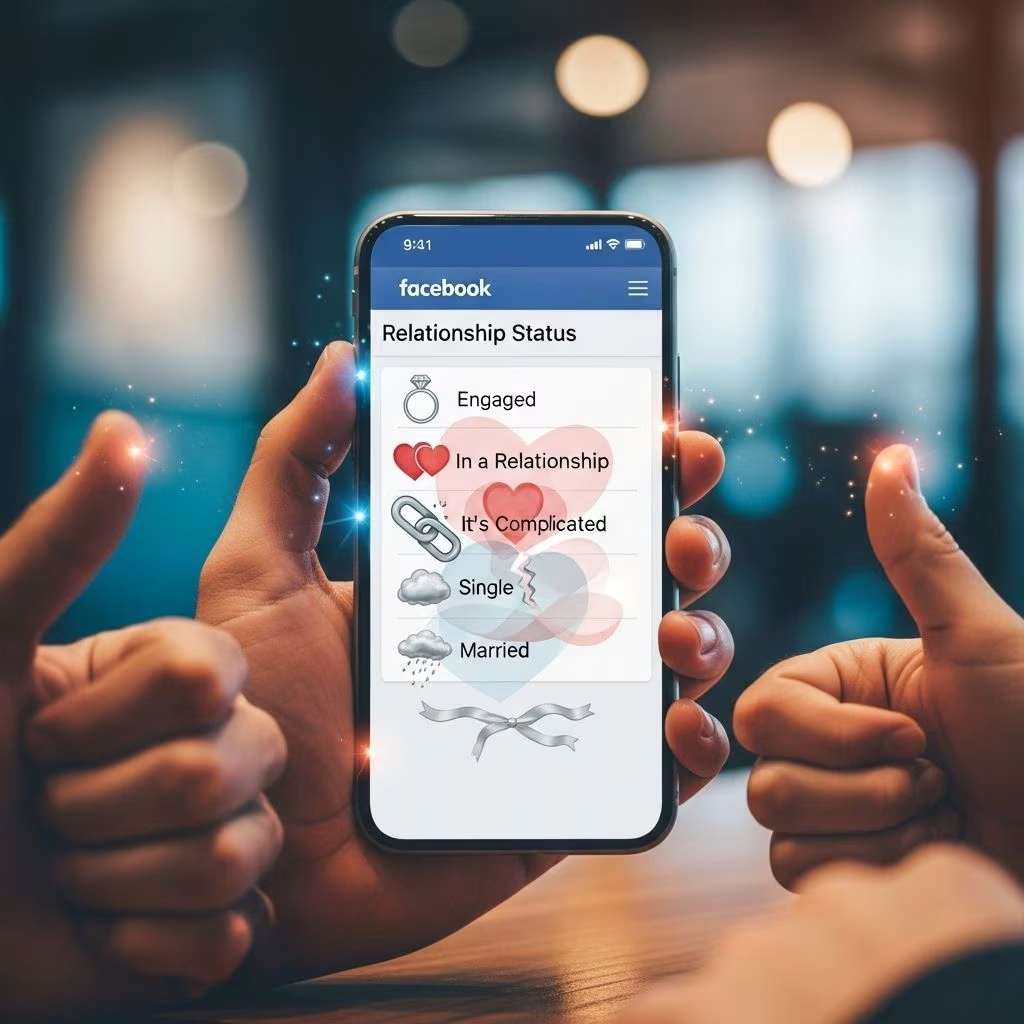
What Your Facebook Relationship Status Truly Reveals About You
Social media, especially Facebook, is deeply woven into the fabric of modern relationships. Where once you announced your romantic achievements to close friends and family, today your relationship status can be broadcast instantly to hundreds of people with a simple click. But what does it really say about you when you choose (or refuse) to update your relationship status on Facebook? In this article, we’ll break down the most common statuses, explore their hidden meanings, and unpack what your online love life really communicates to the world.
Why People Care about Facebook Relationship Status
For some, Facebook relationship statuses are merely digital tags, but for others, they carry emotional weight, spark drama, or even trigger breakups. The public nature of these declarations makes them not just personal milestones, but also social statements that reveal how you see yourself, your partner, and your place in the digital world.
- They serve as a public signal of availability or commitment.
- They may trigger feelings of insecurity or pride.
- They can invite scrutiny, support, or even gossip from your social circle.
Let’s examine what your Facebook status selection may reveal about you.
The Real Meanings Behind Facebook Relationship Statuses
1. Single
Setting your status to Single goes beyond reporting the absence of a relationship. If you make it a point to declare your single status (instead of leaving it blank), several deeper motivations may be at play:
- You crave attention: Announcing you are single lets your network know you are open to connections and, perhaps, looking for new romantic possibilities.
- Revenge or closure: Many choose “Single” soon after a breakup as a loud message or even as a subtle jab at their ex.
- Signaling independence: For some, it’s a way to reinforce autonomy, especially after leaving a long-term relationship.
In essence, declaring yourself single can be proactive – it’s a social “For Sale” sign, a bold message to friends and followers, and sometimes, a therapeutic move in the aftermath of a breakup.
2. It’s Complicated
This status isn’t just about ambiguity in romance; it’s an open invitation for others to speculate or even pry. “It’s Complicated” typically signals one (or more) of these feelings:
- You seek attention or drama: This status all but begs your followers to ask what’s going on.
- Relationship turbulence: You may be going through a rough patch and wish to broadcast it, either for sympathy or as a passive-aggressive move.
- Uncertainty or confusion: You genuinely may not know where you stand and hope to make this uncertainty clear to others.
Often, “It’s Complicated” is used impulsively during a fight or after a significant argument. Rarely does it mean the situation is truly complicated; more often, it reflects the user’s inner turmoil, indecision, or desire to create waves in their social circles.
3. In a Relationship
Choosing In a Relationship is arguably the most common status for those partnered up, but it reveals several layers about the user:
- Desire for public validation: Some couples feel a need to “legitimize” their relationship in the eyes of friends and family.
- Show of commitment: It can be a mutual agreement and a way of staking a claim on each other in the public sphere.
- Potential insecurity: Sometimes, the pressure to change one’s status stems from doubts or anxieties about the relationship.
Many healthy couples forgo this status altogether, preferring privacy or feeling that their relationship doesn’t need digital verification. On the other hand, if one partner insists on the update, it might indicate trust issues or insecurity in the relationship.
4. Engaged
Engaged on Facebook serves as a triumphant announcement of commitment. But beyond sharing happy news, it also reflects:
- Showmanship: In some cases, users immediately update their status and post ring photos, reveling in attention.
- Desire for celebration: Friends and family typically flood the couple with congratulations and positive feedback.
- Major life milestone: This status represents a turning point and is generally received more positively than other statuses.
While “Engaged” bears less stigma, some critics argue that the manner of announcement (photo dumps, videos) can border on showing off, turning genuine milestones into performances.
5. Married
Married is the only status that seems entirely appropriate for public declaration, usually met with warmth and respect. Nonetheless, not all who choose it are officially married. In some cases:
- True celebration: This status is a testament to the couple’s bond and is usually used earnestly.
- Mock-seriousness: Some non-married couples jokingly use “Married” as a test or playful proclamation, often masking real insecurities.
- Genuine partnership: For actual married couples, especially older users, it’s just part of adult life online.
Interestingly, young couples who aren’t married but use “Married” tend to be those most invested in public perception yet self-conscious about openly stating their real status.
16 Ways Revealing Your Relationship on Facebook Speaks Volumes
Beyond the basic statuses, the act of declaring (or hiding) your relationship on Facebook communicates a spectrum of traits and motivations. Here are 16 things your online relationship status and activity might signal, whether directly or indirectly:
- 1. You Care About Validation
Posting your status means you want your relationship recognized and validated by your social circle. - 2. You’re Not That Private
If you’re comfortable broadcasting your love life, you don’t mind sharing personal information with the world. - 3. You Seek Reassurance
Wanting your partner to reciprocate by updating their status may be a sign you need constant affirmation. - 4. You’re Sensitive to Social Pressure
You feel compelled to put your relationship online because everyone else is doing it. - 5. You Have a Competitive Streak
Comparing your relationship status with friends may secretly drive your updates and posts. - 6. You Might Harbor Insecurity
Anxiety about whether your partner wants to “go official” online often surfaces from deeper insecurities. - 7. You Enjoy Sharing Milestones
Posting anniversaries, proposals, or “major moments” shows a desire to celebrate with your digital community. - 8. You Can Be Passive-Aggressive
Changing your status after arguments or to “It’s Complicated” might be your way of sending subtle messages to your partner or their friends. - 9. You’re Socially Strategic
Declaring a new relationship or breakup can be a calculated move to influence how others perceive you. - 10. You’re Nostalgic or Sentimental
Reluctance to delete old photos or posts may reveal lingering feelings or an attachment to the past. - 11. You Might Resist Change
Leaving your status blank or refusing to update after relationship changes can be a form of quiet protest. - 12. You Like a Good Spectacle
Over-the-top engagement or wedding posts may indicate a love of the spotlight. - 13. You’re Empathetic
Some update their status to avoid hurting their partner’s feelings, prioritizing emotional needs over privacy. - 14. You’re Self-Aware
Choosing not to update your status, or opting out of relationship drama, shows maturity and confidence. - 15. You Use Facebook as a Diary
Chronicling your relationship from start to finish points to treating social media like a personal timeline. - 16. You Invite Drama
Whether consciously or not, sharing every twist in your relationship can foster gossip, curiosity, and judgment.
The Social Media Effect: How Facebook Changes Relationships
Facebook isn’t just a neutral messenger; it actively shapes the nature of relationships and the anxieties that come with them:
- Amplifies insecurities: The pressure to go public with a relationship can lead to tension if one partner is less enthusiastic.
- Invites scrutiny: Changes in status, photos, or mutual friends can spark rumors and doubts.
- Creates artificial expectations: The speed and visibility of status updates make relationships look like social performances.
- Can fuel drama: Arguments, breakups, and reconciliations often play out on the public stage, escalating issues that might otherwise remain private.
| Facebook Status | Main Social Signal | Typical Implications |
|---|---|---|
| Single | Availability | Seeking attention, saying “I’m back on the market” |
| It’s Complicated | Instability/Drama | Looking for sympathy, stirring curiosity |
| In a Relationship | Commitment/Public claim | Validation, possible insecurity |
| Engaged | Milestone | Celebration or showmanship |
| Married | Stability | Earnest declaration or playful exaggeration |
Privacy vs. Publicity: Should You Share Your Relationship on Facebook?
Choosing whether to announce your relationship online isn’t a trivial decision. Here are the major pros and cons:
- Pros
- Public support and celebration
- Transparency with your network
- Shared milestones and memories
- Cons
- Exposure to gossip and judgment
- Invasion of privacy
- Risk of drama after breakups or disagreements
Ideally, couples should discuss their comfort levels and motivations before going public. Digital declarations should stem from mutual agreement, not pressure, and should reflect real feelings—not just the hope of likes or admiration.
Frequently Asked Questions (FAQs)
Does a Facebook relationship status really matter?
It matters only insofar as you allow it to. For some, it’s a meaningful gesture, while for others, it’s a superficial detail. What’s more important is the real-life relationship quality, not the appearance online.
Should couples put their relationship status on Facebook?
There’s no universal rule. Some couples enjoy sharing their happiness, while others value privacy. The best approach is for partners to discuss and agree on what makes them comfortable.
What does it mean if my partner refuses to show our relationship on social media?
It could stem from a desire for privacy, previous negative experiences, or just personal preference — not necessarily a lack of commitment. Open communication is key.
Can Facebook harm relationships?
Yes, Facebook can amplify insecurities, spark jealousy, and fuel drama. Negativity may arise if it’s used to measure relationship worth or manage conflicts publicly.
Is it ever a good idea to change your status to “It’s Complicated” after a fight?
Generally, no. Such updates tend to invite drama and external opinions that can make private matters public and harder to resolve. It’s better to address relationship issues privately.
Final Thoughts: Navigating Love and Identity in the Age of Facebook
Whether you proudly display your relationship for the world or choose to keep it private, your Facebook status sends messages—intentionally or not—about who you are and what you value. The healthiest approach blends honest self-reflection, respect for your partner, and an awareness of how public posts affect private matters. Ultimately, Facebook is only as significant in your love life as you allow it to be.


