


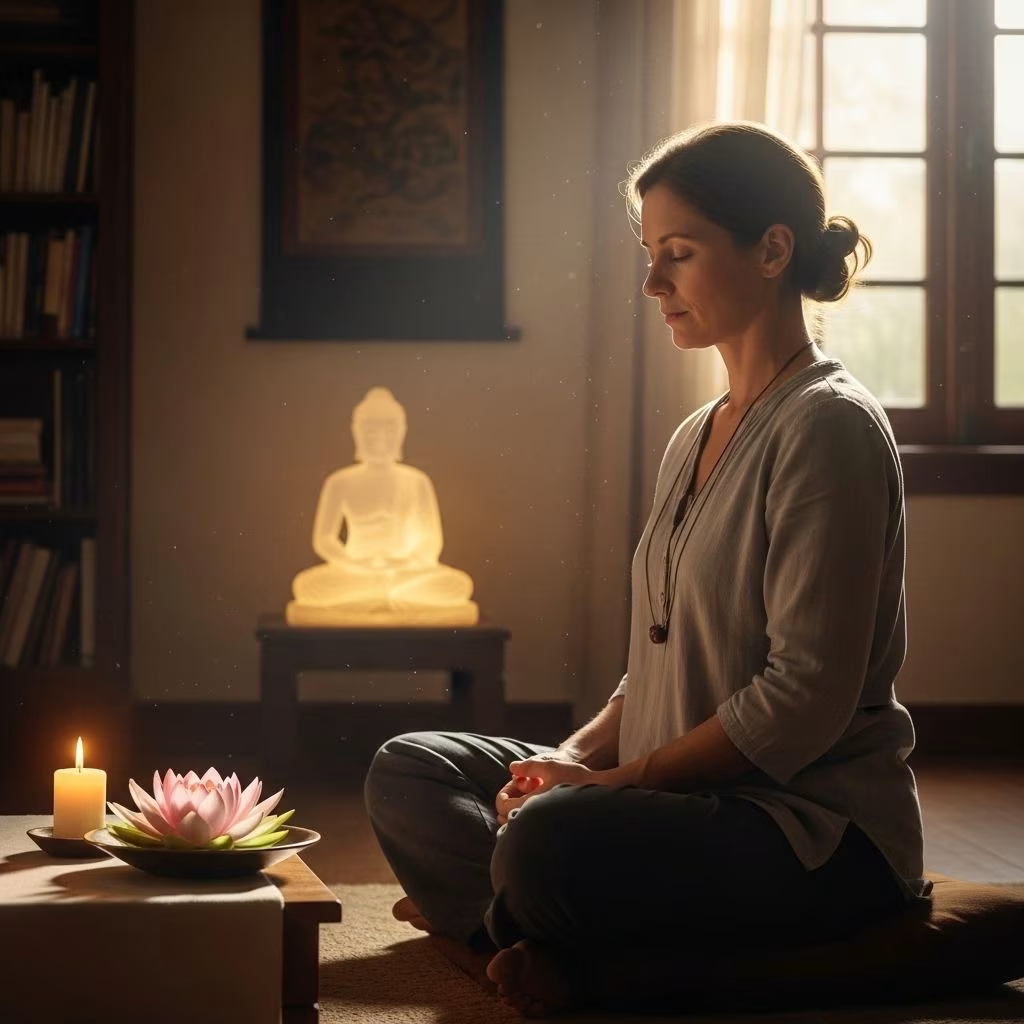
Why They Wanted to Deny She Was Buddhist in Her Eulogy
Our identities are woven through every part of our lives—how we love, the beliefs that guide us, and the choices we make even in the face of terminal illness. And yet, when it comes to the rituals of death, those identities can suddenly become sites of tension, hidden behind polite denials or silent compromise. What happens when honoring someone’s truth feels inconvenient to those left behind?
The Journey of Friendship and Spirituality
My friendship with her was marked by a rare intimacy—a shared language around spirituality, possibility, and a deep trust in forces we couldn’t always see or explain. I recall trips across the world, braving volcanic eruptions in Indonesia, bolstered not by certainty, but by the faith she carried everywhere. Her perspective was clear: “We have to have faith. Believe everything will be alright, and it will be so.”
- Openness to Wonder: She was never cowed by uncertainty; instead, she leaned in, finding meaning where others saw only chaos.
- Standing Firm in Belief: Even during severe illness and unpredictable natural events, her conviction was unwavering: what you believe shapes your reality.
- A Private Language: For years, we believed we were the only ones who shared this view—until we found kindred spirits, and realized that spiritual connection often exists quietly, beneath society’s surface.
The Reality of Spiritual Practice
To outsiders, faith can look like a kind of magical thinking. For us, it was a way of navigating life’s greatest uncertainties. Popular media and books like The Secret encouraged this mindset, but our connection ran deeper. When life felt precarious, she would return again and again to teachings about the power of belief, reminding those around her: “No matter what happens, we have to have faith.”
As her health declined, spirituality became not just a comfort, but an anchor—something we could keep coming back to even when the world didn’t make sense. The binary between hope and fear, faith and denial, blurred here. What seemed naive to some was, for us, the only sane response to suffering.
When Identity Becomes Inconvenient: The Eulogy
It was in the wake of loss that her Buddhist identity suddenly became fraught. Family members, uncomfortable or unfamiliar with her spiritual path, sidelined it during her memorial. The eulogy, meant to honor who someone truly was, became an act of careful omission. There was a public story, and then there was the real story—a truth known only to those who dared to share it.
- Family Tensions: A lack of understanding or acceptance led to disagreements about what should be included in the eulogy.
- Social Pressures: In cultures where Buddhism—or other minority religions—are misunderstood or stigmatized, spiritual identity is often erased or softened after death.
- The Motivation: Sometimes families fear what the community might think, or simply can’t reconcile themselves with the loved one’s path.
The result was a sanitized version of her life. The very philosophy that had given her comfort and hope in her final years was downplayed—or outright denied—at her funeral. For those who loved her most, the wound was sharp: How can we honor someone’s memory when parts of their truth are deemed too inconvenient to name?
Why Spiritual Denial Happens
Denial in the face of someone’s spiritual choice usually arises from a complex mix of love, fear, and social dynamics. The closer we are to someone, the more their differences may challenge our own beliefs, especially as we face the finality of their loss. Often, family feels a need to safeguard their own peace, protect reputations, or simply adhere to traditions they think matter more.
- Protecting the Narrative: Families may feel threatened by a departure from their own faith or worldview.
- Minimizing Difference: In times of grief, some default to what feels most familiar, even at the expense of authenticity.
- Fear of Alienation: Worrying what others will think, families might erase the parts of identity that do not fit the dominant norm.
Yet, the omission still stings for those who knew her real story—not out of self-righteousness, but from the pain of a story half-told, a life half-remembered.
The Personal Cost of Spiritual Erasure
When someone’s spiritual path is erased or denied posthumously, it affects more than just a ceremony. It casts a shadow over all the ways that person lived courageously and authentically—a denial of growth, resilience, and the hard-won peace they may have found in their faith.
For those left behind, the effect is often a confusing blend of anger, sadness, and impotence. Should we insist on the whole truth? Should we let things lie and preserve family harmony?
Deciding How to Respond
- Standing Up for the Truth: Some, particularly friends, feel obligated to speak out or privately uphold the reality of the deceased’s beliefs.
- Choosing Compassion: At times, letting others have their version of closure may feel like a greater kindness, though that can come with its own regrets.
- Navigating Silence: There is a unique pain in abiding by a silence that feels like a betrayal—but sometimes, it is necessary to keep peace among the living.
At the heart of this lies a difficult question: Who owns a story after someone is gone?
Reckoning With Loss, Faith, and the Need to Belong
Grieving someone whose life and death challenged convention is its own kind of spiritual practice. Buddhism, like many wisdom traditions, teaches us to sit with discomfort—to notice suffering and not immediately try to “fix” it by changing the story. But this teaching goes against cultural habits that value tidy narratives, “letting go,” and moving on.
True acceptance isn’t a denial of longing, hurt, or complexity. Instead, it’s an acknowledgment that life’s most important moments rarely fit our expectations or social rules.
| Denial | Acceptance |
|---|---|
| Suppressing uncomfortable truths | Honoring all facets of identity |
| Maintaining a tidy narrative | Acknowledging life’s messiness |
| Prioritizing tradition/comfort | Allowing space for complexity |
Spiritual Practice in Grief
Applying Buddhist principles after loss does not mean “letting go” or denying grief. Rather, it means being present to the ache, holding every moment—including longing and confusion—with compassionate awareness. To feel every emotion fully is its own form of reverence, a refusal to erase even the hardest parts of the story.
- Loss, when met with presence, puts us in touch with what mattered most about the one we loved—including the unique path they walked.
- To remember them honestly, even if only in private, is an act of deep love.
- Internalizing oppressive cultural teachings about sensitivity, difference, or “letting go” can wound us further. True spiritual practice is about allowing and bearing witness—not controlling experience.
Owning Our Stories: The Courage to Tell the Truth
In the aftermath of a loved one’s death, the courage to honor their real journey can be transformative. Claiming their truth—even if only to ourselves or a close circle—becomes both an act of resistance and healing. The stories we dare to remember, the memories we refuse to let go of, these shape how we ourselves will one day be remembered.
There is, however, no universal answer. The decision to insist on honesty or accommodate family wishes is personal, shifting with every loss and every relationship. But what remains true is this: when we have the courage to honor even the uncomfortable truths, we offer something priceless—the gift of being seen and celebrated in full.
- Be Kind to Yourself: Allow space for your own mourning, discomfort, or sense of injustice.
- Make a Personal Ritual: If the public ceremony cannot speak the truth, find a private way to honor it.
- Stay Connected: Seek others who knew and loved the person in all their truth, to keep the real story alive.
Integrity in Memory: Carrying Forward What Matters
We do not need permission from the majority to honor the truth of the ones we loved. Eulogies are important, but so are the quiet moments when we remember, tell stories, and pass on values. Authenticity in how we grieve and remember makes room for future generations to be braver about who they are—and how they wish to be honored when their own time comes.
In the end, integrity in memory isn’t about fighting every battle or forcing hard conversations. It’s about being gentle with ourselves, understanding why families do what they do, and finding space, somewhere, to hold the full story sacred.
Frequently Asked Questions (FAQs)
Q: Why would a family exclude a loved one’s true spiritual path in their eulogy?
A: Families may omit or minimize spiritual identities that differ from tradition due to discomfort, social pressure, or protectiveness over family image. This often arises from a lack of understanding, or a desire to avoid confronting difficult emotional truths in a public setting.
Q: How can I honor someone’s religious or spiritual identity if it wasn’t acknowledged at their funeral?
A: Consider finding private ways to honor their path, such as holding a personal ceremony, sharing meaningful stories, or practicing rituals they valued. Connecting with others who also want to remember the full truth can keep their legacy alive even if it wasn’t publicly acknowledged.
Q: Is it disrespectful to push for mentioning someone’s faith during the mourning period?
A: It depends on relationships, context, and motive. Advocating for honest remembrance can be powerful but may also cause additional pain for some family members. Sometimes, asserting truth privately or after emotions have settled is a more compassionate choice.
Q: What role can spiritual practice play in processing grief?
A: Spiritual practice can help cultivate presence, compassion, and acceptance, supporting us to hold the pain of loss without suppressing or rushing through it. Practices like meditation or mindful remembrance create space for all emotions to be witnessed.
Moving Forward: Honoring Wholeness in Loss
Life’s final rituals are never just about endings. They are about honoring the entirety of a person’s journey—their courage, differences, and unwavering commitment to what they believed, even if that stood at odds with family or culture. When we make room for that wholeness, even in the face of discomfort, we affirm the dignity of the ones we love…and the bravery it takes to walk any path at all.
Courage, gentleness, and honesty: these are the seeds we can plant amid grief. And they will blossom, quietly but powerfully, for generations to come.
References
- https://tinybuddha.com/blog/love-relationships-blog/why-they-wanted-to-deny-she-was-buddhist-in-her-eulogy/
- https://tinybuddha.com/blog/respond-instead-of-reacting-speak-your-truth-not-your-fears/
- https://tinybuddha.com/blog/big-little-secret-rejection-get-past-quickly/
- https://tinybuddha.com/blog/there-are-some-people-you-just-cant-help/
- https://tinybuddha.com/blog/why-i-wont-just-let-go-of-the-hurt-in-my-heart/
- https://tinybuddha.com/blog/what-i-now-know-about-rejection-and-how-its-set-me-free/
- https://thetattooedbuddha.com/2023/07/25/how-mindfulness-put-the-fun-in-funeral/
- https://reformedjournal.com/2024/10/10/buddha-jesus-and-my-brother/
- https://tinybuddha.com/blog/want-know-love-stop-lying/


