


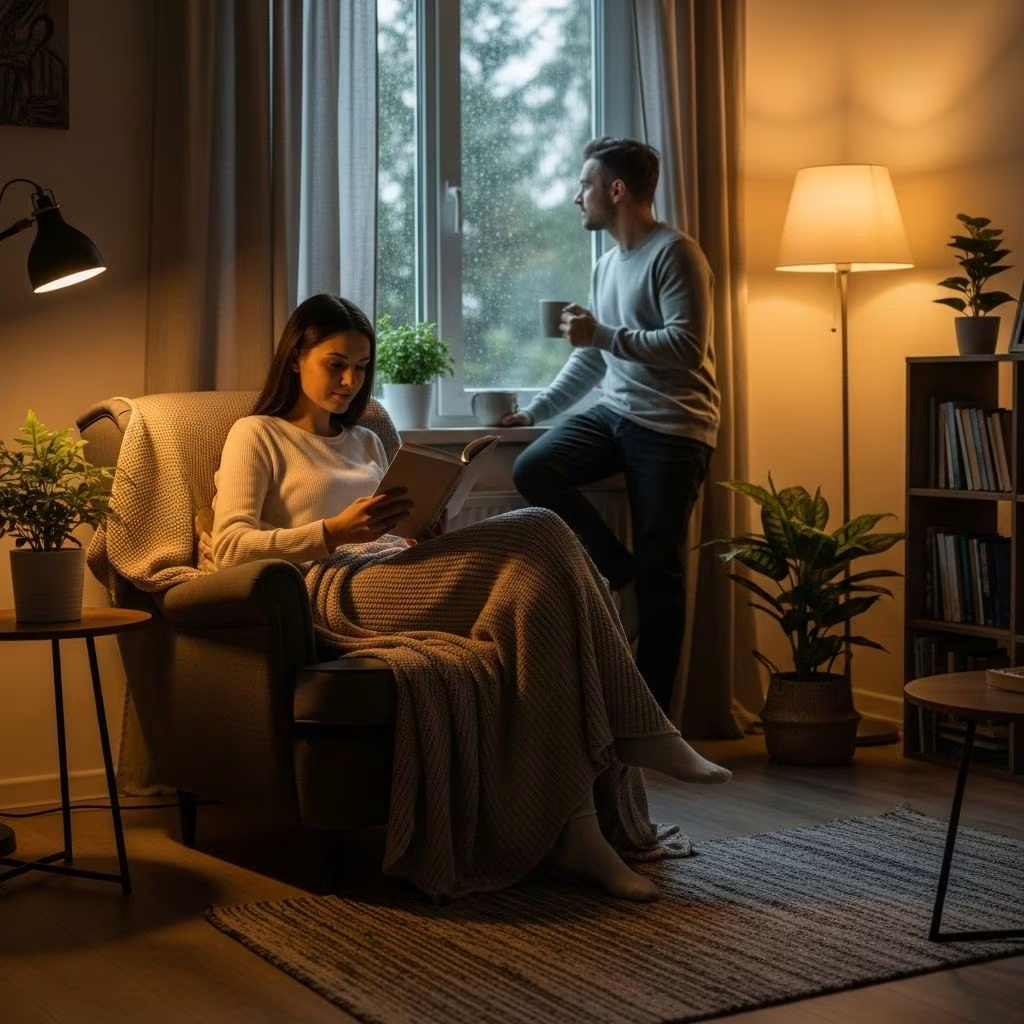
In the whirlwind of modern romance, couples often fall into the trap of believing that spending every waking moment together is the hallmark of true love. We romanticize the idea of being inseparable, of finding our “other half” who completes us. But what if the real secret to a lasting, fulfilling relationship isn’t about maximizing togetherness, but rather about embracing strategic separateness?
The notion might seem counterintuitive at first. After all, shouldn’t being in love mean wanting to spend all your time with your partner? The reality is far more nuanced. The healthiest, most enduring relationships are built on a foundation that honors both connection and independence. Understanding this balance can transform your relationship from merely surviving to genuinely thriving.
The Paradox of Intimacy and Independence
At the heart of every successful long-term relationship lies a beautiful paradox: the closer you want to be with someone, the more important it becomes to maintain your individuality. This isn’t about creating distance or building walls; it’s about nurturing the whole, complete person you were before the relationship and continuing to grow that person within it.
When two people come together, they bring their entire selves—their dreams, passions, quirks, and individual pursuits. These unique qualities are often what attracted them to each other in the first place. Yet somewhere along the journey, many couples lose sight of this truth. They begin to merge so completely that the boundaries between “me” and “we” blur beyond recognition.
The most resilient couples understand that a relationship should enhance your life, not consume it entirely. They recognize that the strength of their bond doesn’t depend on constant proximity but on the quality of their connection when they are together. This mindset shift can be revolutionary for partners who have fallen into patterns of codependency or who feel suffocated by expectations of constant togetherness.
Understanding Your Need for Solitude
Everyone has different requirements when it comes to alone time, and these needs aren’t a reflection of how much you love your partner. Some people are natural introverts who recharge through solitary activities, while others are extroverts who still benefit from occasional quiet moments of self-reflection. Neither approach is right or wrong—they’re simply different.
The challenge arises when partners have mismatched needs for alone time. One person might feel energized by constant interaction and interpret their partner’s need for space as rejection. Meanwhile, the other person might feel drained by too much togetherness and struggle to articulate this need without causing hurt feelings. This dynamic creates tension that can erode even the strongest relationships if left unaddressed.
Recognizing and respecting these differences is crucial. Your need for alone time isn’t about escaping your partner or the relationship. It’s about maintaining your mental health, processing your thoughts and emotions, and staying connected to the person you are outside of the relationship. This self-awareness and self-care ultimately make you a better partner because you’re showing up as your most authentic, balanced self.
The Art of Maintaining Your Identity
One of the greatest fears people have when entering a serious relationship is losing themselves in the process. This fear isn’t unfounded—countless individuals have watched their hobbies fade, their friendships drift, and their personal goals dissolve as they become increasingly enmeshed in their romantic partnership.
Maintaining your individual identity requires intentional effort. It means continuing to pursue the passions that made you feel alive before you met your partner. It means nurturing friendships that exist independently of your relationship. It means setting personal goals that have nothing to do with being part of a couple.
When you cultivate these aspects of your life, something remarkable happens. You become more interesting, more fulfilled, and more attractive to your partner. You have stories to share from your separate experiences. You bring fresh energy and perspectives to your relationship. You avoid the stagnation that can set in when two people’s lives become completely intertwined with no room for individual growth.
This doesn’t mean you’re being selfish or prioritizing yourself over your relationship. Rather, you’re recognizing that the best version of your relationship exists when both partners are thriving as individuals. You’re understanding that a healthy relationship is composed of two whole people choosing to share their lives, not two halves desperately clinging to each other for completion.
Building a Foundation of Self-Sufficiency
There’s profound strength in knowing you could be okay on your own. This isn’t about planning for a breakup or keeping one foot out the door. It’s about building a foundation of self-sufficiency that makes your choice to be together feel exactly like what it is—a choice, not a necessity born from fear or dependence.
When you can genuinely enjoy your own company, when you have interests that captivate you independent of your partner’s involvement, when you feel confident navigating life on your terms, you bring tremendous value to your relationship. You’re not looking to your partner to fill a void or complete you. Instead, you’re sharing an already full life and making it even richer.
This self-sufficiency creates a dynamic where you’re together because you genuinely want to be, not because you need to be. That distinction might seem subtle, but it changes everything. It removes the suffocating pressure of being someone’s entire world. It allows love to breathe and grow organically rather than feeling like an obligation or a lifeline.
Couples who master this balance often report feeling more attracted to each other, more interested in each other’s lives, and more committed to their partnership. They’ve discovered that the secret to never taking each other for granted is maintaining lives rich enough that their time together feels like a privilege rather than a default.
Practical Strategies for Incorporating Alone Time
Understanding the importance of alone time is one thing; actually implementing it in your daily life is another. Many couples struggle with the logistics and the emotional challenges of creating space for individual pursuits. The key is approaching this intentionally and with clear communication.
Start by having an honest conversation with your partner about your respective needs for alone time. This discussion should be free from judgment and focused on understanding rather than changing each other. Share specific examples of activities that recharge you and help you feel like yourself. Be willing to listen to your partner’s needs with an open mind, even if they differ significantly from your own.
Once you’ve established mutual understanding, create structures that support both togetherness and independence. This might mean designating certain evenings for individual pursuits, establishing separate spaces in your home where each person can retreat, or agreeing that certain hobbies remain solo activities. The specific arrangements matter less than the commitment to honoring each other’s needs.
It’s also important to frame alone time positively rather than as something you’re doing “instead of” spending time together. Emphasize how your solo activities make you a better partner—more interesting, more balanced, more fulfilled. Help your partner understand that you’ll return from your alone time with more energy and enthusiasm for the relationship.
Overcoming Guilt and Resistance
Even when you intellectually understand the value of alone time, actually taking it can trigger unexpected feelings of guilt. You might worry that you’re being selfish, that you’re neglecting your partner, or that wanting space means something is wrong with your relationship. These concerns are normal, but they’re also largely unfounded.
Wanting alone time doesn’t mean you love your partner less—it means you love yourself enough to maintain your well-being, which ultimately benefits your relationship. Think of it like putting on your own oxygen mask first on an airplane. You can’t show up as your best self for your partner if you’re depleted, resentful, or disconnected from who you are.
Your partner might also resist the idea initially, especially if they have different needs or if they interpret your desire for space as rejection. This resistance often stems from insecurity rather than actual incompatibility. Be patient and consistent in reassuring them of your commitment while also holding firm on your boundaries. Over time, as they see how alone time improves your mood and the quality of your interactions, their resistance typically decreases.
If your partner continues to struggle with your need for space or makes you feel guilty for taking it, this might indicate deeper relationship issues that need addressing. A healthy partner will respect your needs even when they don’t fully share them. They’ll recognize that your well-being matters and that supporting your independence ultimately strengthens your bond.
The Long-Term Benefits for Your Relationship
When couples successfully integrate alone time into their relationship, the benefits compound over time. You maintain the sense of mystery and intrigue that often fades in long-term relationships. You continue growing and evolving as individuals, which keeps the relationship dynamic and interesting. You avoid the resentment that builds when people sacrifice too much of themselves for their partnership.
Perhaps most importantly, you create a relationship model based on choice rather than obligation. Every day, you’re actively choosing to be together rather than staying together out of habit or fear. This conscious commitment keeps the relationship feeling fresh and intentional, even years down the line.
Couples who master this balance often describe their relationships as simultaneously comfortable and exciting. They have the security of deep commitment combined with the vitality that comes from two people who are actively engaged with life beyond their partnership. They avoid the stagnation trap where couples run out of things to talk about because their lives have become too intertwined.
Moreover, relationships built on mutual independence tend to be more resilient during challenging times. When life throws inevitable curveballs—career changes, health issues, family crises—partners who have maintained their individual strength and support systems are better equipped to weather these storms together.
Finding Your Unique Balance
There’s no universal formula for the right amount of alone time in a relationship. What works perfectly for one couple might feel completely wrong for another. The goal isn’t to follow someone else’s blueprint but to discover the balance that allows both partners to feel fulfilled, connected, and authentically themselves.
This balance will likely shift over time as your lives change. You might need more alone time during particularly stressful work periods or less when you’re going through something challenging and need extra support. The key is maintaining open communication and being willing to adjust as circumstances evolve.
Pay attention to how you feel. If you’re consistently irritable, drained, or resentful, you probably need more alone time. If you’re feeling disconnected from your partner or questioning your commitment, you might need more quality time together. Trust your instincts and be willing to speak up when the balance feels off.
Remember that prioritizing alone time isn’t selfish—it’s essential self-care that ultimately serves your relationship. By maintaining your individuality, pursuing your passions, and honoring your need for solitude, you’re not pulling away from your partner. You’re ensuring that you have something valuable to bring to the relationship, that you’re choosing each other from a place of strength rather than need, and that your love remains vibrant and intentional rather than becoming stale and obligatory.
Frequently Asked Questions
Q: How much alone time is healthy in a relationship?
A: There’s no one-size-fits-all answer. The right amount varies based on individual temperament, life circumstances, and relationship dynamics. The key is that both partners feel satisfied with the balance between togetherness and independence. Some couples thrive seeing each other daily while maintaining separate interests, while others prefer several nights apart each week. Communication about your respective needs is more important than hitting a specific number.
Q: Does wanting alone time mean my relationship is in trouble?
A: Not at all. Wanting alone time is a healthy, normal need that has nothing to do with the quality of your relationship. In fact, relationships where both partners feel comfortable taking space tend to be stronger and more sustainable long-term. It’s when you can’t communicate about these needs or when one partner refuses to respect the other’s boundaries that problems arise.
Q: How do I ask for alone time without hurting my partner’s feelings?
A: Frame your need for alone time positively, emphasizing how it helps you be a better partner rather than as an escape from the relationship. Use “I” statements like “I need some quiet time to recharge so I can be fully present with you later” rather than “You’re suffocating me.” Be specific about what you need and reassure your partner of your commitment to the relationship.
Q: What if my partner and I have very different needs for alone time?
A: Mismatched needs for alone time are common and manageable with communication and compromise. The partner who needs more alone time shouldn’t have to sacrifice their well-being, but they can help their partner understand it’s not personal. The partner who prefers more togetherness can develop their own interests and friendships. Finding middle ground where both people feel respected is essential.
Q: Can too much alone time damage a relationship?
A: Yes, if taken to an extreme. While alone time is healthy, relationships also require quality time together to maintain intimacy and connection. If you’re consistently choosing solo activities over spending time with your partner, or if you’re using alone time to avoid addressing relationship issues, this could indicate a problem. The goal is balance, not complete independence.
References
- https://www.elitedaily.com/life/important-time-youre-relationship/1456271
- https://capsulenz.com/diaries/the-love-diaries-i-need-more-alone-time-in-my-relationship-how-do-i-ask-for-it/
- https://www.elitedaily.com/dating/alone-time-key-lasting-relationship/1686279
- https://affirmativetherapycollective.com/elite-daily-exercise-article/


