


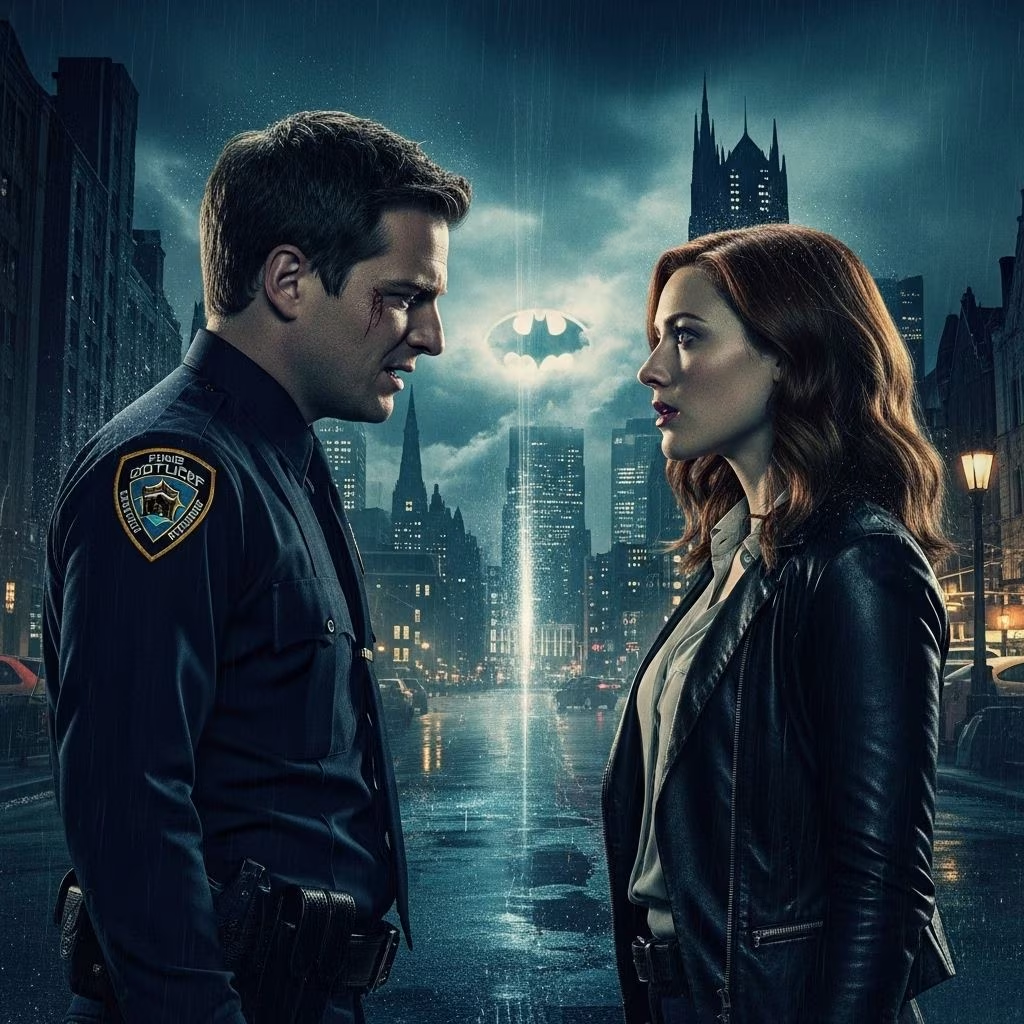
Will Jim & Barbara Get Back Together on Gotham? Breaking Down Gotham’s Most Turbulent Romance
Gotham isn’t just a show about the rise of Batman’s city or the origins of iconic villains—the FOX drama also dives deep into complex relationships amidst pervasive chaos. Few are as messy, passionate, and unpredictable as the relationship between Jim Gordon and Barbara Kean. As Gotham’s narrative evolves, so too does their storied romance—from engagement to heartbreaking betrayals, from obsessive vengeance to tentative peace. The intrigue and debate remain: Will Jim and Barbara ever get back together? Or is their love doomed by fate and, more pertinently, by the show’s own twists and turns?
The Foundations: How Did Jim and Barbara Start?
At the series’ beginning, Barbara Kean exists as more than Jim Gordon’s fiancée—she’s a successful gallery owner, an anchor who provides him desperately needed stability and hope. Jim, for his part, stands as Gotham’s moral compass, an idealist clinging to hard-won integrity in a city devoured by corruption.
Yet from the very start, the odds are against them. With Jim’s work overtaking his personal life and Barbara growing increasingly anxious about the darkness enveloping Gotham, cracks quickly show in their relationship. Episodes highlight these early issues, hinting that the lovebirds’ story may not follow a conventional or happy trajectory.
Comic Book Canon vs. Gotham the Series
For die-hard Batman fans, the relationship between Jim Gordon and Barbara Kean is loaded with expectations from comic book canon. In the comics, Barbara and Jim marry and have a son, James Gordon Jr., but eventually divorce after infidelity and growing apart. However, Gotham the TV series reimagines key circumstances:
- Sarah Essen, Jim’s canonical affair partner, is placed in a different role as police captain, removing the expected love triangle with Barbara.
- Barbara’s own backstory and sexuality are given new dimensions, especially through her previous and current relationships with women.
This divergence from comic source material leaves viewers with more uncertainty about how Jim and Barbara’s story will unfold onscreen.
Barbara’s Past With Montoya: Old Lovers, New Conflict
Detective Renee Montoya is more than just a figure from Barbara’s past—she’s a living symbol of unresolved conflict. From their first scene together, the romantic chemistry and lingering tension is palpable. When Montoya approaches Barbara in the pilot, her warnings about Jim’s integrity seed doubt, both for viewers and for Barbara herself.
Barbara’s past romance with Montoya isn’t just backstory—it’s an active fault line running through the series. If Barbara isn’t fully forthcoming about this relationship, it casts shadows on her trust in Jim, and perhaps on whether she’s truly moved on. Later, Barbara’s struggles with identity and fidelity push the love triangle further.
- The relationship between Barbara and Montoya is framed as more dangerous and transformational than her romance with Jim, ultimately acting as a plot device to highlight Barbara’s instability and development.
- This narrative choice exposes broader show criticisms, particularly in how Gotham portrays bisexual characters—often reducing lesbian and bisexual relationships to stepping stones toward Barbara’s narrative chaos or villainy.
Jim Gordon’s Work: The Burden Barbara Can’t Bear
Jim’s noble crusade against Gotham’s criminals is both his blessing and curse. Barbara supports him, but she’s increasingly fraught with anxiety over Jim’s safety and potential moral compromise.
Highlight moments include:
- The tense scene when Detective Montoya accuses Jim of being implicated in a cover-up and Barbara’s overt relief when Jim reassures her of his innocence.
- Barbara’s struggles with fear—fear for Jim’s life, fear that he will lose himself to the city’s corruption, and fear that she cannot compete with his sense of duty. This tension erodes her faith over time.
Barbara’s emotional turmoil compounds the cracks in their relationship, illustrating that sometimes love isn’t enough when the world you inhabit is perpetually under siege.
Enter Leslie Thompkins: The Doomed Romance?
Leslie “Lee” Thompkins bursts onto the Gotham scene as Jim’s next romantic partner after Barbara’s departure. Initially, Leslie seems to provide the comfort and stability Jim craves—someone who understands his moral drive without needing constant reassurance. But beneath their surface harmony, cracks quickly form:
- Barbara’s absence haunts Jim and Leslie’s relationship, with unresolved feelings resurfacing at key moments throughout the series.
- Leslie herself becomes entangled in the chaos of Gotham, and her relationship with Jim is perpetually threatened by the city’s violence and Jim’s inability to fully commit while Barbara lingers in his psyche.
| Relationship | Core Traits | Main Threats |
|---|---|---|
| Jim & Leslie | Stable, supportive, moral alignment | Danger of Gotham, unresolved feelings for Barbara |
| Jim & Barbara | Passionate, chaotic, deep history | Distrust, infidelity, mutual trauma |
Despite their attempts at happiness, Gotham’s relentless danger and the shadow of Barbara doom Jim’s relationship with Leslie. Their story serves not just as a romantic subplot, but as another tragic example of the city’s destructive power over love.
Infidelity, Obsession, and the Descent Into Chaos
Relationships in Gotham are rarely simple, and Jim and Barbara’s story is no exception. As the show progresses, Barbara’s mental health dramatically deteriorates—culminating in obsession, violence, and even murder. After departing from Jim, she becomes entangled with dangerous figures, eventually attempting to kill Jim’s new partner Leslie out of madness and fixation.
This descent removes any remaining possibility of a simple reconciliation for Barbara and Jim, further fracturing their connection and forcing Jim—always the moral center—to grapple with loving someone lost to darkness.
Barbara’s Villainous Arc: From Penthouse to Underworld
Barbara Kean’s journey across Gotham ultimately sees her embracing, and at times relishing, the city’s criminal underworld. After a stint in Arkham Asylum, she emerges as a new kind of character—a villainous mastermind who partners with Gotham’s most dangerous citizens, including Tabitha Galavan. Their relationship, both romantic and criminal, becomes a significant subplot: acting as both guardians and threats to the young Selina Kyle (future Catwoman).
- Barbara and Tabitha’s relationship is powerful, but, arguably, used by writers as a placeholder for Barbara’s “real” arc back toward Jim, exposing problematic handling of same-sex relationships within the show.
- This evolution supports Barbara’s role as one of Gotham’s central antagonists, but always with the implied possibility of, if not redemption, at least a return to sanity through connection with Jim.
Can Jim & Barbara Really Reconcile? The Dream vs. Reality
Gotham keeps the possibility of a Jim-Barbara reunion alive, fueling speculation and shipping among fans. In some of the show’s key moments, their chemistry appears undiminished—the shared history and unresolved passion shimmering just beneath the surface. But is lasting reconciliation possible?
- Major obstacles persist: Barbara’s criminality and mental breakdowns, Jim’s inability to forgive or forget her betrayals, and new partners for both of them.
- Some episodes tease the hope of rekindled romance, but these are almost always undermined by renewed violence or betrayal.
- By series’ end, Barbara’s only road to redemption seems to be raising her daughter alongside Jim and Leslie—as friends and co-parents, not lovers, closing the door on true romantic reconciliation.
Themes & Subtext: Bisexuality, Gender, and Stereotype
Gotham is both praised and critiqued for its handling of LGBTQ+ characters and romantic arcs. Barbara’s bisexuality becomes a narrative battleground:
- Her relationships with Montoya and Tabitha are often framed as deviations leading to instability or villainy, while her connection to Jim is positioned as more legitimate or redemptive.
- Critics argue that the show resorts to trope-heavy arcs—painting bisexuality and same-sex love as phases or gateways to darkness, rather than fulfilling or equitable relationships in their own right.
- Race and gender also factor in, with female characters of color often written out or used to further the drama between the main (white) characters.
While Gotham is undeniably entertaining, these problematic depictions complicate its legacy and viewer interpretations.
Is a Happy Ending Possible in Gotham?
If Gotham teaches viewers anything, it is that happily ever after is rare. The city swallows even its brightest hopes, twisting love into something dangerous and unpredictable. For Jim and Barbara, their best possible outcome is not reconciliation as lovers, but as co-parents striving for peace amidst chaos. Barbara’s journey from love interest to villain and back toward complicated redemption reflects the show’s core tension: the impossibility of escaping Gotham’s gravitational pull.
Frequently Asked Questions (FAQs)
Q: Do Jim and Barbara get back together at any point in the show?
A: Jim and Barbara’s relationship is rekindled briefly in the later seasons, but their deep-seated issues and Barbara’s criminal descent ultimately keep them apart romantically.
Q: Why did Barbara and Jim break up in Gotham?
A: The breakup is caused by a mixture of distrust, Barbara’s struggles with Jim’s dangerous job, and later, Barbara’s own psychological decline and criminal behavior.
Q: Are any of Barbara’s non-Jim relationships portrayed positively?
A: While Barbara’s relationships with Montoya and later Tabitha Galavan have moments of depth and connection, the show often frames these romances as unstable or transitional, rather than equally valid. Many critics view this as a flaw in the show’s storytelling.
Q: Does Jim ever marry Barbara in the FOX series?
A: No, Jim does not marry Barbara in the Gotham TV series. He marries Leslie Thompkins and eventually co-parents Barbara’s child with both women.
Q: How does Barbara’s story end in Gotham?
A: By the series finale, Barbara leaves behind her criminal life and partners with Jim and Leslie to raise their daughter, achieving a hard-won stability and partnership, but not romantic reunion.
Key Takeaways: Love, Redemption, and the Gotham Effect
- Jim and Barbara’s relationship is central to Gotham’s first few seasons, but is continually derailed by betrayal, mental instability, and the city’s pervasive danger.
- Barbara’s relationships with women are used for dramatic effect, often to reinforce tropes about instability or deviation from her “true” love story with Jim.
- Neither Jim nor Barbara finds lasting romantic happiness, but both achieve a form of redemption by working together as parents.
- Gotham’s storytelling blends comic tradition with provocative television drama, for better and for worse—leaving viewers debating the real meaning and future of its central relationships.
Whether or not Jim and Barbara ever get back together, the city’s darkness, their choices, and the show’s own narrative priorities leave a lasting mark on what love is allowed to look like in Gotham.
References
- https://www.bustle.com/articles/41865-will-barbara-kean-jim-gordon-break-up-on-gotham-they-may-be-different-from-the
- https://afterellen.com/reflecting-on-gothams-bisexual-problem-the-life-and-loves-of-barbara-kean/
- https://gotham.fandom.com/wiki/Barbara_Kean
- https://www.youtube.com/watch?v=HxgKyRkFJaY
- https://www.imdb.com/news/ni62353962/
- https://screenrant.com/gotham-5-best-relationships-5-worst/
- https://en.wikipedia.org/wiki/Jim_Gordon_(Gotham)


