


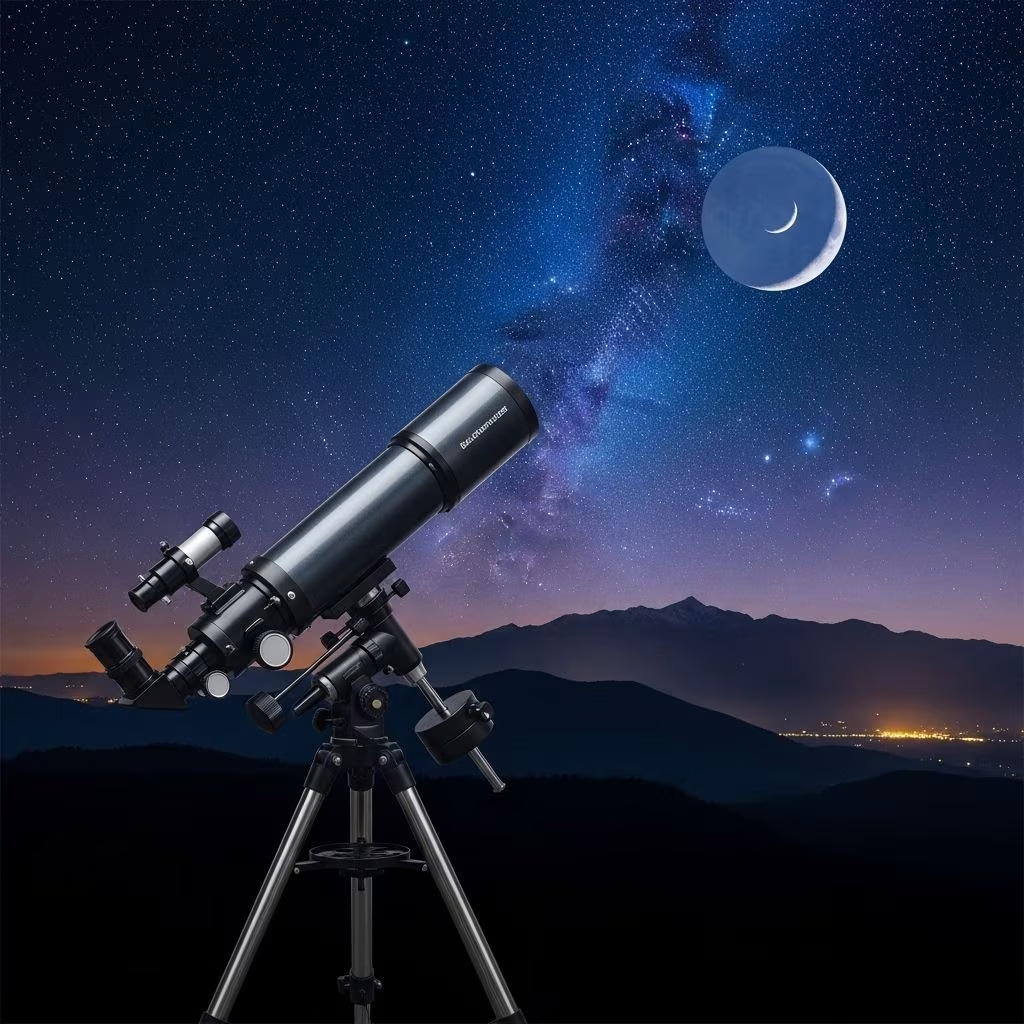
Best Telescopes for Beginners in 2025: Your Expert Buying Guide
Venturing into stargazing is a thrilling experience, offering an unprecedented window to the cosmos. However, selecting your first telescope can be daunting, given the multitude of models, features, and price ranges available. This comprehensive guide covers everything you need to know to choose the best beginner telescope—from essential specifications and top picks to frequently asked questions and troubleshooting tips. Whether you’re a budding astronomer, a parent, or an enthusiast seeking deep-sky adventures, you’ll find practical advice and detailed reviews here.
Quick List: Best Telescopes for Different Needs
- Best for Beginners: Celestron Astro Fi 130
- Best Budget Telescope: Orion SkyScanner 100mm Table Top Reflector
- Best Value for Enthusiasts: Celestron NexStar 8SE
- Best Premium Telescope: Unistellar eQuinox 2
- Best for Astrophotography: Skywatcher Classic 200P Dobsonian
- Best Motorized Telescope: Celestron StarSense Explorer LT 80AZ
- Best for Portability: Astronomers Without Borders OneSky Reflector
- Best Smart Telescope: Vaonis Vespera
- Best for Deep Space: Unistellar eQuinox 2
- Best for Kids: Gskyer AZ70400 Refractor
- Best Portable Smart Telescope: Vaonis Vespera
How to Choose Your First Telescope
Choosing the right beginner telescope requires understanding essential terms, your viewing goals, and your budget. Consider the following factors:
- Aperture: The diameter of the main optical component. Larger apertures capture more light and show fainter objects.
- Mount Type: Alt-azimuth mounts are easy to use and ideal for beginners. Equatorial mounts suit tracking celestial objects but are more complex.
- Optical Design: Common types include refractors (good for planets), reflectors (good for deep-sky objects), and compound/Cassegrain telescopes (versatile but pricier).
- Portability: Lightweight and compact telescopes are easier to transport and set up.
- Accessories: Eyepieces, finderscopes, smartphone mounts, and apps enhance your experience.
Featured Top Beginner Telescopes & Reviews
Celestron Astro Fi 130
| Design | Sturdy Newtonian reflector; robust tripod |
|---|---|
| Performance | SkyAlign tech for easy alignment; clear lunar & planetary views |
| Functionality | App-controlled; easy to operate for all skill levels |
- Pros: Beginner-friendly, quick setup, app-driven control via SkyPortal, recommended for mobile observation.
- Cons: Relies on app; battery drains quickly in cold; benefits from eyepiece upgrades.
The Celestron Astro Fi 130 offers a superb starting point for those new to astronomy. With its built-in SkyAlign technology and easy app connectivity, finding celestial objects is accessible even without prior star knowledge. It provides excellent views of the Moon, planets like Venus and Mars, and even fainter objects such as the Andromeda Galaxy. Mid-range Plossl eyepieces are recommended for best results, and investing in 12V rechargeable batteries ensures longer viewing sessions in colder climates.
Orion SkyScanner 100mm Table Top Reflector
- Pros: Highly affordable; simple design; easy for kids & adults to use.
- Cons: Limited aperture; not ideal for deep-sky viewing.
Perfect for budget-conscious beginners and families, the Orion SkyScanner 100mm has a compact form factor suited for tabletop use. It’s excellent for observing the Moon and bright planets, though low aperture limits its deep-sky capabilities.
Celestron NexStar 8SE
| Mount Type | Computerized Altitude-Azimuth |
|---|---|
| Aperture | 203.2mm (8″) |
| Focal Length | 2032mm |
| Eyepieces | 25mm, 81x |
| Weight | 24 lbs |
- Pros: Large aperture; automated mount; database of 40,000+ celestial objects.
- Cons: Heavy; requires manual alignment using three bright stars.
Considered among the best for ambitious beginners, the NexStar 8SE’s intelligent auto-align and large 8-inch mirror make it the top pick for those wanting to advance in astronomy. The fully automated mount and smartphone compatibility help with aiming and imaging, but setup can be cumbersome for first-timers.
Unistellar eQuinox 2
- Pros: Digital imaging; direct smartphone connectivity; excellent for deep space.
- Cons: Premium price; heavier design.
The Unistellar eQuinox 2 is renowned for its advanced imaging and intelligent observation, making it a great choice for those focused on astrophotography or deep-sky exploration. Its digital features and mobile integration come at a higher cost but provide a unique experience beyond traditional telescopes.
Celestron StarSense Explorer LT 80AZ
- Pros: Innovative smartphone star-finding app; lightweight; motorized navigation.
- Cons: Limited aperture; some learning curve for app setup.
This model combines a traditional refractor with smart motorization powered via the StarSense technology. Its intuitive mobile interface and easy alignment make locating objects straightforward, which is ideal for urban users or those new to astronomy.
Astronomers Without Borders OneSky Reflector Telescope
- Pros: Collapsible design; lightweight; excellent value.
- Cons: Small aperture restricts faint object views.
With a compact, collapsible tube and simple assembly, the OneSky is great for portable stargazing and quick urban or rural trips.
Vaonis Vespera Smart Telescope
- Pros: Digital intelligence; portable; automated imaging and tracking.
- Cons: Limited manual control; expensive.
The Vaonis Vespera smart telescope offers seamless imaging and deep-sky viewing using onboard artificial intelligence and smartphone control. Its automated features are ideal for tech-savvy users and kids.
Gskyer AZ70400 Refractor
- Pros: Lightweight; simple setup; child-friendly controls.
- Cons: Narrow field of view; limited deep-sky capability.
With its easy-to-use controls and lightweight build, this telescope is excellent for introducing children to the wonders of astronomy. It’s best for lunar and planetary observation.
The Best for Deep-Space Viewing
Advanced beginner telescopes like the Unistellar eQuinox 2 or the Skywatcher Classic 200P Dobsonian enable glimpses of galaxies, nebulae, and clusters during optimal dark-sky periods—such as a new moon in the fall equinox.
What to Expect with Your First Telescope
- Lunar Details: Craters, rilles, and mountain chains
- Planetary Views: Venus phases, Mars features, Jupiter’s moons, Saturn’s rings
- Deep-Sky: Andromeda Galaxy, Hercules Cluster, Orion Nebula (with large apertures)
- Easy Setup: Most beginner telescopes require minimal assembly and provide instant astronomy enjoyment.
Essential Accessories for Beginners
- Kellner or Plossl Eyepieces: Upgrade for sharper, brighter views.
- Red Dot Finder: Helps target objects quickly.
- Mobile App: Controls, guides, and recommends key celestial sights.
- Rechargeable Batteries: Essential for prolonged usage, especially in cold weather.
- Tripod: Sturdy support for stabilized observations.
Frequently Asked Questions (FAQs)
- What is the best type of telescope for a beginner?
- A refractor or small Newtonian reflector is generally the simplest and most reliable for beginners. Compound (Cassegrain) types offer versatility but higher costs.
- How much should I spend on my first telescope?
- Quality models start around $200–$500. Spending more increases aperture and features but isn’t necessary to begin.
- Is a computerized or app-enabled telescope worth it?
- If you want easy star-finding and automation, computerized mounts or smartphone apps are excellent, but manual scopes offer a traditional, hands-on experience.
- Can I photograph planets and galaxies with a beginner telescope?
- Basic models allow snapshot photography of the Moon and bright planets. For deep-sky astrophotography, choose specialized or digital telescopes like the Unistellar or Vaonis Vespera.
- How do I care for and maintain my telescope?
- Store in a dry place, cover the optics, and clean gently with appropriate lens cloth. Avoid touching the mirrored surfaces; replace batteries regularly.
- Are telescopes suitable for children?
- Yes, especially lightweight refractors or models with simple controls and safety features. Adult supervision is recommended for fragile parts or advanced models.
Contributing Experts
Our guide has been compiled with insights from astronomers, science writers, and educators with years of observing experience. Key contributors include science journalists dedicated to accessible astronomy and renowned amateur clubs who actively test new entry-level scopes.
Update Log
Latest updates feature top telescope releases for 2025, expanded app integration tips, and new accessory recommendations based on field testing and user feedback.
How We Test
- Expert hands-on reviews in varied environments, including urban and rural dark-sky sites.
- Comparative analysis of setup time, image clarity, and ease of use for all skill levels.
- Field trials during astronomical events—tracking lunar eclipses, equinoxes, and visible galaxies.
Tips Before You Buy
- Define Your Goals: Decide whether you seek planetary detail, lunar landscapes, or deep-sky exploration.
- Research Key Features: Compare aperture, mount, and accessory compatibility.
- Read User Reviews: Community feedback offers valuable real-world insights.
- Check Warranty and Support: Reliable brands offer robust support and guarantees.
Current Astronomical Events Worth Watching
- Corn Moon (Blood Moon Eclipse): September 7, 2025 — a stunning lunar eclipse is best viewed with high-magnification telescopes.
- Autumnal Equinox: September 22, 2025 — paired with a new moon, perfect for faint deep-space object viewing.
Summary Table: Top Telescopes for Beginners
| Model | Best For | Mount Type | Aperture | Unique Features | Price Range |
|---|---|---|---|---|---|
| Celestron Astro Fi 130 | Entry-level, all-round | App-driven Alt-Azimuth | 130mm | SkyAlign, mobile app | $350–$450 |
| Orion SkyScanner 100mm | Budget, kids, casual use | Manual Alt-Azimuth | 100mm | Simple tabletop mount | $175–$220 |
| Celestron NexStar 8SE | Enthusiasts, deep sky | Computerized Alt-Azimuth | 203.2mm (8″) | Automated star alignment | $1300–$1600 |
| Unistellar eQuinox 2 | Astrophotography, deep space | Digital motorized | 85mm | Smartphone connectivity | $1800–$2300 |
| Gskyer AZ70400 Refractor | Kids, beginners | Manual Alt-Azimuth | 70mm | Lightweight, easy controls | $75–$120 |
Start Your Stargazing Journey
With the right telescope and accessories, the night sky comes alive. Make sure to review your options carefully, and remember: the best telescope for you is the one that matches your curiosity, your sky conditions, and your level of commitment. Happy observing!
References
- https://www.space.com/31229-best-beginner-telescopes.html
- https://www.space.com/15693-telescopes-beginners-telescope-reviews-buying-guide.html
- https://www.youtube.com/watch?v=6TIOSPMZkL0
- https://www.skyatnightmagazine.com/top-astronomy-kit/best-telescopes-beginners
- https://astrobackyard.com/beginner-astrophotography-telescope/
- https://www.planetary.org/articles/how-to-pick-the-perfect-beginner-telescope
- https://www.learntostargaze.com/blog/what-telescope-should-i-buy
- https://www.youtube.com/watch?v=JI5id4xksSU
- https://www.celestron.com/collections/telescope-buyers-guide
- https://astrobackyard.com/buying-your-first-telescope/
- https://www.livescience.com/technology/dont-miss-your-chance-to-get-the-best-beginner-telescope-before-prime-day-ends
- https://www.livescience.com/technology/best-beginner-telescope-now-cheapest-its-been-since-april-thanks-to-prime-day
- https://abigailbassett.com/2024/06/20/the-best-telescopes-for-beginners/
- https://astrotelescopios.com/en-us/blogs/noticias/guia-de-compra-los-mejores-telescopios-para-principiantes?srsltid=AfmBOorlaZbJLdQhu6U9sr_cwoOqOeryUltphOmJz7axLyBTaSLzFUE2
- https://telescopelocker.com/best-telescopes-for-beginners/telescopes-for-beginners/
- https://www.shudiscovery.org/steam-resources/telescope-buying-guide
- https://www.cloudynights.com/topic/896130-advice-for-buying-telescope-for-beginner/


