


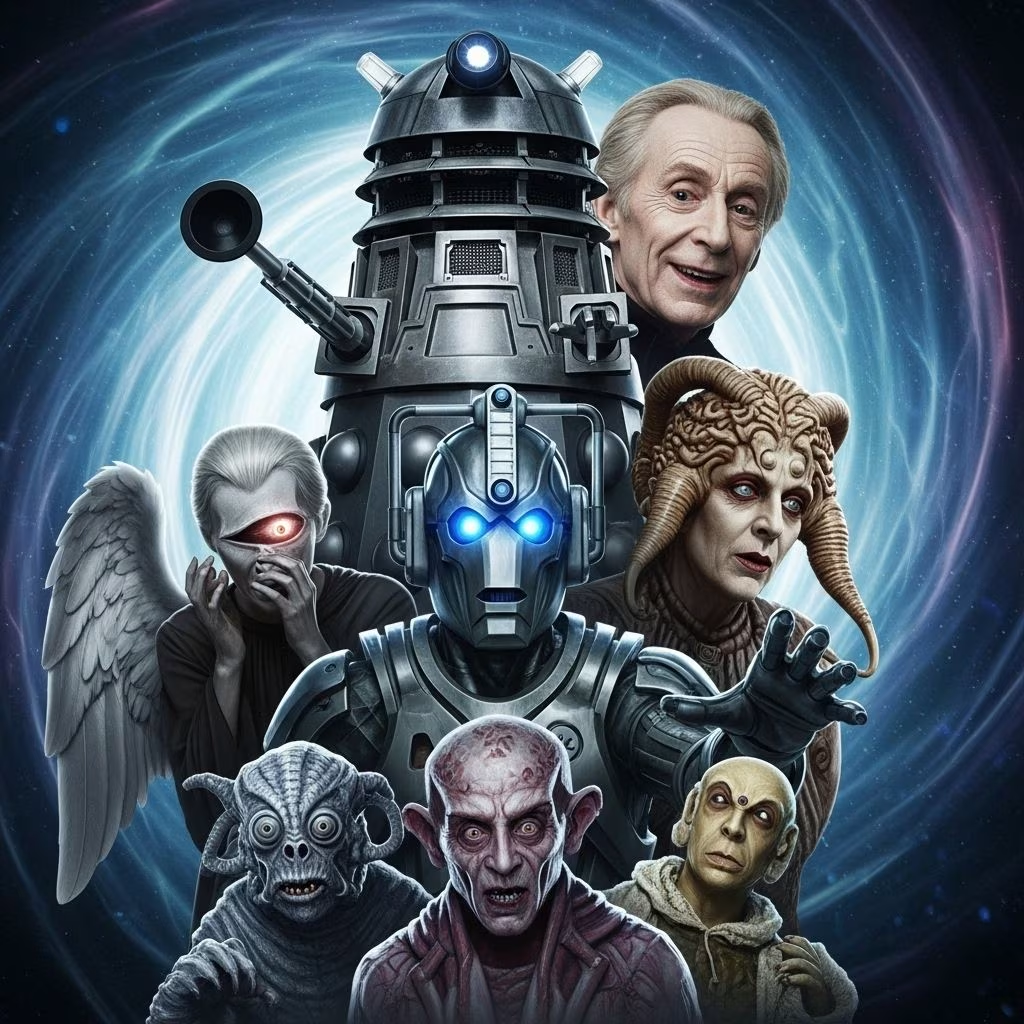
Doctor Who Villains Ranked From Worst to Best
Few television series boast a rogue’s gallery as infamous and diverse as Doctor Who. Since the show’s launch in 1963, the Doctor has faced everything from cosmic horrors and conniving masterminds to comedic one-offs and haunting monsters. Some villains are epoch-defining, while others are little more than a humorous footnote. Below, we traverse Whovian history, examining both loved and loathed antagonists to determine which truly left their mark on time and space.
Why Villains Matter in Doctor Who
The Doctor’s adversaries help define each era, providing the hero with both philosophical and mortal challenges. The best Doctor Who villains not only threaten the Doctor but embody complex fears and ethical dilemmas, often reflecting or corrupting human nature. As the series reinvents itself through regenerations, new creative voices ensure its take on villainy remains as flexible as it is iconic.
Ranking the Rogues: Every Major Era Represented
While dozens of monsters, alien races, and scheming evildoers have appeared across classic and modern Who, some names are unavoidable. This ranking focuses on those recurring or especially significant antagonists, including classic recurring races, standout one-offs, and recent additions that quickly earned legendary status.
- #20 – The Celestial Toymaker
A manipulative immortal with reality-bending powers, the Toymaker enjoys toying with mortals via sadistic games. While earlier appearances were limited and his original stories lost to time, his upcoming return keeps his reputation alive among Whovian fans. His influence as an all-powerful trickster embodies the psychedelic unpredictability of early Doctor Who antagonists.
- #19 – The Racnoss
Queen of a spider-like alien species, the Racnoss typify the show’s approach to blending horror and camp. Her appetite for destruction was world-ending, but her melodramatic mannerisms and brief appearance mean she lacks the depth of Who’s most memorable monsters. She nevertheless stands out as a chilling foe from the Tenth Doctor era.
- #18 – The Vashta Nerada
Literally the shadows that live in the dark — Vashta Nerada are the stuff of primal fear. Created in the acclaimed “Silence in the Library” two-parter, this microscopic menace can strip flesh from bone in seconds, forcing the Doctor to improvise like never before. Their presence lingers in audience imaginations long after their sole major appearance.
- #17 – The Ice Warriors
Martian warriors whose code of honor sometimes pits them against the Doctor, the Ice Warriors debuted in the Patrick Troughton era and have reemerged in modern Who. As a rival civilization, their fierce traditions and evolving morality make them formidable and complex. Their reptilian design and hissing voices remain instantly recognizable.
- #16 – The Ood
Though originally framed as villains due to mind control and enslavement, the Ood are more tragic than evil. Their Cthulhu-like tentacled faces made them memorable, and episodes like “Planet of the Ood” deepened their characterization while exploring themes of exploitation. Still, their chilling red-eyed rage creates lasting images of terror in Doctor Who’s modern canon.
- #15 – The Sontarans
The squat, militaristic Sontarans are obsessed with war and glory. Both grave threats and occasional comic relief, they are always up for a fight. Classic stories emphasized their battle prowess, while modern Who sometimes lampoons their martial literalism for laughs—especially in the ever-popular Strax.
- #14 – The Family of Blood
Seen in the two-part Tenth Doctor story “Human Nature / The Family of Blood,” these shape-shifting fiends hunt the Doctor for his Time Lord essence. Their relentless pursuit and creepy, grinning forms elevate them as some of the most hypersonically scary one-story villains of modern Who.
- #13 – The Zygons
Masters of biological mimicry, the Zygons’ ability to duplicate humans and infiltrate society has made them enduring foes since their first appearance in the Tom Baker era. Their reappearance in modern times (“The Zygon Invasion/Inversion”) reinforced their lasting relevance as allegories for distrust and xenophobia.
- #12 – The Autons
One of the first Doctor Who villains faced by the Third Doctor, the Autons are living plastic controlled by the Nestene Consciousness. Their debut in the 1970 classic “Spearhead from Space” set the tone for earthy paranoia and introduced viewers to the concept of everyday objects coming to life—a theme revisited in the modern era’s debut episode.
- #11 – The Ood
Reiterating their position in the hall of fame, the Ood’s evolution from manipulated terror to sympathetic race represents Doctor Who’s unique ability to subvert expectations and code morality into its universe-spanning mythology.
The Top 10 Doctor Who Villains: Defining Monsters & Arch-Enemies
As we close in on the best of the best, these ten adversaries aren’t just memorable—they help define what makes Doctor Who great, providing the Doctor their biggest narrative and existential challenges.
- #10 – The Silurians
Ancient reptiles who believe Earth is rightfully theirs. Their confrontations with humanity (and the Doctor) highlight survival, colonialism, and misunderstanding. Their stories ask: who is the real monster, and can peace ever be achieved? Their continued appearances across many eras cement their legacy.
- #9 – The Silence
Appearing first in the Eleventh Doctor’s metaplot, the Silence are tall, faceless beings who can erase themselves from one’s memory the moment they are not seen. Allies of secrecy and manipulation, their uncanny design and psychological warfare ushered in one of New Who’s most innovative story arcs.
- #8 – The Weeping Angels
Debuting in “Blink,” these quantum-locked statues are only able to move when not observed. Their introduction revolutionized the show’s approach to horror, turning everyday objects into threats and ensuring audiences never looked at stone figures the same way again.
- #7 – The Sycorax
With bony faces and brute force, the Sycorax spearheaded David Tennant’s first outing as the Doctor. They exemplify raw, alien tyranny and were vanquished only after a duel that set the Tenth Doctor’s brave, witty, and slightly unpredictable style.
- #6 – The Judoon
These intergalactic trigger-happy police rhinos are both threats and comic relief. The Judoon’s rigid dedication to the law is both dangerous and darkly funny, and their appearances highlight the show’s ability to blend genres while poking fun at bureaucracy and brute force alike.
- #5 – The Master / Missy
Arguably the Doctor’s most personal nemesis, the Master shares Time Lord origins and a taste for manipulation, villainy, and occasional redemption. Their rivalry is simultaneously cosmic and intimate, spanning generations and genders. From Roger Delgado’s suave original incarnation to Michelle Gomez’s unpredictable Missy, the Master is as vital to the show as any monster.
- #4 – The Cybermen
Logical to a fault, the Cybermen represent the horror of losing humanity. Endless, tireless, and ever-upgrading, their chilling catchphrase “Delete!” and near-indestructible nature reflect technological progress at its most terrifying. They serve as a warning against the erasure of emotion for the sake of efficiency.
- #3 – The Daleks
The single most iconic adversaries in Doctor Who’s history. Born from the warped mind of Davros to wage eternal war, Daleks appear almost every era, crying “Exterminate!” with relentless hate. At once camp spectacle and allegory for intolerance, their impact is unmissable. Their design and the chilling vocalization set the standard for all sci-fi antagonists to follow.
- #2 – The Time Lords / The Timeless Child Arc
Once guardians of the timeline, the Time Lords have, on occasion, been antagonists themselves—especially during the Time War and the divisive Timeless Child arc. Their cold bureaucracy, arrogance, and willingness to bend ethics for the sake of control make them dangerous to friend and foe alike. The storylines involving Gallifrey and its secrets often rip at the very identity of the Doctor.
- #1 – The Weeping Angels
While the Daleks are the show’s face, the Weeping Angels broke new ground in television horror. Iconic immediately upon their debut, they represent the perfect union of concept, design, and execution. ‘Don’t blink’ became a catchphrase—a warning for fans, and an in-universe rule whose violation spelled certain doom.
Villains With Special Significance
- The Mara – An abstract force of evil from the Fifth Doctor era, the Mara manipulated the dreams and fears of companions and viewers alike.
- The Black Guardian – With cosmic ambitions and a menacing presence, the Black Guardian manipulated events across multi-season arcs in pursuit of universal domination.
- The Rani – A fellow renegade Time Lord, she brought mad science and cold pragmatism to the Doctor’s rogue gallery, distinct from the raging passion of the Master.
Frequently Asked Questions (FAQs)
Q: Who is the most iconic Doctor Who villain?
A: The Daleks are the most recognized villains, embodying the show’s science fiction spirit and its recurring theme of fighting tyranny.
Q: Which villain scared viewers the most?
A: For many fans, the Weeping Angels are the scariest, with their ability to strike when unseen, turning one of childhood’s most familiar objects into a figure of horror.
Q: Has any villain ever defeated the Doctor?
A: While the Doctor almost always wins, some villains—including the Daleks and the Master—have occasionally engineered victories, only for their plans to fall apart in the long term.
Q: Are there any Doctor Who villains who became heroes?
A: A few, such as certain members of the Silurian and Ood races, have shifted to ally status, reflecting the show’s themes of redemption and empathy.
Doctor Who Villains Compared: A Table of Terror
| Villain | First Appearance | Key Traits | Why They’re Legendary |
|---|---|---|---|
| Daleks | 1963 (The Daleks) | Emotionless, genocidal, tank-like | Permanently changed sci-fi aliens forever |
| Cybermen | 1966 (The Tenth Planet) | Logical, relentless, cybernetic | Cautionary tale of technological progress |
| The Master | 1971 (Terror of the Autons) | Charismatic, manipulative, genius | The Doctor’s literal dark reflection |
| Weeping Angels | 2007 (Blink) | Stealthy, quantum-locked, terrifying | Redefined horror in a science fiction series |
| The Silence | 2011 (The Impossible Astronaut) | Forgettable, controlling, shadowy | Psychological horror through memory manipulation |
Enduring Appeal: Why These Villains Endure
Doctor Who’s enduring popularity relies in part on its unforgettable villains. By innovating, adapting, and revisiting these foes throughout its decades-long history, the show ensures each era has its own flavour of terror. With each new generation of viewers, the classic spectres—Daleks, Cybermen, Weeping Angels, and many others—remain as fearsome, fascinating, and fundamental as ever.
References
- https://www.space.com/doctor-who-villains-ranked-worst-to-best
- https://www.cbr.com/deadly-doctor-who-villains-ranked/
- https://gamerant.com/doctor-who-main-villains-ranked/
- https://richardaustinwriter.com/2018/04/16/the-top-50-greatest-villains-in-space/
- https://screenrant.com/doctor-who-big-villain-reveals-ranked/
- https://collider.com/doctor-who-villains-rooting-for-ranked/
- https://screenrant.com/doctor-who-villains-monsters-most-appearances/
- https://www.thegamer.com/doctor-who-best-villains-list/
- https://www.youtube.com/watch?v=Ax0tY9KhU5E
- https://www.cbr.com/best-modern-doctor-who-villains/
- https://www.watchmojo.com/articles/top-20-doctor-who-villains
- https://www.looper.com/853730/the-greatest-villains-in-doctor-who-ranked/
- https://www.youtube.com/watch?v=TrifV4rcZqs
- https://en-academic.com/dic.nsf/enwiki/1051725
- https://www.theflagshipeclipse.com/2025/06/05/7-best-modern-doctor-who-villains-ranked/
- https://movieweb.com/doctor-who-best-villains-from-the-modern-era-ranked/
- https://www.themarysue.com/the-best-doctor-who-villains-ranked/
- https://gamerant.com/doctor-who-best-villains-from-classic-series/


