Geminid Meteor Shower 2025: A Spectacular Celestial Show
The Geminid meteor shower is widely regarded as the most vibrant and reliable meteor display of the year, captivating astronomy enthusiasts every December. With its origins in the mysterious asteroid 3200 Phaethon and the promise of dazzling, multi-colored meteors, the 2025 Geminids are set to deliver another unforgettable night sky performance. This detailed guide covers the dates, viewing tips, scientific background, and fascinating facts about the Geminid meteor shower.
Overview: What Are Meteor Showers?
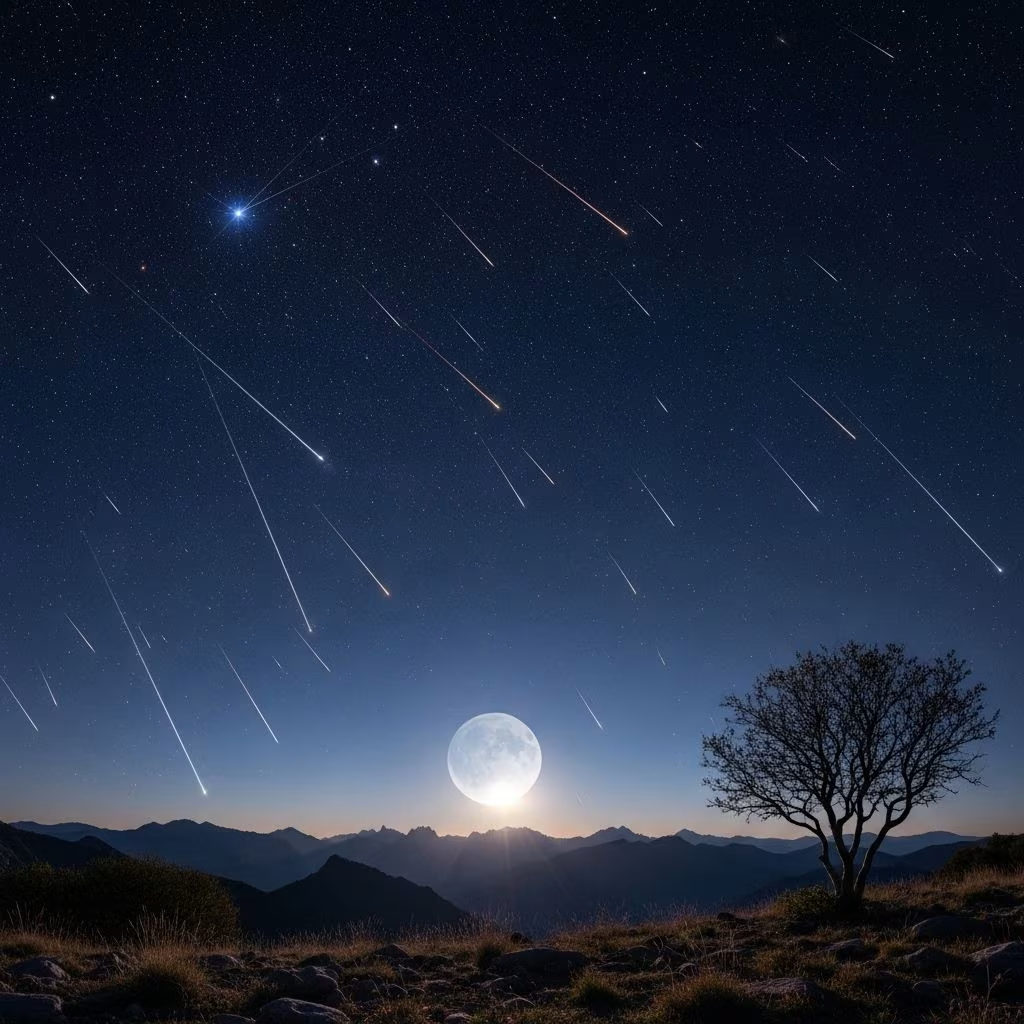
A meteor shower is a celestial event where multiple meteors—streaks of light caused by cosmic debris—enter Earth’s atmosphere at high speeds. These meteors generally seem to radiate from a specific point in the sky, called the “radiant,” resulting from parallel trajectories of meteoroids. The Geminids, one of the most established meteor showers, stand out for the exceptional number and brightness of visible meteors each year.
When to View the Geminid Meteor Shower in 2025
- Active Dates: December 4–20, 2025
- Peak Night: December 13–14, 2025 (Best viewing overnight into the morning of December 14)
- Expected Meteor Rate at Peak: Up to 120 meteors per hour under ideal conditions
- Moon Phase at Peak: Waning crescent, roughly 30% full, which rises near 2 a.m. (local standard time)
- Optimal Viewing Time: From 10 p.m., with greatest activity after midnight as Gemini constellation rises high in the sky
The radiant—the apparent point of origin of Geminid meteors—is located near the bright stars Castor and Pollux in the constellation Gemini. This means the shower is observable from most locations around the globe, including both hemispheres, though southern observers will see fewer meteors.
The Science and Origins of the Geminid Meteor Shower
The Geminids are unique among major meteor showers for their origin: most meteor showers come from comets, but the Geminids trace their lineage to the asteroid 3200 Phaethon. This asteroid occasionally passes very close to the Sun, heating its surface and shedding particles that become Geminid meteoroids.
3200 Phaethon’s nature remains debated. While it is built like an asteroid, its highly elongated (elliptical) orbit resembles that of a comet, leading some scientists to dub it a “rock comet”—a potential new class of celestial object.
Meteor Shower Facts
- The Geminids and the Quadrantids are the only major meteor showers whose parent bodies are asteroids, not comets.
- The Geminid shower was first recorded in 1862, making it a relatively recent discovery compared to classics like the Perseids and Leonids.
- Geminid meteors are often noted for their multi-colored appearance—bright white, yellow, green, red, and blue—created by traces of metals such as sodium and calcium that vaporize at high speeds.
- The meteors typically travel at a speed of about 33.8 km/sec (21 miles/sec), which is classified as medium velocity.
- The intensity of the Geminid shower appears to increase every year, making newer observations potentially richer.
How to Watch the Geminid Meteor Shower
Observing a meteor shower is fundamentally a patient, immersive astronomical experience. The Geminids offer particularly favorable conditions because many meteors are visible during the evening as well as after midnight, unlike most showers.
- Find a Dark Location: Seek a site far from urban light pollution for optimal meteor counts.
- No Equipment Needed: The Geminids are visible to the naked eye; telescopes or binoculars are not required.
- Let Eyes Adjust: Allow 30–40 minutes for your eyes to adjust to the dark for maximum sensitivity.
- Comfort: Bring a reclining chair or blanket and dress warmly—meteor-watching can be a cold, stationary activity.
- Best Direction: While the radiant is near Castor in Gemini, avoid staring directly at it. Instead, scan the dark sky areas to the side for more meteors.
- Timing: Start observing from 10 p.m.; the activity generally increases toward local midnight and into the early morning as Gemini moves overhead.
- Moon Strategy: The waning crescent moon in 2025 will rise at about 2 a.m. Observing before moonrise offers the darkest sky, but facing west after moonrise keeps the moon at your back, reducing glare.
Helpful Tips for Meteor Hunters
- Wrap up in layers of warm clothing and beverages—it can get very cold in December.
- Bring friends or family for a shared experience (but avoid flashlights and mobile screens).
- Check the local weather and cloud forecasts before heading out.
- Consider using a red flashlight to preserve night vision if necessary.
- Keep patience: meteors can come in bursts followed by quiet spells, so long observing periods pay off.
Characteristics of Geminid Meteors
What makes the Geminids so spectacular? Their distinctive blend of high brightness, slow motion, and colorful streaks. Here are notable features:
- Brightness: Geminid meteors are among the brightest of all annual showers.
- Color: Multi-colored meteors (mostly white, with some showing yellow, green, red, or blue) due to elemental compositions.
- Motion: Medium-slow velocity makes their streaks longer and easier to spot.
- Fireballs: Occasional fireballs—exceptionally bright meteors—are seen during the shower.
- Trains: Persistent trains (trails of light behind meteors) are rare for Geminids, differentiating them from some other showers.
| Parameter | Details |
|---|---|
| Date of Maximum | 14 December 2025 |
| Shower Active | 4–20 December 2025 |
| Expected Peak Rate (ZHR) | 120–150 meteors per hour |
| Radiant Location | Near Castor in Gemini (RA: 07:33, Dec: +32.4°) |
| Typical Velocity | 33.8 km/sec (21 miles/sec) |
| Parent Body | Asteroid 3200 Phaethon |
| Moon Phase at Peak | Waning Crescent (30% full) |
Historical Context and Unique Features
Unlike older major showers such as the Perseids or Leonids, the Geminids were first noticed only in 1862. Since then, their intensity and reliability have steadily increased, with modern observations showing richer displays than historical ones. Its parent asteroid, 3200 Phaethon, was discovered in the 1980s, leading to new scientific investigations into asteroid-driven meteor showers.
- 3200 Phaethon has an exceptionally eccentric orbit, sometimes categorized as both asteroid and comet-like—a true astronomical oddity.
- The Geminids are intensifying year after year, a phenomenon attributed to changing dynamics in Phaethon’s debris stream.
- Meteors originate from particles that can be as small as grains of sand.
Frequently Asked Questions (FAQs)
Q: Do I need special equipment to watch the Geminids?
A: No equipment is required. The Geminids are best observed with the naked eye. Binoculars or telescopes will restrict your field of view, making it harder to spot meteors.
Q: Where is the best place to watch the shower?
A: Any dark, open location away from city lights—such as rural fields or parks—will maximize your viewing experience. Facing east, where Gemini rises, is ideal before moonrise; westward after moonrise.
Q: Can I see Geminids in the Southern Hemisphere?
A: Yes, but at reduced rates compared to the Northern Hemisphere. The radiant is lower in the sky from southern latitudes, so fewer meteors are visible.
Q: What makes Geminid meteors multi-colored?
A: The colors are due to different chemicals vaporizing at high speeds in the atmosphere. For example, sodium yields yellow, iron gives green, and calcium creates blue or violet hues.
Q: How long does the peak last?
A: The peak lasts for several hours overnight, from roughly 10 p.m. to 4 a.m. local time, with maximum rates around midnight to 2 a.m. as Gemini is overhead.
Q: Are meteor showers dangerous?
A: No, meteors typically vaporize high in the atmosphere and rarely reach the ground. Observing meteors is completely safe.
Compare: Geminids vs. Other Major Meteor Showers
| Shower | Parent Body | Peak Rate/hr | Active Dates | Best Viewing Hemisphere |
|---|---|---|---|---|
| Geminids | Asteroid 3200 Phaethon | 120–150 | Dec 4–20 | Northern (best), Southern (lower rates) |
| Perseids | Comet Swift-Tuttle | 80–100 | Jul 17–Aug 24 | Northern |
| Leonids | Comet Tempel-Tuttle | 20–100+ (rare) | Nov 6–Nov 30 | Both |
| Quadrantids | Asteroid 2003 EH1 | 120 | Dec 28–Jan 12 | Northern |
Viewing Tips for Maximum Enjoyment
- Check moonrise and moonset times for your location to plan moon-free observation windows.
- Arrive early and allow your eyes to adjust to true darkness—avoid phone or flashlight use.
- Keep expectations realistic; light pollution and weather can reduce visible rates. Still, even a handful of meteors per hour can be breathtaking.
- Bring snacks, warm drinks, and extra layers.
- Record your observations and share photos, or join local astronomy clubs for guided viewing events.
The Geminid Meteor Shower: Why You Shouldn’t Miss It
The 2025 Geminid meteor shower promises a remarkable show for anyone willing to brave December’s cold for a glimpse of shooting stars. Whether you’re a seasoned astronomer or a casual skywatcher, the Geminids deliver dazzling colors, numerous bright meteors, and a touch of cosmic mystery. Mark December 13–14 on your calendar, prepare for a long, memorable night, and witness one of Earth’s greatest natural spectacles overhead.
References
- https://in-the-sky.org/news.php?id=20251214_10_100
- https://www.amsmeteors.org/meteor-showers/meteor-shower-calendar/
- https://science.nasa.gov/solar-system/meteors-meteorites/geminids/
- https://www.rmg.co.uk/stories/space-astronomy/geminid-meteor-shower-uk-dates-how-to-see
- https://www.imo.net/resources/calendar/
- https://www.farmersalmanac.com/geminid-meteor-shower
- https://www.amsmeteors.org/meteor-showers/2020-meteor-shower-list/
- https://www.nhm.ac.uk/discover/meteor-shower-lyrids-perseids-geminids-leonids-orionids.html
- https://in-the-sky.org/news.php?id=20251018_10_100
- https://www.timeanddate.com/astronomy/meteor-shower/list.html
- https://www.rmg.co.uk/stories/space-astronomy/meteor-shower-guide-2025
- https://www.highpointscientific.com/astronomy-hub/post/night-sky-news/meteor-showers-in-2025
- https://starwalk.space/en/news/geminid-meteor-shower
- http://www.seasky.org/astronomy/astronomy-calendar-2025.html
- https://hk.space.museum/en/web/spm/resources/special-astronomical-events/meteor-shower/geminid-meteor-shower.html
- https://www.photopills.com/articles/meteor-shower-photography-guide