Libra Constellation: Facts, History, and the Zodiac Scales
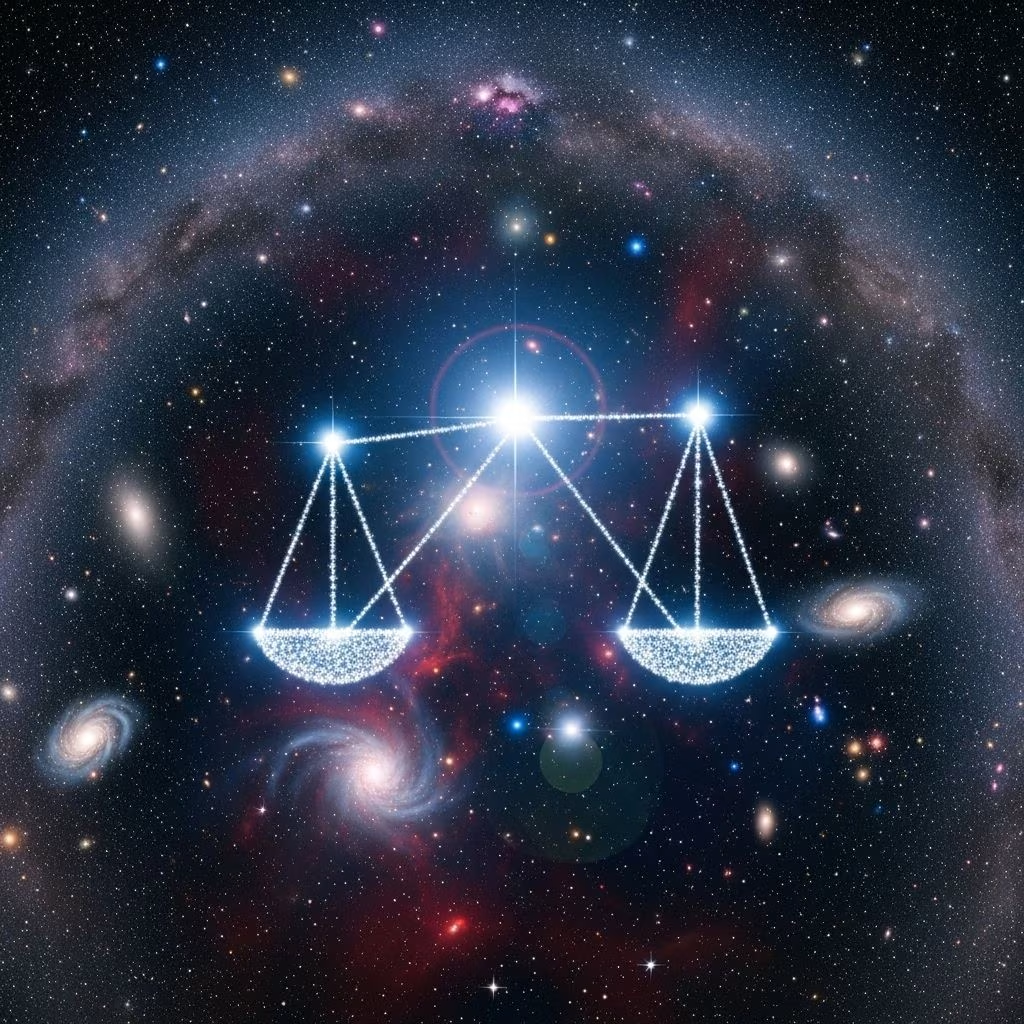
The constellation Libra, Latin for “the Scales,” is a prominent zodiac constellation known for symbolizing balance and justice. One of the twelve constellations of the zodiac, Libra holds a special place in both astronomical tradition and astrology, representing an enduring legacy of science, mythology, and star lore.
Key Facts About Libra
- Latin Name: Libra (meaning “Scales”)
- Zodiac Symbol: ♎ (the Scales or Balance)
- Area: 538 square degrees (29th largest constellation)
- Location: Southern Hemisphere, best viewed in June
- Brightest Star: Zubeneschamali (Beta Librae, magnitude 2.61)
- Famous for: Balance & Justice mythology, unique as the only inanimate zodiac sign
Where is Libra in the Sky?
Libra is situated in the southern sky, nestled between its zodiac neighbors Virgo to the west and Scorpius to the east. The constellation can be found at latitudes between +65° and -90°, making it visible from most parts of the world, but easiest to spot from the southern hemisphere.
| Neighboring Constellations | Direction Relative to Libra |
|---|---|
| Virgo | West |
| Scorpius | East |
| Serpens Caput | North |
| Ophiuchus | Northeast |
| Lupus | South |
| Centaurus | Southwest |
| Hydra | West |
The constellation achieves its highest point in the sky (known as culmination) around 9pm in the month of June. Libra’s stars form an identifiable quadrangle shape, though its stars are not the brightest in the night sky, making dark, clear skies essential for the best viewing experience.
Libra’s Place in Astronomy
Libra has been recognized since ancient times. It was officially catalogued by the Greek astronomer Ptolemy in the 2nd century CE. Today, the constellation is one of the 88 modern constellations defined by the International Astronomical Union (IAU). Its official abbreviation is Lib and its genitive (possessive) form is Librae, used in star names (for example, Beta Librae).
- Family: Zodiac
- Messier Objects: None
- Number of Main Stars: 4
- Total Bright Stars: 83 (brighter than magnitude 6.5)
- Number of Stars With Known Planets: 4
- Associated Meteor Shower: May Librids
The Brightest Stars in Libra
Though it contains no first-magnitude stars, Libra’s four main stars are distinctive and historically significant:
- Zubeneschamali (Beta Librae): The brightest star with magnitude 2.61, a blue-white star whose Arabic name means “the northern claw.” Some early observers noted its unusual greenish hue, a rarity among stars.
- Zubenelgenubi (Alpha Librae): A wide double star visible to the naked eye, magnitude 2.75, “southern claw” in Arabic.
- Zubenelhakrabi (Gamma Librae): Name means “the scorpion’s claw,” marks one of the scale’s pans.
- Brachium (Sigma Librae): Formerly known as Gamma Scorpii, a red giant, it was once considered part of Scorpius.
These stars together form a distinctive quadrangle. The naming of Libra’s stars reveals its historical connection with Scorpius, as several names refer to “claws.” In antiquity, Libra was sometimes viewed as Scorpius’s extended claws rather than a separate constellation.
Other Notable Stars in Libra
- HD 140283 (Methuselah Star): Among the oldest stars known, estimated at over 14 billion years old—possibly older than the universe itself as calculated by certain models, which has challenged astronomers and astrophysicists.
- HE 1523-0901: A red giant star, considered even older than Methuselah.
Origin, History, and Mythology of Libra
Libra stands out as the only inanimate object among the zodiac constellations—the rest represent animals or mythological figures. The constellation’s symbolism dates back thousands of years:
- In Babylonian astronomy, stars now forming Libra were considered the claws of the celestial Scorpion (Scorpius).
- The Romans established Libra as the Scales, representing justice, balance, and fair measurement—core values in Roman legal tradition.
- Libra was associated with Astraea or Dike, the goddess of justice, often depicted holding the scales in art, notably adjacent to the constellation Virgo.
- Libra’s role as the Scales has also been mentioned by poets like Ovid in “Metamorphoses,” reflecting its mythic importance in Western culture.
Science Behind the Scales: Deep Sky Objects and Features
Libra is not home to any Messier objects, but it does host a small selection of interesting deep-sky features, including:
- NGC 5897: A loosely concentrated globular cluster located about 40,000 light-years away, visible through amateur telescopes.
- NGC 5882: A faint planetary nebula, best seen at high magnification in large amateur telescopes.
Libra is not particularly rich in deep sky objects compared to some of its neighbors, but it is of considerable interest to astronomers researching old stars and exoplanet host stars.
Libra and the Zodiac: Astrology and Symbolism
Libra’s identity as a zodiac sign is as important as its astronomical presence. In astrology:
- Astrological Dates: September 23 – October 22
- Element: Air
- Symbolism: Balance, harmony, fairness, and justice
- Ruling Planet: Venus
People born under Libra are said to possess qualities like diplomacy, sociability, and a desire for harmony. The scales motif is a powerful metaphor for weighing decisions and moral judgment, reinforcing the constellation’s ancient associations.
When and How to Observe Libra
Peak Visibility: June (evenings)
- Visible at latitudes between +65° and -90°.
- Appears above the horizon during late spring and early summer in the northern hemisphere.
- Dark skies are crucial for observing Libra’s stars, as none are exceptionally bright.
- Use the neighboring constellations—look just east of Virgo and west of Scorpius—for easier identification.
Libra Constellation in Art and Culture
Libra’s symbolism permeates Western art, literature, and iconography. The scales appear in depictions of justice, legal emblems, and astrological charts. Its association with balance and fairness helped cement the constellation’s role as a cultural touchstone for ethical ideals and impartiality.
Quick Facts Table
| Attribute | Details |
|---|---|
| Symbol | ♎ (Scales) |
| Best Viewing Month | June |
| Location | Southern Hemisphere, visible worldwide |
| Area Rank | 29th largest |
| Brightest Star | Zubeneschamali (Beta Librae) |
| Messier Objects | None |
| Notable Features | Old stars (e.g., Methuselah Star), deep sky objects |
| Neighboring Constellations | Virgo, Scorpius, Ophiuchus, Lupus, Centaurus, Hydra, Serpens Caput |
Frequently Asked Questions (FAQs)
Q: Why is Libra called the Scales?
A: Libra’s name comes from the Latin word for “scales,” symbolizing balance and justice. It is the only zodiac constellation named after an object instead of an animal or mythological being.
Q: What is the brightest star in Libra?
A: The brightest star is Zubeneschamali (Beta Librae), with an apparent magnitude of 2.61. It is known for its subtle greenish tint, making it especially interesting among stellar observers.
Q: Was Libra always considered a separate constellation?
A: In ancient Babylonian and Greek times, the stars of Libra were sometimes considered the claws of Scorpius. It later became recognized as a separate constellation representing scales and balance, particularly under Roman influence.
Q: Are there any meteor showers associated with Libra?
A: Yes, the May Librids meteor shower is linked to the constellation, though it is relatively minor and not as famous as other showers.
Q: Do any of Libra’s stars have planets?
A: Yes, at least four stars in Libra have confirmed exoplanets, making it an interesting target for astronomers seeking to find habitable worlds.
Libra in Context: Interesting Trivia
- Libra is sometimes depicted as being held by Astraea, the Greek goddess of justice, whose own constellation is Virgo.
- The constellation has a unique status as the only zodiac sign not symbolized by a living creature.
- The International Astronomical Union (IAU) set Libra’s official boundaries in the 20th century, standardizing star maps worldwide.
- Several stars in Libra have names referencing “claws” due to their former association with Scorpius, highlighting the constellation’s shifting identity through history.
Conclusion: The Celestial Scales Endure
Libra continues to captivate stargazers with its balance of myth, history, and subtle beauty. Although faint compared to neighboring constellations, Libra’s legacy as a symbol of justice and equilibrium in both the astronomical and astrological realms endures. For observers around the world, the Scales serve as a timeless reminder of the universe’s quest for harmony and order.
References
- https://www.space.com/21597-libra-constellation.html
- https://en.wikipedia.org/wiki/Libra_(constellation)
- https://www.constellation-guide.com/constellation-list/libra-constellation/
- https://theplanets.org/constellations/libra-constellation/
- https://www.britannica.com/place/Libra-constellation
- https://theskylive.com/sky/constellations/libra-constellation
- https://www.go-astronomy.com/constellations.php?Name=Libra
- https://en.wikipedia.org/wiki/Libra_constellation
- https://star-name-registry.com/constellations/libra
- https://www.space.com/26088-libra-constellation-scales-origins.html
- https://www.astronomytrek.com/constellations/libra/
- https://www.centreofexcellence.com/libra-constellation/
- https://www.planetguide.net/libra-constellation/
- https://www.horoscope.com/article/6-libra-constellation-facts/
- https://starify.org/libra-constellation/
- https://astro4edu.org/resources/diagram/9P17by35Gr8/
- https://ameliasamazingspaceadventures.com/category/libra/
- https://arabiannightsrum.com/stars/summer-constellations/libra/
- https://interstellarium.com/en/constellations/libra/