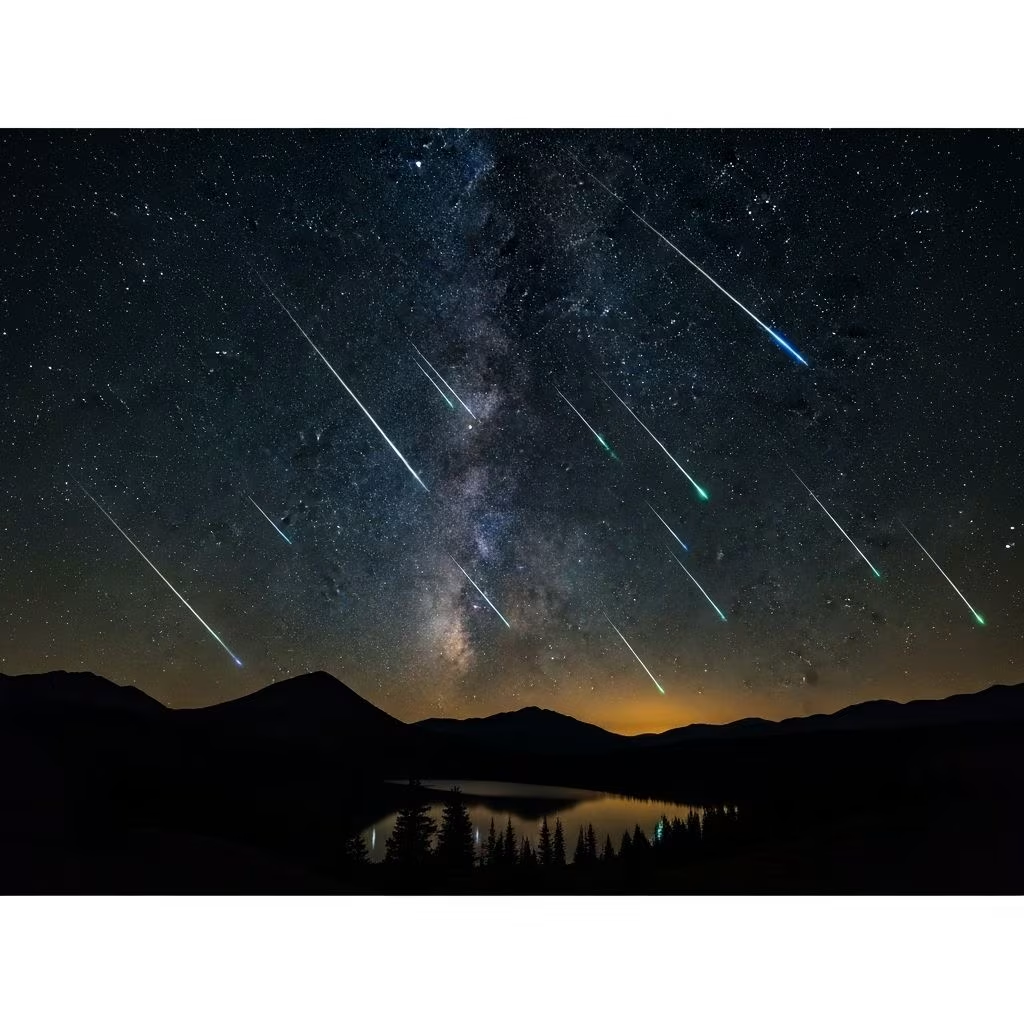
The Perseid meteor shower is one of the most dazzling and anticipated celestial events of the year. In 2025, the Perseids will once again light up night skies, promising a cosmic show for both seasoned astronomers and casual stargazers alike. This comprehensive guide covers everything you need to know—from peak times and visibility challenges to the science and history behind the shower, and expert tips for the best viewing experience.
What Is the Perseid Meteor Shower?
The Perseid meteor shower is an annual astronomical event, occurring every July and August as Earth passes through a cloud of debris left by the comet 109P/Swift-Tuttle. When Earth intersects this stream, tiny fragments burn up in our atmosphere, producing flashes of light known as meteors—or more colloquially, shooting stars.
Named after the constellation Perseus, from which the meteors appear to radiate, the Perseids are renowned for their high rates and propensity for producing brilliant fireballs, making them a highlight of the northern hemisphere’s summer night sky.
The Science Behind the Show
- Cometary Origin: The debris that creates the Perseids originates from the comet 109P/Swift-Tuttle, first observed in the 19th century.
- Meteor Entry: As fragments enter Earth’s atmosphere at speeds averaging 36 miles (58 km) per second, they compress the air ahead, heating both air and debris, often creating bright, long-lasting trails or fireballs.
- Annual Return: Earth’s orbit intersects with this debris stream every year, ensuring the predictability of the Perseid shower.
When Does the Perseid Meteor Shower Occur in 2025?
The Perseid meteor shower will be active from July 17 to August 24, 2025, with peak activity expected on the night of August 12 through the predawn hours of August 13. During the peak, and under ideal dark sky conditions, observers might usually see up to 100 meteors per hour. However, this year’s shower coincides with a bright, 86%-lit waning gibbous moon, which will reduce the overall visibility of fainter meteors.
| Meteor Shower | Peak Date | Active Period | Typical Rate (per hour) | Notes |
|---|---|---|---|---|
| Perseids | August 12-13 | July 17 – August 24 | Up to 100 (ideal); ~15 (2025 expected) | Best before moonrise, bright fireballs possible |
Predicted Meteor Rates for 2025
- Normal Peak Rate: Up to 100 meteors per hour in darkness without moonlight.
- 2025 Expected Peak: Around 15 meteors per hour due to the bright gibbous moon overshadowing dim meteors .
- Peak Viewing Time: Night of August 12, with best opportunities just after 10 p.m. local time and especially in the pre-dawn hours of August 13 .
Why the Moon Matters for Meteor Viewing
This year, the moon is a significant factor. The 2025 Perseid peak coincides with an 86% illuminated waning gibbous moon, which will be above the horizon during key viewing hours. Moonlight washes out much of the night sky, making only the brightest meteors visible. As a consequence, only the most spectacular fireballs and persistent trains are likely to be seen in most locations.
- Dimmer meteors are more numerous but will be lost in the glare.
- Best rates are likely early in the night before the moon rises or after it sets, depending on your local time.
- For most locations, expect peak viewing for about an hour after darkness sets in, before moonrise begins to interfere.
How to See the Perseid Meteor Shower: Top Tips for 2025
Despite the challenging moonlight, the Perseids remain well worth observing. With a little planning, you can maximize your chances of witnessing this stunning event.
- Choose a Dark Sky Location: Get as far away from city lights as possible. Rural areas, parks, and protected dark sky reserves are ideal.
- Time Your Viewing: Aim for the hours immediately after nightfall and before the moon rises, or after the moon has set close to dawn.
- Let Your Eyes Adjust: It takes about 15–30 minutes for your eyes to fully adapt to darkness. Avoid looking at phones or bright screens during this period.
- Get Comfortable: Bring a reclining chair or a blanket, dress in layers, and pack snacks or warm drinks. Lying flat gives you the widest view of the sky.
- Look Up, Not Just at Perseus: While Perseids radiate from the Perseus constellation, meteors can appear anywhere in the sky.
- No Equipment Needed: Binoculars and telescopes are unnecessary and may even hinder your view, as meteors cover large regions of the sky.
- Check the Weather: Clear skies are essential. Check local forecasts and be willing to relocate if necessary for optimal conditions.
Quick Viewing Checklist
- Find a dark, unobstructed area with a wide view of the sky.
- Arrive early to get set up and allow eyes to adjust.
- Lie back, look up, and stay patient—meteors often come in bursts.
- Bring a red flashlight if you need light, as it preserves night vision.
- Pack insect repellent if viewing in summer fields or woods.
The Fireballs and “Earthgrazers” of the Perseids
The Perseids are especially known for producing fireballs: extremely bright meteors that can outshine Venus, leaving behind glowing trails that linger in the night sky. Another treat unique to meteor showers like the Perseids are so-called earthgrazers—meteors that skim the upper atmosphere at shallow angles, producing long, slow, and colorful trails near the horizon.
- Fireballs are much brighter and more visible—even against moonlight.
- Earthgrazers are more likely to be seen just after local dusk, when the radiant is low in the sky.
- Both add dramatic flair to the Perseid display, making even low-activity years visually rewarding.
The Origin and Legacy of the Perseid Meteor Shower
Scientific connections between meteor showers and comets were first made in the 19th century. In 1862, Lewis Swift and Horace Tuttle discovered the comet now named 109P/Swift-Tuttle, whose orbit was shown by Giovanni Schiaparelli to match the stream producing the Perseids. Every 133 years, the comet returns to the inner solar system—a reminder that the meteors we watch each summer are fragments from ancient cosmic encounters.
- The Perseids’ parent comet last passed by Earth in 1992.
- The radiant—the point in the sky from which the meteors appear to come—lies in the constellation Perseus, best seen in the northeastern sky from mid-northern latitudes.
Perseids vs Other Meteor Showers
| Meteor Shower | Typical Peak Rate (per hour) | Parent Body | Radiant | Best Observed |
|---|---|---|---|---|
| Perseids | 80–100 | Comet Swift-Tuttle | Perseus | August |
| Geminids | 100–120 | 3200 Phaethon (asteroid) | Gemini | December |
| Quadrantids | 60–120 | 2003 EH1 (asteroid) | Böotes | January |
Frequently Asked Questions (FAQs)
When is the best time to see the Perseid meteor shower in 2025?
The shower peaks the night of August 12-13, with the best viewing opportunities in the predawn hours when the radiant is highest in the sky and more meteors are visible.
Will the moon affect meteor viewing this year?
Yes, the gibbous moon (around 86% illumination) will make fainter meteors harder to see. The best chances are before moonrise or in the hours before dawn as the sky darkens again.
Where should I look to spot Perseids?
While Perseids appear to radiate from Perseus, meteors streak across the entire sky. Lie down and take in as much of the sky as possible for the best results.
Do I need a telescope or special equipment?
No. The Perseids are best seen with the unaided eye. Telescopes and binoculars maintain too narrow a field of view for effective meteor watching.
Can I see the Perseids from the Southern Hemisphere?
The Perseids are most prominent from the Northern Hemisphere, though observers closer to the equator may still spot a few meteors.
Expert Tips for Meteor Watching Success
- Arrive Early: Allow at least 30 minutes for your eyes to adapt to the dark for best results.
- Use Red Flashlights: Red preserves your night vision and doesn’t spoil the darkness after you’ve adjusted.
- Avoid Phones: Blue light from screens disrupts night vision and can make dim meteors harder to see.
- Pack Smart: Bring a blanket, warm clothing, a reclining chair, snacks, insect repellent (for summer evenings), and water.
- Be Patient: Meteor showers come in bursts; periods of inactivity may be followed by sudden flurries of meteors.
Interesting Perseid Facts
- The Perseids produce some of the fastest and brightest meteors of all annual showers.
- Fireballs are more common in the Perseids than in many other showers.
- The Perseids have been observed for over two millennia; early Chinese records date back to around 36 AD.
- Many Perseid meteors leave persistent trains that can last for several seconds.
Conclusion: Why the Perseids Captivate Stargazers Year After Year
Despite 2025’s challenging moonlight conditions, the Perseid meteor shower remains a must-see astronomical event. Its rich history, celestial origins, and reliable annual display ensure it continues to captivate those who make the effort to observe. Follow expert tips, plan for dark, clear skies, and you may still be rewarded with bright fireballs streaking across the summer night—an awe-inspiring reminder of our planet’s ongoing journey through the dusty remains of an ancient comet.
References
- https://www.amsmeteors.org/meteor-showers/meteor-shower-calendar/
- https://www.space.com/stargazing/meteor-showers/dont-miss-perseid-meteor-shower-2025-peak-aug-12-13-heres-what-you-need-to-know
- https://www.rmg.co.uk/stories/space-astronomy/perseid-meteor-shower-guide-uk-when-where-to-see
- https://www.planetary.org/articles/your-guide-meteor-shower
- https://in-the-sky.org/news.php?id=20250812_10_100
- https://www.space.com/stargazing/meteor-showers/the-perseid-meteor-shower-2025-peaks-aug-12-13-heres-what-to-expect-from-the-dazzling-cosmic-light-show
- https://abcnews.go.com/US/watch-perseid-meteor-shower-peak-tuesday/story?id=124580723
- https://www.usatoday.com/story/news/nation/2025/08/10/perseid-meteor-shower-2025/85577274007/
- https://www.amsmeteors.org/2025/08/viewing-the-perseids-in-2025/
- https://www.youtube.com/watch?v=gxxRY2FsKno
- https://www.timeanddate.com/astronomy/meteor-shower/perseid.html
- https://starwalk.space/en/news/all-you-need-to-know-about-the-perseids
- https://www.nhm.ac.uk/discover/meteor-shower-lyrids-perseids-geminids-leonids-orionids.html
- https://www.livescience.com/space/meteoroids/perseid-meteor-shower-2025-how-to-see-shooting-stars-despite-the-full-moon
- https://www.nasa.gov/blogs/watch-the-skies/2025/08/08/bright-moonlight-could-interfere-with-view-of-perseids-peak/
- https://www.nasa.gov/image-article/perseids-meteor-shower/