


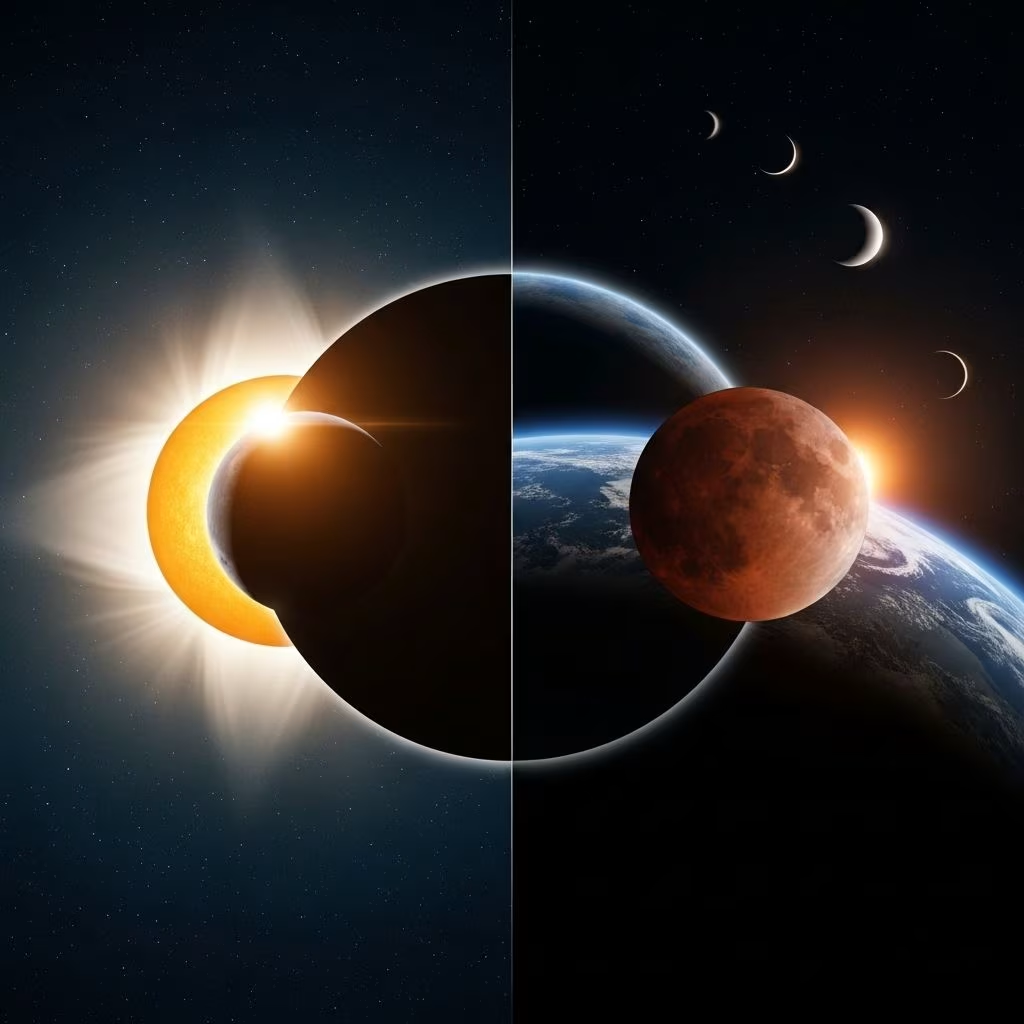
Eclipses have fascinated humanity across civilizations, sparking myth, science, and awe. Solar and lunar eclipses are the two most prominent types of eclipses visible from Earth, resulting from precise alignments among the sun, moon, and our planet. While the terms are often confused, these events are distinct—both in how they occur and how we experience them. This guide delves into the causes, differences, visual effects, and safe viewing practices for both solar and lunar eclipses.
What Is an Eclipse?
An eclipse occurs when one celestial body moves into the shadow of another due to their alignment. In the Earth sun moon system, a solar or lunar eclipse takes place when all three bodies form a straight line, causing the sun’s light to be blocked or obscured from direct view either partially or wholly.
What Is a Solar Eclipse?
A solar eclipse happens when the moon passes directly between the Earth and the sun, casting a shadow on Earth’s surface and blocking sunlight in some regions. This phenomenon only occurs during a new moon phase, and is visible from specific locations on Earth depending on the alignment.
Types of Solar Eclipses
- Total Solar Eclipse: The moon completely covers the sun, turning day briefly into night and revealing the sun’s corona a pearly-white outer atmosphere that is usually hidden by the sun s bright face.
- Partial Solar Eclipse: The moon covers a portion of the sun, resulting in a crescent shape and causing a noticeable but not complete dimming of daylight.
- Annular Solar Eclipse: The moon appears slightly smaller than the sun and does not cover it entirely, creating a fiery ring of fire or annulus around the moon s silhouette.
How Solar Eclipses Occur
Solar eclipses occur when the moon s shadow falls on Earth. Because the moon’s orbit is tilted about 5 degrees relative to Earth’s orbit around the sun, solar eclipses are only possible when the new moon crosses the ecliptic the apparent path of the sun at points called nodes. Despite new moons occurring monthly, eclipses are more rare because perfect alignment is required.
Visibility of Solar Eclipses
Solar eclipses are visible only from the narrow path traced by the moon’s shadow (the path of totality for a total eclipse). This can be just 100 200 km wide, so only observers in specific regions at the right time experience the full effect. For others, only a partial eclipse may be visible or none at all.
Duration of Solar Eclipses
The total phase of a solar eclipse rarely lasts more than 7 minutes in a given location, often much less. The entire event partial phases included spans a few hours, but the dramatic totality is fleeting.
Safety Precautions When Viewing Solar Eclipses
- Never look directly at the sun during any phase of a solar eclipse without proper eye protection: it can cause permanent eye damage or blindness.
- Use only approved solar filters or eclipse glasses that meet the ISO 12312-2 international safety standard.
- Alternative safe viewing methods include a pinhole projector or solar viewing projectors.
What Is a Lunar Eclipse?
A lunar eclipse occurs when the Earth passes directly between the sun and the moon, casting Earth’s shadow onto the lunar surface. Only occurring during the full moon phase, the event is dramatically visible to anyone on Earth’s night side as the moon darkens or takes on a copper-red hue.
Types of Lunar Eclipses
- Total Lunar Eclipse: The entire moon moves through Earth’s darkest shadow (the umbra), often adopting a vivid red or copper color due to Earth’s atmosphere filtering sunlight and casting it onto the moon.
- Partial Lunar Eclipse: Only part of the moon enters Earth’s umbra, resulting in a noticeable ‘bite’ taken out of the lunar face, which appears sharply shadowed.
- Penumbral Lunar Eclipse: The moon passes through Earth’s faint outer shadow (the penumbra), causing subtle dimming that can be hard to notice without close observation.
How Lunar Eclipses Occur
Because the moon’s orbit is tilted, lunar eclipses do not occur every full moon. Alignment must be precise: Earth s shadow must be cast onto the moon when the sun, Earth, and moon form a near-perfect line. Lunar eclipses are more common and last much longer than solar eclipses.
Visibility of Lunar Eclipses
Unlike solar eclipses, lunar eclipses are visible from anywhere on Earth s night side. The wide coverage means that billions can witness a lunar eclipse simultaneously when the sky is clear.
Duration of Lunar Eclipses
The total eclipse phase can last up to nearly two hours, with the whole event including partial and penumbral phases spanning several hours.
Safety Precautions When Viewing Lunar Eclipses
- Lunar eclipses are safe to view with the naked eye


