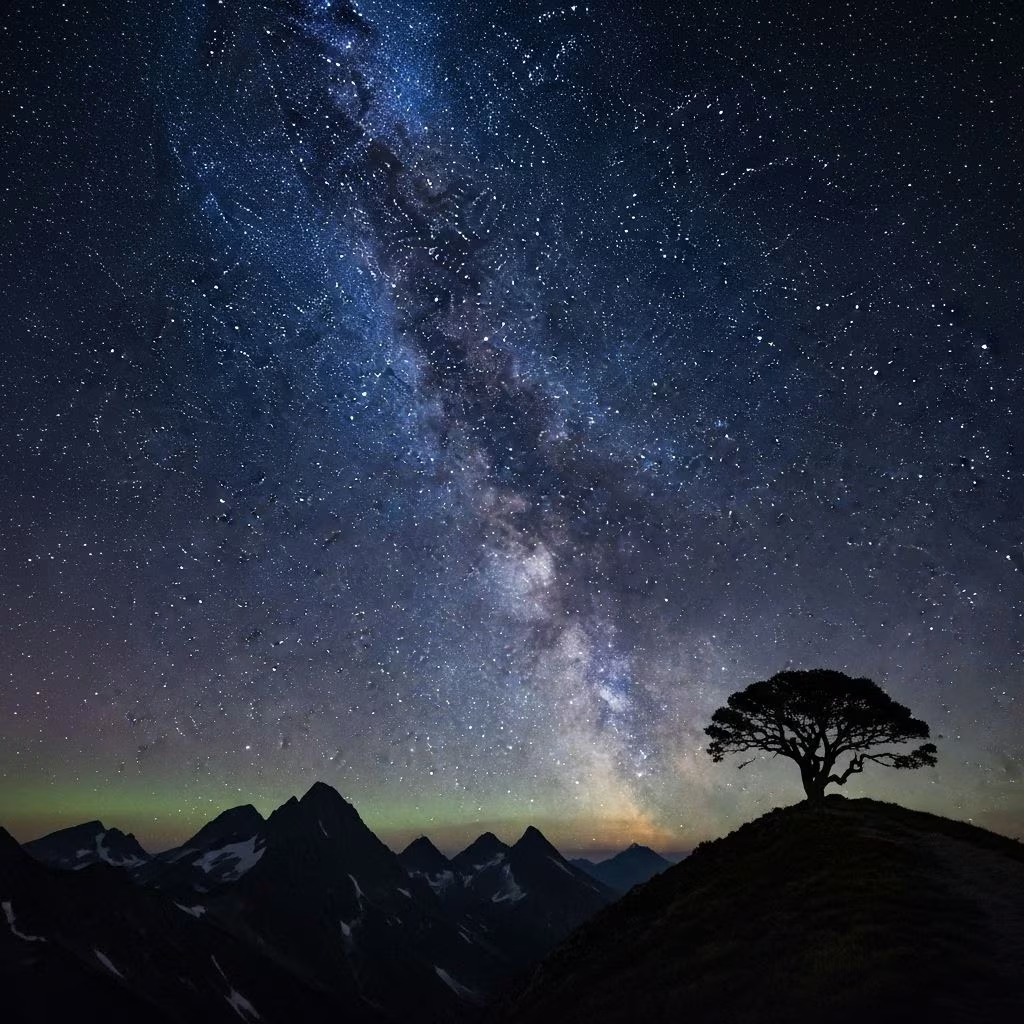
The night sky is adorned with countless stars, but a select few stand out due to their remarkable brightness and cosmic significance. Visible to the naked eye from almost anywhere on Earth, these luminous points have inspired wonder and scientific inquiry for millennia. This article explores the brightest stars as seen from our planet, delving into their properties, locations, and what makes them shine so brilliantly against the canvas of night.
What Makes a Star ‘Bright’?
When astronomers refer to a star’s brightness, they’re usually talking about its apparent magnitude—a measure of how bright the star appears from Earth. The lower (or more negative) the magnitude, the brighter the star is to our eyes. This brightness depends on a combination of factors:
- Intrinsic luminosity: The actual energy output of the star, or how much light it produces.
- Distance: How far the star is from Earth. Some distant stars outshine nearer, dimmer ones due to their incredible luminosity.
- Obscuration: Interstellar dust or gas can dim a star’s apparent brightness, though the brightest stars are typically less affected.
- Binary and multiple star systems: Many of the brightest stars are actually systems with two or more stellar components whose light combines to create the brightness we see.
The 25 Brightest Stars in the Night Sky
The following table highlights the 25 brightest stars visible from Earth (excluding the Sun), their magnitudes, and the constellations they call home:
| Rank | Name | Apparent Magnitude | Constellation |
|---|---|---|---|
| 1 | Sirius | -1.46 | Canis Major |
| 2 | Canopus | -0.74 | Carina |
| 3 | Alpha Centauri | -0.27 | Centaurus |
| 4 | Arcturus | -0.05 | Boötes |
| 5 | Vega | 0.03 | Lyra |
| 6 | Capella | 0.08 | Auriga |
| 7 | Rigel | 0.13 | Orion |
| 8 | Procyon | 0.37 | Canis Minor |
| 9 | Betelgeuse | 0.42 | Orion |
| 10 | Achernar | 0.46 | Eridanus |
| 11 | Hadar | 0.58 | Centaurus |
| 12 | Altair | 0.76 | Aquila |
| 13 | Acrux | 0.77 | Crux |
| 14 | Aldebaran | 0.86 | Taurus |
| 15 | Antares | 0.91 | Scorpius |
| 16 | Spica | 0.97 | Virgo |
| 17 | Pollux | 1.14 | Gemini |
| 18 | Fomalhaut | 1.16 | Piscis Austrinus |
| 19 | Deneb | 1.25 | Cygnus |
| 20 | Mimosa | 1.25 | Crux |
| 21 | Regulus | 1.40 | Leo |
| 22 | Adhara | 1.50 | Canis Major |
| 23 | Castor | 1.58 | Gemini |
| 24 | Shaula | 1.63 | Scorpius |
| 25 | Gacrux | 1.64 | Crux |
Spotlight on the Top Brightest Stars
Let’s take a closer look at the most radiant stars individually, learning about the origins of their brilliance and their roles both astronomically and culturally.
1. Sirius: The Dog Star
Sirius is the brightest star in the night sky, with an apparent magnitude of -1.46. Located about 8.6 light-years away in the constellation Canis Major, Sirius is often called the Dog Star and is actually a binary star system, consisting of a main-sequence star (Sirius A) and a faint white dwarf companion (Sirius B). The close proximity to Earth, combined with its intrinsic luminosity, makes Sirius shine brilliantly overhead, especially during winter nights in the Northern Hemisphere.
- Other names: Dog Star, Alpha Canis Majoris
- Distance from Earth: 8.6 light-years
- Key feature: Closest bright star system to Earth, binary nature
2. Canopus: The Southern Guide
Canopus, with a magnitude of -0.74, ranks as the second-brightest star. Found in the constellation Carina, it’s visible primarily from the Southern Hemisphere and has been an important navigation point for centuries. Canopus is luminous, shining thousands of times more brightly than the Sun.
- Constellation: Carina
- Distance: approx. 310 light-years
- Type: Supergiant
3. Alpha Centauri: The Sun’s Neighbor
The Alpha Centauri system is the third-brightest, visible at magnitude -0.27. This triple-star system consists of Alpha Centauri A, Alpha Centauri B, and Proxima Centauri—the latter being the closest known star to the Sun. For many in the Southern Hemisphere, Alpha Centauri is a familiar, ever-present beacon.
- Constellation: Centaurus
- Distance: 4.37 light-years
- Significance: Closest stellar system to the Sun
4. Arcturus: The Orange Giant
Arcturus glows at magnitude -0.05 in the constellation Boötes. It’s notable for its orangish hue—a K-type giant—and is about 37 light-years away. Arcturus is one of the brightest, fastest-moving stars in our neighborhood, often associated with spring evenings in the Northern Hemisphere.
5. Vega: The Summer Star
Vega, magnitude 0.03, is the brightest star in Lyra. Only 25 light-years from Earth, its brilliance and pivotal position in the Summer Triangle asterism make it a favorite for amateur astronomers. Vega has also played a significant historical role as a former northern pole star and is one of the most-studied stars after the Sun.
Other Major Bright Stars
- Capella (Auriga): A multi-star system, bright, yellow-white color, easy to spot in northern winters.
- Rigel (Orion): A blue supergiant, often marks Orion’s left foot, among the most powerful stars visible to the naked eye.
- Procyon (Canis Minor): Bright, binary star, often forms the Winter Triangle with Sirius and Betelgeuse.
- Betelgeuse (Orion): Notable red supergiant, known for its variable brightness and potential for a future supernova.
- Achernar (Eridanus): Extremely oblate and fast-rotating, largely visible from Southern latitudes.
Why Do Some Stars Appear So Bright?
The most luminous stars in our night sky are not always the largest or closest; their apparent dominance results from a combination of factors:
- Intrinsic luminosity: Some are true giants or supergiants, burning fuel at a prodigious rate and pouring out intense energy.
- Proximity: Others, like Sirius and Procyon, shine bright due to their nearness to Earth.
- Multiple star systems: Many bright spots are actually combinations of two or more stars whose light merges, enhancing visible brightness.
- Lack of obscuring dust: Stars in clearer regions of space or out of the galactic plane appear brighter without interference.
Brightest Stars and Their Constellations
These celestial jewels are guiding lights not just for modern astronomy but also for ancient navigators and storytellers who wove the stars into legends and lore. Some key associations:
- Sirius: Canis Major; symbols of loyalty, dogs in mythology
- Alpha Centauri & Hadar: Centaurus; prominent in Southern Hemisphere legend
- Arcturus: Boötes; harbinger of spring
- Vega, Altair, Deneb: The Summer Triangle; critical to summer sky navigation
- Betelgeuse, Rigel: Orion; one of the most recognizable star patterns on Earth
- Antares: Scorpius; known as the “rival of Mars” due to its reddish color
Star Facts and Trivia
- The North Star (Polaris) is not the brightest star, despite its fame as a navigation aid. It comes in at magnitude +1.98, outside the top 25.
- Supergiant status: Betelgeuse and Rigel are among the physically largest and most luminous stars.
- Variable brightness: Betelgeuse periodically dims and brightens, rattling astronomers’ predictions.
- Binary and even triple systems: Several luminous stars are actually double or triple stars, their combined light producing the observed brightness.
- Seasonal visibility: Many of these bright stars dominate their respective seasons, guiding both ancient and modern observers.
- Deneb, despite being one of the most distant, still appears extremely bright due to its high intrinsic luminosity.
Frequently Asked Questions: The Brightest Stars
Q: What is the brightest star in the night sky?
A: Sirius, located in Canis Major, is the brightest star visible from Earth (excluding the Sun), shining at magnitude -1.46.
Q: Is the North Star (Polaris) the brightest?
A: No, Polaris is not the brightest star. While it is essential for navigation as the current northern pole star, it is only the 49th brightest in the sky.
Q: Why does Betelgeuse sometimes dim?
A: Betelgeuse is a variable star, meaning its brightness changes over time. These fluctuations are due to complex processes in its outer layers and immense size—astronomers monitor it for clues about late stellar evolution.
Q: Can I see these stars from anywhere on Earth?
A: Most bright stars are visible from many parts of the globe, though some (like Canopus or Acrux) are restricted to southern latitudes.
Q: What role did these stars play for ancient civilizations?
A: Many of these stars served as navigational aids, timekeepers, agricultural markers, and mythological icons for ancient societies.
Tips for Stargazing: How to Spot the Brightest Stars
If you’re eager to locate these stellar celebrities, follow these practical tips:
- Use sky maps or stargazing apps to identify the positions of constellations and their brightest stars—many popular apps can augment reality and guide your gaze.
- Choose a clear, dark night, away from city lights, for optimal viewing. However, many of these stars are visible even with moderate light pollution.
- Look for asterisms—like Orion’s Belt or the Summer Triangle—to orient yourself before seeking individual stars.
- If you’re in the Southern Hemisphere, don’t miss Canopus, Alpha Centauri, and Acrux!
- During winter, focus on Orion, with Rigel and Betelgeuse marking key points.
- Remember that some stars, such as Deneb or Fomalhaut, are seasonal and best viewed at certain times of year.
The Enduring Allure of the Brightest Stars
The brightest stars are not just marvels of nature but guideposts that have shaped humanity’s understanding of the cosmos. Whether you’re an avid astronomer or a casual skywatcher, these celestial gems offer both beauty and insight every clear night. As you look up, remember that each bright star is a distant sun, a living furnace shaping its surroundings, and, quite possibly, a beacon for civilizations yet undiscovered.
References
- https://en.wikipedia.org/wiki/List_of_brightest_stars
- https://en.wikipedia.org/wiki/Sirius
- https://www.space.com/star-personalities
- https://www.britannica.com/science/list-of-brightest-stars-2231574
- https://www.space.com/5104-spot-brightest-star-sky.html
- https://starwalk.space/en/news/top-7-brightest-stars-in-the-sky
- https://www.jagranjosh.com/general-knowledge/brightest-stars-in-the-sky-1726954017-1
- https://web.pa.msu.edu/people/horvatin/Astronomy_Facts/brightest_stars.html
- https://www.youtube.com/watch?v=PU5CgWsAPqM
- http://stars.astro.illinois.edu/sow/bright.html
- https://stellardiscovery.com/brightest-stars-in-the-sky/
- https://astropixels.com/stars/brightstars.html
- https://www.skyatnightmagazine.com/advice/brightest-star-in-night-sky
- https://www.star-registration.com/en-eu/blogs/stars/the-30-brightest-stars
- https://sky-tonight.com/stars/20-brightest-stars
- http://blog.simulationcurriculum.com/articles/2015/5/15/the-ten-brightest-stars-in-the-sky
- https://lovethenightsky.com/brightest-stars/