50 Most Historic Hotels in America
From opulent grand resorts to quirky roadside motels, America’s historic hotels stand as monuments to unique chapters of our nation’s past. Each location charms visitors with original architecture, famous guests, and stories that shaped their communities. Whether you seek elegant gardens, presidential lore, or spaces that once set the stage for American innovation and culture, these hotels deliver history as their most luxurious amenity. Embark on an inspiring journey through 50 of the most storied hotels in the United States, each promising an unforgettable experience.
Introduction to America’s Historic Hotels
America’s historic hotels offer more than a place to rest—they invite guests to step into another era. From Gilded Age glamour to Revolutionary sites, these properties are woven into the fabric of their local and national stories. Whether set in bustling cities, quiet villages, or scenic parks, each one preserves architectural details and traditions handed down through generations.
Many properties are recognized by Historic Hotels of America®, a program of the National Trust for Historic Preservation, which requires that member hotels:
- Be at least 50 years old
- Hold significant historic value
- Be listed, or eligible for listing, on the National Register of Historic Places, or designated a National Historic Landmark
- Preserve their original character and architecture
Historic Hotel Profiles by Region & State
This curated list travels region by region, showcasing notable hotels in each state. Dive into the stories, guests, and distinctive details that make these establishments a destination in themselves.
Alabama
- The Battle House (Mobile, Est. 1852): Famed for hosting Stephen Douglas in 1860, this Southern grand dame features antebellum elegance and a history intertwined with Mobile’s storied past.
Alaska
- Anchorage Hotel (Anchorage, Est. 1916): This hotel hosted every Alaskan governor post-statehood and is said to have a friendly ghost or two occupying its historic halls.
Arizona
- Hotel Congress (Tucson, Est. 1919): A landmark on the National Register of Historic Places, its unique claim to fame is the capture of John Dillinger’s gang in the 1930s.
Arkansas
- 1886 Crescent Hotel and Spa (Eureka Springs, Est. 1886): Dubbed “America’s Most Haunted Hotel”, it’s a Victorian marvel with stories ranging from glamorous spa days to ghostly encounters.
California
- Hotel del Coronado (Coronado, Est. 1888): Known for its iconic red roofs, this seaside retreat welcomed luminaries from Marilyn Monroe to 11 U.S. presidents and is featured in the classic film “Some Like It Hot”.
Colorado
- The Stanley Hotel (Estes Park, Est. 1909): Inspiration for Stephen King’s “The Shining”, The Stanley is famed for its stately Colonial Revival design and mysterious ambiance.
Connecticut
- Greenwich Hotel (Greenwich, Est. 1903): Blending century-old details with understated elegance, it’s a favorite for travelers who appreciate both history and tranquility.
Delaware
- The Inn at Montchanin Village (Montchanin, Est. 1799): Spread across quaint cottages and lush gardens, this inn preserves the legacy of DuPont company village life, complete with European-style landscaping and locally sourced cuisine.
District of Columbia
- The Mayflower Hotel (Washington, D.C., Est. 1925): Known as the “Grand Dame of Washington”, it hosted numerous presidential inaugural balls and political gatherings throughout its illustrious life.
Florida
- The Breakers (Palm Beach, Est. 1896): The Mediterranean Revival masterpiece stands out for its Gatsby-era luxury and a guestbook that reads like a “Who’s Who” of American society.
Georgia
- The Georgian Terrace (Atlanta, Est. 1911): The site of “Gone with the Wind”’s movie premiere gala, this Beaux-Arts beauty has long been Atlanta’s social epicenter.
Hawaii
- Moana Surfrider (Waikiki, Est. 1901): Dubbed the “First Lady of Waikiki,” this beachfront icon blends Edwardian elegance with tropical luxury, making it a favorite since Hawaii’s earliest days of tourism.
Idaho
- Hotel Boise (The Grove Hotel) (Boise, Est. 1930s): Celebrated for its Art Deco façade, it’s central to the capital’s evolving urban heritage.
Illinois
- Palmer House (Chicago, Est. 1871): America’s longest-operating hotel in its original location, Palmer House introduced the world to the brownie and hosted countless celebrities and dignitaries.
Indiana
- French Lick Springs Hotel (French Lick, Est. 1845): Once a playground for high society and gamblers, its storied halls now invite guests to experience spa luxury and golf heritage.
Iowa
- Hotel Julien Dubuque (Dubuque, Est. 1839): This riverfront landmark was a favorite of Al Capone and showcases the romance of Mississippi River travel.
Kansas
- Hotel at Old Town (Wichita, Est. 1906): Housed in a historic warehouse, it celebrates Wichita’s industrial roots and lively Old Town district.
Kentucky
- The Brown Hotel (Louisville, Est. 1923): Known for inventing the classic hot brown sandwich and dazzling with ornate interiors, it’s a treasured Kentucky gathering place.
Louisiana
- Hotel Monteleone (New Orleans, Est. 1886): Famed for its revolving Carousel Bar, the Monteleone is a literary landmark beloved by Hemingway, Capote, and Williams.
Maine
- The Colony Hotel (Kennebunkport, Est. 1914): Overlooking the Atlantic coast, it offers classic New England hospitality in Craftsman-style surroundings.
Maryland
- Lord Baltimore Hotel (Baltimore, Est. 1928): A beacon of French Renaissance architecture, this city center classic is cherished for its restored ballrooms and rooftop views.
Massachusetts
- Omni Parker House (Boston, Est. 1855): The nation’s oldest continuously operating hotel, site of the Boston Cream Pie’s invention, and a favorite haunt of literary legends and U.S. presidents.
- Fairmont Copley Plaza (Boston, Est. 1912): Built on the original Museum of Fine Arts site, the Plaza has hosted high society for generations in its marble-lined grandeur.
Michigan
- Grand Hotel (Mackinac Island, Est. 1887): Internationally famous for its iconic porch overlooking Lake Huron, this National Historic Landmark captures an era of Victorian resort opulence.
Minnesota
- Saint Paul Hotel (St. Paul, Est. 1910): Renowned for refined dining and hospitality, it has welcomed countless world leaders and entertainers.
Mississippi
- Nottoway Plantation Resort (White Castle, Est. 1859): Features the largest existing antebellum mansion in the South, now part of a resort offering tours and stays steeped in Civil War history.
Missouri
- Hotel Frederick (Boonville, Est. 1905): A beautifully restored railroad-era hotel blending Victorian detail with quirky modern amenities.
Montana
- Murray Hotel (Livingston, Est. 1904): Long a haven for railroad travelers, writers, and celebrities, it remains an Old West anchor in Montana’s artsy heartland.
Nebraska
- The Cornhusker Marriott Hotel (Lincoln, Est. 1926): A Lincoln institution once known for ballroom dancing and movie star guests.
Nevada
- Gold Hill Hotel (Gold Hill, Est. 1861): The state’s oldest hotel, its rustic rooms evoke the Nevada silver rush and wild west adventure.
New Hampshire
- Omni Mount Washington Resort (Bretton Woods, Est. 1902): Scene of the pivotal 1944 International Monetary Conference, it boasts grand Queen Anne style amid the White Mountains.
New Jersey
- Congress Hall (Cape May, Est. 1816): The oldest seaside resort in America, this beloved yellow hotel has welcomed four U.S. presidents since its founding.
New Mexico
- Hilton Santa Fe Historic Plaza (Santa Fe, Est. 1625): Once the home of Padre Ramón Ortiz, its mud adobe walls date to the earliest European settlement of the Southwest.
New York
- The Algonquin Hotel (New York City, Est. 1902): Known for hosting the “Round Table” of literary giants, the Algonquin is a Manhattan landmark of wit and culture.
North Carolina
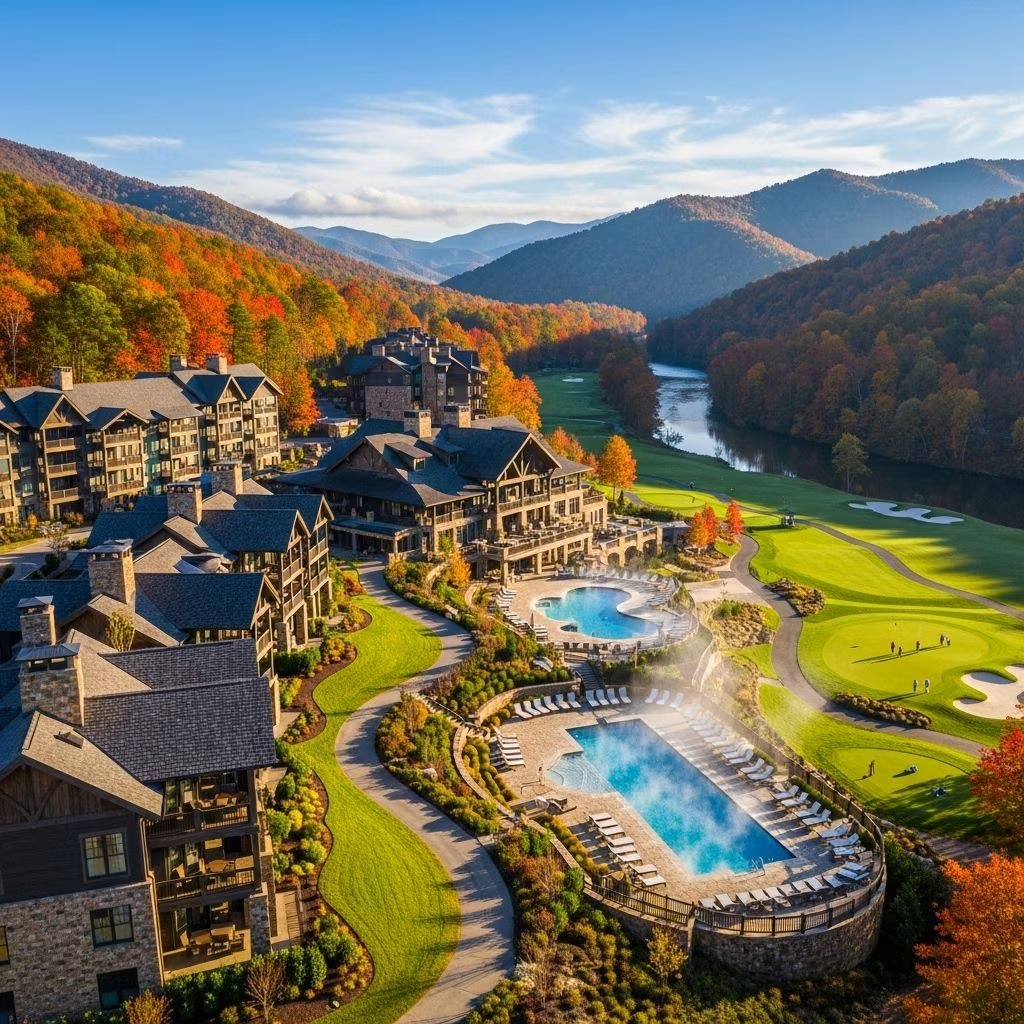
- The Grove Park Inn (Asheville, Est. 1913): A masterpiece of Arts and Crafts design, it has attracted everyone from F. Scott Fitzgerald to President Obama, and overlooks the stunning Blue Ridge Mountains.
North Dakota
- The Historic Patterson Hotel (Bismarck, Est. 1911): A symbol of early 20th-century optimism in the Northern Plains, famed for its period interiors.
Ohio
- The Westin Great Southern Columbus (Columbus, Est. 1897): Formerly the Great Southern Hotel, its ornate baroque style once lured vaudeville stars and Gilded Age politicians.
Oklahoma
- The Skirvin Hilton (Oklahoma City, Est. 1911): Host to statesmen and jazz legends, it’s also recognized for its role in Civil Rights Movement history.
Oregon
- Geiser Grand Hotel (Baker City, Est. 1889): A preserved showcase of Victorian high style, with period stained glass and a grand cupola dominating Main Street since the gold rush.
Pennsylvania
- Omni Bedford Springs Resort (Bedford, Est. 1806): This mineral springs spa resort has hosted U.S. presidents and foreign dignitaries for centuries.
Rhode Island
- Ocean House (Watch Hill, Est. 1868): A beloved seaside haven, meticulously restored to its original splendor to evoke the Gilded Age.
South Carolina
- Wentworth Mansion (Charleston, Est. 1886): A prime example of Second Empire architecture and Southern graciousness, renowned for its hospitality.
South Dakota
- Hotel Alex Johnson (Rapid City, Est. 1928): Invoking Native American motifs, this hotel offers panoramic Black Hills views and rich cultural history.
Tennessee
- The Peabody Memphis (Memphis, Est. 1869): Internationally famous for its daily duck march, The Peabody is the “South’s Grand Hotel”.
Texas
- The Driskill (Austin, Est. 1886): A Romanesque Revival icon, the Driskill is a symbol of Lone Star grandeur and storytelling since the days of Texas cattle barons.
Utah
- Hotel Utah (Joseph Smith Memorial Building) (Salt Lake City, Est. 1911): Once the city’s most luxurious accommodations, today it serves as a gathering place rich in local legacy.
Vermont
- Woodstock Inn & Resort (Woodstock, Est. 1793): Celebrated for its revolutionary history and classic New England hospitality amid the Green Mountains.
Virginia
- Williamsburg Inn (Williamsburg, Est. 1937): Neighbor to the Colonial Williamsburg Historic Area, the Inn and its gardens are living testaments to 18th-century charm and the restoration movement that saved them.
- Williamsburg Lodge, Autograph Collection and Colonial Houses (Williamsburg, Est. 1750/1937): These neighboring properties sit amid 301 acres of museums, gardens, and immersive historical experiences, highlighted by gardens with native and colonial-era plantings, and living history tours.
Washington
- Hotel Sorrento (Seattle, Est. 1909): Renowned as “Seattle’s Grand Dame”, this Italianate hotel exudes Old World allure in the Pacific Northwest.
West Virginia
- The Greenbrier (White Sulphur Springs, Est. 1778): Famously housing a secret Cold War bunker, The Greenbrier has been a retreat for everyone from presidents to royalty.
Wisconsin
- The Pfister Hotel (Milwaukee, Est. 1893): The Pfister’s noted Victorian art collection and elaborate marble interiors make it a crown jewel of the Midwest.
Wyoming
- Lake Yellowstone Hotel (Yellowstone National Park, Est. 1891): The longest-operating hotel in the country’s oldest national park, its Colonial Revival silhouette stands at the edge of Yellowstone Lake, offering guests a unique connection to frontier-era adventure.
Why Choose a Historic Hotel?
Historic hotels offer an experience far beyond a typical overnight stay. Guests enjoy:
- Authentic architecture and décor—often lovingly restored to original glory
- Legendary guests—walk in the footsteps of presidents, authors, stars, and revolutionaries
- Unique storytelling—each property reveals a different thread of American history, from art and music to peace treaties and culinary firsts
- Exceptional settings—from oceanfront lawns to city landmarks and mountain vistas
Renovation and Preservation Efforts
Maintaining historic hotels is an art in itself. Many properties:
- Undertake extensive restoration to retain period features
- Collaborate with preservation societies and local historians to ensure authenticity
- Embrace modern amenities discreetly, so comfort never overtakes classic charm
- Host educational tours and workshops celebrating their unique legacies
Planning Your Stay at a Historic Hotel
To make the most of your visit to a historic hotel, consider:
- Requesting guided tours or access to historical archives
- Booking rooms or suites famed for notable guests or events
- Enjoying on-site gardens, museums, or living history exhibits
- Participating in culinary events celebrating locally inspired or heritage dishes
Many hotels also offer special packages for anniversaries, heritage festivals, and holiday celebrations that further immerse guests in their rich history.
Frequently Asked Questions (FAQs)
Q: What makes a hotel “historic” in America?
A hotel is considered historic if it is at least 50 years old, has architectural or cultural significance, and is listed or eligible for listing in the National Register of Historic Places or designated a National Historic Landmark.
Q: Can you find luxury amenities in historic hotels?
Yes. Many historic hotels blend classic design with modern luxury—think world-class spas, renowned restaurants, and state-of-the-art guest rooms, often set in beautifully restored original buildings.
Q: Are these hotels more expensive than regular hotels?
While some historic hotels are luxury properties with high-end pricing, many offer a range of rooms and packages suitable for different budgets. It’s best to shop early and look for seasonal promotions.
Q: Do historic hotels host special events or tours?
Absolutely. Many historic hotels offer guided history tours, lectures, garden walks, and themed events, especially around local or national milestones.
Q: Can I host a wedding or corporate event at a historic hotel?
Historic hotels are popular venues for weddings, meetings, and celebrations, offering stylish ballrooms, gardens, and personalized service linked to their storied ambience.
References
- https://www.travelmarketreport.com/hotels-resorts/articles/historic-hotels-of-america-has-big-birthday-plans-for-the-usas-250th
- https://906rewards.com/island-house-hotel-named-in-top-25-historic-hotels-of-america-most-magnificent-gardens-list/
- https://www.countryliving.com/life/travel/g3638/historic-hotels-of-america/
- https://www.countryliving.com/shopping/antiques/a65317325/antiques-influencer-lily-barfield-marlene-inn-houston/
- https://www.historichotels.org/us/press/in-the-news/these-10-us-national-park-lodges-are-so-stunning-tourists-say-the-views-don-t-look-real
- https://www.historichotels.org/us/inspiration/top-25-lists.php
- https://historycollection.com/from-the-civil-war-to-the-jazz-age-15-historic-hotels-in-the-southern-united-states/
- https://journeyswithsteve.com/12-of-americas-historic-and-grand-hotels/